
Review · DHARAVI COMMUNITY WALKS
Mumbai: Dharavi Slum and Dhobi Ghat Tour with Train Ride
Laundry and trains, right in Mumbai’s heart. This short tour strings together Dhobi Ghat and a Mumbai local train ride with a guided walk through Dharavi, so you see how people earn a living and keep life moving in one of the city’s most talked-about areas. I especially liked the way the guide’s stories make the places feel personal, and how the working laundry and local train switch your view from sightseeing to real city rhythm.
One thing to plan for: the tour has a clothing rule, with no short skirts or skirts, and it involves active walking in busy neighborhoods, so comfy shoes and long pants will make your day easier.
In This Review
- Key Things I’d Prioritize
- Third Wave Coffee to Dhobi Ghat: How This Tour Actually Feels
- Dhobi Ghat Viewing Deck: Laundry on a Massive Scale
- Mumbai Local Train Ride: A Real Commuter Reality Check
- Dharavi Walk: Alleys, Work, and Community Strength
- Guides Who Make It Feel Human: Bhaarti, Abhishek, Hardik, Alkama
- Price and Value: What $26 Buys You in Real Terms
- Practical Tips That Will Save You Hassle
- Dress code: plan long and comfy
- Expect active walking
- Bring a “listening mindset”
- Who Should Book This Tour (and Who Might Skip It)
- Should You Book the Dhobi Ghat and Dharavi Train Tour?
- FAQ
- What is the duration of the Mumbai: Dharavi Slum and Dhobi Ghat Tour with Train Ride?
- How much does the tour cost?
- Where does the tour start and end?
- What’s included in the tour?
- Are there any clothing restrictions?
- Is free cancellation available?
Key Things I’d Prioritize
- Dhobi Ghat at working level: You see an open-air system that’s still in motion, not a static exhibit.
- The train ride as a city lesson: You feel how commuting shapes daily life.
- A Dharavi walk with local context: The guide connects alleys to work, families, and small businesses.
- Guides named by many groups: People in the program spotlight locals like Bhaarti and Abhishek.
- Small group size: Limited to 10, which helps you hear your guide and keep the pace sane.
Third Wave Coffee to Dhobi Ghat: How This Tour Actually Feels
The meeting point is at Third Wave Coffee, which is a handy, clear start if you’re already doing a morning or early afternoon in the neighborhood. From there, you follow your guide through two of Mumbai’s most meaningful lenses: work and neighborhood life.
The format is built for focus. You’re not trying to do everything across the city. Instead, you get a guided walking block in Dharavi, then a local train ride, then a guided look at Dhobi Ghat, ending at the Dhobi Ghat Viewing Deck. With a total duration listed at 3 hours, it’s the kind of tour you choose when you want context fast, not when you want a slow meander.
Dhobi Ghat Viewing Deck: Laundry on a Massive Scale
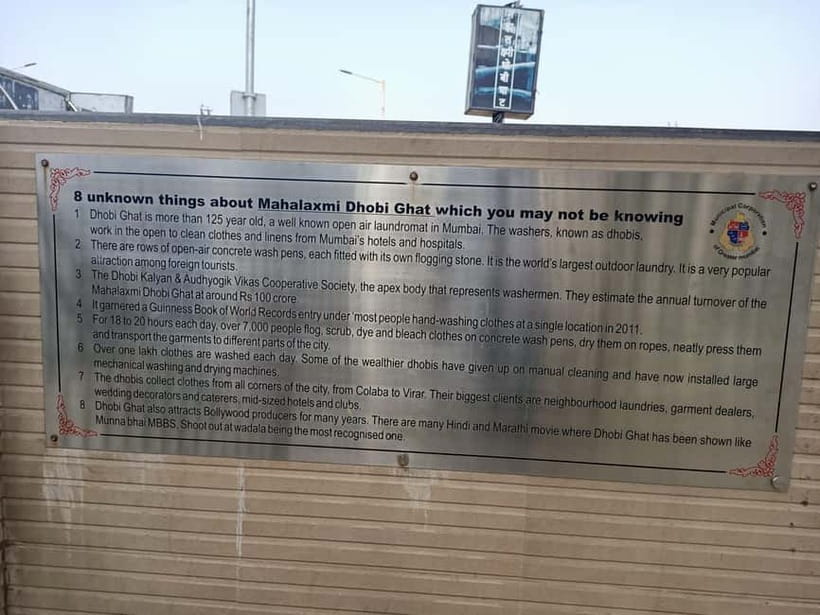
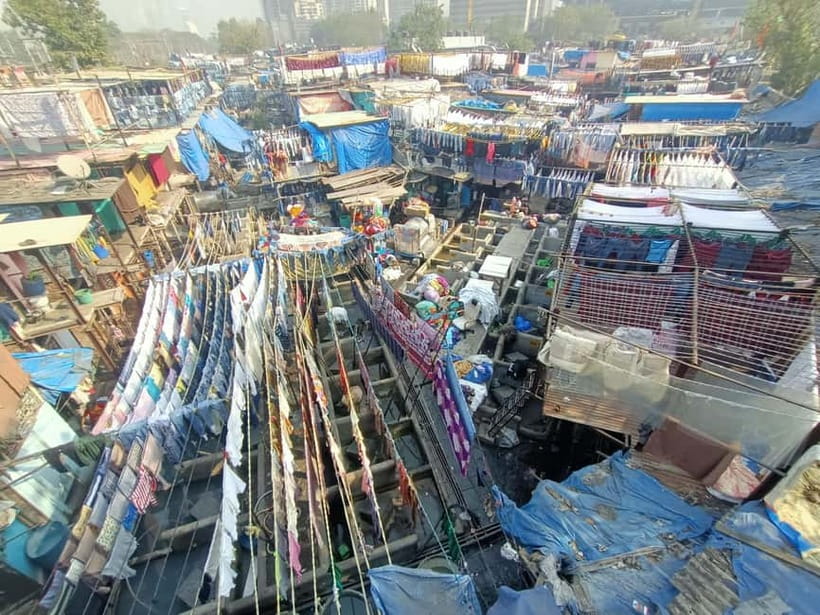
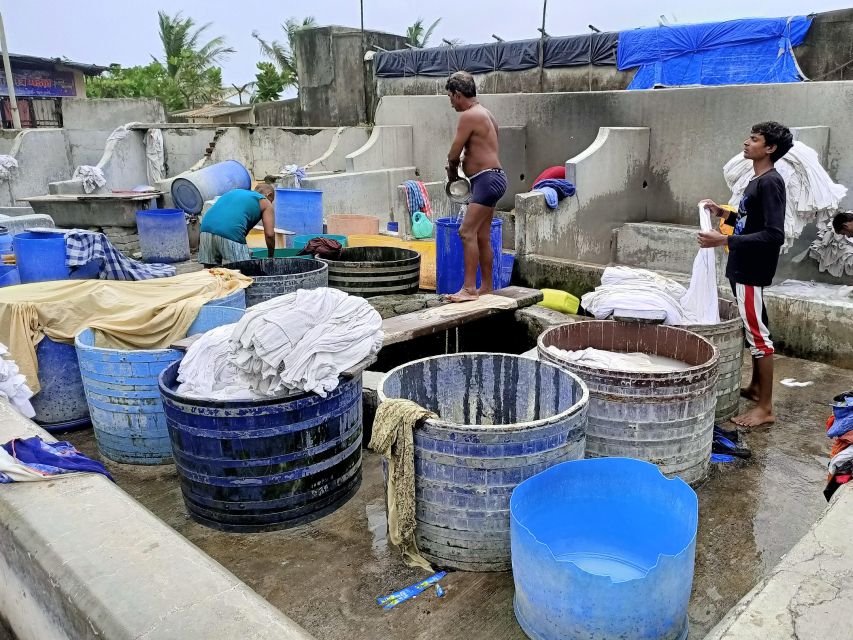
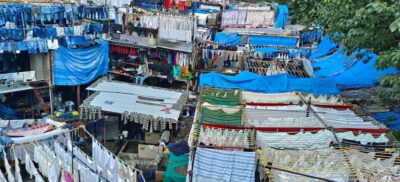
If you only know Dhobi Ghat from photos, you’ll be surprised by how real it feels once you’re there. Dhobi Ghat is Asia’s largest open-air laundry, and the tour is designed to show you the operation from close by—then from the viewing deck, where you can take in the bigger picture.
What I like about this stop is the perspective shift. At ground level, you notice the pace and the work—people cleaning, managing, and moving garments as part of everyday city demand. From the viewing deck, you start understanding the layout and the scale. It’s one of those rare places where your camera can’t tell the whole story, because the sound, motion, and sheer number of garments are part of why it’s so memorable.
The best practical tip here is to listen to your guide while you look. The magic of Dhobi Ghat isn’t just that it’s huge. It’s that your guide connects the scenes to how the work supports livelihoods and how the community has organized around that need. In at least one guiding style shared in the program, your guide also helps you understand what you’re seeing, not just where to stand for photos.
And yes, the viewing deck is a strong photo angle—Richard even called it a perfect spot for photos from above. Even if you don’t care about photos, it’s still worth it for the “oh, that’s how it all fits together” feeling.
Other Dharavi walks led by people who live there



Mumbai Local Train Ride: A Real Commuter Reality Check
This is the part that many people treat like a bonus. It’s not. The Mumbai local train ride is a core part of the experience because it changes how you understand the city.
On paper, it’s transportation. In practice, it’s where you feel how Mumbai runs. Your guide moves you from Dhobi Ghat’s work-world to Dharavi’s neighborhood-world (or vice versa), but the train gives you the in-between reality: the flow of commuters, the sense of timing, and the way everyone’s doing their daily routine at once.
One detail I really value from the experiences shared: the open-doorways can mean you feel the wind while you ride. Richard described wind blowing through his hair, which is such a small detail, but it tells you what kind of ride this can feel like—alive, moving, and unmistakably local.
Another reason this segment matters is simple: it’s not an “exotic transport” gimmick. Mumbai local trains are part of how the city links neighborhoods, and this tour uses that connection instead of bypassing it with a private car. If you want to understand Mumbai beyond landmarks, the train does that work for you.
Dharavi Walk: Alleys, Work, and Community Strength

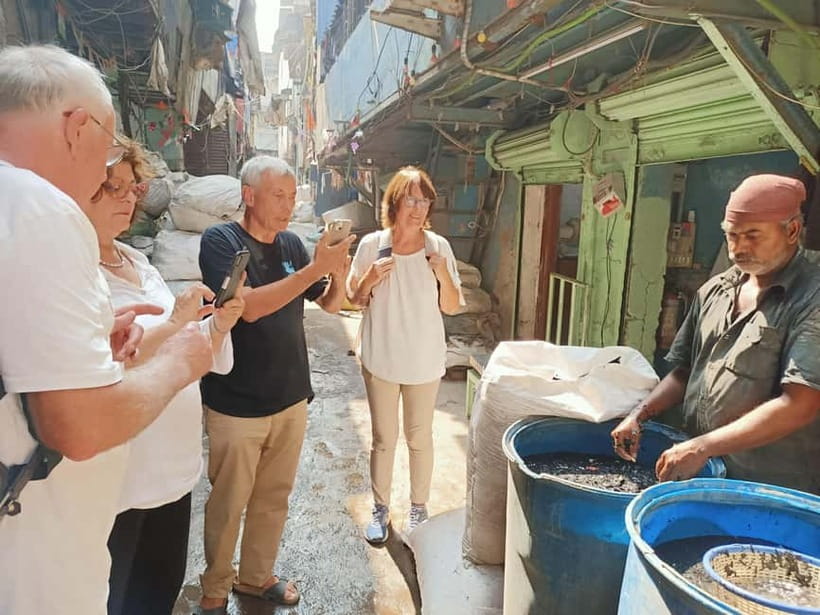
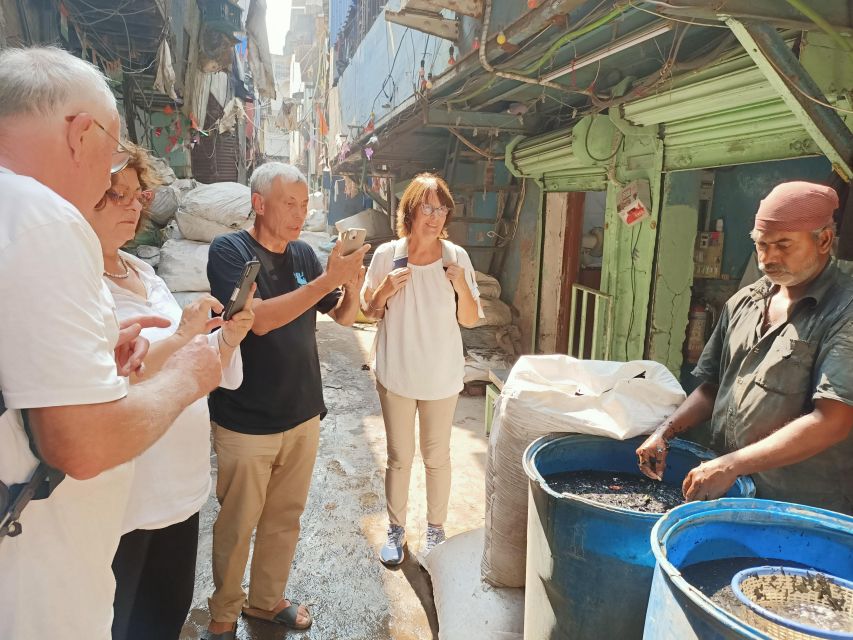
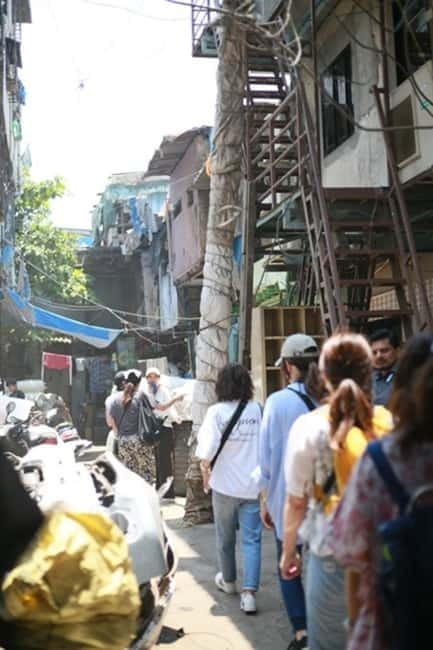
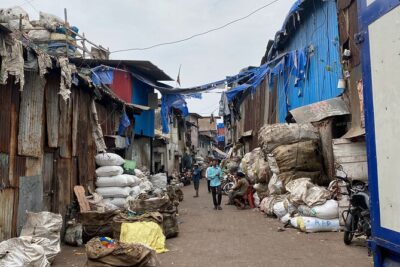
Dharavi is Asia’s largest slum, and the tour doesn’t treat it as a single dramatic viewpoint. Instead, you get a guided walk through the labyrinthine alleys and businesses, with a focus on stories of resilience, entrepreneurship, and community spirit.
The best part of the Dharavi segment is that it’s framed as a place with systems. You’re not just walking past doors and walls. Your guide helps you connect what you see to how people earn money, how small industries function, and how community networks support daily life.
The walk is listed as 2 hours, which is a meaningful chunk of time for a neighborhood visit. It’s enough to get beyond “street-level wow” and start noticing patterns: where work happens, where people gather, and how the neighborhood organizes itself around real needs.
Important note for your expectations: Dharavi is sensitive territory. You’ll want to keep your tone respectful, stay close to your guide, and focus on listening. The tour is built around human stories, not shock value.
And because the guides are often locals, the way the tour comes across can feel less like a scripted narration. In the experiences shared, guides like Abhishek and Bhaarti were highlighted as having personal ties to the area, which changes the tone from tourist talk to lived context.
Guides Who Make It Feel Human: Bhaarti, Abhishek, Hardik, Alkama
A tour like this lives and dies on the guide. Here, the program has a real track record of guides being both communicative and personally connected to the neighborhoods.
In the experiences shared:
- Bhaarti was praised for being professional and informative, and specifically for knowing the area from the inside, including people and the labyrinth of lanes.
- Abhishek was also described as living in the slums himself, which made the tour feel grounded and real while answering questions in a local way.
- Hardik received strong praise for being personable and sharing lots of context.
- Alkama was described as charismatic, with a focus on what you’re actually seeing during Dhobi Ghat, the train ride, and the Dharavi walk.
I love that the tour isn’t trying to be neutral about what matters. It puts faces on the story. If you’re the kind of traveler who asks practical questions—how people work, how routines work, how neighborhoods function—this format gives you a good channel for that.
More visits to the open-air laundry at Mahalaxmi
- Mumbai: Dhobi Ghat Laundry and Dharavi Slum Tour with Local
★ 5.0 · 469 reviews - Mumbai: Dharavi Slum and Dhobi Ghat Laundry Tour
★ 5.0 · 317 reviews - Private Combo Tours Sightseeing + Dharavi Slum + Dhobi Ghat & Dabbawalas
★ 5.0 · 245 reviews - Dharavi, Dhobighat, and Mumbai Dabbawallas
★ 5.0 · 168 reviews - Dabbawala, Dhobi Ghat & Dharavi slum Tour with Local Train Ride
★ 5.0 · 102 reviews - Mumbai: Dharavi Slum Tour with Dhobi Ghat (Open-Air Laundry)
★ 4.8 · 62 reviews
Price and Value: What $26 Buys You in Real Terms

The price is $26 per person, and for Mumbai, that’s the kind of ticket that makes sense if you value time and guidance.
Here’s what you actually get included:
- English-speaking tour guide
- Train tickets
- Bottled mineral water
- You also skip the ticket line
You’re paying for three things that are hard to organize on your own, especially if you’re trying to do it safely and without turning the day into logistics. First, you get a guide who can interpret what you’re seeing in Dharavi and Dhobi Ghat. Second, you get help with the train portion, since train routes and timing can be confusing for first-timers. Third, you avoid wasting energy lining up at entry points.
The small group size helps too. Limited to 10 participants, it’s easier to stay together, hear your guide, and keep the pace comfortable during walking sections.
Practical Tips That Will Save You Hassle

This is where you can make the tour feel smooth instead of stressful.
Dress code: plan long and comfy
The tour lists that short skirts and skirts are not allowed. That means you should plan on long pants or trousers. If you’re packing for India weather, lightweight breathable fabric helps. Also, bring comfortable shoes because you’re doing walking in neighborhood alleys and around the laundry areas.
Expect active walking
Dharavi is a guided walk (2 hours), and Dhobi Ghat includes guided time plus walking up to viewpoints. Even if the total duration is short, you’ll be on your feet.
Bring a “listening mindset”
This isn’t just a photo tour. Your guide shares stories about resilience, work, entrepreneurship, and community life. If you walk fast and only look, you’ll miss what makes this experience stick.
Who Should Book This Tour (and Who Might Skip It)
I’d point you toward this tour if you:
- Want a guided, human-scale introduction to Dharavi and Dhobi Ghat
- Like the idea of riding a Mumbai local train as part of the experience, not as a separate activity
- Prefer a small group setup with an English-speaking guide
- Have limited time and want to cover two major neighborhoods in one go
I’d suggest skipping or swapping plans if you:
- Need a fully seated, low-walking experience
- Are not comfortable with a strict no short skirts/skirts dress code
- Want a more “museum-like” attraction format. This is a real working-and-living area experience, not a staged show.
Should You Book the Dhobi Ghat and Dharavi Train Tour?

If you’re trying to understand Mumbai as more than skylines and monuments, this tour makes sense. You get three powerful contrasts in a short time: open-air laundry work at Dhobi Ghat, neighborhood life and local enterprise in Dharavi, and the connecting thread of the local train.
The strongest reason to book is simple: the tour is guided by people with genuine neighborhood connection, and that shapes what you learn. Names like Bhaarti and Abhishek show up because they’re able to answer questions in context, not in generalities.
If the dress rule and walking pace work for you, this is a high-value way to spend a few hours in Mumbai.
FAQ
What is the duration of the Mumbai: Dharavi Slum and Dhobi Ghat Tour with Train Ride?
The tour duration is listed as 3 hours.
How much does the tour cost?
The price is $26 per person.
Where does the tour start and end?
The tour starts at Third Wave Coffee and finishes at the Dhobi Ghat Viewing Deck.
What’s included in the tour?
It includes an English-speaking tour guide, train tickets, and bottled mineral water.
Are there any clothing restrictions?
Yes. Short skirts and skirts are not allowed.
Is free cancellation available?
Free cancellation is available up to 24 hours in advance for a full refund.
Mumbai by Rail, Line by Line
- Dabbawala, Dhobi Ghat & Dharavi slum Tour with Local Train Ride
★ 5.0 · 102 reviews - Mumbai Street Food & Bazaar Tour with Local Transport
★ 5.0 · 51 reviews - Local Transport & Dabbawallah Tour
★ 5.0 · 40 reviews - Mumbai: Local Transport & Dabbawallah Tour
★ 4.9 · 14 reviews
Dhobi Ghat from a Few More Angles
- Mumbai: Dharavi Slum, DhobiGhat, and Dabbawallas Tour
★ 4.9 · 689 reviews - Mumbai: Dhobi Ghat Laundry and Dharavi Slum Tour with Local
★ 5.0 · 469 reviews - Mumbai: Dharavi Slum and Dhobi Ghat Laundry Tour
★ 5.0 · 317 reviews - Private Combo Tours Sightseeing + Dharavi Slum + Dhobi Ghat & Dabbawalas
★ 5.0 · 245 reviews
Dharavi, Told by Its Residents
- Dharavi slum tour in Mumbai by Female tour guides of the slum
★ 5.0 · 1,976 reviews - Mumbai: Dharavi Slum, DhobiGhat, and Dabbawallas Tour
★ 4.9 · 689 reviews - Dharavi Slum Tour
★ 5.0 · 625 reviews - Dharavi Slum tour in Mumbai by local resident
★ 5.0 · 572 reviews
New on the Mumbai shortlist



Dharavi Community Walks, compared.
 ★ 5.0Dharavi slum tour in Mumbai by Female tour guides of the slumFrom $91,976 reviews
 ★ 4.9Dharavi Slum, DhobiGhat, and Dabbawallas TourFrom $14689 reviews
 ★ 5.0Dharavi Slum TourFrom $20625 reviews
 ★ 5.0Dharavi Slum tour in Mumbai by local residentFrom $4572 reviews
 ★ 4.9Dharavi Slum Slumdog Millionaire Tour with a LocalFrom $10529 reviews
 ★ 5.0Mumbai Slum Tour – Visit Dharavi Slum with Local GuideFrom $5509 reviews
 ★ 5.0Dhobi Ghat Laundry and Dharavi Slum Tour with LocalFrom $4469 reviews
 ★ 5.02-Hour Guided Tour of DharaviFrom $22359 reviews
Browse the lists this tour appears in