
Review · DHARAVI COMMUNITY WALKS
Private City Tour with Dharavi Slum Dhobighat and Dabbawalla
Mumbai has layers, and this day shows them fast.
This private tour pairs big-name sights like Chhatrapati Shivaji Terminus and Gateway of India with real local life in Dharavi and Mahalaxmi Dhobi Ghat. Two things I like a lot: you get a full-city orientation in one long stretch, and the guide team behind Sid/Siddhi is repeatedly praised for a professional, human, and sensitive approach. One consideration: it’s a 6–7 hour outing, so you’ll want comfortable shoes and a good-weather day to keep it enjoyable.
You start in Colaba, then you work your way through South Mumbai’s architecture, markets, and viewpoints before ending in Dharavi. I also like that the stops are practical and time-efficient—most locations are quick photo-and-story breaks—so you’re not spending your day stuck in a single area. The main drawback to plan around is the subject matter in Dharavi: you’ll want to go in with respect and patience, and you may find the contrast emotionally intense, even with a careful guide.
In This Review
- Key highlights to notice before you go
- Why this private Mumbai route mixes icons with real neighborhoods
- Meet-up in Colaba: how the 9:30 start and 6–7 hour timing work
- South Mumbai’s landmark belt: Gateway of India to Marine Drive
- Gandhi and hilltop views: Mani Bhavan, Hanging Gardens, and Banganga
- Antilia and the contrast stop at Dhobi Ghat
- Churchgate, then Dharavi: how the day’s hardest part stays respectful
- Sid/Siddhi as the guide: what the tour experience depends on
- Price and value: $75.69 for a private day that covers a lot
- Who should book this tour, and who should think twice
- What to do so the day feels good (not chaotic)
- Should you book Namaste Tours and Trips for this private Mumbai day?
- FAQ
- What is the duration of the private tour?
- What time does the tour start?
- Where is the meeting point?
- Where does the tour end?
- Is pickup included?
- Is this tour private?
- What is the price per person?
- Are tickets included for the stops?
- Does the tour include Dabbawalla visits?
- What if the weather is bad?
- Is there free cancellation?
Key highlights to notice before you go
- Private guide attention: only your group, so questions stay on topic and the pacing stays flexible
- Sid/Siddhi’s communication: strong email/WhatsApp coordination is part of the experience
- Respect-first Dharavi visit: the tour is built around a sensitive, human approach
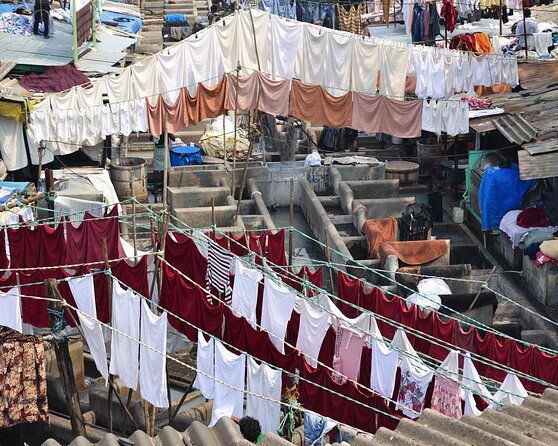
- Dhobi Ghat in Mahalaxmi: see an open-air laundry scene as part of everyday city work
- South Mumbai overview in one pass: major monuments, courts, markets, and promenades
- Free entry at listed stops: many stops show admission as free, which boosts value
Why this private Mumbai route mixes icons with real neighborhoods
Most Mumbai days fall into two camps: either you do the postcard sights, or you focus on one neighborhood and go deeper. This tour tries to do both in a single, organized sweep.
The value is in the contrast. You’ll look up at monumental architecture—then you’ll move to places where people work, trade, and live. That shift matters. It turns Mumbai from a set of famous backdrops into a living city with history, institutions, and everyday routines in the same day. You also get the guidance to connect the dots, not just stand and take photos.
And the “private” part is more than a label. Multiple guests mention how much they appreciated Sid/Siddhi’s professional knowledge and authentic personality, plus a careful, people-first manner. That’s exactly what you want when the itinerary includes Dharavi, where your mindset and behavior really do affect the experience.
Meet-up in Colaba: how the 9:30 start and 6–7 hour timing work
You meet at Regal Cinema, Apollo Bandar, Colaba (start time 9:30 am). Pickup is offered, and the tour uses a mobile ticket. The day runs roughly 6–7 hours, and it ends at Kumbhar Wada in Dharavi.
That timing is ideal if:
- you’re short on time and want a “get your bearings fast” day,
- you want a structured route without rushing between far-apart neighborhoods.
It’s less ideal if you hate long stretches of moving around or you prefer slow, museum-style pacing. Here, many stops are set up as quick orientation moments—think about 10–30 minutes at each location rather than extended, sit-down time. Bring water, wear shoes you can walk in all day, and plan for a weather-dependent outing since the experience requires good weather.
Other Dharavi walks led by people who live there




South Mumbai’s landmark belt: Gateway of India to Marine Drive
This tour starts the classic way: with major landmarks that help you understand how Mumbai “faces” the sea and how British-era and post-independence landmarks sit side by side.
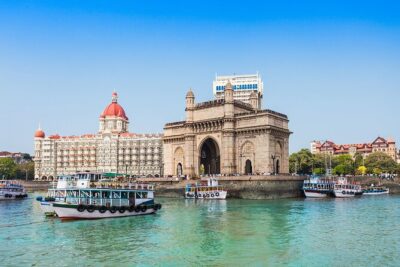
Gateway of India (about 20 minutes) is where you’ll orient quickly. It’s an arch monument from the early 20th century, and it was built to commemorate the landing of King-Emperor George V—the first British monarch to visit. Even if you’ve seen photos before, it’s the kind of stop where your guide’s framing helps you read the location beyond the postcard.
Then you head inland through more civic and institutional buildings:
- University of Mumbai Library (about 20 minutes): you’ll get a sense of the city’s academic presence and scale.
- Bombay High Court Principal Bench (about 10 minutes): a shorter stop, but it sets the tone for Mumbai as a legal and administrative hub.
A major architectural anchor follows: Chhatrapati Shivaji Terminus (about 20 minutes). It’s a UNESCO World Heritage Site and a historic railway terminus designed by Frederick William Stevens. This stop is worth your time because train stations here aren’t just transportation—they’re monuments to ambition, engineering, and design.
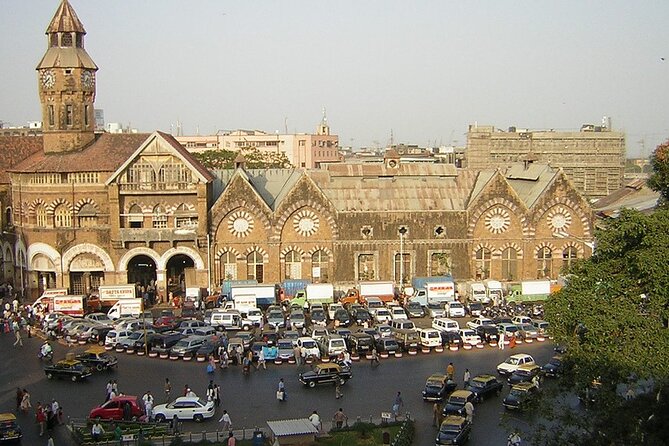
Next is Crawford Market (about 20 minutes). The building was completed in 1869 and donated to the city by Cowasji Jehangir. Markets in Mumbai aren’t only for shopping—they’re social infrastructure. Even as a short visit, you’ll see how daily life organizes itself around public spaces.
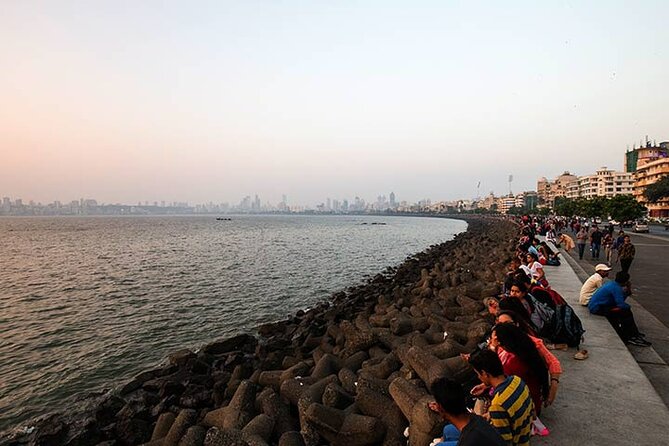
Finally, you reach Marine Drive (about 20 minutes). It’s a 3 km promenade along Netaji Subhash Chandra Bose Road, built with the famous C-shaped curve. The quick timing means you’ll likely take in views more than linger, but that’s the point: a smooth transition from monuments to coastline energy.
Gandhi and hilltop views: Mani Bhavan, Hanging Gardens, and Banganga
After you’ve got the skyline and civic backbone in place, the tour shifts into reflection and perspective—still without losing momentum.
Mani Bhavan Gandhi Museum (about 20 minutes) is dedicated to Gandhi and focused on his political activities in Mumbai. You’ll appreciate this stop more if you’re curious about how political movements took root in specific places, not just abstract dates.
Then comes the scenery section:
- Hanging Gardens (Pherozeshah Mehta Gardens) (about 20 minutes): terraced gardens on Malabar Hill’s western side, positioned opposite Kamala Nehru Park.
- Kamala Nehru Park (about 20 minutes): built in 1952 and named after Nehru’s wife, with a view over Marine Drive from above.
These two stops work as a mental break. After institutional architecture and market life, you get open air and a viewpoint that helps you understand why people like to live and promenade in this part of town.
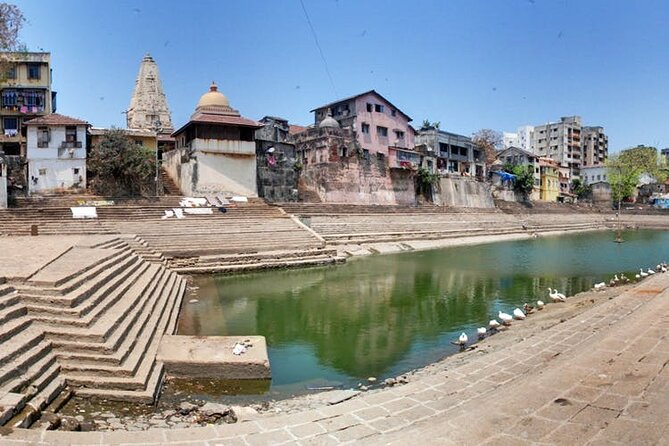
Banganga (about 20 minutes) wraps this cluster. It’s the Banganga Tank, part of the Hindu Walkeshwar Temple complex in the Malabar Hill area. A tank-temple complex is the kind of detail that often gets skipped on quick sightseeing days. Here, it gives Mumbai a spiritual texture that matches the city’s older layers.
Antilia and the contrast stop at Dhobi Ghat
One part of this itinerary is designed for shock-by-design: the move from hill views and temple tanks to extreme wealth and then to everyday work.
Antilia (about 20 minutes) is a private residence in the “billionaires row” area. It’s named after the mythical island Antillia and is the residence of Indian billionaire Mukesh Ambani and family, who moved in during 2012. You won’t be touring inside, but as a photo stop and city-contrast moment, it hits hard. In a single day, you can literally place wealth, infrastructure, and street-level reality into the same mental map.
Then the tour turns to work you can see. Dhobi Ghat (Mahalakshmi Dhobi Ghat) (about 30 minutes) is an open-air laundry place. It’s located at Mahalaxmi railway station and is also accessible from the Jacob Circle monorail station. This stop is a great change of pace because the activity is visible—washing, handling cloth, and the rhythms of a service industry that supports the city.
A practical note: an open-air laundry scene can be busy and active. I’d plan for sensory intensity (sounds and smells can vary by conditions), and I’d stay attentive to your guide’s pace so you don’t create bottlenecks or get too close to workers.
More visits to the open-air laundry at Mahalaxmi
- Mumbai: Dhobi Ghat Laundry and Dharavi Slum Tour with Local
★ 5.0 · 469 reviews - Mumbai: Dharavi Slum and Dhobi Ghat Laundry Tour
★ 5.0 · 317 reviews - Private Combo Tours Sightseeing + Dharavi Slum + Dhobi Ghat & Dabbawalas
★ 5.0 · 245 reviews - Dharavi, Dhobighat, and Mumbai Dabbawallas
★ 5.0 · 168 reviews - Dabbawala, Dhobi Ghat & Dharavi slum Tour with Local Train Ride
★ 5.0 · 102 reviews - Mumbai: Dharavi Slum Tour with Dhobi Ghat (Open-Air Laundry)
★ 4.8 · 62 reviews
Churchgate, then Dharavi: how the day’s hardest part stays respectful
After Dhobi Ghat, you move to Churchgate Railway Station (about 20 minutes). It’s a seaside area known for sports like Oval Maidan and Brabourne Stadium. The nearby spaces include neo-Gothic and 1930s-era architectural styling around that stadium zone. This stop works as another orientation moment, tying the city’s transportation network to public recreation areas.
Then comes Dharavi (about 2 hours). Dharavi is a locality in Mumbai considered to be one of the world’s largest slums, with a little over 2.1 square kilometers and an estimated population around 1,000,000.
Here’s what makes a guided visit matter. You’re not just “seeing poverty.” You’re trying to understand a place where people build, trade, and manage life in very tight spaces. The experience provider’s guide approach is repeatedly praised as human and sensitive, and that’s exactly what you should look for when you book. A good guide keeps the conversation grounded and helps you act respectfully—asking before photographing, staying mindful of people’s space, and not treating residents like scenery.
Two hours is a long enough window to do more than a drive-by. Still, it’s not a full day of walking deep into every pocket. So come with the right goal: learn the shape of the area, understand the social reality, and let your guide show you the most meaningful viewpoints.
Sid/Siddhi as the guide: what the tour experience depends on
In tours like this, the guide is the product. And this one repeatedly earns praise around the same themes.
First is communication. Guests describe excellent email and WhatsApp coordination before the day. That matters because it reduces stress about meeting points, timing, and expectations. When the day includes multiple zones—Colaba, South Mumbai, Mahalaxmi, and Dharavi—clear communication keeps you from losing time.
Second is the guide’s tone. Multiple reviews mention Sid/Siddhi’s authentic personality and a very human and sensitive approach. For Dharavi and Dhobi Ghat, that’s not soft focus—it’s practical. If your guide treats the community with respect and frames what you’re seeing with care, your experience becomes more than shock value.
Third is flexibility. One guest noted the guide’s willingness to adjust when they had already seen some places, even adding new stops. That’s a big deal on a one-day itinerary. It means you’re not locked into a rigid script.
Finally, there’s the shopping pressure factor. One review specifically points out that the guide mentioned you don’t have to buy anything. I like that message because it sets the tone early: you’re there to understand and experience, not to get steered into purchases.
Price and value: $75.69 for a private day that covers a lot
At $75.69 per person, this tour isn’t trying to be “budget-safari cheap.” It’s priced like a proper private day with a guide.
Here’s where the value comes from:
- You’re getting multiple major South Mumbai stops (Gateway of India, CST, Crawford Market, Marine Drive, and more) in one organized route.
- You’re also getting two signature local-life stops: Dhobi Ghat and Dharavi.
- Many listed stops show admission ticket free, which helps keep costs from creeping up during the day.
Because it’s private, the guide can keep the pacing matched to your group. That reduces the classic problem with public tours: you feel rushed at some stops and stuck waiting at others. With a private setup, you can usually spend your minutes where the guide thinks the story lands best.
One more thing: the tour is commonly booked about 78 days in advance on average, so it’s not one of those last-minute options that always has openings. If you’re planning around a tight Mumbai schedule, booking earlier can help you lock in the date.
Who should book this tour, and who should think twice
This is a strong fit if you:
- want a first-time Mumbai orientation plus a reality check in Dharavi,
- prefer a private guide over large-group tours,
- like city walks that mix monuments, markets, and everyday working life,
- want a guide who communicates clearly and handles sensitive stops thoughtfully.
You might think twice if you:
- can’t handle a long day (6–7 hours),
- have very limited mobility or fatigue tolerance, because the day includes multiple walking and viewing stops,
- expect a gentle, only-comfortable sightseeing route. This one includes Dharavi, and that can be emotionally intense even when handled respectfully.
What to do so the day feels good (not chaotic)
A few practical tips that match how this itinerary is structured:
- Wear comfortable shoes. There are multiple outdoor stops and viewpoints.
- Bring a hat and water if the weather is warm—this depends on good-weather requirements.
- Keep your phone charged and camera ready, but follow your guide on when photography is appropriate, especially in Dharavi and Dhobi Ghat.
- If you care about the “Dabbawalla” part of the tour name, ask your provider before booking. In the details you have here, the listed stops emphasize Dhobi Ghat and Dharavi, and Dabbawalla isn’t clearly mapped to a specific stop.
Should you book Namaste Tours and Trips for this private Mumbai day?
If you’re the kind of traveler who wants Mumbai’s “what you see” and “what people live” in the same day, this is a solid choice. The itinerary covers big city symbols—CST, Marine Drive, Gateway of India—then it shifts into places where the city’s work happens: Dhobi Ghat and Dharavi. That contrast is the whole point.
Also, the repeated praise for Sid/Siddhi’s human, sensitive approach is exactly what you want when the itinerary includes sensitive social areas. Add clear pre-tour communication (email and WhatsApp), and you get a day that’s less stressful and more meaningful.
I’d book it if you can handle 6–7 hours and you’re ready to go beyond photo stops. Skip it if you only want architecture, or if you want a softer, low-contrast day.
FAQ
What is the duration of the private tour?
The tour runs about 6 to 7 hours.
What time does the tour start?
The start time is 9:30 am.
Where is the meeting point?
You’ll meet at Regal Cinema, Apollo Bandar, Colaba, Mumbai, Maharashtra 400001, India.
Where does the tour end?
The tour ends at Kumbhar Wada, Dharavi, Mumbai, India.
Is pickup included?
Pickup is offered.
Is this tour private?
Yes. It’s a private tour/activity, so only your group participates.
What is the price per person?
The price is $75.69 per person.
Are tickets included for the stops?
For the listed stops, admission ticket is shown as free.
Does the tour include Dabbawalla visits?
The tour name includes Dabbawalla, but the listed stops provided here do not mention a specific dabbawalla stop. If that’s important to you, confirm with the provider before booking.
What if the weather is bad?
The experience requires good weather. If it’s canceled due to poor weather, you’ll be offered a different date or a full refund.
Is there free cancellation?
Yes, you can cancel for a full refund up to 24 hours in advance.
The Dabbawala Route, Continued
- Mumbai: Dharavi Slum, DhobiGhat, and Dabbawallas Tour
★ 4.9 · 689 reviews - Private Combo Tours Sightseeing + Dharavi Slum + Dhobi Ghat & Dabbawalas
★ 5.0 · 245 reviews - Dharavi, Dhobighat, and Mumbai Dabbawallas
★ 5.0 · 168 reviews - Dabbawala, Dhobi Ghat & Dharavi slum Tour with Local Train Ride
★ 5.0 · 102 reviews
Dhobi Ghat from a Few More Angles
- Mumbai: Dharavi Slum, DhobiGhat, and Dabbawallas Tour
★ 4.9 · 689 reviews - Mumbai: Dhobi Ghat Laundry and Dharavi Slum Tour with Local
★ 5.0 · 469 reviews - Mumbai: Dharavi Slum and Dhobi Ghat Laundry Tour
★ 5.0 · 317 reviews - Private Combo Tours Sightseeing + Dharavi Slum + Dhobi Ghat & Dabbawalas
★ 5.0 · 245 reviews
Dharavi, Told by Its Residents
- Dharavi slum tour in Mumbai by Female tour guides of the slum
★ 5.0 · 1,976 reviews - Mumbai: Dharavi Slum, DhobiGhat, and Dabbawallas Tour
★ 4.9 · 689 reviews - Dharavi Slum Tour
★ 5.0 · 625 reviews - Dharavi Slum tour in Mumbai by local resident
★ 5.0 · 572 reviews
New on the Mumbai shortlist


Dharavi Community Walks, compared.
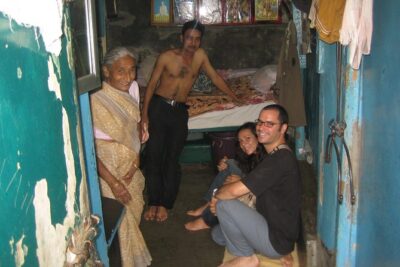 ★ 5.0Dharavi slum tour in Mumbai by Female tour guides of the slumFrom $91,976 reviews
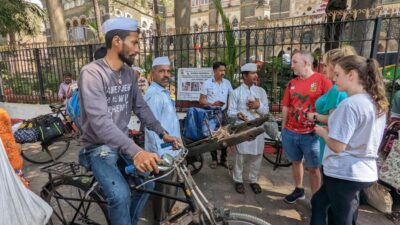 ★ 4.9Dharavi Slum, DhobiGhat, and Dabbawallas TourFrom $14689 reviews
 ★ 5.0Dharavi Slum TourFrom $20625 reviews
 ★ 5.0Dharavi Slum tour in Mumbai by local residentFrom $4572 reviews
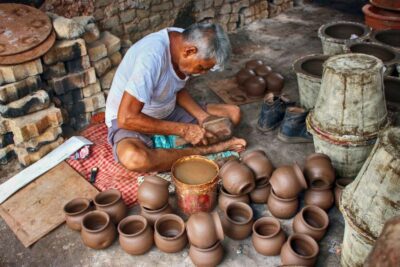 ★ 4.9Dharavi Slum Slumdog Millionaire Tour with a LocalFrom $10529 reviews
 ★ 5.0Mumbai Slum Tour – Visit Dharavi Slum with Local GuideFrom $5509 reviews
 ★ 5.0Dhobi Ghat Laundry and Dharavi Slum Tour with LocalFrom $4469 reviews
 ★ 5.02-Hour Guided Tour of DharaviFrom $22359 reviews