
Review · DHARAVI COMMUNITY WALKS
Mumbai: Dhobi Ghat & Dharavi Slum tour
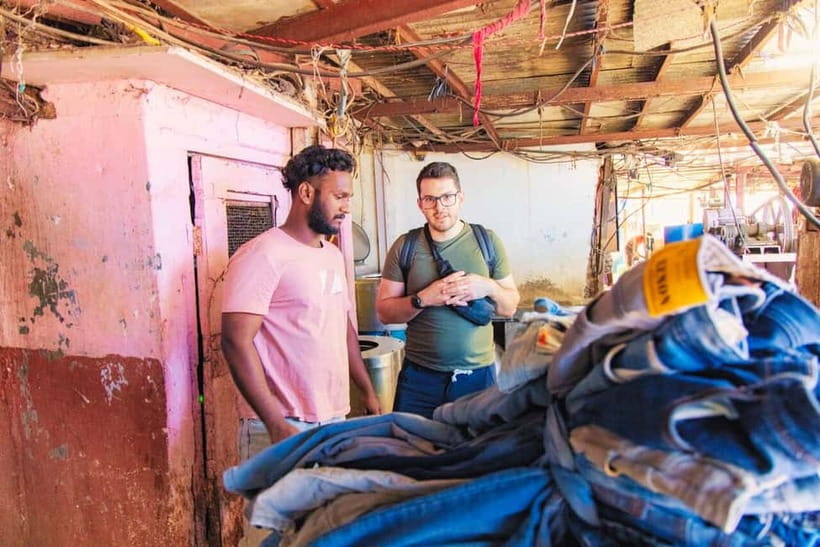
Mumbai surprises you when you walk with locals. You’ll spend part of your time in Dharavi and part at Dhobi Ghat, seeing how thousands of everyday routines, trades, and tradespeople keep the city moving. I love the resident-led storytelling, like the professional explanations from guides such as Sajid and the informative walk led by Jay, because it makes the sights feel human, not like a scene. I also like the practical flow—walk, then a local train ride, then a photo stop at Dhobi Ghat—so you get variety without losing time. One drawback to consider: the tour length can sometimes run shorter than the advertised 3 hours if access changes along the way.
The tone here is respectful and privacy-aware, and you’ll be walking through real working spaces and homes. The day also comes with an emotional contrast: you’ll see industry and crafts, and you may also feel the weight of cramped living. The tour runs in English and Hindi, and it finishes at the Dhobi Ghat viewing deck.
In This Review
- Key things that make this tour worth your time
- Dharavi and Dhobi Ghat in one grounded, walking-based plan
- Dharavi lanes: what you’re actually seeing (and how to do it respectfully)
- The “industrial then residential” route works for your understanding
- Kumbharwada pottery community: worth it, but be flexible
- The local train ride: a quick culture lesson in your itinerary
- Dhobi Ghat: the open-air laundry system you can actually see
- Photo stop and finish at the Dhobi Ghat viewing deck
- Guide quality makes or breaks this kind of tour
- Price and value: is $13 actually a deal here?
- Logistics that you should plan for (without turning it into a headache)
- Who should book this Dharavi and Dhobi Ghat experience?
- Should you book this tour?
- FAQ
- How long is the Mumbai Dhobi Ghat and Dharavi tour?
- What is included in the $13 per person price?
- Where is the meeting point?
- Where does the tour finish?
- Are the guides available in English?
- Is hotel pick-up or drop-off included?
Key things that make this tour worth your time

- Resident guides from Dharavi: you’re not just watching; you’re hearing stories from people who live the place.
- A train ride to Mahalaxmi: it’s part transit, part culture lesson, and it helps link Dharavi to Dhobi Ghat naturally.
- Dhobi Ghat’s open-air scale: you’ll see handwashing on a massive, well-organized system.
- Kumbharwada pottery community stop: a chance to connect the day’s “work” theme to craft skills.
- Good value at about $13: train tickets and Dhobi Ghat entry are included, so you’re not piecing it together yourself.
Dharavi and Dhobi Ghat in one grounded, walking-based plan

This is the kind of tour that helps you get your bearings fast in Mumbai. You start with Dharavi, then use a local train to reach Dhobi Ghat, instead of shuttling back and forth in a way that wastes your time. You get a walking focus too, which matters here—Mumbai reveals itself on foot.
I also like that it’s designed around real neighborhoods, not staged viewpoints. You’ll spend real time in lanes tied to daily work and family life, then shift to Dhobi Ghat, where the city’s laundry system is visible right in front of you. The pairing works: it shows how Mumbai runs on labor and logistics, from neighborhood workshops to large-scale washing.
Dharavi lanes: what you’re actually seeing (and how to do it respectfully)
Dharavi isn’t presented as a single spectacle. You’ll walk through areas that feel like a patchwork of work zones and living zones. In the industrial side, you’ll see small factories and workshops that show how resourceful the community is—many people rely on hands-on trades, not abstract ideas.
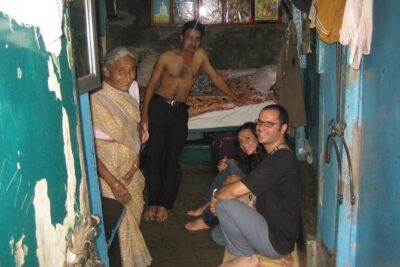
Then the walk typically shifts toward the residential side, where conversations tend to turn toward daily routines and family traditions. That part is where the tour becomes more than a photo stop. You’ll learn how people build ordinary life in tight spaces, and you’ll hear about practical challenges that shape the day.
Privacy and respect are built into the approach, and it’s not “come look at suffering” style. If you’re going with a curious mindset and basic manners, you’ll do well here. If your expectation is a clean, polished city tour, Dharavi may feel heavy—and that’s worth acknowledging before you book.
Other Dharavi walks led by people who live there




The “industrial then residential” route works for your understanding
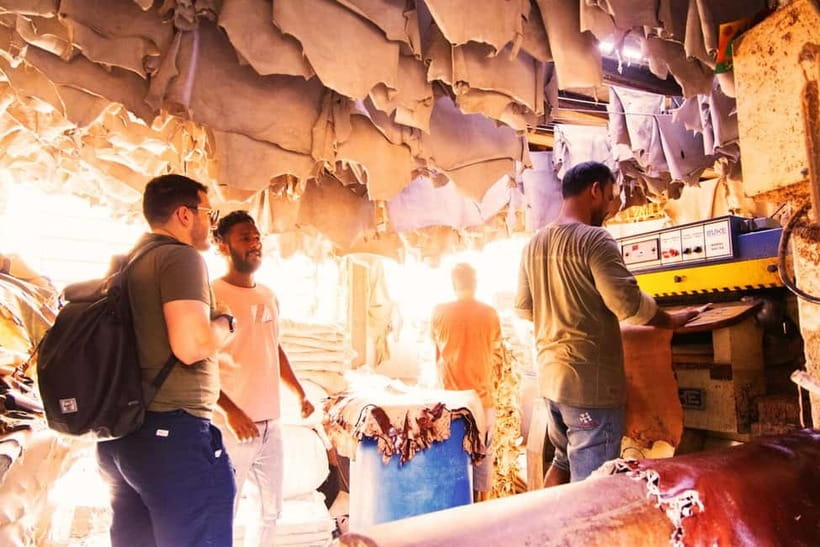
A lot of tours in crowded cities fail because they only show one layer. Here, the pacing helps you connect dots. When you start in the industrial area, it’s easier to understand why so many residents depend on trade and production. Then, when you move into the residential side, you see how that work sits alongside family life.
I think this sequence is valuable for you because it answers a common question: How does a place like this function day-to-day? You’re not only seeing the outer facts; you’re getting a sense of the rhythm.
One more practical tip: bring a mindset for small contrasts. You might spot craftsmanship, see people busy at their tasks, and then immediately pass a quieter corner. That whiplash is real Mumbai.
Kumbharwada pottery community: worth it, but be flexible
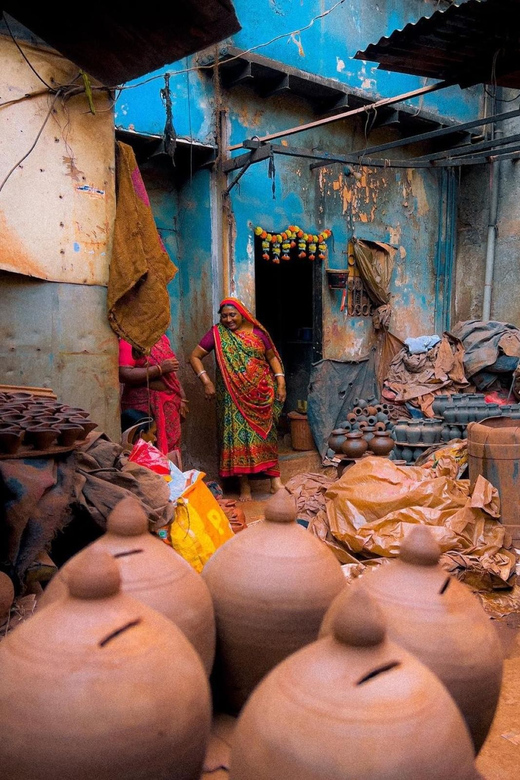
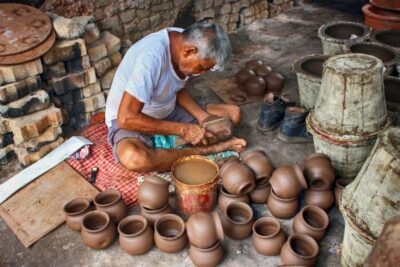
Kumbharwada is on the highlights list as the potter’s community stop. In theory, this is where the tour adds a craft layer: you see how the area’s work culture connects to hands-on making, not just production and logistics.
But here’s the honest consideration: access can change. In at least one case, the pottery visit wasn’t possible because a bridge was down, and the tour ended up running shorter than expected. So if Kumbharwada is your top priority, go in knowing you might not see every stop in every situation.
If that happens, try to treat it like part of being on a real neighborhood schedule. Your guide can still help you understand the area’s work culture, even if one specific craft stop is missed.
The local train ride: a quick culture lesson in your itinerary
After the Dharavi portion, you’ll take a local train for about 30 minutes. This isn’t a “transfer” you ignore; it’s part of the tour experience. Mumbai’s train system is one of the city’s defining rhythms, and using it as part of a local-guided plan helps you feel what daily commuting is like.
You’ll typically ride to Mahalaxmi station, which positions you perfectly for the next highlight. For me, the best value of this train segment is that it reduces the “private car bubble” effect. You see how people move through the city, and you arrive at Dhobi Ghat already oriented.
More visits to the open-air laundry at Mahalaxmi
- Mumbai: Dhobi Ghat Laundry and Dharavi Slum Tour with Local
★ 5.0 · 469 reviews - Mumbai: Dharavi Slum and Dhobi Ghat Laundry Tour
★ 5.0 · 317 reviews - Private Combo Tours Sightseeing + Dharavi Slum + Dhobi Ghat & Dabbawalas
★ 5.0 · 245 reviews - Dharavi, Dhobighat, and Mumbai Dabbawallas
★ 5.0 · 168 reviews - Dabbawala, Dhobi Ghat & Dharavi slum Tour with Local Train Ride
★ 5.0 · 102 reviews - Mumbai: Dharavi Slum Tour with Dhobi Ghat (Open-Air Laundry)
★ 4.8 · 62 reviews
Dhobi Ghat: the open-air laundry system you can actually see
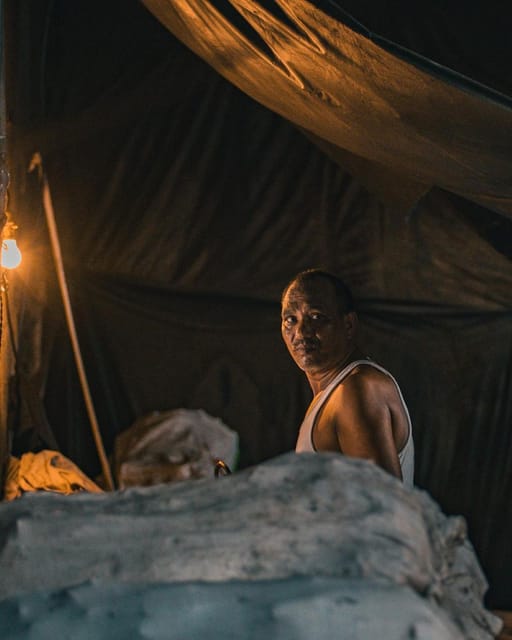
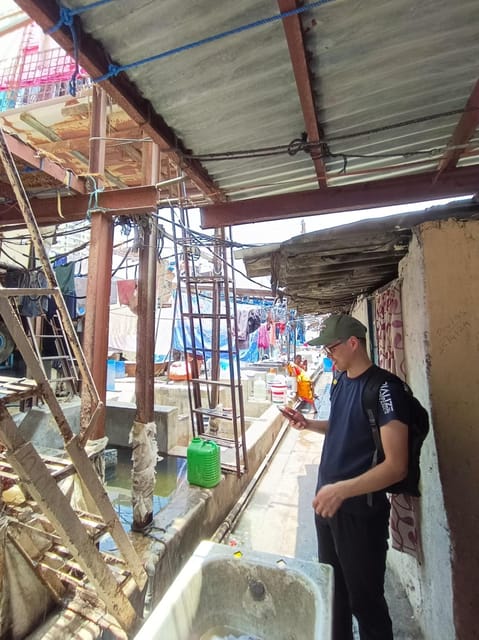
Dhobi Ghat is famous for a reason. You’re stepping into the world’s largest open-air laundry concept, where rows of colorful clothes move through a handwashing workflow that’s visually organized and intense in pace.
You’ll visit after you arrive at Mahalaxmi station, and you should plan for the fact that it’s a sensory place. The scale can feel surprising: many garments, many hands, and a continuous flow that looks like choreography once you watch for a few minutes.
There’s usually a photo stop too, about 15 minutes. That means you can take pictures, but don’t spend the whole time shooting. I suggest using those minutes to figure out how the work moves—where clothes are handled, how the space is organized, and how workers manage the volume.
This is the spot where your “Dharavi work culture” understanding really connects. Both places show how labor turns into daily infrastructure. The difference is the visibility: Dharavi’s production is embedded in neighborhood life, while Dhobi Ghat externalizes it into a public open-air operation.
Photo stop and finish at the Dhobi Ghat viewing deck
The tour finishes at the Dhobi Ghat viewing deck. Think of this as your last “look over everything” moment: you can stand back, get the bigger picture, and connect what you saw up close with the overall setup.
For practical travel reasons, a viewing deck finish is smart. It gives your brain closure before you head out on your own. You’ll also have a quick chance to re-check your photos and notes while the scene is still fresh.
Guide quality makes or breaks this kind of tour
This is one of those experiences where the guide matters a lot. The good ones don’t just point; they explain. Based on what I’d expect from guides like Sajid and Jay, you should plan on hearing clear English narration (and Hindi when needed) and a guided walk that tries to cover each part properly.
You’ll also notice that guides are often friendly and willing to answer questions. One important detail: in some cases the guide is young, even around 18, and still speaks English well. That’s a good sign—communication is a big part of making a sensitive place feel understandable rather than awkward.
Price and value: is $13 actually a deal here?
At around $13 per person for a 3-hour experience, this tour is priced for value, not for luxury. The biggest reason it works: you’re not paying extra for key components.
Included items are meaningful here:
- a packaged water bottle
- train tickets
- entry fees at Dhobi Ghat
So your money goes toward the guide, the walking route, and the transportation that connects the two areas. Since Dhobi Ghat has an entry fee, including it avoids the common problem of “low headline price” that turns into a higher final total once you start adding stops.
What you pay extra for (if anything) is mostly personal—snacks, local spending, and any optional add-ons you decide you want later. Also note: hotel pick-up and drop-off aren’t included, so you’ll handle getting to the meeting point yourself.
Logistics that you should plan for (without turning it into a headache)
You’ll meet at Third-wave Coffee Shop in the Ram Mahal building, opposite Mahim railway station on the west side. That meeting point is close to where the local rail system matters, so it fits the tour style.
The tour is about 3 hours long on paper, but real neighborhoods can shift the schedule. If access changes (like a bridge issue affecting Kumbharwada), the visit order can change and the total time can run shorter. That’s not something you can control, so I recommend building in some flexibility on the rest of your day.
Who should book this Dharavi and Dhobi Ghat experience?
You’ll probably love this tour if you:
- want authentic Mumbai with local voices and real working spaces
- like guided walking plans rather than only jumping between viewpoints
- can handle emotional contrast (work, craft, and also hardship)
- enjoy practical city experiences like using a local train
I’d think twice if you need a “comfortable and quiet” tour style. Dharavi can feel intense, and Dhobi Ghat has its own busy, work-focused energy. If you’re easily overwhelmed by crowd density or strong sensory environments, plan your expectations carefully.
Should you book this tour?
Yes, I’d book it if you’re looking for value and clarity: a low-cost guided plan that links Dharavi and Dhobi Ghat in a way that makes sense. The local-resident leadership is the main reason it feels worthwhile, and guides like Sajid and Jay are exactly the kind of storytellers who can turn a hard-to-imagine place into something you genuinely understand.
Book it with one condition: go in flexible on timing and routes. If Kumbharwada pottery becomes unavailable due to access issues, the tour may shorten. If that kind of change won’t ruin your day, this is a strong pick.
FAQ
How long is the Mumbai Dhobi Ghat and Dharavi tour?
The duration is 3 hours.
What is included in the $13 per person price?
It includes a packaged water bottle, train tickets, and entry fees at Dhobi Ghat.
Where is the meeting point?
You meet at Third-wave Coffee Shop in the Ram Mahal building, opposite Mahim railway station on the west side.
Where does the tour finish?
The tour finishes at the Dhobi Ghat viewing deck.
Are the guides available in English?
Yes. The live tour guide speaks English and Hindi.
Is hotel pick-up or drop-off included?
No, pick up and drop at hotels are not included.
More Mumbai, Every Kind of Day
- Dharavi slum tour in Mumbai by Female tour guides of the slum
★ 5.0 · 1,976 reviews - Mumbai: Full-Day Sightseeing Tour of Mumbai
★ 4.9 · 1,822 reviews - Private Mumbai Sightseeing Tour (Traveller’s Choice Award Winner)
★ 5.0 · 1,565 reviews - Elephanta Caves & Island Guided Private Tour
★ 5.0 · 1,327 reviews
Dhobi Ghat from a Few More Angles
- Mumbai: Dharavi Slum, DhobiGhat, and Dabbawallas Tour
★ 4.9 · 689 reviews - Mumbai: Dhobi Ghat Laundry and Dharavi Slum Tour with Local
★ 5.0 · 469 reviews - Mumbai: Dharavi Slum and Dhobi Ghat Laundry Tour
★ 5.0 · 317 reviews - Private Combo Tours Sightseeing + Dharavi Slum + Dhobi Ghat & Dabbawalas
★ 5.0 · 245 reviews
Dharavi, Told by Its Residents
- Dharavi slum tour in Mumbai by Female tour guides of the slum
★ 5.0 · 1,976 reviews - Mumbai: Dharavi Slum, DhobiGhat, and Dabbawallas Tour
★ 4.9 · 689 reviews - Dharavi Slum Tour
★ 5.0 · 625 reviews - Dharavi Slum tour in Mumbai by local resident
★ 5.0 · 572 reviews
New on the Mumbai shortlist




Dharavi Community Walks, compared.
 ★ 5.0Dharavi slum tour in Mumbai by Female tour guides of the slumFrom $91,976 reviews
 ★ 4.9Dharavi Slum, DhobiGhat, and Dabbawallas TourFrom $14689 reviews
 ★ 5.0Dharavi Slum TourFrom $20625 reviews
 ★ 5.0Dharavi Slum tour in Mumbai by local residentFrom $4572 reviews
 ★ 4.9Dharavi Slum Slumdog Millionaire Tour with a LocalFrom $10529 reviews
 ★ 5.0Mumbai Slum Tour – Visit Dharavi Slum with Local GuideFrom $5509 reviews
 ★ 5.0Dhobi Ghat Laundry and Dharavi Slum Tour with LocalFrom $4469 reviews
 ★ 5.02-Hour Guided Tour of DharaviFrom $22359 reviews
Browse the lists this tour appears in