
Review · DHARAVI COMMUNITY WALKS
Dhobi Ghat (Open Air Laundry) with Dharavi Slum Guided Tour
Laundry tells a city story. This tour pairs Mumbai’s Mahalaxmi Dhobi Ghat—still running since 1890—with a guided Dharavi walk that turns complex life in the area into clear, human-scale details. I love how easy it is to see the work directly, and I love how the guide, Rakesh, keeps things understandable and gives strong photo opportunities.
The one catch is that it’s mostly outdoors and you’ll be moving for hours, so you’ll want good weather and comfy shoes—and there are no included meals. If that sounds like a dealbreaker, this likely won’t be your best fit.
In This Review
- Key Things I’d Make Sure You Notice
- Mahalaxmi Dhobi Ghat: A Working Laundry Built for the Open Air
- Seeing Dhobis Work Up Close (Without Turning It Into a Spectator Show)
- Dharavi on Foot: Small Workshops That Feed Global Demand
- The Recycling Area: Sorting to Plastic Pellets
- Rooftop Tin Hutments: The View That Stays With You
- Community Centre Stop: Why It’s Included
- Pickup, Air-Conditioned Transport, and a Mid-Tour Break
- Price and Value: What You’re Really Paying for at $30
- Who Should Book This Tour (and Who Might Skip It)
- Should You Book Dhobi Ghat and Dharavi?
- FAQ
- What is the duration of the Dhobi Ghat and Dharavi tour?
- Where does the tour start and end?
- Is pickup and drop-off included?
- What’s included in the tour price?
- Are meals included?
- What should I know about the weather?
- Is the tour private?
Key Things I’d Make Sure You Notice
- An 1890s open-air laundry still serving hotels and hospitals
- Photo-friendly moments that come from knowing where to stand and what to watch
- A Dharavi walk focused on small industries, not vague guessing
- Recycling, from sorting to finished plastic pellets
- A rooftop tin-hutments view where you can see how tightly the town stretches
- Guide-led clarity in English, with explanations adjusted to your level
Mahalaxmi Dhobi Ghat: A Working Laundry Built for the Open Air
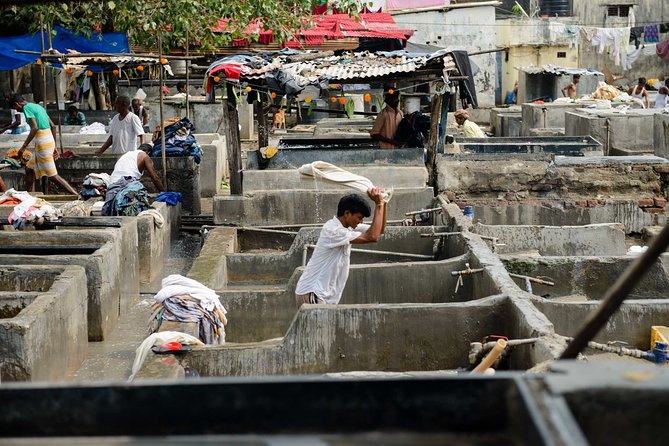
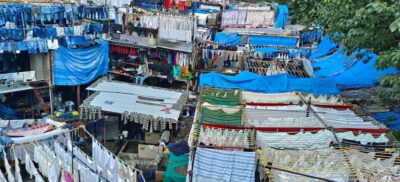
Mahalaxmi Dhobi Ghat is one of the last surviving traditional commercial open-air laundromats in Mumbai. The launders here—called dhobis—work in the open to clean and dry clothes and linens sent from places like hotels and hospitals. The site was constructed in 1890, and that age matters: you’re not looking at a museum idea, you’re seeing an operating system.
Your time here is about one hour, and your admission ticket is included. That hour is short, but it’s long enough to understand the flow: who’s doing what, how laundry moves through the space, and how drying happens in a working rhythm.
Seeing Dhobis Work Up Close (Without Turning It Into a Spectator Show)
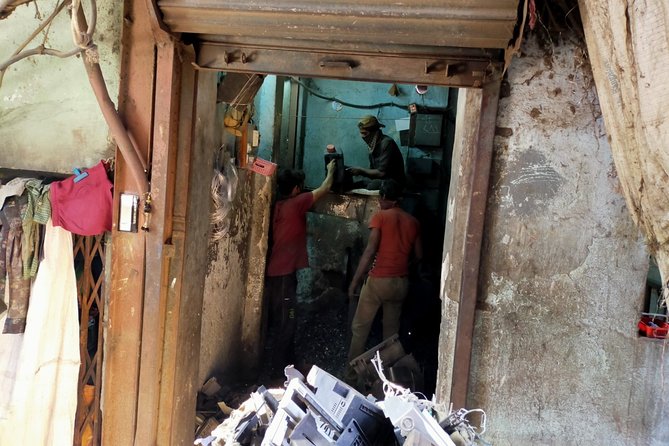
This stop is fascinating because it’s straightforward. There’s washing, there’s drying, and there’s constant coordination. The best part is that you’re not stuck behind barriers; you can actually watch the process that keeps Mumbai’s day-to-day running.
I’d treat this as more than photo time. Watch how dhobis handle clothes and linens as they move through the workload. You’ll likely notice how much of the job relies on routine and speed—less on flashy equipment, more on hands-on craft and repetition.
One thing that helps a lot: you have a local English-speaking guide with you the whole time. In past tours, the guide Rakesh has shown up with clear, practical guidance about where to meet and how to follow the group, which means you spend your time looking at the ghat—not hunting for the next turn.
Tip for your photos: aim for “process” shots, not just faces. If your guide points out where washing and drying overlap, those spots tend to produce the most satisfying images because they show work in motion.
Other Dharavi walks led by people who live there



Dharavi on Foot: Small Workshops That Feed Global Demand
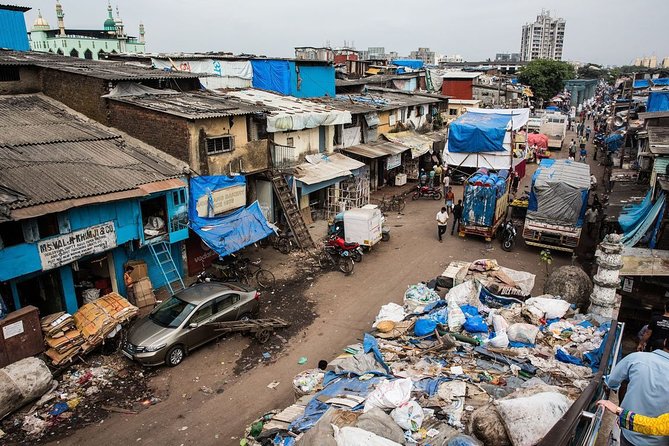
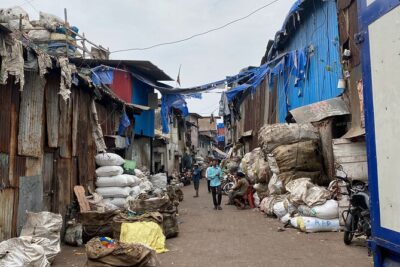
After the laundry stop, the tour shifts into a guided walking exploration of Dharavi, described as one of Asia’s largest slum areas. The focus isn’t on horror-story drama. Instead, it’s on what people build in tight spaces—especially entrepreneurship and small-scale industries.
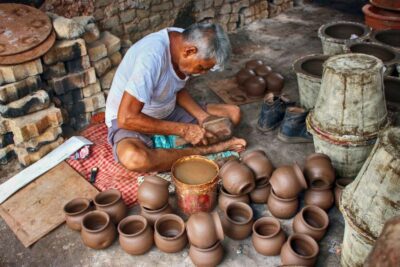
You’ll see both commercial and residential areas. And you’ll cover a lot of production types during the walk, including plastic recycling, export-quality leather goods, pottery, embroidered garments, pottery, soap making, bakery items, and color dye. The tour also references where veg oil gets recycled and highlights small lanes, plus schools and hospitals.
There’s also a cultural layer that makes the walk more than economic statistics. The route includes a place where Muslim community members make a shrine for Hindus, which gives you a clearer picture of how daily life overlaps in real space, not just in headlines.
And yes, this is also the same area where the movie Slumdog Millionaire was shot. That connection can pull you in, but what keeps you there is the lived-in reality you can see with your own eyes as your guide explains how goods move from small processes to finished products.
The Recycling Area: Sorting to Plastic Pellets
One of the standout segments is the recycling area. Your guide shows you the process, starting with sorting and moving through to finished plastic pellets. That’s a big deal because it helps you connect what you see to what you use elsewhere.
The important part isn’t that recycling happens—it’s that the chain is visible. You get to see the steps in a way that’s hard to grasp from afar. The result is that Dharavi starts to make sense as an industrial system, not just a collection of homes and streets.
If you’re the type of traveler who likes to understand how things work, this segment will likely be one of your favorites. It’s direct. You can point, watch, and ask questions through your guide’s explanations.
Rooftop Tin Hutments: The View That Stays With You
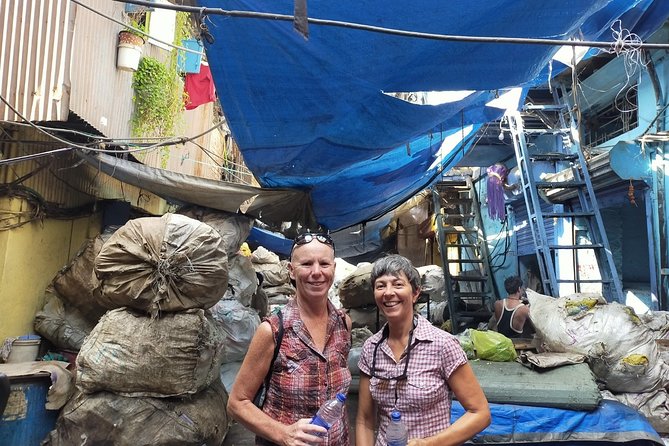
Another highlight is a rooftop visit. The tin-hutment structures stretch outward as far as you can see, and the tour is designed to help you take in that scale. It’s the kind of view that makes you re-think space—how life expands, compresses, and organizes itself when land is limited.
A rooftop stop often means steps or uneven ground on the way up and down, even if the tour doesn’t advertise exact physical details. I’d wear shoes you trust on irregular surfaces. Also, plan for the sun. If the day is bright and your group is walking, shade matters.
This is one of those moments where it’s worth pausing your phone. Take a breath, then take your photo. The view is unforgettable, but your eyes still need a second to register what you’re seeing.
More visits to the open-air laundry at Mahalaxmi
- Mumbai: Dhobi Ghat Laundry and Dharavi Slum Tour with Local
★ 5.0 · 469 reviews - Mumbai: Dharavi Slum and Dhobi Ghat Laundry Tour
★ 5.0 · 317 reviews - Private Combo Tours Sightseeing + Dharavi Slum + Dhobi Ghat & Dabbawalas
★ 5.0 · 245 reviews - Dharavi, Dhobighat, and Mumbai Dabbawallas
★ 5.0 · 168 reviews - Dabbawala, Dhobi Ghat & Dharavi slum Tour with Local Train Ride
★ 5.0 · 102 reviews - Mumbai: Dharavi Slum Tour with Dhobi Ghat (Open-Air Laundry)
★ 4.8 · 62 reviews
Community Centre Stop: Why It’s Included
The itinerary includes a community centre stop as part of the Dharavi portion. That matters because it shifts the narrative slightly. Instead of focusing only on production and streets, you also get a glimpse of the social infrastructure that supports community life.
In practical terms, this gives your brain a place to reset. After watching processes and moving through alleyways, a community stop helps your guide explain how people coordinate beyond making products—how they share services, spaces, and daily routines.
Pickup, Air-Conditioned Transport, and a Mid-Tour Break
The tour is built to be manageable. You get pickup and drop, plus an air-conditioned vehicle for transportation and private transportation throughout. You’ll also get mineral water, and there’s refreshment between the tour so you don’t feel wiped out or dehydrated.
The total duration is about 5 to 6 hours. That’s a strong length for seeing both sides—Dhobi Ghat and Dharavi—without turning it into an all-day marathon.
Start time is 10:00 am, and the meeting point is Third Wave Coffee, Tip Road, Unit no.58, Ground, Ram Mahal, Senapati Bapat Marg, Marinagar Colony, Station, Mahim, Mumbai, Maharashtra 400016, India. The experience ends back at the meeting point, so you don’t have to solve the transit puzzle at the end of a long walk.
Weather matters. This experience requires good weather. If it’s canceled due to poor weather, you’ll be offered a different date or a full refund. That’s not just fine print—it affects the rooftop segment and your overall comfort outdoors.
Price and Value: What You’re Really Paying for at $30
At $30 per person, the value depends on what’s included and how efficiently the day runs. Here, you’re not just paying for a guide. You’re also covering admission tickets for both stops, pickup and drop, and a local English-speaking guide, plus mineral water and transportation costs like toll, tax, and parking fees.
Also, the tour is structured so you’re not bouncing around Mumbai on your own. That “time-saving” piece has real value. Mumbai traffic can be slow, and a planned route makes the day feel less chaotic.
One thing to note: meals are not included. That means you’ll want to eat before you go or plan a post-tour meal. Since you’ll have a refreshment break and water, you’re not going to run completely empty, but you should still treat it like a half-day with walking and plan accordingly.
If you want the best shot at getting your preferred date, book ahead. The experience is commonly reserved about 41 days in advance on average, so popular slots can fill.
Who Should Book This Tour (and Who Might Skip It)
This tour is a great fit if you:
- want to see traditional labor at Mahalaxmi Dhobi Ghat that’s still in active use
- like guided context, not just sightseeing
- enjoy understanding how everyday industries work, especially recycling and small manufacturing
- care about photography, and appreciate that your guide helps you find the good angles
It may be less ideal if you strongly dislike walking or you want a low-movement day. There’s a Dharavi walking segment and a rooftop visit. If you have limited mobility, you might want to ask the operator what the walking and rooftop portions involve before you book.
It’s also a good choice for travelers who want something human and practical. This tour tends to reward curiosity: you’ll leave with clearer ideas about work, materials, and how community spaces function.
Should You Book Dhobi Ghat and Dharavi?
I think you should book it if you want two honest contrasts in one day: open-air washing that’s been operating for more than a century, followed by an on-foot look at how entrepreneurship happens in small spaces—especially recycling, leather, pottery, dye, and soap and bakery production.
The guide quality is a key reason to choose this one. Rakesh has been highlighted for showing up on time, sticking with the group, explaining in a way that matches your English level, and keeping the tone relaxed with humor. Add included transport, admission, water, and refreshments, and the $30 price starts to feel like you’re paying for access plus guidance, not just a “walk-by” experience.
Just go in prepared: wear comfy shoes, bring sun protection if it’s clear, and don’t plan on a full meal during the tour. If you do that, you’ll get a day that’s practical, eye-opening, and easy to recommend.
FAQ
What is the duration of the Dhobi Ghat and Dharavi tour?
It runs about 5 to 6 hours total.
Where does the tour start and end?
It starts at Third Wave Coffee on Tip Road in Mahim, and it ends back at the same meeting point.
Is pickup and drop-off included?
Yes. Pickup & drop are included, along with air-conditioned vehicle transport and private transportation.
What’s included in the tour price?
Included items are a local English-speaking guide, mineral water, pickup & drop, toll tax and parking fees, and admission tickets for the stops.
Are meals included?
No. Any meals are not included.
What should I know about the weather?
This experience requires good weather. If it’s canceled due to poor weather, you’ll be offered a different date or a full refund.
Is the tour private?
Yes. It’s described as a private tour/activity, meaning only your group participates.
More Mumbai, Every Kind of Day
- Dharavi slum tour in Mumbai by Female tour guides of the slum
★ 5.0 · 1,976 reviews - Mumbai: Full-Day Sightseeing Tour of Mumbai
★ 4.9 · 1,822 reviews - Private Mumbai Sightseeing Tour (Traveller’s Choice Award Winner)
★ 5.0 · 1,565 reviews - Elephanta Caves & Island Guided Private Tour
★ 5.0 · 1,327 reviews
Dhobi Ghat from a Few More Angles
- Mumbai: Dharavi Slum, DhobiGhat, and Dabbawallas Tour
★ 4.9 · 689 reviews - Mumbai: Dhobi Ghat Laundry and Dharavi Slum Tour with Local
★ 5.0 · 469 reviews - Mumbai: Dharavi Slum and Dhobi Ghat Laundry Tour
★ 5.0 · 317 reviews - Private Combo Tours Sightseeing + Dharavi Slum + Dhobi Ghat & Dabbawalas
★ 5.0 · 245 reviews
Dharavi, Told by Its Residents
- Dharavi slum tour in Mumbai by Female tour guides of the slum
★ 5.0 · 1,976 reviews - Mumbai: Dharavi Slum, DhobiGhat, and Dabbawallas Tour
★ 4.9 · 689 reviews - Dharavi Slum Tour
★ 5.0 · 625 reviews - Dharavi Slum tour in Mumbai by local resident
★ 5.0 · 572 reviews
New on the Mumbai shortlist




Dharavi Community Walks, compared.
 ★ 5.0Dharavi slum tour in Mumbai by Female tour guides of the slumFrom $91,976 reviews
 ★ 4.9Dharavi Slum, DhobiGhat, and Dabbawallas TourFrom $14689 reviews
 ★ 5.0Dharavi Slum TourFrom $20625 reviews
 ★ 5.0Dharavi Slum tour in Mumbai by local residentFrom $4572 reviews
 ★ 4.9Dharavi Slum Slumdog Millionaire Tour with a LocalFrom $10529 reviews
 ★ 5.0Mumbai Slum Tour – Visit Dharavi Slum with Local GuideFrom $5509 reviews
 ★ 5.0Dhobi Ghat Laundry and Dharavi Slum Tour with LocalFrom $4469 reviews
 ★ 5.02-Hour Guided Tour of DharaviFrom $22359 reviews
Browse the lists this tour appears in