
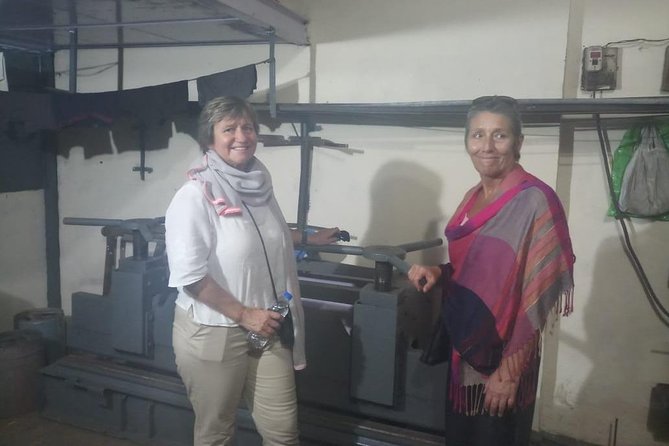
Review · DHARAVI COMMUNITY WALKS
Dharavi Slum Tour with Laundry And Hotel Transfer (South Mumbai)
Laundry and alleys in one half-day. This small-group tour pairs a guided walk through Dharavi’s residential and industrial lanes with a visit to Dhobi Ghat, Asia’s largest open-air laundromat. After your pickup from South Mumbai, you ride in a private vehicle with a local chauffeur-cum-guide who keeps the story clear and practical.
I especially like the easy hotel pickup and drop-off in South Mumbai. And I like that the group is capped at six, so the walk doesn’t turn into a noisy stampede.
One possible drawback: Dhobi Ghat is only about 20 minutes, so if you want long, slow hanging-out time, you may feel slightly rushed.
Key things I’d plan around before you go
- Small group (max 6): enough space to ask questions during the alley walk
- Private vehicle with a local chauffeur-cum-guide: you’re not relying on buses or guessing routes
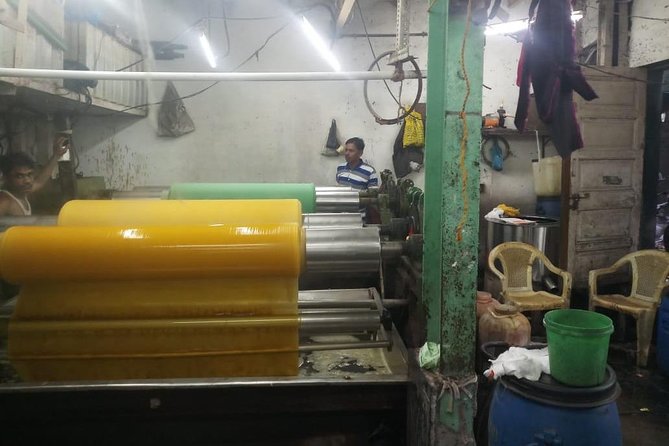
- Dharavi’s both residential and industrial side: you’ll see work alongside home life
- Dhobi Ghat’s major scale: built in the British era and used for large daily laundry runs
- Admissions are included at both stops: you’re paying once and walking into the experience
In This Review
- A South Mumbai Pickup That Keeps the Day Simple
- Dharavi Walks: Homes, Work, and Real Infrastructure Questions
- What to watch for during the alley portion
- Dhobi Ghat: The Open-Air Laundry Stop With Guinness-Scale Numbers
- The main drawback of Dhobi Ghat’s short timing
- Transportation and Group Size: Why It Matters in Mumbai
- Price and Value: What $41.56 Buys You Here
- How to Choose the Morning vs Afternoon Slot
- Who This Tour Suits Best (And Who Might Want Something Else)
- Booking Tips That Make the Day Go Smoother
- Should You Book This Dharavi Slum Tour With Dhobi Ghat?
- FAQ
- How long is the Dharavi Slum Tour and Dhobi Ghat visit?
- What does the tour include?
- Is hotel pickup from South Mumbai included?
- How many people are in the group?
- Is there a choice of morning or afternoon tours?
- What is Dhobi Ghat?
- What happens if the weather is bad?
A South Mumbai Pickup That Keeps the Day Simple
This tour is built for people who want structure without losing the street-level feel. You start with pickup and drop-off from hotels in South Mumbai, which matters in Mumbai. Without that, you’d spend energy negotiating rides and time. Here, your time is protected.
You also get a mobile ticket, which is handy if you’re hopping between sights and don’t want to keep hunting for paperwork. The whole schedule is designed as a half-day plan: you pick either a morning or afternoon slot, then you’re off.
One more detail I like: the operator caps the group at six. That’s the sweet spot where your guide can stop, explain, and answer without the group constantly stretching ahead or falling behind. In a place like Dharavi, that kind of control makes the experience more respectful and more understandable.
The vibe here isn’t about gawking. It’s about getting context fast—what you’re seeing, why it exists, and how people organize life in one of the largest human settlements in the city.
Dharavi Walks: Homes, Work, and Real Infrastructure Questions

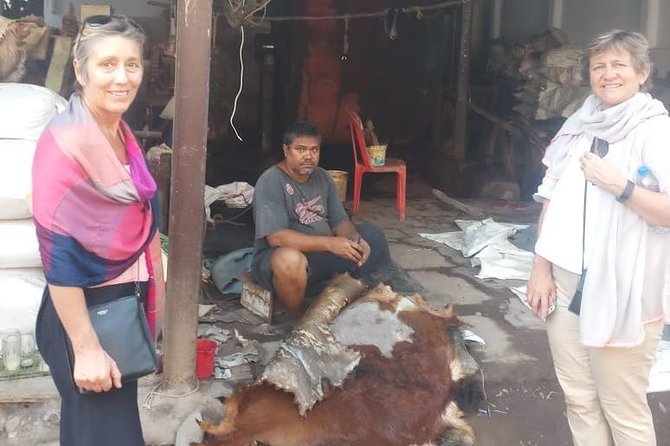
The Dharavi portion is the heart of the tour. You’ll drive from your hotel to the slum area and then follow your driver-guide through small alleys, seeing both residential and commercial/industrial activity. The walk is timed at about two hours, which is enough time to form a first impression without feeling dragged.
What makes this stop valuable is that you don’t just get visuals. You get answers to the big Why/How questions: how people make a living, how neighborhoods function, and how public systems connect to daily life. The tour explicitly includes discussion of government policies aimed at empowering the slum community and it covers the sewage and waste water system you’ll encounter in the area.
That infrastructure topic is important. It’s also emotionally heavy if you’re not prepared. The guide’s job is to frame what you’re seeing in a way that’s factual and grounded. From the guide names mentioned in reviews, Aamir stands out for keeping things friendly and for driving safely, while also being clear about what you’re looking at. In other words: you get context, not just commentary.
A practical note for your comfort: this isn’t a boardwalk style walk. Plan on uneven paths and tight lanes. Wear shoes that handle everyday pavement and dust. If you like taking photos, keep your hands free for your footing and be ready to pause when the group needs to listen.
Also, don’t expect a single “one story” of Dharavi. The tour is set up to show more than one side: it’s part home, part workplace, part place of informal commerce, all layered together. That’s what helps the area feel real rather than like a headline.
What to watch for during the alley portion
You’ll get the most out of the walk if you keep an eye on a few categories the guide is likely addressing:
- Where daily needs show up: not just buildings, but the systems that keep routines moving
- Work areas next to living areas: the proximity between commerce/industry and homes
- Waste and water details: how infrastructure affects everyday movement and health
- Community policies in plain language: what changes, who benefits, and what stays difficult
If you’re the type who likes questions, this is where you’ll get them answered.
Other Dharavi walks led by people who live there




Dhobi Ghat: The Open-Air Laundry Stop With Guinness-Scale Numbers
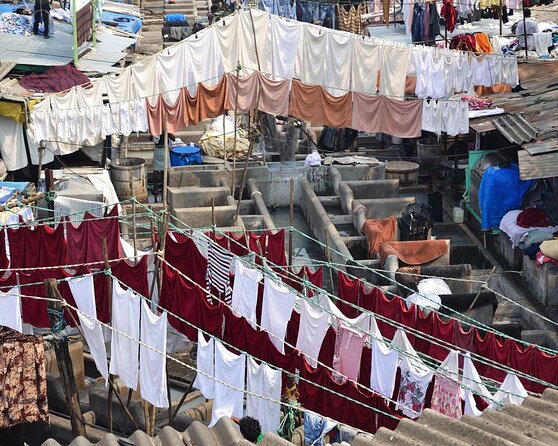
After Dharavi, you head to Dhobi Ghat, described as Asia’s largest open-air laundromat. This stop runs about 20 minutes, and admissions are included here too.
Dhobi Ghat is famous for the way laundry is handled on a massive scale. The tour notes it’s around 150 years old, linked to British-era construction, and it’s referenced in the context of the Guinness record for maximum clothes washed at once. You’re told that roughly 100,000 clothes are washed per day.
Now, here’s how I’d think about this stop so it doesn’t feel like a quick photo stop: treat it as a study in logistics. You’re looking at a production system—people, timing, washing methods, and the sheer volume moving through the day. Even with limited time, the place can give you a strong sense of work rhythms.
Since the stop is short, your best move is to focus on one or two things rather than trying to absorb everything at once. Watch how the process is organized. Notice how water and washing flow through the space. And pay attention to how the activity supports a daily economy in Mumbai.
The main drawback of Dhobi Ghat’s short timing
Because the Dhobi Ghat portion is only about 20 minutes, you don’t get long lingering time. If your ideal experience is slow travel—standing, watching, reading, then watching more—you may want extra time either before or after the tour. But if you want the contrast of Dharavi plus a laundry site in one half-day, this timing makes the plan efficient.
Transportation and Group Size: Why It Matters in Mumbai
This tour uses a private vehicle with a local chauffeur-cum-guide. In Mumbai, that choice affects how you feel during the day. Less time coordinating. Less time lost. More time understanding.
The private vehicle also means your guide can set the tone before you step into the streets. With a group size limited to six, you’re not stuck competing for attention. That matters in a place where people want respect, not interruption.
The tour duration is listed as 3 to 4 hours (approx.), which is realistic for:
- pickup and travel from South Mumbai
- about 2 hours in Dharavi
- a 20-minute Dhobi Ghat stop
- the hand-off between sites
If you’re planning this day alongside other South Mumbai sights, this schedule is manageable. It won’t bulldoze your entire day like a full-day excursion might.
One more logistical detail you’ll appreciate: confirmation is received at booking time, and the tour accepts a small group format. You won’t be piecing together multiple providers or worrying about changing meet points as much.
More visits to the open-air laundry at Mahalaxmi
- Mumbai: Dhobi Ghat Laundry and Dharavi Slum Tour with Local
★ 5.0 · 469 reviews - Mumbai: Dharavi Slum and Dhobi Ghat Laundry Tour
★ 5.0 · 317 reviews - Private Combo Tours Sightseeing + Dharavi Slum + Dhobi Ghat & Dabbawalas
★ 5.0 · 245 reviews - Dharavi, Dhobighat, and Mumbai Dabbawallas
★ 5.0 · 168 reviews - Dabbawala, Dhobi Ghat & Dharavi slum Tour with Local Train Ride
★ 5.0 · 102 reviews - Mumbai: Dharavi Slum Tour with Dhobi Ghat (Open-Air Laundry)
★ 4.8 · 62 reviews
Price and Value: What $41.56 Buys You Here
The price is $41.56 per person, and the tour includes several items that would otherwise add up:
- hotel pickup and drop-off in South Mumbai
- an experienced chauffeur-cum-guide
- all fees and taxes
- admission tickets included for the scheduled stops
It’s not just “someone shows you around.” You’re paying for structure: a private ride, a guide who can explain systems (including sewage/waste water and government policy context), and the time-boxed route between two very different places.
Also, the timing matters. This is booked about 40 days in advance on average, which suggests it’s a popular half-day option. In high-demand cities, popularity often correlates with reliability—especially when the group is small and the guide experience is a key part of the outcome.
So, is it good value? For most people doing Dharavi for the first time, yes—because the admissions and local interpretation are folded in. You’re also avoiding the hassle of trying to organize a safe, sensible route on your own.
If you’re the kind of visitor who gets impatient with unclear explanations, this format is a good match. If you’re hoping for a long sit-down experience at Dhobi Ghat, you may feel the pace is tight—but the rest of the day is solidly guided.
How to Choose the Morning vs Afternoon Slot
The tour offers both morning and afternoon options, so you can fit it around your other Mumbai plans. The big variable is weather. The tour requires good weather, and if conditions aren’t right you’ll be offered a different date or a full refund.
So use this rule of thumb: pick the slot that best matches your day’s forecast and the rest of your itinerary. If you’re also planning walking-heavy sights, a morning option can sometimes help you avoid piling multiple crowded activities back-to-back. If your schedule is more relaxed, afternoon works too. The tour itself keeps the same core structure either way.
Who This Tour Suits Best (And Who Might Want Something Else)
This Dharavi plus Dhobi Ghat plan fits best if you want:
- a half-day format that still covers two major parts of the story
- a guide to explain context like policy and infrastructure
- the small-group feel that keeps questions possible
- hotel pickup and drop-off without dealing with Mumbai routing
It also suits people who prefer practical learning over sightseeing-only. The tour’s emphasis on systems—work, living, and water/waste infrastructure—helps you understand what you’re seeing.
Where it might not fit as well:
- If you want lots of time for photography or a long watch-and-think period at Dhobi Ghat, the 20-minute stop may feel short.
- If you’re sensitive to the realities of dense living conditions, you’ll need a steady mindset going in. A guided approach helps, but the subject matter is real.
Booking Tips That Make the Day Go Smoother
A few practical moves can help you get the most from the experience:
- Plan footwear first. You’re walking in small alleys, and surfaces can vary. Comfortable, closed shoes will save you.
- Come with questions. The tour is set up to answer the big ones (how life works, how systems work). If you don’t ask, you’ll still learn, but questions unlock more meaning.
- Keep your expectations time-based. Two hours in Dharavi is a focused intro. Dhobi Ghat is a quick visit. Neither stop is meant to replace the other.
- Match your choice to the weather. Since the tour needs good weather, don’t put it as the single day’s plan if your schedule is rigid.
And based on the praise in reviews, the guide experience is a major part of why people rate it so highly. The name Aamir comes up with comments about friendliness and clear explanations, plus safe driving. That’s the kind of “how it feels” detail you want in Mumbai.
Should You Book This Dharavi Slum Tour With Dhobi Ghat?
I’d book it if you’re curious about Mumbai beyond the postcard scenes and you want a guided, organized half-day. The value is strong because pickup, admissions, and a capable chauffeur-cum-guide are included, and the pacing is efficient: roughly two hours for Dharavi and 20 minutes for Dhobi Ghat.
I wouldn’t book it if your main goal is extended time watching laundry processes or you dislike tight time windows. Dhobi Ghat is intentionally short here. You’ll get a sense of the scale, not a long uninterrupted visit.
If your goal is first-time understanding—Dharavi’s residential and industrial life, plus Dhobi Ghat’s open-air laundry—this tour is a focused, sensible choice.
FAQ
How long is the Dharavi Slum Tour and Dhobi Ghat visit?
The tour lasts about 3 to 4 hours. The Dharavi stop is about 2 hours, and the Dhobi Ghat stop is about 20 minutes.
What does the tour include?
It includes hotel pickup and drop-off in South Mumbai, an experienced chauffeur-cum-guide, all fees and taxes, and admission tickets for the scheduled stops.
Is hotel pickup from South Mumbai included?
Yes. The tour includes convenient pickup from hotels in South Mumbai and drop-off afterward.
How many people are in the group?
This experience has a maximum of 6 travelers.
Is there a choice of morning or afternoon tours?
Yes. You can choose either a morning or afternoon tour to fit your schedule.
What is Dhobi Ghat?
Dhobi Ghat is described as Asia’s largest open-air laundromat and a laundry area about 150 years old, linked to British-era construction, with Guiness record references for washing at maximum scale.
What happens if the weather is bad?
The experience requires good weather. If it’s canceled due to poor weather, you’ll be offered a different date or a full refund.
More Mumbai, Every Kind of Day
- Dharavi slum tour in Mumbai by Female tour guides of the slum
★ 5.0 · 1,976 reviews - Mumbai: Full-Day Sightseeing Tour of Mumbai
★ 4.9 · 1,822 reviews - Private Mumbai Sightseeing Tour (Traveller’s Choice Award Winner)
★ 5.0 · 1,565 reviews - Elephanta Caves & Island Guided Private Tour
★ 5.0 · 1,327 reviews
Dhobi Ghat from a Few More Angles
- Mumbai: Dharavi Slum, DhobiGhat, and Dabbawallas Tour
★ 4.9 · 689 reviews - Mumbai: Dhobi Ghat Laundry and Dharavi Slum Tour with Local
★ 5.0 · 469 reviews - Mumbai: Dharavi Slum and Dhobi Ghat Laundry Tour
★ 5.0 · 317 reviews - Private Combo Tours Sightseeing + Dharavi Slum + Dhobi Ghat & Dabbawalas
★ 5.0 · 245 reviews
Dharavi, Told by Its Residents
- Dharavi slum tour in Mumbai by Female tour guides of the slum
★ 5.0 · 1,976 reviews - Mumbai: Dharavi Slum, DhobiGhat, and Dabbawallas Tour
★ 4.9 · 689 reviews - Dharavi Slum Tour
★ 5.0 · 625 reviews - Dharavi Slum tour in Mumbai by local resident
★ 5.0 · 572 reviews
New on the Mumbai shortlist




Dharavi Community Walks, compared.
 ★ 5.0Dharavi slum tour in Mumbai by Female tour guides of the slumFrom $91,976 reviews
 ★ 4.9Dharavi Slum, DhobiGhat, and Dabbawallas TourFrom $14689 reviews
 ★ 5.0Dharavi Slum TourFrom $20625 reviews
 ★ 5.0Dharavi Slum tour in Mumbai by local residentFrom $4572 reviews
 ★ 4.9Dharavi Slum Slumdog Millionaire Tour with a LocalFrom $10529 reviews
 ★ 5.0Mumbai Slum Tour – Visit Dharavi Slum with Local GuideFrom $5509 reviews
 ★ 5.0Dhobi Ghat Laundry and Dharavi Slum Tour with LocalFrom $4469 reviews
 ★ 5.02-Hour Guided Tour of DharaviFrom $22359 reviews
Browse the lists this tour appears in