

Review · DHOBI GHAT LAUNDRY VISITS
Dhobi Ghat Guided Tour A walk inside the biggest open air Laundry
A working laundry should never be boring. At Mahalaxmi Dhobi Ghat, you get a guided look at how hundreds of washermen and women keep Mumbai’s clothes clean using mostly hands-on routines. I especially like the chance to watch charcoal ironing and the way a good guide connects what you see to Mumbai’s everyday life. One drawback to keep in mind: the pace and how long you actually walk around can feel short, especially since parts of the process are now machine-assisted.
This tour is built for people who want more than a quick photo stop. You start near Mahalakshmi Railway Station, then you’ll spend time moving through an active open-air workspace where families do their jobs in shift rhythms. The guide’s job is to explain the steps and the meaning behind the place, so you can understand it instead of just passing through.
Expect a small group (up to 15) and an English-speaking guide included in the price. It runs about 1 day 6 hours on the schedule, but plan for variable timing on the ground and bring patience. If you’re hoping for a fully manual, slow-motion reenactment of laundry from another century, you might feel disappointed—some families use machines now.
In This Review
- Key things that make this Dhobi Ghat tour worth your time
- Mahalaxmi Dhobi Ghat: what you’re really walking into
- Price and value: is $12 a fair deal?
- Your starting point near Mahalaxmi Station (and what it means for your day)
- The guided walk: washing troughs, drying routines, and ironing work
- What you’ll learn: culture, labor, and how the yard stays running
- Guide quality you can count on (and how to get more from it)
- What to bring: simple prep for an open-air laundry visit
- Etiquette and comfort: how to not get in the way
- How this tour fits into a Mumbai itinerary
- Should you book this Dhobi Ghat guided tour?
- FAQ
- Where is the meeting point for the Dhobi Ghat guided tour?
- How much does the tour cost?
- How long is the tour?
- Is the guide English-speaking?
- Are food and drinks included?
- How many people are in a group?
Key things that make this Dhobi Ghat tour worth your time
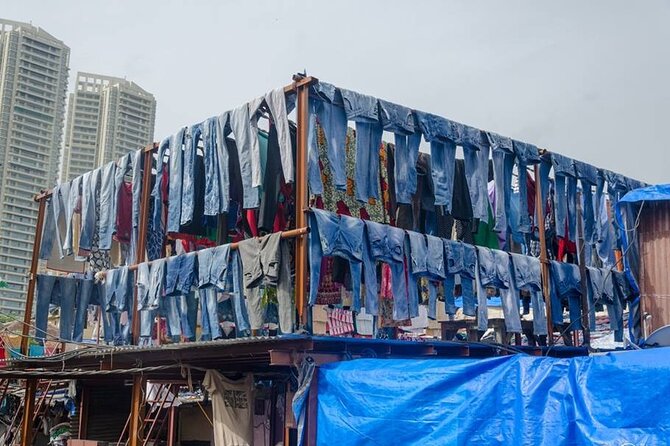
- Open-air, working-laundry experience: you’re not visiting a museum exhibit; people are actively washing and pressing clothes
- Handwashing details you can actually see: clothes get worked in troughs, then hung to dry, then ironed
- Charcoal irons and family teamwork: different family members handle different jobs during the day
- Small-group vibe: a max group size of 15 makes questions easier and the walkthrough calmer
- English-speaking guide included: you’ll get explanations as you go, not just a signboard tour
- Near public transport: starting by Mahalaxmi Station keeps logistics simple
Mahalaxmi Dhobi Ghat: what you’re really walking into
Mahalaxmi Dhobi Ghat is one of those places where you instantly understand why Mumbai feels like a living city. This is a traditional open-air laundry area that’s been operating for over a century, and it’s often described as the world’s largest open-air laundry. People bring dirty clothes from all over the city, and the washing happens as part of a daily workflow, not a staged performance.
What I like about visiting with a guide is that you’re learning the logic behind the steps. You’ll see the physical process—washing troughs, drying areas, and ironing stations—but you’ll also hear how dhobi families split tasks. That “everyone has a job” structure is what makes the place run, especially because so much of the work is still handled by hand.
The open-air layout matters too. Instead of being shut inside, you’re watching work happen in the daylight, with movement and noise you’d expect in a working yard. That realism is the point, but it also means the experience is practical, not polished.
Price and value: is $12 a fair deal?

At $12 per person (with all fees and taxes included), this tour is priced like a value play for Mumbai. What you’re paying for isn’t a fancy venue—it’s access and interpretation inside an active laundry yard, with an English-speaking guide to explain what’s going on.
The “value math” looks good for three reasons:
- A working site is harder to explain than a landmark. Without a guide, you can still watch the washing, but you may miss why certain steps happen when they do.
- Small group size (up to 15) usually keeps the walkthrough manageable.
- No food included means the cost is mostly going toward the guided time, not meals or extras.
One thing to plan around: the scheduled duration is about 1 day 6 hours (approx.), but the experience on the ground can feel much shorter depending on timing and how your group moves. If you want a long, hour-by-hour tour feel, keep expectations flexible and treat it like a morning or afternoon cultural stop you build around.
Also, it’s smart to book ahead. This is often reserved about 18 days in advance on average, so don’t wait until the last minute if your dates are fixed.
More visits to the open-air laundry at Mahalaxmi




Your starting point near Mahalaxmi Station (and what it means for your day)
You meet at Mahalakshmi Railway Station and the tour ends back at the meeting point. That’s a big deal for comfort and time, because Mahalaxmi Station connects you to the city’s public transport network. In practice, it means you don’t need a private transfer just to get started.
You’ll want to time your day so you can handle the neighborhood vibe. A laundry yard brings smells, heat, and constant activity. You’re going to be outside around work in progress, so treat it like a real-world visit, not a sit-down attraction.
The fact that this ends near where it begins also helps with planning. You won’t be stuck coordinating a new pickup point afterward. You can slot it between other Mumbai activities while staying in the same general area.
The guided walk: washing troughs, drying routines, and ironing work
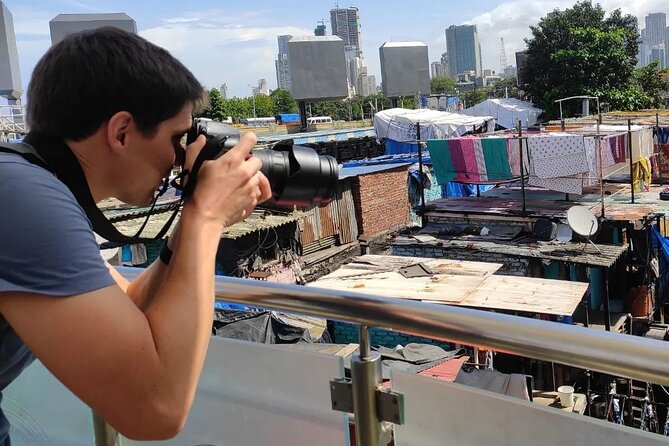
Here’s what you should expect to see as the guide leads you through the workflow at Mahalaxmi Dhobi Ghat.
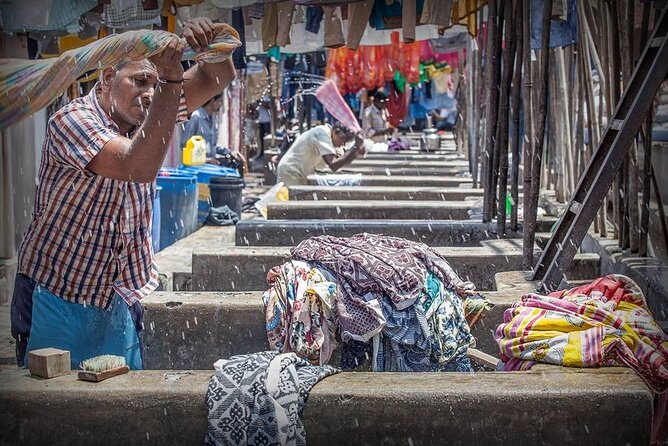
First, you’ll get oriented to the washing stage. Clothes are worked in troughs where the cleaning happens. You may also see that not everything is purely manual anymore—some dhobi families use machines as part of their routine. Still, the heart of the work is visible: people physically handle the clothes and keep the process moving.
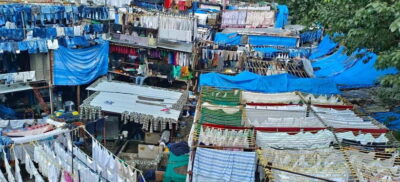
Next comes drying. After washing, garments are hung out to dry. This section often shows you the scale quickly. When lines of clothing stretch through an open-air space, you stop thinking of laundry as a one-person task and start seeing it as a city service.
Then you’ll reach the ironing stage. One of the most memorable parts is the charcoal irons, which are bulky and very physical to operate. Watching someone press fabric with a heavy iron is different from seeing a modern machine cycle. It gives you a clear sense of labor intensity and how skilled the workers are, even if it looks straightforward from a distance.
Finally, a guide helps connect the dots. The process isn’t random—it’s organized in a shift rhythm with different people managing different tasks. That’s where the tour earns its “guided” label. You’re not just seeing laundry; you’re learning how the yard functions as an operation.
What you’ll learn: culture, labor, and how the yard stays running

A good English-speaking guide is the difference between watching water and understanding work. You’ll learn the history and significance of the Dhobi Ghat—why Mahalaxmi’s laundry area matters in Mumbai’s daily life and why this kind of labor has shaped the city.
The key idea is that dhobi work isn’t only about cleanliness. It’s a social and economic system. People bring in clothes from across Mumbai, and then workers turn around clean, crisp laundry through their day’s shifts. The ghat becomes a link between homes, families, and a service network.
You’ll also pick up how family structures support the work. Different family members take care of specific stages: one person flogs or works the clothes in the washing trough, others handle hanging and drying, and someone else irons the clothes using the bulky charcoal setup. Even if you don’t catch every detail, the overall pattern becomes clear when you’re standing there watching.
One practical note: because parts of the process may be machine-assisted, you might not experience a fully old-school method at every moment. That doesn’t remove value, but it does change what kind of experience you’re likely to have. If you’re expecting a slow, fully manual journey through laundry history, you may feel that it’s moved on.
More of Mumbai at walking pace
- Group Guided Walking Tour in Fort and Colaba
★ 5.0 · 1,073 reviews - Private Guided Walking Tour in Fort & Colaba
★ 5.0 · 895 reviews - Private Guided Walking Tour in Bandra Queen of Suburbs
★ 5.0 · 383 reviews - Private Guided Spiritual Walk in Banganga Hindu Temples
★ 5.0 · 271 reviews - Mumbai: Dharavi Slum Walking Tour by First Female Tour Guide
★ 4.9 · 192 reviews - Private Guided Non-Veg Street Food Walking Tour in Muslim Quarter
★ 5.0 · 140 reviews
Guide quality you can count on (and how to get more from it)

The strongest praise for this tour centers on the guide. A friendly guide who knows what they’re doing makes the whole experience feel comfortable and unhurried. One guide name that shows up is Rakesh—he’s described as friendly and open from the start, and he explains clearly while answering questions.
Even if you don’t know your guide in advance, you can use this tip: ask questions as you go. The best moments usually come when you ask what a step is for, how the workflow is timed, or why certain areas look the way they do. Since the tour keeps you moving through an active yard, your questions help the guide tailor explanations to what you’re currently seeing.
Another pattern to look for: a guide who doesn’t rush you. If the walkthrough feels paced and calm, you’ll notice more—how clothes move through stages, how workers coordinate, and how space is used.
Just be aware of a potential timing mismatch. The tour schedule lists about 1 day 6 hours (approx.), but the actual walking-around time can feel short for some groups depending on how your tour day is managed. If you want a longer experience, you can still get your money’s worth by asking for more context and taking your time during the key stations.
What to bring: simple prep for an open-air laundry visit
Because this is an outdoor, working environment, your comfort matters more than usual. Here’s what I’d plan for:
- Water: the tour doesn’t include food or drinks, and you may spend time outside while things run
- Light layers: Mumbai can feel hot and humid, and laundry yards are open-air by nature
- Closed-toe shoes: you’ll be standing and walking on uneven surfaces common in service areas
- A camera with patience: if you’re photographing, you’ll want to pause and frame carefully rather than rushing
Also, consider smell and noise as part of the reality. Laundry work can have strong odors and a constant hum of activity. If you’re sensitive to that, it’s smart to think of this as an “up close and personal” cultural stop, not a soft sightseeing stroll.
Etiquette and comfort: how to not get in the way
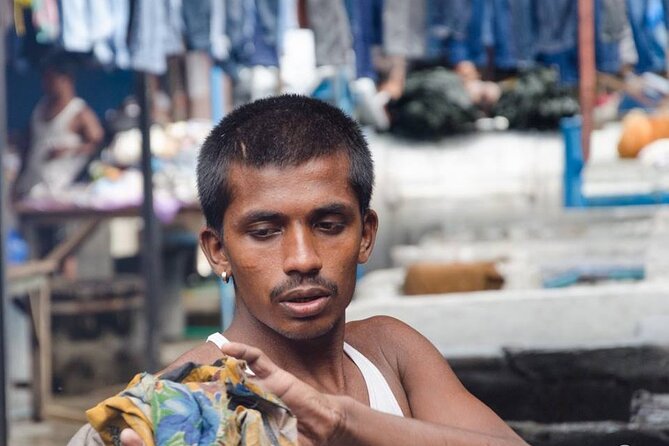
You’re visiting a place where people work. That means you should act like you’re entering someone’s workplace, not just taking in a scene.
Keep a little space. Don’t block walkways where workers move. If you’re taking photos, do it in a way that doesn’t interrupt hanging, folding, or ironing work. If the guide asks you to wait or move, follow that lead—your best access usually comes when you cooperate.
One more practical idea: listen more than you talk. Since the guide’s job is to explain the steps and significance, you’ll get more value when you let the guide guide. Then use the questions to zoom in on what you didn’t understand.
How this tour fits into a Mumbai itinerary
This is a great choice if you want a side of Mumbai that feels real rather than staged. It pairs well with other cultural stops in the city because it’s near Mahalakshmi Station, which makes it easy to slot into a transport-friendly route.
It’s also a smart way to balance your day. Big sights can be overwhelming. A laundry yard sounds small compared to monuments, but it gives you a different kind of perspective—how the city keeps functioning at ground level.
Who should consider it most:
- You like street-level experiences and learning about labor and daily systems
- You want a guided explanation in English rather than wandering without context
- You prefer smaller groups (max 15) and a more conversational pace
Who might skip it:
- You want a long, multi-stop tour with lots of downtime
- You’re expecting a fully manual, antique-style demonstration from start to finish
- You’re not comfortable with an active workplace environment
Should you book this Dhobi Ghat guided tour?
I’d book it if you want an authentic look at how Mumbai’s laundry world operates, with a guide who helps you understand the process instead of just pointing at things. At $12, the included English-speaking guidance is a strong value, especially with the small group limit.
Skip or adjust expectations if you’re expecting a lengthy, slow, hands-on deep immersion. The schedule lists a long day, but the on-the-ground walk may feel brief, and some parts may be more machine-assisted than you imagined.
If your goal is to see the big open-air laundry in action—washing troughs, drying lines, and those charcoal irons—this tour is exactly the kind of practical cultural stop that makes a Mumbai visit feel grounded.
FAQ
Where is the meeting point for the Dhobi Ghat guided tour?
The tour starts at Mahalakshmi Railway Station in Mumbai, and it ends back at the same meeting point.
How much does the tour cost?
The price is $12.00 per person.
How long is the tour?
The duration is listed as 1 day 6 hours (approx.).
Is the guide English-speaking?
Yes. The tour includes an English-speaking guide.
Are food and drinks included?
No. Food and drinks are not included.
How many people are in a group?
This tour has a maximum group size of 15 travelers. Confirmation is received at time of booking.
Mumbai on Foot, Continued
- Group Guided Walking Tour in Fort and Colaba
★ 5.0 · 1,073 reviews - Private Guided Walking Tour in Fort & Colaba
★ 5.0 · 895 reviews - Private Guided Walking Tour in Bandra Queen of Suburbs
★ 5.0 · 383 reviews - Private Guided Spiritual Walk in Banganga Hindu Temples
★ 5.0 · 271 reviews
More Mumbai, Every Kind of Day
- Dharavi slum tour in Mumbai by Female tour guides of the slum
★ 5.0 · 1,976 reviews - Mumbai: Full-Day Sightseeing Tour of Mumbai
★ 4.9 · 1,822 reviews - Private Mumbai Sightseeing Tour (Traveller’s Choice Award Winner)
★ 5.0 · 1,565 reviews - Elephanta Caves & Island Guided Private Tour
★ 5.0 · 1,327 reviews
Dhobi Ghat from a Few More Angles
- Mumbai: Dharavi Slum, DhobiGhat, and Dabbawallas Tour
★ 4.9 · 689 reviews - Mumbai: Dhobi Ghat Laundry and Dharavi Slum Tour with Local
★ 5.0 · 469 reviews - Mumbai: Dharavi Slum and Dhobi Ghat Laundry Tour
★ 5.0 · 317 reviews - Private Combo Tours Sightseeing + Dharavi Slum + Dhobi Ghat & Dabbawalas
★ 5.0 · 245 reviews
New on the Mumbai shortlist



Dhobi Ghat Laundry Visits, compared.
 ★ 4.9Dharavi Slum, DhobiGhat, and Dabbawallas TourFrom $14689 reviews
 ★ 5.0Dhobi Ghat Laundry and Dharavi Slum Tour with LocalFrom $4469 reviews
 ★ 5.0Dharavi Slum and Dhobi Ghat Laundry TourFrom $5317 reviews
 ★ 5.0Private Combo Tours Sightseeing + Dharavi Slum + Dhobi Ghat & DabbawalasFrom $79245 reviews
 ★ 5.0Dharavi, Dhobighat, and Mumbai DabbawallasFrom $20168 reviews
 ★ 5.0Dabbawala, Dhobi Ghat & Dharavi slum Tour with Local Train RideFrom $35102 reviews
 ★ 4.8Dharavi Slum Tour with Dhobi Ghat (Open-Air Laundry)From $462 reviews
 ★ 5.0Mumbai Dharavi Slum, Dhobi Ghat & Dabbawala Lunchbox TourFrom $1843 reviews
Browse the lists this tour appears in