
Review · DHARAVI COMMUNITY WALKS
Small Group Tour of Dharavi Slum
A city within a city starts here in Dharavi. You get a street-level look at daily life and local work, with a local guide leading the way through areas most people won’t find on their own. It’s also tied to what you’ve seen in pop culture, without turning it into a theme-park.
Two things I genuinely like: free mineral water is provided, and the tour is structured around real neighborhoods plus working spaces. You’re paying about $15 for a short, guided walk (about 2 hours 15 minutes) that includes transport from Churchgate by train when the pickup route applies.
One thing to consider: the route goes through tight, busy lanes and small work areas, so it’s not the best fit if you dislike close quarters. Plan for practical movement and for how you’ll get to your next stop afterward, since the day’s logistics matter in Mumbai.
In This Review
- Key Points Worth Noting Before You Go
- Dharavi and Kumbharwada: What This 2-Hour Walk Really Shows
- Price and What’s Included in Your $15 Ticket
- Stop 1: Dharavi District, 2.1 Square Kilometres of Work
- Stop 2: Kumbharwada Pottery Area in About 15 Minutes
- Churchgate Transport, Mobile Ticket, and How You’ll Get Back
- Picking the Right Guide Moment: Names You Might Meet
- How the Tour Feels on the Ground (and What to Expect)
- What to Bring and How to Prepare in Mumbai Heat
- Who This Dharavi Slum Tour Is Best For
- Should You Book This Dharavi Slum Tour?
- FAQ
- How long is the Small Group Tour of Dharavi Slum?
- What is included in the $15 per person price?
- Is transportation from Churchgate included?
- Where is the meeting point and where does the tour end?
- What will I see during the tour?
- Is food included?
- What is the cancellation policy for a full refund?
Key Points Worth Noting Before You Go
- Local guides who explain day-to-day life from inside Dharavi, not from a textbook.
- Mineral water included, a small detail that makes the walk more comfortable.
- Churchgate train transfer can be included, which helps you start the tour without stressing over Mumbai transit.
- Kumbharwada pottery area is a focused 15-minute stop, giving you a craft angle alongside everyday life.
- Small-group feel with a maximum of 1 participant, so questions don’t get rushed.
- Factory-style work and local industries show up in the route, not just housing.
Dharavi and Kumbharwada: What This 2-Hour Walk Really Shows
This tour is designed to shift your perspective from slum as a headline to slum as a functioning place where people live, work, and solve problems daily. You’re not just looking at buildings. You’re watching how routines and labor shape the neighborhood.
The best part is the way the guide helps you connect dots. Dharavi is often described as a massive informal settlement, but on the ground you see patterns: homes close to production, community spaces, and the constant motion of small-scale work. Then you add Kumbharwada, the pottery area, and the contrast helps you understand how different trades share the same city fabric.
If you want a Mumbai experience that feels direct and grounded, this is one of the more effective ways to do it in a short time window.
Price and What’s Included in Your $15 Ticket
At $15 per person, this tour is priced like a no-fuss city experience: you’re paying for a guide, entry where needed, and getting you into the right areas without doing the heavy planning yourself. In practical terms, it’s the cost of one decent meal in Mumbai, but for a guided chunk of your day.
What’s included:
- Mineral water bottles
- Local guide
- Transportation from Churchgate is included if you’re picked up from Churchgate (train transportation)
- Mobile ticket
- Admission tickets are listed as free for the stops
What’s not included:
- Taxi/Uber charges
- Food and cold drinks
That mix makes sense for a 2-hour-and-change walk. You’re not paying for a full day’s meal plan. You’re paying for access and interpretation—exactly where a good guide earns their fee.
Other Dharavi walks led by people who live there



Stop 1: Dharavi District, 2.1 Square Kilometres of Work
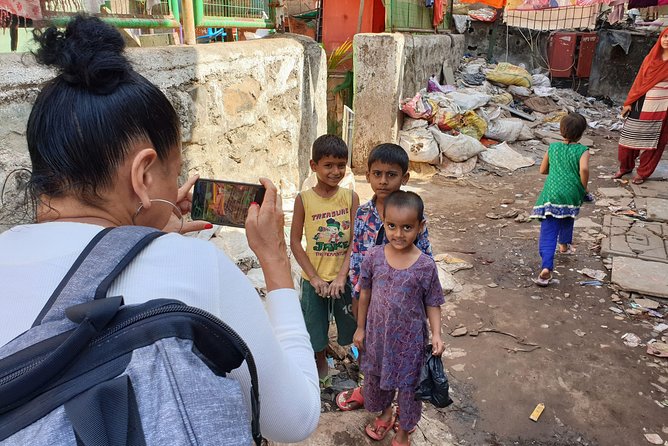
You’ll spend most of your time at Dharavi, which is described as one of the world’s largest slum localities. The numbers given are huge and useful for context: about 2.1 square kilometres and around 700,000 people, with density stated as 277,136 people per square kilometre. Those statistics aren’t just trivia. They explain why space feels tight and why daily life runs at high speed.
In this part of the tour, the highlights lean into how the neighborhood functions:
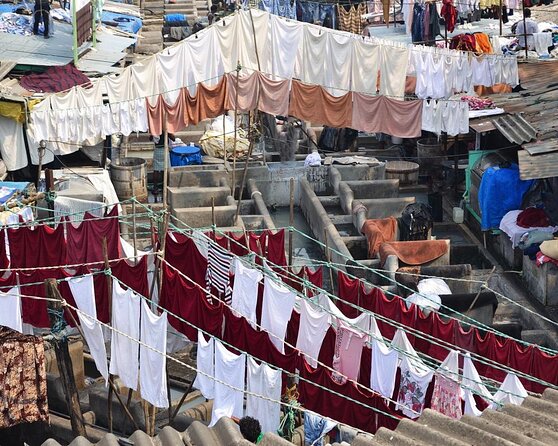
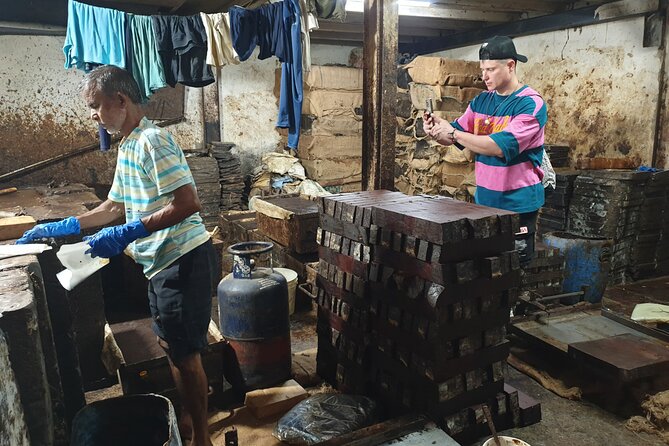
- Factory areas producing goods, including items like suitcases
- Work spaces connected to religious objects, such as Hindu shrines
- A residential area component
- Time around a school
Here’s why that matters for you: you’re not only seeing where people sleep. You’re seeing how survival and income link to production and community institutions. The guide’s explanations—often anchored in firsthand experience—help you understand how everyday systems keep going even under pressure.
The tour also tends to focus on lanes and corners that aren’t obvious from the main road. One review specifically praised the ability to reach many gully lanes that are otherwise hard to access. That’s the whole point of coming with a local guide instead of wandering solo.
Stop 2: Kumbharwada Pottery Area in About 15 Minutes
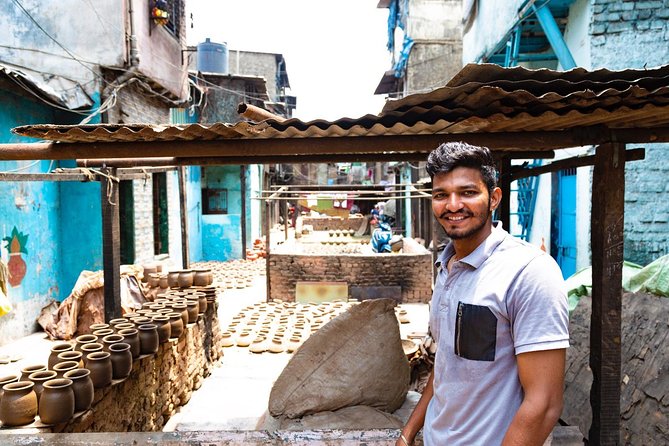
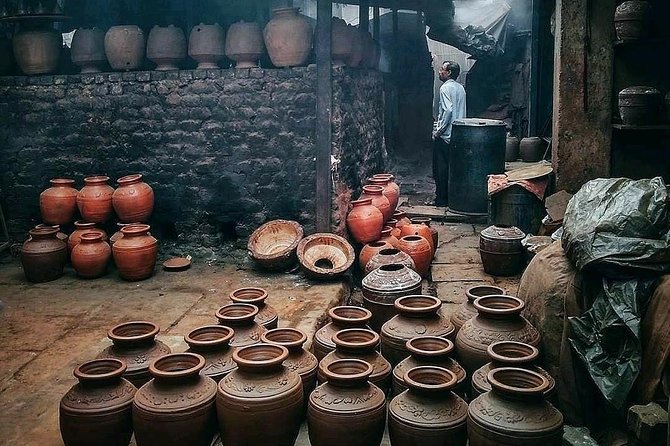
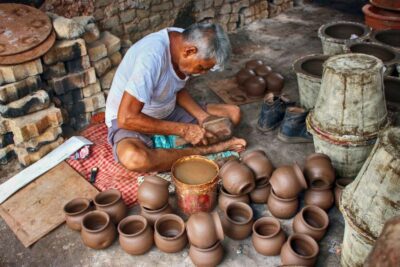
After Dharavi, you’ll shift to Kumbharwada, the pottery area, with a stop duration listed around 15 minutes. Even though it’s short, it’s a smart counterbalance. Dharavi can feel like a blur of construction, commerce, and crowded housing—then pottery gives you a craft rhythm you can actually picture in your head.
You’ll likely be watching how hands-on work fits into the neighborhood’s everyday flow. Because the time is limited, don’t treat this stop like a museum visit. Treat it like a quick glimpse of process and place: the human scale of production next to everything else.
If you’re the type of person who likes one clear takeaway, Kumbharwada is the cleanest one in the itinerary. It gives you an image you can remember once you’re back on the bus or train.
Churchgate Transport, Mobile Ticket, and How You’ll Get Back
Mumbai logistics can turn a good plan into a headache, so I’m glad this tour includes a practical piece: transport from Churchgate when pickup is from Churchgate, using train transportation. That removes one of the biggest sources of stress—figuring out which line and where to meet before you’re even inside the experience.
You also get a mobile ticket, and you should receive confirmation at booking time. That matters because it reduces the chance of last-minute scramble for paper tickets or unclear details.
One more practical note: the meeting point and end point are shown as the Young Tours & Travel office on 90 Feet Rd, Muslim Nagar, Kumbhar Wada, Dharavi. But the additional guidance explains that the route and your next movement can be a bit tricky, and it recommends taking a cab to your next destination. If you need the nearest railway station, the guide will accompany you back to it.
In plain terms: give yourself buffer time after the tour. Mumbai moves fast, and you’ll want to avoid feeling rushed.
- Dharavi slum tour in Mumbai by Female tour guides of the slum
★ 5.0 · 1,976 reviews - Mumbai: Full-Day Sightseeing Tour of Mumbai
★ 4.9 · 1,822 reviews - Private Mumbai Sightseeing Tour (Traveller’s Choice Award Winner)
★ 5.0 · 1,565 reviews - Group Guided Walking Tour in Fort and Colaba
★ 5.0 · 1,073 reviews - Highlights of Mumbai Sightseeing Tour: TRAVELLERS CHOICE AWARDED
★ 5.0 · 915 reviews - Private Guided Walking Tour in Fort & Colaba
★ 5.0 · 895 reviews
Picking the Right Guide Moment: Names You Might Meet
This tour’s quality is heavily tied to the person holding the route. The standout detail in the feedback is that many guides are local to Dharavi and use lived experience to explain what you’re seeing.
You might be guided by:
- Sneha, praised for strong organization and clear explanations of daily life
- Rahul, noted for detailed commentary while showing the slum and its sights
- Divya, described as making the experience unforgettable and reframing the city beyond negative stereotypes
- Pooja, singled out for perspective-shifting insights, including facts about the local economy and how work connects to larger systems
Even when a guide changes, the pattern tends to stay the same: they answer questions in real time and connect the physical places to how people earn, learn, and live.
If you’re the kind of person who loves asking questions—about work, education, community rules, or what daily schedules look like—this format gives you the best chance to get real answers instead of surface-level chat.
How the Tour Feels on the Ground (and What to Expect)
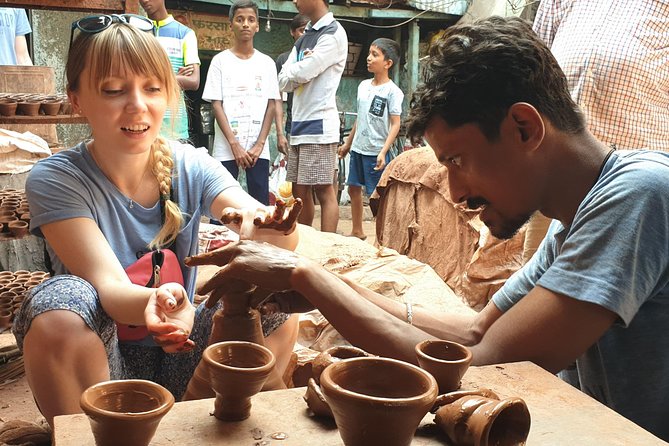
This isn’t a slow photo stroll. It’s a guided walking experience where you’ll move through areas that include homes, production, and public life elements like a school stop. Expect sensory intensity: close space, visible work, and constant human activity.
Because of that, the tour works best when you show up with a calm mindset:
- Be ready to listen more than you talk.
- Keep your expectations grounded in what a short walk can show.
- Ask questions when it fits, but don’t expect long lectures at every corner.
The reviews repeatedly highlight how the guides are open to questions and how the route can include places that feel hard to reach on your own. That combination—access plus explanation—is exactly why a small-group approach helps. You’re not competing for attention.
Also, the tour states a maximum of 1 traveler. That’s rare and useful. It makes it easier for the guide to adjust the pace and focus on what you care about, whether that’s work, daily routine, or the craft side at Kumbharwada.
What to Bring and How to Prepare in Mumbai Heat
Since this is a walk with real streets and real crowds, you’ll get more out of it if you dress for movement. Wear shoes you trust on uneven ground. Bring a light layer if you get sun-burnt easily, and consider a cap.
Because mineral water bottles are included, you don’t need to buy a water bottle just to survive. Still, if you’re the type who gets thirsty quickly, keep your own rhythm in mind and take sips when the guide pauses.
A useful tip: plan your next stop before you start the tour. The guidance suggests taking a cab afterward if you’re headed somewhere far, and the guide can help if you want to reach a nearby railway station.
Who This Dharavi Slum Tour Is Best For
I’d recommend this tour if you want:
- A guided, short-format experience (about 2 hours 15 minutes) that doesn’t require a full day commitment.
- Insight into how daily life and work coexist in one neighborhood.
- A local guide you can ask questions to, including guides like Sneha, Rahul, Divya, and Pooja who were praised for clarity and perspective.
It’s also a good match for people who value access. One review specifically pointed out the ability to visit many gully lanes otherwise not accessible, and that’s a big part of why this tour is worth paying for.
Where it might not fit as well:
- If you hate crowded walking conditions or uncomfortable closeness, this experience could feel too intense.
- If you want a long, slow sightseeing day with lots of landmarks and open-space views, this format is more about interpretation than sightseeing.
Should You Book This Dharavi Slum Tour?
Yes, I think you should book it if your goal is to understand Dharavi as a working community, not as a one-note story. The value is strong for the time: you get a local guide, mineral water, free entry, and Churchgate train transport when applicable, all wrapped into a short walk with Kumbharwada.
If you can handle tight lanes and you’re ready to treat the day like a conversation with the city—rather than a checklist—you’ll get a lot from it.
If your comfort zone is wide-open spaces and quiet environments, consider whether a different Mumbai neighborhood tour might suit you better. But for most people looking for real, street-level context, this one is a solid pick.
FAQ
How long is the Small Group Tour of Dharavi Slum?
The tour lasts about 2 hours 15 minutes.
What is included in the $15 per person price?
The tour includes mineral water bottles, a local guide, a mobile ticket, and the stated admission tickets are free for the stops. Transportation from Churchgate is included if you’re picked up from Churchgate by train.
Is transportation from Churchgate included?
Yes. If you are picked up from Churchgate, train transportation is included.
Where is the meeting point and where does the tour end?
The meeting point is listed at Young Tours & Travel, 90 Feet Rd, Muslim Nagar, Kumbhar Wada, Dharavi, Mumbai, Maharashtra 400017, India. The tour finish is listed at the same office location.
What will I see during the tour?
You’ll visit Dharavi and then Kumbharwada, the pottery area. Dharavi includes time around daily life and work spaces, and the highlights mention factories producing items such as suitcases and Hindu shrines, plus a residential area and a school.
Is food included?
No. Food and cold drinks are not included.
What is the cancellation policy for a full refund?
You can cancel up to 24 hours in advance for a full refund. If you cancel less than 24 hours before the start time, the amount paid is not refunded.
More Mumbai, Every Kind of Day
- Dharavi slum tour in Mumbai by Female tour guides of the slum
★ 5.0 · 1,976 reviews - Mumbai: Full-Day Sightseeing Tour of Mumbai
★ 4.9 · 1,822 reviews - Private Mumbai Sightseeing Tour (Traveller’s Choice Award Winner)
★ 5.0 · 1,565 reviews - Elephanta Caves & Island Guided Private Tour
★ 5.0 · 1,327 reviews
Dharavi, Told by Its Residents
- Dharavi slum tour in Mumbai by Female tour guides of the slum
★ 5.0 · 1,976 reviews - Mumbai: Dharavi Slum, DhobiGhat, and Dabbawallas Tour
★ 4.9 · 689 reviews - Dharavi Slum Tour
★ 5.0 · 625 reviews - Dharavi Slum tour in Mumbai by local resident
★ 5.0 · 572 reviews
New on the Mumbai shortlist



Dharavi Community Walks, compared.
 ★ 5.0Dharavi slum tour in Mumbai by Female tour guides of the slumFrom $91,976 reviews
 ★ 4.9Dharavi Slum, DhobiGhat, and Dabbawallas TourFrom $14689 reviews
 ★ 5.0Dharavi Slum TourFrom $20625 reviews
 ★ 5.0Dharavi Slum tour in Mumbai by local residentFrom $4572 reviews
 ★ 4.9Dharavi Slum Slumdog Millionaire Tour with a LocalFrom $10529 reviews
 ★ 5.0Mumbai Slum Tour – Visit Dharavi Slum with Local GuideFrom $5509 reviews
 ★ 5.0Dhobi Ghat Laundry and Dharavi Slum Tour with LocalFrom $4469 reviews
 ★ 5.02-Hour Guided Tour of DharaviFrom $22359 reviews
Browse the lists this tour appears in