
Review · DHARAVI COMMUNITY WALKS
Mumbai Slum Tour –An insight of Dharavi Slum with Local Guide
Forget the headlines; walk Dharavi for real. This 2-hour guided walking tour is built around daily work and local stories, led by an English-speaking resident guide who helps you see how industries function up close and how life carries on beyond stereotypes. I like that the experience is described as responsible and safe, with a small-group feel that keeps things human instead of clicky.
I’d put my second big win on the list for the practical details: you get bottled water, and you’re not left to figure anything out alone since the tour ends at a Dharavi office where the guide helps you catch your way back. One consideration: this is a walking tour through tight, active lanes, so plan for a bit of a fast, close-up pace rather than a slow stroll.
In This Review
- Key things that make this Dharavi tour worth your time
- A Dharavi walking tour that’s built for street-level understanding
- From Third Wave Coffee to Kumbhar Wada: how the route actually works
- Inside Dharavi’s plastic recycling units: seeing reuse as a business
- Textile workshops where clothes get stitched, dyed, and printed
- Bakery units and the local snack rhythm
- Narrow lanes, temples, and mosques: community life in the same space
- Leather tanneries and export-quality production you can actually understand
- Local markets and daily essentials you can picture at home
- Community schools and welfare: education as part of the picture
- Price and logistics: is $10.04 really good value?
- Who this Dharavi tour is best for
- Should you book the Dharavi insight walking tour?
- FAQ
- How long is the Dharavi walking tour?
- What is the price per person?
- Is pickup available?
- Is there an English-speaking guide?
- What’s included in the tour price?
- Is food included?
- Where does the tour start and end?
- How big are the groups?
- What is the cancellation policy?
Key things that make this Dharavi tour worth your time
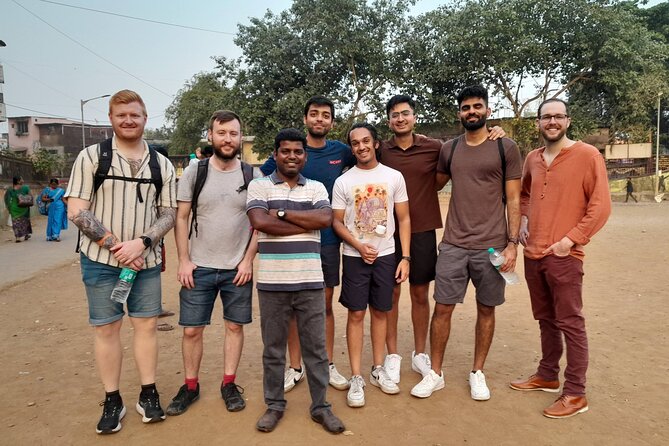
- Local resident guidance that focuses on real routines, not just photo stops
- Working industries in view, from plastic recycling to textile workshops
- Khari and snack baking where you can understand what drives the day-to-day
- Community life in the same lanes as homes, temples, and mosques
- Leather production and export-quality work shown as part of the local economy
A Dharavi walking tour that’s built for street-level understanding
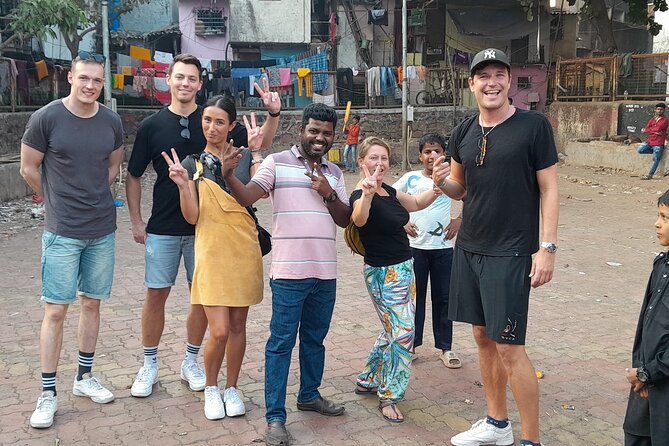
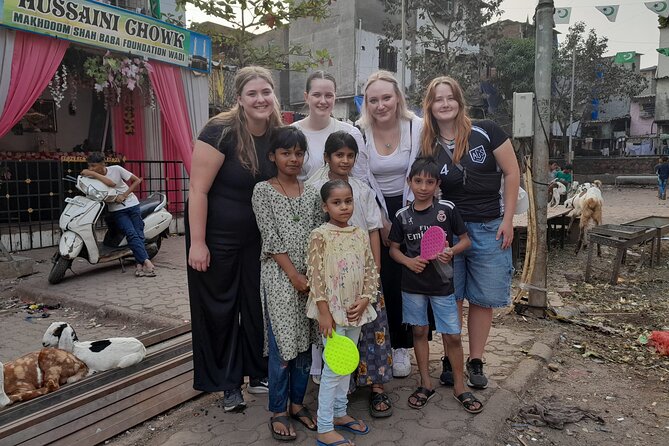
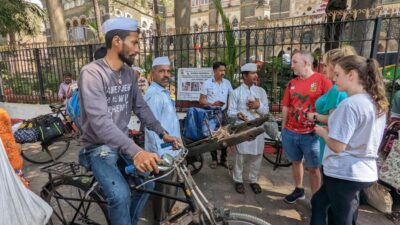
Dharavi is one of those places people think they already know, usually from headlines that flatten everything into one big label. This tour uses the opposite approach: it keeps you moving through the places where people work, learn, and shop, so the picture you get is more accurate—and more interesting.
What I like most is the tone. You’re not treated like an outsider staring in. Instead, your local guide shares stories that connect the workshops to daily life, and that’s what changes how you remember the walk afterward.
You should also know what you’re signing up for: this is not a museum tour. It’s a working neighborhood, with narrow lanes and active small-scale industries. That’s the point, and it also means you’ll get better results if you stay respectful, keep your expectations practical, and wear comfortable walking shoes.
From Third Wave Coffee to Kumbhar Wada: how the route actually works
The tour meets at Third Wave Coffee on Tip Road (Ram Mahal, Senapati Bapat Marg area, Mahim/Marinagar Colony, Mumbai). After about 2 hours, it ends at Kumbhar Wada, Dharavi, where your guide helps you arrange transport back to where you need to go—car, Uber, taxi, or even train.
This matters because Dharavi tours can get awkward if you’re left alone at the end. Here, the plan includes that handoff back to normal transit life. It’s also useful that the start is near public transportation, so you’re not forced to rely only on pickup.
On top of that, the tour uses a mobile ticket, and pickup is offered. Group discounts are available too, which is a nice perk if you’re coming with a friend.
Other Dharavi walks led by people who live there



Inside Dharavi’s plastic recycling units: seeing reuse as a business
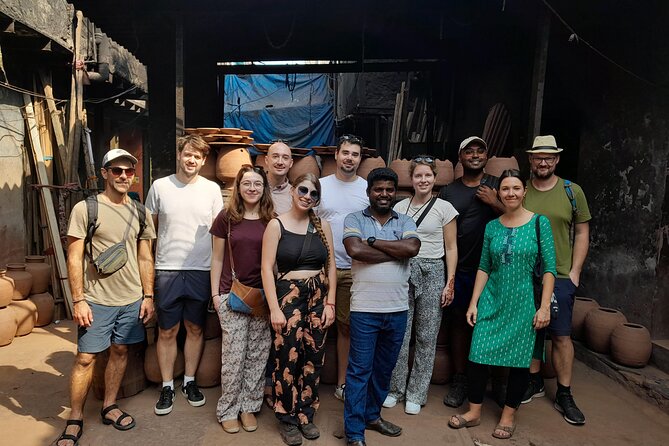
One of the first things you’ll come across is plastic recycling, where waste is melted, molded, and reused. On paper it sounds straightforward, but on the ground it becomes clearer how the work connects materials, tools, and skilled handling.
This stop tends to be a good reality check for your brain. You often hear recycling talked about as a concept. In Dharavi, it’s an organized set of processes, and you start noticing the logic: turn scrap into usable forms, keep the workflow moving, and feed the next stage of production.
The practical benefit for you: you’ll leave with a better understanding of why a neighborhood like this can function as an economic engine. Instead of thinking only about poverty, you’ll also see industry, craft, and continuity.
Textile workshops where clothes get stitched, dyed, and printed
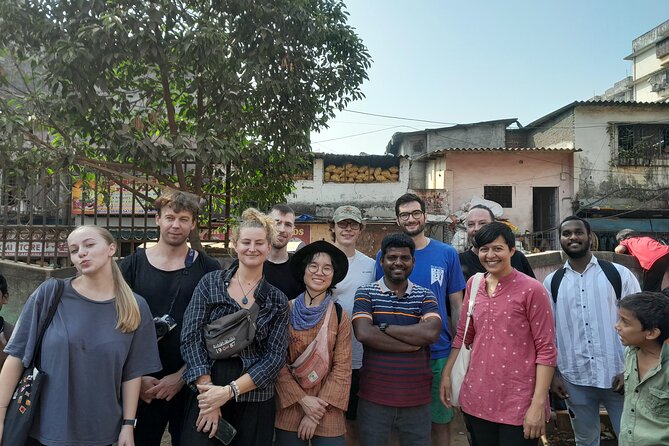
Next up are textile workshops, where you can see clothing being stitched and where fabric may be dyed and printed. This is where you’ll feel the creativity mixed with production.
Even if you’re not a “factory person,” this stop helps you understand what people mean when they say this area is a hub of skills. You’re not just seeing finished goods; you’re seeing steps—pieces becoming product.
Possible drawback to keep in mind: because this is a working environment, you’ll likely have less space to linger and look slowly at everything. If you want photos, treat it like a quick documentation moment, not a prolonged setup.
Bakery units and the local snack rhythm
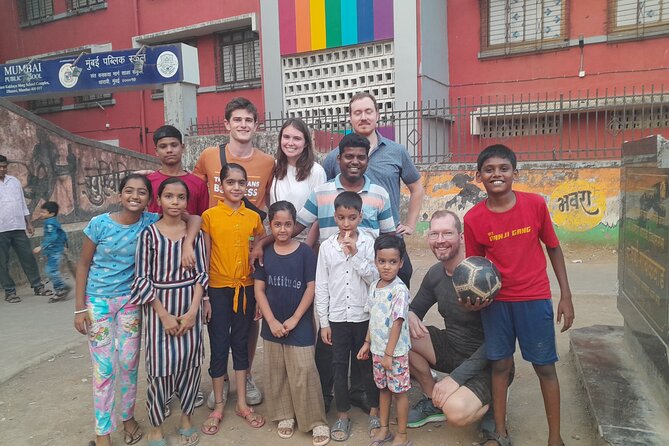
Then you move into bakery units, including the making of khari biscuits, bread, and other local snacks. This stop has a different energy than the workshops, because it’s tied to food, timing, and everyday hunger.
What I appreciate here is that it rounds the tour out. Dharavi isn’t only recycling and manufacturing. It also supports the kind of local food economy that people rely on daily. It’s a reminder that daily life isn’t just about jobs; it’s also about meals and routines.
If you’re visiting Mumbai for the first time, this is also a helpful cultural contrast. You get a taste of how the neighborhood feeds itself, not just how it processes materials.
- Dharavi slum tour in Mumbai by Female tour guides of the slum
★ 5.0 · 1,976 reviews - Mumbai: Full-Day Sightseeing Tour of Mumbai
★ 4.9 · 1,822 reviews - Private Mumbai Sightseeing Tour (Traveller’s Choice Award Winner)
★ 5.0 · 1,565 reviews - Group Guided Walking Tour in Fort and Colaba
★ 5.0 · 1,073 reviews - Highlights of Mumbai Sightseeing Tour: TRAVELLERS CHOICE AWARDED
★ 5.0 · 915 reviews - Private Guided Walking Tour in Fort & Colaba
★ 5.0 · 895 reviews
Narrow lanes, temples, and mosques: community life in the same space
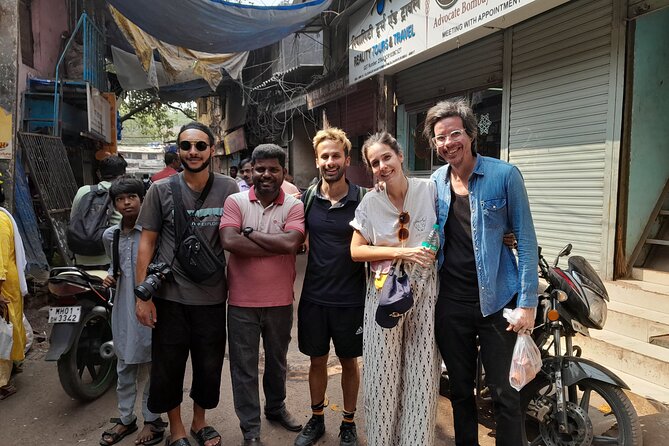
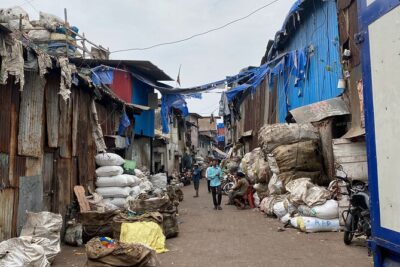
As you walk, you’ll pass colorful narrow lanes lined with small homes and religious spaces, including temples and mosques. This section is important because it shows how work and community coexist.
It can be easy for visitors to treat a slum tour as a catalog of industries. But here, the tour keeps reconnecting the buildings to people’s lives. The guide’s stories help you understand why the lanes matter—this is where neighbors meet, where routines happen, and where faith is part of the everyday map.
A good way to get the most from this part: pay attention to the flow. Notice how entrances, small storefronts, and religious spaces sit right next to production work. That proximity is one of the things that makes Dharavi feel so real.
Leather tanneries and export-quality production you can actually understand
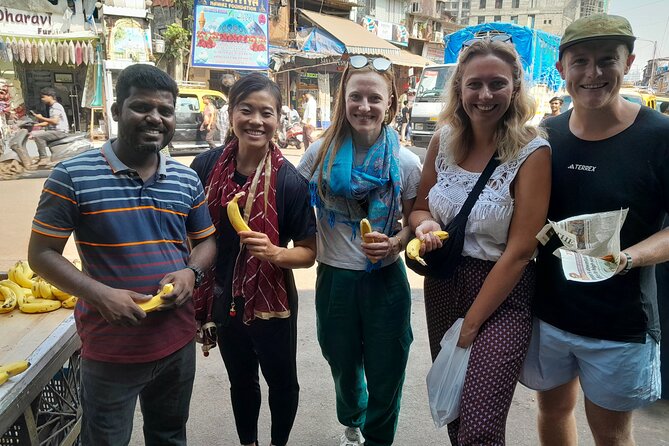
One of the most talked-about parts of Dharavi is leather, and this tour doesn’t avoid it. You’ll see leather tanneries and small factories involved in export-quality goods.
This stop can be intense just because leather processing is a high-skill, hands-on kind of work. But the value for you is clarity. Instead of hearing big claims, you get a grounded look at how production is organized and how the workflow supports a wider market.
If you’re squeamish about production environments, you should come prepared for the fact that this tour shows labor, not just products. Staying respectful and listening closely to your guide will help you understand what you’re seeing and why it matters to the local economy.
Local markets and daily essentials you can picture at home
After the more industrial moments, the tour shifts to local markets selling daily essentials and fresh produce. This is one of those stops that turns a story into a scene you can imagine after you’re done.
Markets are where you realize a neighborhood isn’t only producing for outside demand. It’s also buying, trading, and meeting everyday needs. Seeing fresh produce and essentials in the middle of the tour makes Dharavi feel less like a headline and more like a place where people plan meals and manage household life.
If you like street photography, this is often a better time than workshops for picking up motion and color—again, keep it respectful and fast.
Community schools and welfare: education as part of the picture
The walk also includes community schools and stories tied to education and welfare. This part matters because it prevents the tour from turning into only “work” and only “industry.”
Education changes how you think about the future of a neighborhood. When your guide connects schools to day-to-day realities, the tour becomes more balanced. It’s not only about what people do now—it’s about what’s being built alongside it.
This stop is also a good one for slowing down mentally. You can take in the setting, listen carefully, and let the guide’s context make the scenes click.
Price and logistics: is $10.04 really good value?
At about $10.04 per person for roughly 2 hours, this tour is priced like a budget-friendly guided walk, not a premium day excursion. The value is in what you get for that price: an English-speaking local guide, bottled water, and an included admission ticket.
You also get practical options that help it run smoothly: pickup is offered, you can use a mobile ticket, and the tour ends at a location where the guide helps you get transport back. With a max group size listed at up to 50 travelers, it’s not one of those tiny clandestine walks, but the small-group options mentioned in the experience design can make it feel more personal.
One practical tip: book with enough time. The average booking window is around 15 days in advance, and this is the kind of tour that tends to be popular because it’s short and straightforward.
And if your plans shift, the tour includes free cancellation up to 24 hours in advance. That gives you breathing room if you’re juggling Mumbai logistics.
Who this Dharavi tour is best for
This tour fits you best if you want:
- A short walking format that covers multiple parts of Dharavi in about two hours
- A guide who explains what you’re seeing in plain terms and connects it to everyday life
- A responsible, respectful approach to a place that’s often misunderstood
It’s also a strong pick if you’re traveling solo. One review mentioned being guided by Ruqaiyya, and emphasized how that kind of local guidance can make someone feel safer walking through the area.
If you’re the type who hates walking tours or needs lots of wide-open space to move comfortably, you may feel less at ease in tight lanes. Keep expectations realistic and treat the tour like a guided orientation to a living neighborhood.
Should you book the Dharavi insight walking tour?
Yes, if you want a practical, short Dharavi experience with a local English-speaking guide and you’re comfortable walking through an active neighborhood.
Book it when you:
- Have about 2 hours and want a structured route
- Want to see recycling, textiles, baking, markets, and schools rather than only one theme
- Care about getting context that corrects the usual stereotypes
Skip or rethink it if you:
- Want a slow, low-stimulation stroll
- Dislike tours where you see real workplaces instead of curated stops
If you decide to go, come ready to listen. The biggest payoff here is what your guide helps you notice as you walk—how skills, routines, and community spaces sit side by side.
FAQ
How long is the Dharavi walking tour?
The tour lasts about 2 hours.
What is the price per person?
The price is listed as $10.04 per person.
Is pickup available?
Pickup is offered.
Is there an English-speaking guide?
Yes. The tour includes an English-speaking local guide.
What’s included in the tour price?
The tour includes the local guide, bottled water, and admission ticket.
Is food included?
No, food and drinks are not included.
Where does the tour start and end?
It starts at Third Wave Coffee on Tip Road in Mahim (Senapati Bapat Marg area) and ends at Kumbhar Wada, Dharavi.
How big are the groups?
The activity lists a maximum of 50 travelers, and it also offers private and small-group tour options.
What is the cancellation policy?
You can cancel for a full refund up to 24 hours before the experience starts. If you cancel within 24 hours, the amount paid is not refunded.
More Mumbai, Every Kind of Day
- Dharavi slum tour in Mumbai by Female tour guides of the slum
★ 5.0 · 1,976 reviews - Mumbai: Full-Day Sightseeing Tour of Mumbai
★ 4.9 · 1,822 reviews - Private Mumbai Sightseeing Tour (Traveller’s Choice Award Winner)
★ 5.0 · 1,565 reviews - Elephanta Caves & Island Guided Private Tour
★ 5.0 · 1,327 reviews
Dharavi, Told by Its Residents
- Dharavi slum tour in Mumbai by Female tour guides of the slum
★ 5.0 · 1,976 reviews - Mumbai: Dharavi Slum, DhobiGhat, and Dabbawallas Tour
★ 4.9 · 689 reviews - Dharavi Slum Tour
★ 5.0 · 625 reviews - Dharavi Slum tour in Mumbai by local resident
★ 5.0 · 572 reviews
New on the Mumbai shortlist



Dharavi Community Walks, compared.
 ★ 5.0Dharavi slum tour in Mumbai by Female tour guides of the slumFrom $91,976 reviews
 ★ 4.9Dharavi Slum, DhobiGhat, and Dabbawallas TourFrom $14689 reviews
 ★ 5.0Dharavi Slum TourFrom $20625 reviews
 ★ 5.0Dharavi Slum tour in Mumbai by local residentFrom $4572 reviews
 ★ 4.9Dharavi Slum Slumdog Millionaire Tour with a LocalFrom $10529 reviews
 ★ 5.0Mumbai Slum Tour – Visit Dharavi Slum with Local GuideFrom $5509 reviews
 ★ 5.0Dhobi Ghat Laundry and Dharavi Slum Tour with LocalFrom $4469 reviews
 ★ 5.02-Hour Guided Tour of DharaviFrom $22359 reviews
Browse the lists this tour appears in