

Review · DHOBI GHAT LAUNDRY VISITS
Mumbai City Tour With Laundry And Hotel Transfers (South Mumbai)
South Mumbai tells its story in short walks. This 3–4 hour tour strings together iconic landmarks built under British rule, Gandhi’s Mumbai, and the everyday machines that keep the city running—plus Dhobi Ghat laundry and dabbawala lunch deliveries. You’ll also get hotel transfers and a small group feel, which matters in a city that never really slows down.
I especially like that entry fees and taxes are handled—most monument stops mean you’re not hunting for ticket counters mid-walk. I also like the English-speaking driver-cum-guide with decades in hospitality, the kind of guide who explains what you’re seeing and keeps you feeling safe.
One thing to consider: the stops are short and you’ll be outdoors for a good chunk, so it’s best when the weather is kind and you’re okay with moving at a brisk city pace.
In This Review
- Key highlights before you go
- Price and what you truly get for $41.39
- How the guide and group size shape the experience
- Stop-by-stop: Gateway of India to Badhwar Park
- Mani Bhavan and the Jain Temple: belief plus politics
- Hanging Gardens, the water story, and the city’s rhythm
- Ambani’s home, Churchgate, and how daily logistics matter
- Chowpatty Beach and street food timing
- Dhobi Ghat: the working laundry you see up close
- Chhatrapati Shivaji Terminus and Afghan Church: architecture plus memory
- Horniman Circle Garden, Marine Drive, and Rajabai Clock Tower
- Timing, weather, and what to expect from the pace
- Who this tour is best for (and who should skip it)
- Should you book this Mumbai City Tour with laundry and hotel transfers?
- FAQ
- How long is the South Mumbai city tour?
- Is pickup from the hotel included?
- Are monument entry fees included in the price?
- Are snacks included?
- What is the group size limit?
- What happens if the weather is bad?
Key highlights before you go
- Most entry fees included so you’re not paying surprise add-ons at each site
- Small group (max 6 travelers) which makes questions and conversation actually work
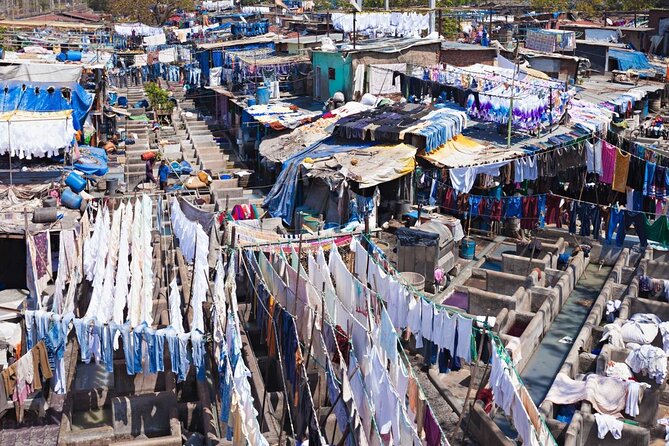
- Dhobi Ghat laundry in action—thousands of manual wash cycles, right before your eyes
- Churchgate dabbawalas—you’ll see how lunch boxes travel across the city
- Gandhi, Jain, and Zoroastrian sites—religion and belief show up in very different ways
- Hotel transfers + mobile ticket—less friction means more time looking closely
Price and what you truly get for $41.39
At $41.39 per person for about 3 to 4 hours, this is a solid value for South Mumbai if you’re the kind of traveler who wants a guided loop without budget whack-a-mole. The biggest “value lever” here is that all fees and taxes are included, and the tour notes that most of the entry fees for monument stops are covered. That changes the whole feel of a city tour: you spend less time juggling small cash purchases and more time listening and looking.
The tour also covers transfers (pickup offered), and it runs with a maximum of 6 travelers, so it’s not a huge bus-and-bobble-head situation. Instead, you get a tighter group size where the guide can keep the pace and answer questions in real time.
The one extra cost to plan for is simple: snacks are not included. In practice, that means bring water and expect you’ll want something small for energy if you’re doing the evening street food scene later.
How the guide and group size shape the experience
This tour uses a driver-cum-guide with 25+ years in hospitality and English ability. That matters because South Mumbai is full of layered meaning—British-era names, religious sites, working neighborhoods—so you benefit from someone who can translate not just facts, but the why behind them.
You’ll also feel the difference of a max-6 group. With fewer people, short stops don’t turn into chaotic herd movement. You’re more likely to hear the explanation at each site instead of only catching it halfway while walking.
One more practical note: you’ll get pickup offered and it’s listed as being near public transportation, which is helpful if you’re staying somewhere without direct hotel access for a vehicle.
More visits to the open-air laundry at Mahalaxmi




Stop-by-stop: Gateway of India to Badhwar Park
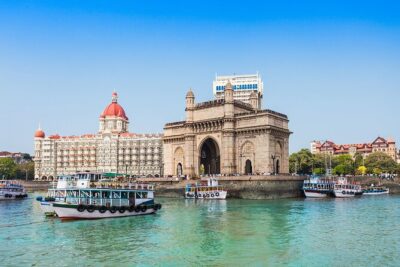
Your tour starts at the Gateway of India, a major South Mumbai landmark built by the British to commemorate the arrival of King George V and Queen Mary to India. Even if you’ve seen photos, standing here gives you a scale check on how power and ceremony were “built into” the city.
You get about 20 minutes here, and the admission ticket is included. That’s a smart setup: the entrance fee being handled means you don’t lose your time slice to ticket logistics.
Next is Badhwar Park, where you get a quick look at a fishermen’s village idea—homes for working fishermen, with the daily rhythm of leaving early for bread and returning early morning. It’s only 10 minutes, and the admission is free, so think of it as a quick reality check: this neighborhood isn’t just scenery for visitors.
Mani Bhavan and the Jain Temple: belief plus politics
The tour then moves to Mani Bhavan Gandhi Museum, about 20 minutes, with admission included. You’re stepping into Mahatma Gandhi’s house, now used as a museum, and the emphasis is on India’s freedom struggle through non-violent ideas under Gandhi’s mentorship. Even in a short stop, this is one of the places where you can connect “history” to a specific person and a specific home.
After that comes Jain Temple – Mumbai. You get around 10 minutes, and the admission ticket is included. This stop is about looking closely: intricate stone carvings and a dome painted with the zodiac. In a region that often gets simplified into only colonial buildings and beaches, this is your reminder that Mumbai also runs on deep religious artistry.
If you’re someone who likes your history guided (not just read off a sign), these two stops together work well. You see political struggle at Mani Bhavan, then spiritual symbolism at the Jain temple.
Hanging Gardens, the water story, and the city’s rhythm
Next is Hanging Gardens, with 15 minutes and admission included. These gardens are described as being hanging on water tanks, and the tour frames it as a site connected to how the city receives water. You also get mention of the Boot House and more nearby features.
This is one of those stops where the explanation turns the place into more than a pretty view. If you’ve ever wondered how cities function behind the postcard images, this is part of the answer—water systems shape where people build and where communities thrive.
Then the route continues toward sites that show Mumbai’s spread of identities and eras. You’ll include a look at the Zoroastrian community cremation process at a Dakhma, also known as the Tower of Silence. The tour describes it as a circular, raised structure used for ex-carnation, meaning dead bodies are exposed as part of the community practice. This is worth approaching with respect; even if you only spend a short time, the cultural meaning is heavy.
Other loops past the Gateway, Marine Drive and beyond
- Mumbai: Full-Day Sightseeing Tour of Mumbai
★ 4.9 · 1,822 reviews - Private Mumbai Sightseeing Tour (Traveller’s Choice Award Winner)
★ 5.0 · 1,565 reviews - Highlights of Mumbai Sightseeing Tour: TRAVELLERS CHOICE AWARDED
★ 5.0 · 915 reviews - Highlights of South Mumbai Guided Private Tour in AC Vehicle
★ 5.0 · 620 reviews - Private Mumbai Sightseeing Tour(Travellers Choice Award Winner)
★ 5.0 · 565 reviews - Private Half-Day Sightseeing Tour in Mumbai
★ 5.0 · 430 reviews
Ambani’s home, Churchgate, and how daily logistics matter
You’ll also see the house belonging to Mukesh Ambani, the billionaire and richest person of India, described as built at a cost of USD 200 million. The tour notes it’s rumored to be paying a USD 100,000 electricity bill per month. I’d treat that “rumored” figure as exactly that—information presented as a local talking point, not a confirmed receipt—but the scale of the home is the point.
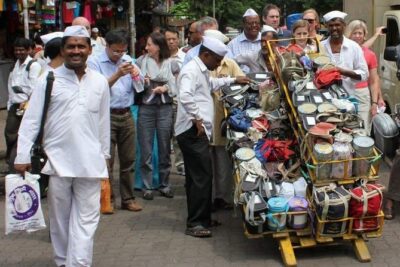
Then comes Churchgate Railway Station, where you’ll get about 10 minutes and admission included. This is one of the most interesting switches in the itinerary because you stop being a history tourist and start being a city-operations tourist. Here you’ll find the dabbawalas—lunch box delivery workers—who deliver meals to major and minor offices across Mumbai, including government and private workplaces.
This stop makes Mumbai feel real in a way that big monuments can’t. It’s the infrastructure of everyday life: timing, routes, and trust. If you only think about Mumbai as landmarks, you’ll miss the working choreography. This adds it back.
Chowpatty Beach and street food timing
Next is Chowpatty Beach, about 15 minutes, with admission included. The tour describes it as a family beach where people come to reset after work, and it’s also famous for street food served in the evening. On weekends, it’s said to be busy with Indian families.
In a short visit, don’t expect a long beach day. Instead, think of Chowpatty as a breathing space and a change of pace. You’re switching from carved stone and museum frames to seaside crowds and the energy of people doing normal things.
If your schedule allows, the most useful strategy is to keep an eye on the time and decide whether to linger nearby after your guided loop ends.
Dhobi Ghat: the working laundry you see up close
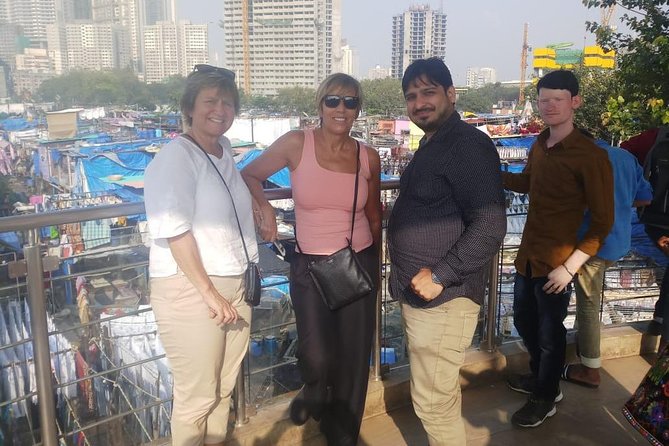
Now for the stop that many people remember most clearly: Dhobi Ghat. You get around 10 minutes with admission included, and the description highlights a scale you won’t forget—about 5,000 manual washing cycles happening at a time. The tour also notes this laundry is 150 years old, built by the British, and has contracts with star hotels and government undertakings like Indian Railways.
This isn’t a staged performance. It’s work. Seeing it in person changes how you think about “city services”—water, soap, physical labor, and coordination all happen daily, even when outsiders don’t notice.
A practical thought: this is one of those places where photography and staring are easy distractions. Instead of trying to do everything, pick one thing to watch for a minute—how items move through the process or how people work in parallel—then let your guide’s explanation set the context.
Chhatrapati Shivaji Terminus and Afghan Church: architecture plus memory
Next is Chhatrapati Shivaji Terminus, formerly known as Victoria Terminus. You’ll have about 10 minutes, with admission included, and the tour notes this station is the head of all the central trains to and from various parts of the city.
It’s a short stop, but it’s worth it because this building is where you can feel the city’s transport identity in stone and steel. Stations aren’t just “places you pass through.” They’re a statement.
After that, you’ll visit the Afghan Church, also known as the Church of St. John the Evangelist. The tour explains it’s an Anglican Church built by the British to commemorate the dead of the First Afghan War and the disastrous 1842 event connected to that conflict. Expect about 15 minutes here with admission included.
This stop connects war memory to religious architecture—another reminder that Mumbai carries histories from many directions, not only from Indian political movements.
Horniman Circle Garden, Marine Drive, and Rajabai Clock Tower
The route then includes Horniman Circle Garden, about 5 minutes, with admission included. The tour describes it as an open space with grand buildings around it inside the walled city context, and it mentions the area had been known as Bombay Green in the 18th century, with the surrounding area called Elphinstone Circle.
Then you’ll also get the coastal promenade zone linked to Marine Drive. The tour notes the road and promenade were constructed by philanthropist Bhagojisheth Keer and Pallonji Mistry, and it describes a C-shaped six-lane concrete road along the coast of a natural bay. This part is great for resetting your eyes after the museums and churches.
Finally, you’ll see the Rajabai Clock Tower, located on the Fort campus of the University of Mumbai. The tour lists its height as 85 m. Even if you just glance up, it’s a nice way to end: you finish with a landmark that ties together education, architecture, and scale.
Timing, weather, and what to expect from the pace
The tour runs about 3 to 4 hours, and the time at most stops is 5–20 minutes. That means you’ll leave with a strong overview, but not a “sit and study for hours” vibe. If you love deep museum time, this might feel quick—yet the tradeoff is you see a lot of Mumbai types of places in one guided loop.
The experience also requires good weather. If conditions are poor, the tour notes you’ll be offered a different date or a full refund. That matters for a city tour built on outdoor viewing and short transitions.
If you like structure, this format is a win. You’re given a guided sequence, key fees covered, and a guide who speaks English and keeps the group feeling safe.
Who this tour is best for (and who should skip it)
This is a great fit if you want South Mumbai in one afternoon, with both “big name” landmarks and real daily life stops like Dhobi Ghat and dabbawalas at Churchgate. It’s also a strong choice for first-time visitors who want a guided route that avoids ticket confusion.
You might skip it if you prefer long stays at fewer places. The itinerary is dense, and the clock keeps moving—great for orientation, less ideal for slow travel.
It’s also especially useful if you’re trying to pack your trip efficiently without missing the working parts of the city. Museums are only part of Mumbai; this tour makes sure you see the rest.
Should you book this Mumbai City Tour with laundry and hotel transfers?
I’d book it if you want value, structure, and a mix that feels more like city living than a checklist. The combination of small group size, an English-speaking driver-guide with hospitality experience, and entry fees largely handled is what makes it feel good for your time and budget.
If you’re visiting during a questionable weather window or you hate the idea of short stops, you might wait for better conditions or consider a slower alternative. But when the weather is right, this tour does something rare: it pairs famous monuments with places that show how Mumbai runs every day.
FAQ
How long is the South Mumbai city tour?
The tour lasts about 3 to 4 hours.
Is pickup from the hotel included?
Pickup is offered, and the tour includes hotel transfers.
Are monument entry fees included in the price?
Yes. The tour lists all fees and taxes as included, and it notes most entry fees to the monument stops are included.
Are snacks included?
No. Snacks are not included.
What is the group size limit?
The tour has a maximum of 6 travelers.
What happens if the weather is bad?
The experience requires good weather. If it’s canceled due to poor weather, you’ll be offered a different date or a full refund.
More Mumbai, Every Kind of Day
- Dharavi slum tour in Mumbai by Female tour guides of the slum
★ 5.0 · 1,976 reviews - Mumbai: Full-Day Sightseeing Tour of Mumbai
★ 4.9 · 1,822 reviews - Private Mumbai Sightseeing Tour (Traveller’s Choice Award Winner)
★ 5.0 · 1,565 reviews - Elephanta Caves & Island Guided Private Tour
★ 5.0 · 1,327 reviews
The Big Mumbai Circuits
- Mumbai: Full-Day Sightseeing Tour of Mumbai
★ 4.9 · 1,822 reviews - Private Mumbai Sightseeing Tour (Traveller’s Choice Award Winner)
★ 5.0 · 1,565 reviews - Highlights of Mumbai Sightseeing Tour: TRAVELLERS CHOICE AWARDED
★ 5.0 · 915 reviews - Highlights of South Mumbai Guided Private Tour in AC Vehicle
★ 5.0 · 620 reviews
Dhobi Ghat from a Few More Angles
- Mumbai: Dharavi Slum, DhobiGhat, and Dabbawallas Tour
★ 4.9 · 689 reviews - Mumbai: Dhobi Ghat Laundry and Dharavi Slum Tour with Local
★ 5.0 · 469 reviews - Mumbai: Dharavi Slum and Dhobi Ghat Laundry Tour
★ 5.0 · 317 reviews - Private Combo Tours Sightseeing + Dharavi Slum + Dhobi Ghat & Dabbawalas
★ 5.0 · 245 reviews
New on the Mumbai shortlist


Dhobi Ghat Laundry Visits, compared.
 ★ 4.9Dharavi Slum, DhobiGhat, and Dabbawallas TourFrom $14689 reviews
 ★ 5.0Dhobi Ghat Laundry and Dharavi Slum Tour with LocalFrom $4469 reviews
 ★ 5.0Dharavi Slum and Dhobi Ghat Laundry TourFrom $5317 reviews
 ★ 5.0Private Combo Tours Sightseeing + Dharavi Slum + Dhobi Ghat & DabbawalasFrom $79245 reviews
 ★ 5.0Dharavi, Dhobighat, and Mumbai DabbawallasFrom $20168 reviews
 ★ 5.0Dabbawala, Dhobi Ghat & Dharavi slum Tour with Local Train RideFrom $35102 reviews
 ★ 4.8Dharavi Slum Tour with Dhobi Ghat (Open-Air Laundry)From $462 reviews
 ★ 5.0Mumbai Dharavi Slum, Dhobi Ghat & Dabbawala Lunchbox TourFrom $1843 reviews
Browse the lists this tour appears in