
Review · DHARAVI COMMUNITY WALKS
Dharavi Tour and Family Lunch
Dharavi can feel like a headline until you walk it. This tour is built around seeing how people work and live in one of Mumbai’s best-known neighborhoods, with stops that cover everything from recycling and pottery to embroidery and poppadom-making. I especially like the local guide angle and the way the walk connects daily industry with neighborhood life.
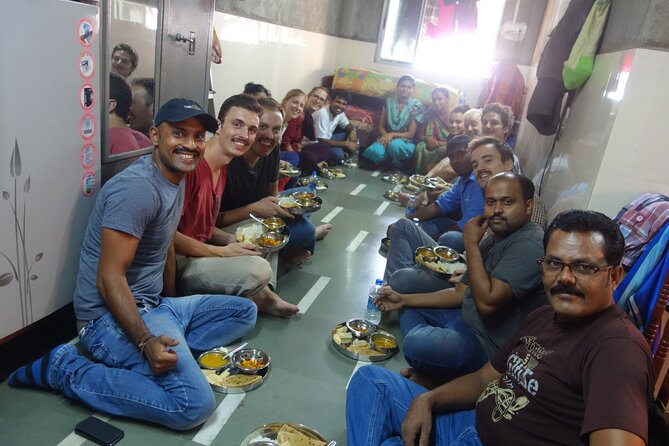
The second thing I like is the family lunch at the end—simple, vegetarian, and genuinely tied to local income. One fair caution: this is an intense place to visit, so keep your expectations respectful and expect strong emotions, not just sightseeing.
In This Review
- Key Highlights at a Glance
- What You’re Really Buying With a Dharavi Tour and Family Lunch
- First Stop in Dharavi: Festival Energy and Getting Your Bearings Fast
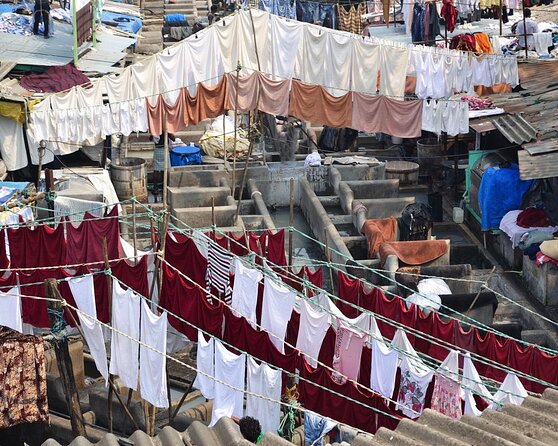
- The Walk Through Industries: From Recycling to Poppadoms
- Temples, Mosques, Churches, and Pagodas: Dharavi as a Microcosm
- Residential Areas: Seeing Everyday Life Without Turning It Into a Show
- The Family Lunch: Where the Experience Gets Personal and Practical
- What Happens After Lunch: Escort to Transport, Not a Hard Drop-Off
- Guides, Respect, and the Small-Group Feel
- Price, Value, and How to Decide If It Fits Your Mumbai
- Practical Tips Before You Go
- Should You Book the Dharavi Tour and Family Lunch?
- FAQ
- How long is the Dharavi tour with family lunch?
- What does the $29.50 price include?
- Is the meal vegetarian?
- Where does the tour start and end?
- How big is the group?
- What happens after the lunch with the local family?
- What is the cancellation policy?
Key Highlights at a Glance
- 3 hours of walking with real neighborhood context
- A vegetarian meal with a local family
- Small group size (max 25)
- Industry stops you’ll recognize in daily life
- Guide support for getting transport after lunch
- Mobile ticket and group discounts
What You’re Really Buying With a Dharavi Tour and Family Lunch
At $29.50 per person for about 3 hours, this is one of those experiences that costs less than a single fancy meal in many cities, yet it includes two big value items: an experienced local guide and lunch in a home. That’s a clear win for your money, especially in Mumbai where guided time and honest access can get pricey fast.
More important than the price is what the tour tries to do: it shifts Dharavi away from a single label. Instead of treating it as a distant curiosity, you’re shown Dharavi as Mumbai’s “beating heart,” with work, faith, and community all woven together. You’ll still learn the big-picture facts, but you’ll also see the day-to-day mechanics—how goods get made, how services keep running, and how people build routines in tight spaces.
First Stop in Dharavi: Festival Energy and Getting Your Bearings Fast
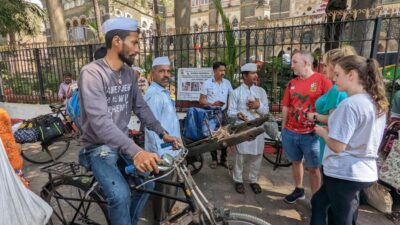
The tour begins with a walk through Dharavi that includes local festival celebrations. Even though the listing doesn’t name the festival specifically, the point is consistent: you start with something communal and human, not just production lines or workshops.
This opening matters because it helps you understand the neighborhood as a living place. It sets a tone of normal life—people celebrating, socializing, and moving through their day—before you start noticing the economic engine underneath.
A practical note: because this is a walking tour in a dense area, you’ll want to dress for movement and heat, and plan to be alert with your footing and your personal space.
Other Dharavi walks led by people who live there



The Walk Through Industries: From Recycling to Poppadoms
One of the strongest reasons this tour works is that it doesn’t stop at one trade. The walk highlights a wide range of activities you can connect to things you’ve seen elsewhere—just with different scale, tools, and working conditions.
You may pass by or learn about businesses such as:
- Recycling (materials turning into usable goods)
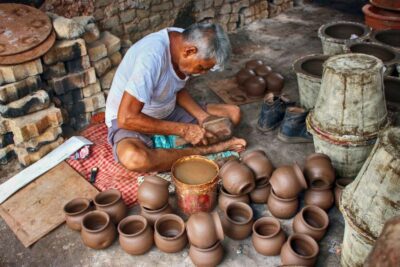
- Pottery-making
- Embroidery
- Bakery work
- Soap factory activity
- Leather tanning
- Poppadom-making
- Plus other small business activity that supports daily life
What you should take away here is the pattern. Dharavi isn’t described as one industry—it’s described as a web of production and trade. That’s the difference between a shallow “slum tour” and something more grounded: you come away understanding how small workshops and informal businesses keep the area functioning, and how different skills sit side by side.
Also, these types of stops tend to create quick learning moments. You’ll hear how products are made and why certain trades remain connected to local networks. It’s not just what exists—it’s why it exists.
Temples, Mosques, Churches, and Pagodas: Dharavi as a Microcosm
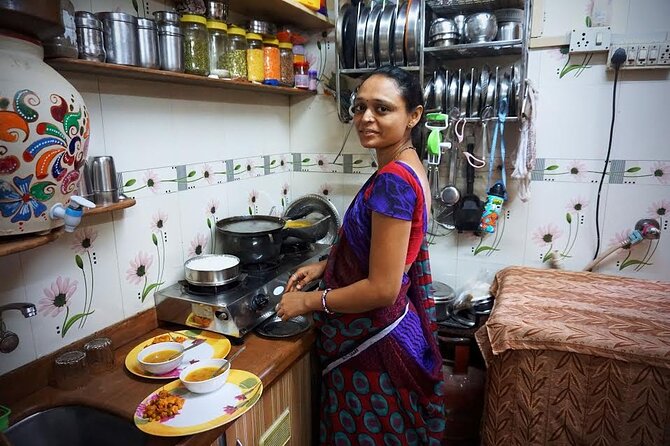
After you see the work side, you’ll also get a sense of community life—particularly the religious mix. The tour includes time in residential areas, and you’ll notice places of worship standing side by side, including temples, mosques, churches, and pagodas.
This detail is more than “scenery.” It’s part of the tour’s central idea that Dharavi is a microcosm of India. People from different parts of the country come here, and you can literally read that diversity in the religious and cultural markers you pass.
For you, this often turns the visit from a single-topic lesson into a broader understanding of Mumbai. You start seeing how identity, faith, and neighborhood life overlap with the working economy.
Residential Areas: Seeing Everyday Life Without Turning It Into a Show
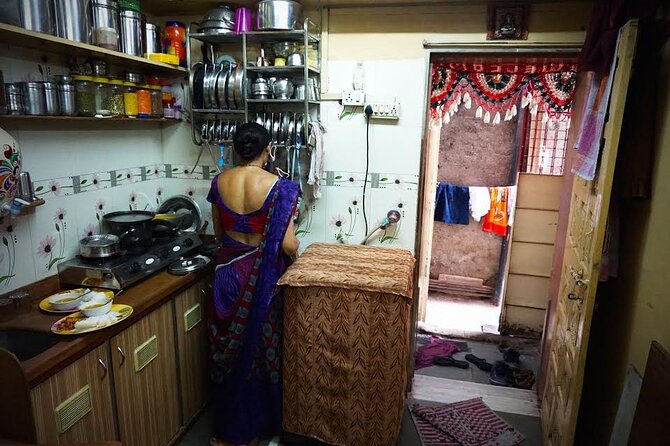
The itinerary includes visits to residential areas, which is where many tours either get respectful—or get awkward. Here, the structure matters: the walk is framed as educational and introductory, with the goal of a more nuanced understanding of life and work.
You’re not just looking at houses. You’re seeing how the neighborhood supports daily rhythm. That’s where things like community spaces, worship sites, and the proximity of work and home start to click.
One consideration: because you’re walking through homes and everyday streets, you should keep your camera discipline tight. Follow your guide’s direction, keep conversations appropriate, and remember you’re moving through people’s real spaces.
More Mumbai lunches worth crossing town for
- Mumbai Private Cultural Tour with Lunch and Transport
★ 5.0 · 44 reviews - Mumbai City Tour with Licensed Guide and Lunch
★ 5.0 · 20 reviews - Dharavi Tour and Family Lunch
★ 5.0 · 17 reviews - Mumbai to Agra Taj Mahal Day Trip with Return Flights and Lunch
★ 5.0 · 16 reviews - Full day city tour of Mumbai with guide & lunch
★ 5.0 · 13 reviews - Elephanta Caves Tour including Lunch and Transport
★ 4.5 · 7 reviews
The Family Lunch: Where the Experience Gets Personal and Practical
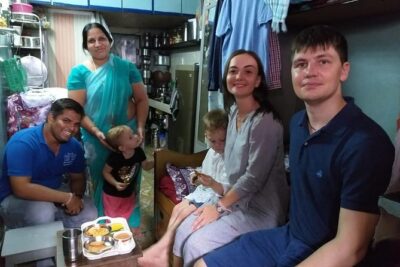
This is the part you’ll likely remember most—and not just because it’s food. Near the end of the tour, you walk to a nearby family home for a vegetarian meal.
Why it matters:
- It gives you extra insight into Dharavi that isn’t only about work.
- It places your money into the local economy in a direct way. The tour description is explicit that it provides the family with extra income.
I also like that the meal is home-cooked and simple, rather than turning into a performance. You’re not going through a restaurant script; you’re sharing a table. That shift changes the emotional tone of the day.
If you have dietary needs beyond vegetarian, the listing only promises vegetarian food, so you’ll want to ask ahead through the booking channel what’s possible for allergies or restrictions.
What Happens After Lunch: Escort to Transport, Not a Hard Drop-Off
A good city tour ends with an easy exit. This one does that.
After lunch, the tour finishes back at the company’s meeting point area, and then your guide helps you sort onward transport. The description specifically says the guide can help you with a taxi, and if you want to catch a local train to another part of Mumbai, your guide will escort you to the station and help you get on the train.
That’s genuinely useful. Mumbai navigation can be intimidating, especially when you’ve just spent a few hours in a neighborhood where your usual travel rhythm disappears. This kind of support helps you keep momentum without stress.
Guides, Respect, and the Small-Group Feel
This tour caps at 25 travelers, which changes the experience. Smaller groups mean you can actually hear explanations without constant noise battles, and your guide can manage the pace better in tight areas.
The guide details in the feedback you provided are also a standout. You’ll see names like Rishi, Jadev, Shivi/Shifa, and Raj showing up in top ratings. The common thread isn’t just that guides were friendly—it’s that they were clear, helpful, and respectful while explaining both industries and social life. That combination is what turns a potentially uncomfortable topic into something you can process and remember.
Look for the guide’s cues. If your guide encourages you to pay attention to specific cues (work processes, community details, religious sites), follow that. The tour is designed so your attention improves your understanding.
Price, Value, and How to Decide If It Fits Your Mumbai
Let’s do the honest math. At $29.50 per person, for roughly 3 hours, you get:
- an experienced local guide
- lunch included
- admission tickets listed as free
- a mobile ticket
- group discount options
For many travelers, the included lunch is a big part of the “felt value.” You’re not paying separately for a meal, and you’re eating in a home context tied to the tour’s mission. The guide support after lunch (taxi help or train escort) also reduces your own mental workload afterward.
Who this suits best:
- You want more than a photo of a famous neighborhood.
- You like tours where work and daily life are treated as connected, not separate.
- You want an experience that tries to be respectful and educational.
- You’re okay with an emotionally heavy topic and you’re ready to see Dharavi as people’s real home and workplace.
Who might think twice:
- If you only want light, low-emotion sightseeing, this could feel intense.
- If you need very accessible routes or minimal walking, the data doesn’t specify accessibility details, so you’ll want to ask directly before booking.
Practical Tips Before You Go
Here are a few smart moves based on how this tour is structured:
- Bring comfortable walking shoes. It’s a walking tour, and you’ll likely be on your feet throughout.
- Keep your camera use controlled. You’ll be near homes and community spaces, so ask your guide when it’s appropriate.
- Plan your day so you’re not rushing right after lunch. You finish the tour with help getting transport, which is great, but you’ll still want a buffer.
- Have some cash or small gratuity ready if you plan to reward great guidance. Gratuity isn’t included, and the guide work seems to be a major reason people rate the tour so highly.
Should You Book the Dharavi Tour and Family Lunch?
If you’re visiting Mumbai and you want an experience that changes how you see the city, I’d book this. The combination of industry education plus a vegetarian home meal is a rare pairing. It isn’t only about Dharavi as a label—it’s about understanding how people make a living and keep community life going, side by side.
If you’re sensitive to emotional intensity, go in with a respectful mindset. This is real life, not a set. But that’s also what makes it worthwhile. For many people, this becomes one of the most memorable stops in their trip, precisely because it feels human and specific, not generic.
FAQ
How long is the Dharavi tour with family lunch?
It’s approximately 3 hours.
What does the $29.50 price include?
Lunch and an experienced local guide are included.
Is the meal vegetarian?
Yes. The family lunch is described as vegetarian.
Where does the tour start and end?
Both the start and the end are at Reality Tours and Travel (Dharavi), 60 Feet Road, Shahid Bhagat Singh Nagar, Kumbhar Wada, Dharavi, Mumbai, Maharashtra 400017, India.
How big is the group?
The tour has a maximum of 25 travelers.
What happens after the lunch with the local family?
The tour finishes after lunch, and your guide helps with transport. If you want to take the local train, the guide escorts you to the station and helps you get on the train.
What is the cancellation policy?
Free cancellation is available up to 24 hours in advance for a full refund. If you cancel less than 24 hours before the start time, the amount paid is not refunded. The tour also requires good weather; if canceled due to poor weather, you’ll be offered a different date or a full refund.
If you tell me your travel month and whether you prefer early or late starts, I can also suggest the best way to fit this into a Mumbai day without rushing.
Lunch Plans Around Mumbai
- Ultimate Mumbai Full Day: Sights, Bollywood Dance, Lunch & Spices
★ 5.0 · 201 reviews - Mumbai Private Cultural Tour with Lunch and Transport
★ 5.0 · 44 reviews - Mumbai City Tour with Licensed Guide and Lunch
★ 5.0 · 20 reviews - Mumbai to Agra Taj Mahal Day Trip with Return Flights and Lunch
★ 5.0 · 16 reviews
More Mumbai, Every Kind of Day
- Dharavi slum tour in Mumbai by Female tour guides of the slum
★ 5.0 · 1,976 reviews - Mumbai: Full-Day Sightseeing Tour of Mumbai
★ 4.9 · 1,822 reviews - Private Mumbai Sightseeing Tour (Traveller’s Choice Award Winner)
★ 5.0 · 1,565 reviews - Elephanta Caves & Island Guided Private Tour
★ 5.0 · 1,327 reviews
Dharavi, Told by Its Residents
- Dharavi slum tour in Mumbai by Female tour guides of the slum
★ 5.0 · 1,976 reviews - Mumbai: Dharavi Slum, DhobiGhat, and Dabbawallas Tour
★ 4.9 · 689 reviews - Dharavi Slum Tour
★ 5.0 · 625 reviews - Dharavi Slum tour in Mumbai by local resident
★ 5.0 · 572 reviews
New on the Mumbai shortlist



Dharavi Community Walks, compared.
 ★ 5.0Dharavi slum tour in Mumbai by Female tour guides of the slumFrom $91,976 reviews
 ★ 4.9Dharavi Slum, DhobiGhat, and Dabbawallas TourFrom $14689 reviews
 ★ 5.0Dharavi Slum TourFrom $20625 reviews
 ★ 5.0Dharavi Slum tour in Mumbai by local residentFrom $4572 reviews
 ★ 4.9Dharavi Slum Slumdog Millionaire Tour with a LocalFrom $10529 reviews
 ★ 5.0Mumbai Slum Tour – Visit Dharavi Slum with Local GuideFrom $5509 reviews
 ★ 5.0Dhobi Ghat Laundry and Dharavi Slum Tour with LocalFrom $4469 reviews
 ★ 5.02-Hour Guided Tour of DharaviFrom $22359 reviews
Browse the lists this tour appears in