
Review · DHARAVI COMMUNITY WALKS
Dharavi Slum Tour
Dharavi isn’t what the stereotypes say it is. A good tour through its narrow lanes shows you real work happening every day and a strong sense of community, not a circus of misery. I like how this experience is designed to challenge misconceptions, and I also like that it keeps things grounded with an English-speaking local guide and a small group (up to 5). The one drawback to consider: you’ll be moving through tight, uneven alleys, so plan for a moderate fitness level and good weather.
It’s also priced so you’re not priced out of the conversation. At about $20 for roughly two hours, you’re paying for local context and access to how people live and work here, not for luxury comfort. If your main goal is typical sightseeing, this tour will feel more like a guided lesson in human scale than a photo-stop spree.
In This Review
- Key Highlights Before You Go
- What Dharavi Feels Like When You Stop Thinking in Stereotypes
- Why that matters for your trip
- The Tour’s Main Mission: Not Gawking, Not Performing
- A practical way to prepare your mindset
- Narrow Alleys, Real Community, and a Pace That Keeps Up with You
- The small-group advantage (for you)
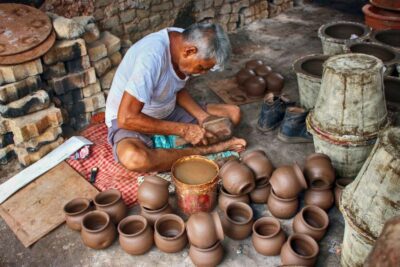
- Work Stops You Can Actually Imagine: Recycling, Leather, Pottery, Soap
- Plastic recycling: seeing value in waste
- Leather work: craftsmanship under pressure
- Pottery and soap production: everyday goods, real function
- One note on expectations
- Schools and Churches: The Parts of Life You Don’t See in Postcards
- How to make this portion work for you
- Guided by Mohamed and Shailinder: Planning That Reduces Stress
- Meeting point you should know
- Price and Value: Is $20 Worth Two Hours in Dharavi?
- Timing and booking lead time
- Weather, Fitness, and Other Small Constraints That Make a Big Difference
- What to pack (without overthinking it)
- Who Should Book This Tour—and Who Might Skip It
- Best match for your travel style
- Should You Book This Dharavi Slum Tour?
- FAQ
- How long is the Dharavi Slum Tour?
- How much does the tour cost?
- What is the meeting point for the tour?
- Is private transportation included?
- Do I get an English-speaking guide?
- How large is the group?
- What happens if the weather is poor?
Key Highlights Before You Go
- Dignity-first approach that rejects poverty-gawking and keeps the focus on effort and achievement.
- English-speaking local guidance that helps you interpret what you’re seeing as you walk.
- Small group size (max 5), which makes it easier to ask questions without feeling rushed.
- Work you can actually picture: plastic recycling, leather work, pottery, and soap production.
- Community landmarks included in the route, like schools and churches.
- Good planning for logistics, including help from guides Mohamed and Shailinder to reach the meeting point smoothly.
What Dharavi Feels Like When You Stop Thinking in Stereotypes
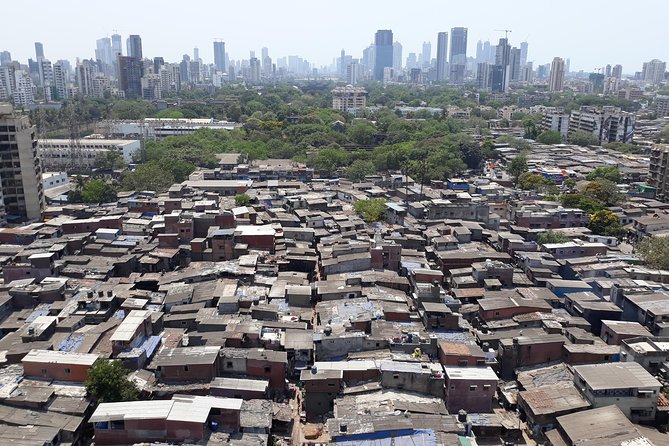
Dharavi is widely known thanks to the 2008 movie Slumdog Millionaire, but fame is a thin layer. The reality here is shaped by dense streets, shared space, and day-to-day industries that keep people moving forward.
This is also why a thoughtfully run tour matters. Dharavi is often described as the largest slum in Asia, yet that description alone tells you nothing about the skills, routines, and community networks that exist right under your feet. The tour’s core idea is simple: don’t treat it like misery porn—treat it like a place where people work, learn, worship, and build.
Why that matters for your trip
If you’ve got preconceived ideas, you’ll likely leave with a sharper mental picture. Instead of reducing people to a headline, you’ll see how industries and institutions connect to everyday life. That shift is the whole point, and it’s what makes the experience more meaningful than most “see-the-poverty” outings.
Other Dharavi walks led by people who live there



The Tour’s Main Mission: Not Gawking, Not Performing
One thing that sets this tour apart is the tone. The tour is explicitly designed to avoid voyeuristic poverty tourism—the kind where the focus is on shock value and staring.
You’ll notice the difference in how the guide frames things. The conversation leans toward capability, effort, and real-world resilience. There’s still hardship in the picture, but you’re not invited to consume it as entertainment. You’re invited to understand it as context.
A practical way to prepare your mindset
Go in ready to look at systems, not just scenes. Ask yourself: What kinds of work are happening here? How do people support one another? How do schools and churches fit into daily rhythm? If you keep those questions in mind, the tour lands much better.
Narrow Alleys, Real Community, and a Pace That Keeps Up with You
Expect the “slum tour” part to be literal: you’ll be walking through narrow alleys in Mumbai. That’s not just scenery—it’s how the place functions. Streets are tight, movement is constant, and you’ll pass through spaces that feel shared rather than staged.
The experience runs for about two hours, which is a sweet spot. Long enough to see multiple types of work, short enough that you’re not stuck grinding through the same lanes for the whole day. Also, the tour caps at maximum 5 travelers, so you get less herd energy and more actual guide-to-person conversation.
- Dharavi slum tour in Mumbai by Female tour guides of the slum
★ 5.0 · 1,976 reviews - Mumbai: Full-Day Sightseeing Tour of Mumbai
★ 4.9 · 1,822 reviews - Private Mumbai Sightseeing Tour (Traveller’s Choice Award Winner)
★ 5.0 · 1,565 reviews - Group Guided Walking Tour in Fort and Colaba
★ 5.0 · 1,073 reviews - Highlights of Mumbai Sightseeing Tour: TRAVELLERS CHOICE AWARDED
★ 5.0 · 915 reviews - Private Guided Walking Tour in Fort & Colaba
★ 5.0 · 895 reviews
The small-group advantage (for you)
With a small group, it’s easier to slow down when something matters. It’s also easier to avoid the awkwardness of a big group stopping in a way that doesn’t respect local flow. If you hate feeling like you’re blocking a sidewalk procession, this format helps.
Work Stops You Can Actually Imagine: Recycling, Leather, Pottery, Soap
This tour highlights several types of local production, and that’s where it becomes more than a walk. You’ll get a look at activity like plastic recycling, leather work, pottery, and soap production.
Here’s what I think makes these stops valuable: they’re concrete. You don’t just hear words like industry or entrepreneurship—you see processes that turn raw inputs into usable products. That helps you understand why the community has skill sets and networks, not only why it struggles.
Plastic recycling: seeing value in waste
Plastic recycling can sound like a single sentence until you see the workflow and the purpose behind it. The takeaway is that jobs aren’t abstractions here; they’re the engine of survival and progress.
Leather work: craftsmanship under pressure
Leather work tends to be hands-on and process-driven. It’s the kind of activity that reminds you how knowledge gets passed on and refined over time.
Pottery and soap production: everyday goods, real function
Pottery and soap production are also a strong choice for a tour like this. These aren’t only for display. They’re tied to daily life—objects that people use, sell, and rely on.
One note on expectations
You’re not shown a museum-style exhibition. You’re seeing work happening in a lived environment. That means the tour can feel closer and more direct than you might expect, so keep your phone away when the guide is speaking.
Schools and Churches: The Parts of Life You Don’t See in Postcards
Along the route, you’ll also encounter schools and churches. This matters because it shifts the focus from purely economic survival to the full picture of life.
When a tour includes education and faith spaces, you get a more honest sense of priorities. You can start to connect dots: learning isn’t a separate topic, and community gatherings aren’t only social—they’re part of how people sustain themselves.
How to make this portion work for you
When you pass these places, pay attention to what the guide highlights, not only what you visually notice. If you treat education and worship as “extra stops” you’ll miss the point. If you treat them as part of the same community system as recycling and making goods, the tour starts to feel coherent.
Guided by Mohamed and Shailinder: Planning That Reduces Stress
The planning quality shows up in details. One of the standout notes from prior experiences is that guides Mohamed and Shailinder help you arrive at the meeting point smoothly, which is huge in a busy city like Mumbai.
This matters more than it sounds. If you’re already in a foreign neighborhood and you’re trying to find a specific building unit, the difference between guesswork and clear help is real peace of mind. I love tours where the logistics are handled with care, because it lets you show up mentally ready to learn.
Meeting point you should know
You meet at Café Coffee Day, Unit No. 58, Ground Floor, Ram Mahal Building, Senapati Bapat Marg, T.P. Road, Station, Marinagar Colony, Navjivan Society, Mahim, Mumbai, Maharashtra 400016, India. The tour ends back at the meeting point.
Because the end location is the same, you don’t need to hunt for a pickup elsewhere. It’s a simple structure that helps when you’re navigating Mumbai streets.
Price and Value: Is $20 Worth Two Hours in Dharavi?
At $20 per person for about two hours, the value is tied to what you’re buying: guided interpretation and an access experience shaped by local context.
This isn’t a “pay for transport” situation. Private transportation isn’t included, and that’s something to plan around. If you can reach the meeting point by public transport, you’ll likely feel the price makes sense fast. If you need a costly taxi from far away, the overall value changes.
Timing and booking lead time
This tour is often booked about 6 days in advance on average. That doesn’t mean you must book weeks ahead, but it does suggest it’s not a last-minute lottery either. If you’re traveling during a busy stretch, booking sooner is the smart move.
Weather, Fitness, and Other Small Constraints That Make a Big Difference
This experience requires good weather. If the conditions are poor, the tour may be canceled and you’ll be offered a different date or a full refund.
You also need moderate physical fitness. “Moderate” here makes sense for a walk through tight alleyways. You’re not training for a marathon, but you should be ready to stand, walk, and maneuver with some uneven movement.
What to pack (without overthinking it)
Think practical. Wear comfortable shoes with decent grip. Bring water, especially if it’s warm. If you’re carrying a heavy bag, consider leaving it light so you can move easily through narrow areas.
Who Should Book This Tour—and Who Might Skip It
This Dharavi tour fits best if you want to understand how people live through work, community spaces, and everyday systems. If you’re curious, open-minded, and ready to ask questions, you’ll likely enjoy it a lot more than a checklist-style attraction.
It may not be ideal if you’re seeking a standard sightseeing format with big views and built-in comfort. The tour leans personal and close-range. It’s also not built for anyone who can’t manage walking through narrow lanes.
Best match for your travel style
- You like real local context over staged photo moments.
- You want a small-group setting with an English-speaking guide.
- You’re interested in how industries and institutions connect, not just poverty as a headline.
Should You Book This Dharavi Slum Tour?
Yes, if your goal is a respectful, guided understanding of Dharavi’s day-to-day life. The combination of an English-speaking local guide, a small group size, and a clear mission away from poverty-gawking makes this feel more like education and conversation than tourism spectacle.
Book it with a realistic plan: wear good shoes, aim for good weather, and reach the meeting point without last-minute stress. If you come in expecting a sensational “look at hardship” show, you’ll miss what the tour actually does best.
FAQ
How long is the Dharavi Slum Tour?
It runs for about 2 hours.
How much does the tour cost?
The price is $20.00 per person.
What is the meeting point for the tour?
Meet at Café Coffee Day, Unit No. 58, Ground Floor, Ram Mahal Building, Senapati Bapat Marg, T.P. Road, Station, Marinagar Colony, Navjivan Society, Mahim, Mumbai, Maharashtra 400016, India.
Is private transportation included?
No, private transportation is not included.
Do I get an English-speaking guide?
Yes. The tour includes an English-speaking local guide.
How large is the group?
This tour has a maximum of 5 travelers.
What happens if the weather is poor?
This experience requires good weather. If it’s canceled due to poor weather, you’ll be offered a different date or a full refund.
More Mumbai, Every Kind of Day
- Dharavi slum tour in Mumbai by Female tour guides of the slum
★ 5.0 · 1,976 reviews - Mumbai: Full-Day Sightseeing Tour of Mumbai
★ 4.9 · 1,822 reviews - Private Mumbai Sightseeing Tour (Traveller’s Choice Award Winner)
★ 5.0 · 1,565 reviews - Elephanta Caves & Island Guided Private Tour
★ 5.0 · 1,327 reviews
Dharavi, Told by Its Residents
- Dharavi slum tour in Mumbai by Female tour guides of the slum
★ 5.0 · 1,976 reviews - Mumbai: Dharavi Slum, DhobiGhat, and Dabbawallas Tour
★ 4.9 · 689 reviews - Dharavi Slum Tour
★ 5.0 · 625 reviews - Dharavi Slum tour in Mumbai by local resident
★ 5.0 · 572 reviews
New on the Mumbai shortlist




Dharavi Community Walks, compared.
 ★ 5.0Dharavi slum tour in Mumbai by Female tour guides of the slumFrom $91,976 reviews
 ★ 4.9Dharavi Slum, DhobiGhat, and Dabbawallas TourFrom $14689 reviews
 ★ 5.0Dharavi Slum TourFrom $20625 reviews
 ★ 5.0Dharavi Slum tour in Mumbai by local residentFrom $4572 reviews
 ★ 4.9Dharavi Slum Slumdog Millionaire Tour with a LocalFrom $10529 reviews
 ★ 5.0Mumbai Slum Tour – Visit Dharavi Slum with Local GuideFrom $5509 reviews
 ★ 5.0Dhobi Ghat Laundry and Dharavi Slum Tour with LocalFrom $4469 reviews
 ★ 5.02-Hour Guided Tour of DharaviFrom $22359 reviews
Browse the lists this tour appears in