
Review · DHARAVI COMMUNITY WALKS
Dharavi- Asia’s largest Slum tour with local guide from Dharavi
Dharavi isn’t what people expect. This private, local-led outing in Mumbai turns assumptions into street-level understanding, with local guides who explain daily life and working industries, and a route that typically centers on leather work and clay making. Guides like Farzan and Kashif stand out in the reviews for sharing personal context about work, schooling, and home life, not just what things look like from the outside.
I also like how the experience is structured for a real visit, not a photo-fest. You get hotel pickup and drop-off, a focused 2–3 hour window, and time to ask questions while you walk tight lanes. The main thing to consider is that photography is prohibited inside Dharavi, and the walking can be compact and uneven—so it’s smart to come with moderate physical fitness and a respectful mindset.
In This Review
- Key highlights you’ll care about
- Entering Dharavi with the right expectations
- Price and value: $47.15 for a guided, door-to-door visit
- Pickup, timing, and how the walking feels
- The lane walk: where small industries shape daily life
- From 90 Feet Road into Dharavi Leather
- Clay pots and taking home something handmade
- Why private guiding keeps it respectful (and stops the voyeur vibe)
- Getting your money’s worth: who this suits best
- Practical logistics that matter on the day
- Should you book this Dharavi tour?
- FAQ
- How long is the Dharavi tour?
- What does the tour cost?
- Does the tour include hotel pickup and drop-off?
- Is the tour private?
- Can I take photos in Dharavi?
- Are there any age or timing restrictions?
Key highlights you’ll care about
- Local-led, private feel: It’s only your group, so you can move at a human pace and ask real questions.
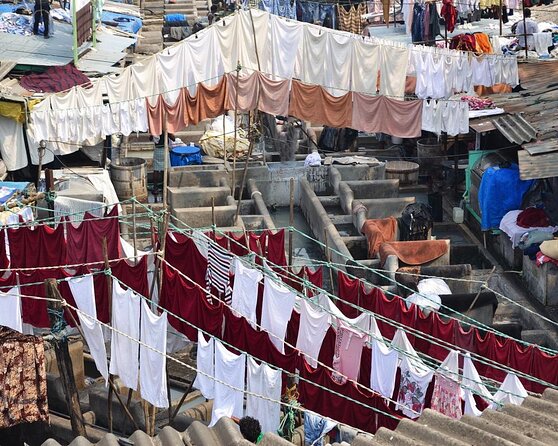
- Two industry stops: You’ll see how people earn money through trades like leather work, and you’ll also encounter clay work such as pot making.
- Hotel pickup and drop-off included: Door-to-door transport makes this much easier than planning a DIY visit.
- Respect rules are part of the deal: Photography is prohibited in Dharavi areas you visit, which keeps the tone serious.
- Short, focused duration: About 2–3 hours keeps it intense but manageable.
- Guides with lived perspective: Multiple guides are described as residents or people with deep personal ties to the community, and they often aim to change perceptions.
Entering Dharavi with the right expectations
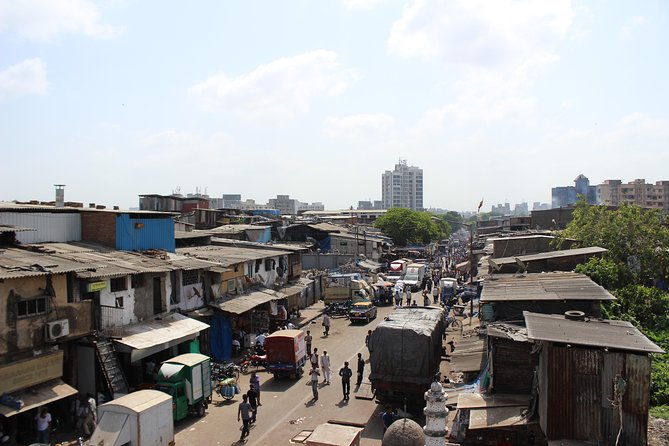
Dharavi gets a lot of headlines, but a guided walk is where the stereotypes start to fall apart. What you’re really experiencing here is an economic system that runs inside a dense neighborhood. The scale can feel shocking at first—thousands of homes and thousands of workdays happening close together—but a good guide helps you connect the dots fast.
One reason this tour lands well is that it’s not presented as shock value. In the best moments, you’re guided through how trades operate on the ground: where goods are made, where products move through small businesses, and how people manage family life alongside work. Reviews mention guides who were raised in Dharavi and still live there, and that matters because it changes the tone from visitor-to-subject into person-to-person conversation.
The other expectation shift is pride. Even when housing conditions are difficult, the working energy and problem-solving spirit show up clearly in how the community organizes daily tasks. Guides mentioned in feedback—Farzan, Furkan, Mujaffar, Razak/Razaak, and Ahad—often frame Dharavi as a place with its own functioning ecosystem, not just an overlooked corner of the city.
Price and value: $47.15 for a guided, door-to-door visit
At about $47.15 per person for a 2–3 hour experience, this isn’t a bargain you should ignore. But it also isn’t pricing itself like a luxury “private” tour. What you’re paying for is the hard part of visiting: getting into the area with a local guide and transportation that starts and ends at your hotel.
A big value point is that hotel pickup and drop-off are included for the standard route. That reduces friction a lot. In Mumbai, time matters, and the extra hassle of finding reliable transport on your own can easily eat up the day you wanted to spend seeing something meaningful.
Two smaller value notes:
- You get a professional guide and a private group format, so you’re not competing with strangers for time to ask questions.
- You’ll see industry-related stops (leather work and clay/pottery making), which helps turn the visit into something you can actually remember for the details.
The one price-related caution: if you need North Mumbai pickup, there may be additional transport cost. And if you want a language guide beyond English, that can add cost too. So think of the base price as fair, but plan a little wiggle room if your hotel is farther out or you need extra language support.
Other Dharavi walks led by people who live there



Pickup, timing, and how the walking feels
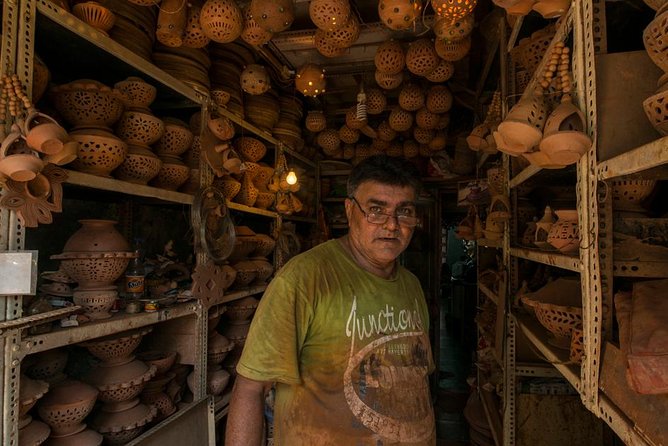
This tour is short on paper—about 2–3 hours—but it’s active on the ground. You’ll be moving through tight by-lanes and work areas, which is why the experience calls for moderate physical fitness. You don’t need to be an athlete, but you should be comfortable walking in crowded, uneven spaces.
You’ll also want to treat it like a focused cultural visit, not a casual stroll. There are rules to follow, and the route includes working areas where attention to local guidance keeps things smooth. One review explicitly praised how safe it felt compared to more voyeuristic tours; that’s the benefit of having a guide who knows what boundaries to keep and how to explain things without turning people into entertainment.
Time-wise, there’s also a scheduling restriction: the tour cannot operate between 12.30 p.m. to 2 p.m. on Fridays. If you’re traveling on a Friday midday, you’ll need an alternate time or another day. Weather matters too—this is an experience that needs good weather, and if it’s canceled due to poor conditions, you should expect a different date or a refund.
The lane walk: where small industries shape daily life
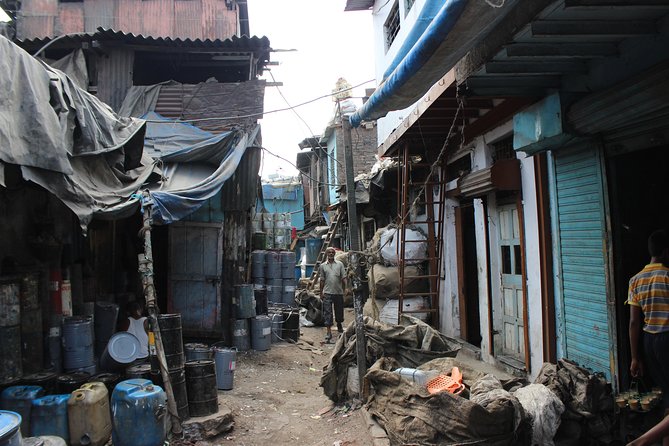
The heart of the experience is the walking itself. You start from a main road and then get pulled into the network of lanes where work happens right alongside daily life. The vibe changes quickly once you’re inside: sounds compress, movement gets denser, and you notice how many small businesses function without much “show.” People aren’t staging a display; they’re doing the job.
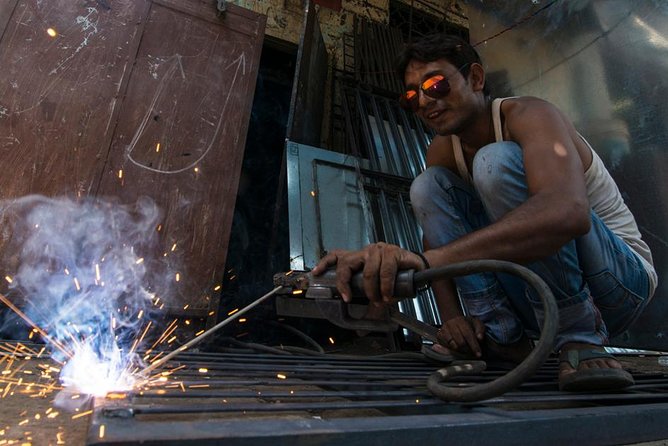
What makes this section worth your time is that it helps you see Dharavi as an economy. The walk is designed to show you small-scale industries operating in and around the area and how those activities contribute to the wider city. You might pass tailors, waste sorters, and other local work setups as the guide explains how goods are processed and turned into products.
In reviews, several guides are singled out for connecting industry to everyday life. Kashif is mentioned for explaining everything from commercial activity to schooling and home life. Farzen is praised for personal insights about people, industries, and home routines. That kind of linking is what turns a “slum tour” into an understanding tour. You start to ask better questions, like:
- How do supply chains work in small spaces?
- How do families plan work around school and daily needs?
- What social systems keep things running?
A practical note: because it’s a dense neighborhood, your guide controls the flow of walking, and the sequence of stops can vary based on what’s happening on the ground. That flexibility can be a plus, because it can make the visit feel more real and less scripted.
From 90 Feet Road into Dharavi Leather
One of the most memorable parts for many people is the leather-focused stop. You enter from 90 Feet Road, then go into a leather area where you can see the practical side of the trade. This is where the tour’s title earns its attention.
You should expect this section to be more intense than a typical museum stop. Leather work is physical, process-driven, and closely tied to materials and timing. Even if you don’t see every single step in the chain, you’ll understand enough to realize why this area functions like an industry cluster, not just a set of workplaces.
The timing here is short—about 10 minutes—and it includes admission listed as free for that stop. Short doesn’t mean shallow, though. The value is in the guide’s explanation of what you’re seeing, and in the fact that it’s framed as labor and enterprise. Multiple reviews highlight that guides can correct the “only poverty” storyline and show the entrepreneurship that exists inside the community.
One caution: because it’s working space, keep your attention on the guide and the rules of the area. This is also where the “no photography” rule becomes real—so be mentally prepared to observe without turning everything into a photo album.
- Dharavi slum tour in Mumbai by Female tour guides of the slum
★ 5.0 · 1,976 reviews - Mumbai: Full-Day Sightseeing Tour of Mumbai
★ 4.9 · 1,822 reviews - Private Mumbai Sightseeing Tour (Traveller’s Choice Award Winner)
★ 5.0 · 1,565 reviews - Group Guided Walking Tour in Fort and Colaba
★ 5.0 · 1,073 reviews - Highlights of Mumbai Sightseeing Tour: TRAVELLERS CHOICE AWARDED
★ 5.0 · 915 reviews - Private Guided Walking Tour in Fort & Colaba
★ 5.0 · 895 reviews
Clay pots and taking home something handmade
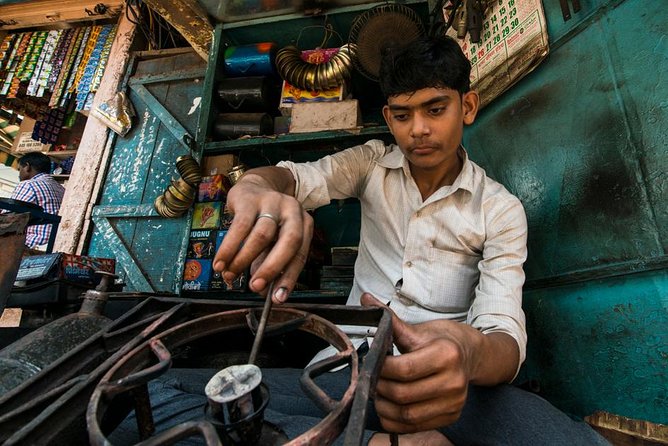
The experience also includes a look at clay pots being made and the chance to buy something to take home. That sounds like a shopping add-on, but it can be meaningful when it’s done right—especially because the products come from the same local economy you’ve been walking through.
Here’s how to approach this part wisely:
- Treat purchases as supporting the craftspeople, not as a souvenir hunt.
- Ask the guide what the items are and how they’re made, since that context makes the object more than a trinket.
- Keep your budget realistic. If you’re traveling with limited luggage, you’ll want to choose items you can carry without drama.
Several reviews mention the tour being educational and eye-opening, and a big reason is that you’re not just looking at “poverty.” You’re seeing skills—like pottery/clay work—that can be practiced, traded, and passed along. That’s the kind of detail you remember long after the photos are sorted.
And yes, there’s a good chance you’ll end up with something small and handmade that feels more personal than a standard Mumbai magnet.
Why private guiding keeps it respectful (and stops the voyeur vibe)
If you’re worried about being intrusive, you’re not wrong to think about it. A lot of “slum tours” worldwide can slide toward voyeurism. This one is set up to avoid that by keeping a private group format and placing the guide at the center of how you move and what you see.
Reviews repeatedly praise guides who lived in Dharavi or have deep personal ties. That matters because they can set expectations on behavior and pacing. People like Farzan, Razak/Razaak, Mujaffar, and Ahad come up in feedback for being informative and for guiding in a way that feels safe and non-exploitative.
You’ll also notice the rules:
- Photography is prohibited in Dharavi areas you visit.
- The guide handles access and movement.
- Your route is shaped by what’s appropriate on the ground.
So the tour works best if you come with the mindset of learning from the community, not taking content from it. If you do that, the visit tends to feel surprising in a good way. Reviews often describe it as changing your view of slums—less about judging what’s lacking, more about understanding what people are building.
Getting your money’s worth: who this suits best
This tour is a strong fit if you want more than photos and street-level impressions. You should book it if you’re the type who asks questions, likes concrete explanations, and cares about seeing how local industries function in real neighborhoods.
It’s also a good choice for families, as long as everyone can handle moderate walking. One review describes a family with children aged 9 and 11 who felt the tour was safe and well explained. If you’re traveling with younger kids, note that children under 5 can join for free, but the tour still has that compact-walking reality.
Where it may not fit:
- If you hate rules like no photography, you’ll feel limited.
- If you want a low-walking, high-comfort experience, the lanes may feel too tight.
- If you’re looking for a purely humanitarian narrative, you might find the strong industry focus more practical than emotional.
Practical logistics that matter on the day
You’ll meet at a specific spot: Third Wave Coffee, Tip Road, Unit no. 58, Ground, Ram Mahal, Senapati Bapat Marg, Marinagar Colony, Station, Mahim, Mumbai. The tour ends near Kumbhar Wada, Dharavi, on 60 Feet Road.
The exact order of what you see can vary, since the sequence is up to the local guide on-ground. That flexibility is often helpful, but it means you shouldn’t plan a tight schedule afterward. Keep some buffer time.
You also get a mobile ticket, and the tour supports group discounts, which is useful if you’re traveling with friends and can book as a small group.
Should you book this Dharavi tour?
Here’s my take: if you want a respectful, local-led view of Dharavi’s everyday economy—with leather work and clay/pot making—this is one of the smarter ways to do it in Mumbai. The guide-driven explanations, the private format, and the hotel pickup make the experience both easier and more human than DIYing it.
I’d skip it only if you’re strongly uncomfortable with tight walking and strict rules like no photography, or if you’re traveling during the Friday midday block when it can’t operate.
If you book, do one thing that makes the visit better: come with curiosity, not judgment. Ask how work connects to daily life. You’ll leave understanding why many guides aim to change perceptions—not with slogans, but with street-level facts you can see with your own eyes.
FAQ
How long is the Dharavi tour?
The experience runs about 2 to 3 hours.
What does the tour cost?
The price is $47.15 per person.
Does the tour include hotel pickup and drop-off?
Yes, hotel pickup and drop-off are included, but there may be additional transport cost for North Mumbai pickup.
Is the tour private?
Yes. It’s a private tour/activity, and only your group participates.
Can I take photos in Dharavi?
No. Photography is prohibited within the areas of Dharavi included in the tour.
Are there any age or timing restrictions?
Children below age 5 can join for free. Also, the tour cannot operate between 12.30 p.m. and 2 p.m. on Fridays, and it requires good weather to run.
More Mumbai, Every Kind of Day
- Dharavi slum tour in Mumbai by Female tour guides of the slum
★ 5.0 · 1,976 reviews - Mumbai: Full-Day Sightseeing Tour of Mumbai
★ 4.9 · 1,822 reviews - Private Mumbai Sightseeing Tour (Traveller’s Choice Award Winner)
★ 5.0 · 1,565 reviews - Elephanta Caves & Island Guided Private Tour
★ 5.0 · 1,327 reviews
Dharavi, Told by Its Residents
- Dharavi slum tour in Mumbai by Female tour guides of the slum
★ 5.0 · 1,976 reviews - Mumbai: Dharavi Slum, DhobiGhat, and Dabbawallas Tour
★ 4.9 · 689 reviews - Dharavi Slum Tour
★ 5.0 · 625 reviews - Dharavi Slum tour in Mumbai by local resident
★ 5.0 · 572 reviews
New on the Mumbai shortlist




Dharavi Community Walks, compared.
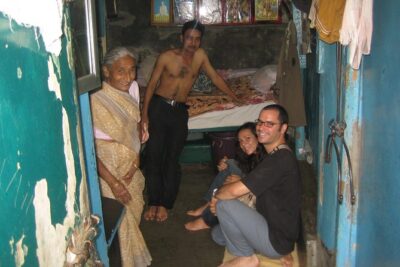 ★ 5.0Dharavi slum tour in Mumbai by Female tour guides of the slumFrom $91,976 reviews
 ★ 4.9Dharavi Slum, DhobiGhat, and Dabbawallas TourFrom $14689 reviews
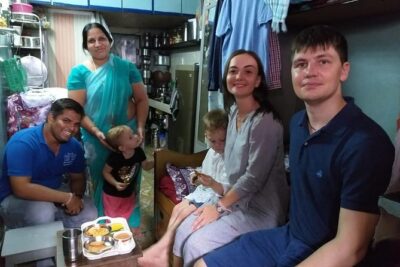 ★ 5.0Dharavi Slum TourFrom $20625 reviews
 ★ 5.0Dharavi Slum tour in Mumbai by local residentFrom $4572 reviews
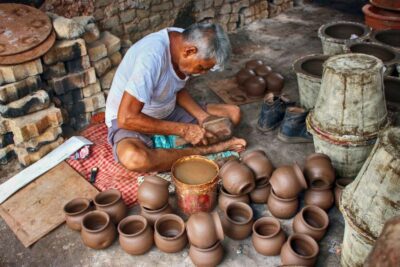 ★ 4.9Dharavi Slum Slumdog Millionaire Tour with a LocalFrom $10529 reviews
 ★ 5.0Mumbai Slum Tour – Visit Dharavi Slum with Local GuideFrom $5509 reviews
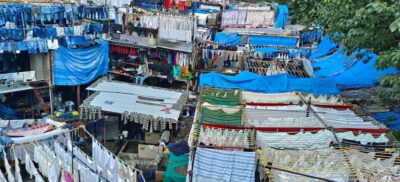 ★ 5.0Dhobi Ghat Laundry and Dharavi Slum Tour with LocalFrom $4469 reviews
 ★ 5.02-Hour Guided Tour of DharaviFrom $22359 reviews
Browse the lists this tour appears in