
Review · DHARAVI COMMUNITY WALKS
Private Guided Walking Tour in Dharavi Slums
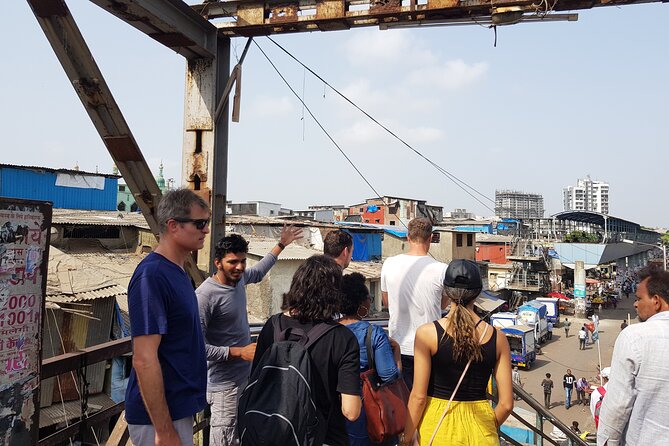
Dharavi is more than a headline. This private, 2-hour walking tour in Mumbai takes you past the places where work and daily life run side by side, starting near Mahim and ending in Kumbhar Wada. You’ll see Dharavi not as a single image, but as a working area of homes, small industries, alleys, schools, and temples.
What I really liked was the focus on practical realities: you understand how the economy functions and how people live within it, instead of only hearing theories. I also appreciated the guide mix of city context and on-the-ground explanation, with local voices that can range from resident guides like Bharti to history-and-context support from guides such as Jimmy, Kamlesh, Sultan, Palak, Siddhesh, and Maiyur.
One thing to consider: this walk can feel emotionally heavy, especially if you’re used to gentler, more polished tourist routes. Plan for good weather, and don’t count on bottled water or snacks being provided.
In This Review
- Key things I’d put on your radar
- A Slum Walk That Centers Work and Human Scale
- Mahim Stop: The City Edge Where Dharavi’s Story Starts
- Dharavi Stop for Recycling: Seeing Waste Turn Into Industry
- Dharavi bylanes and Tannaries: Leather Work Meets Everyday Life
- Kumbhar Wada Potter’s Settlement: Craft Work Inside the Community
- Local Guides and a Respectful Tone: Why Names Matter
- Price and Value at $44.75 for Two Hours
- Practicalities: Meeting Point, Timing, and What to Bring
- Who This Walk Suits (and Who Might Want a Different Day)
- Should You Book This Dharavi Walking Tour?
- FAQ
- How long is the Private Guided Walking Tour in Dharavi Slums?
- How much does the tour cost?
- Is this tour private?
- Where do I meet the guide?
- Where does the tour end?
- What’s included in the price?
- What’s not included?
- When will I get confirmation after booking?
- Does the tour run in bad weather?
- Is free cancellation available?
Key things I’d put on your radar
- Private group, local perspective: you’re with your own group, guided by people connected to the area.
- Mahim to Dharavi story arc: you start at the city edge where Dharavi’s growth began developing.
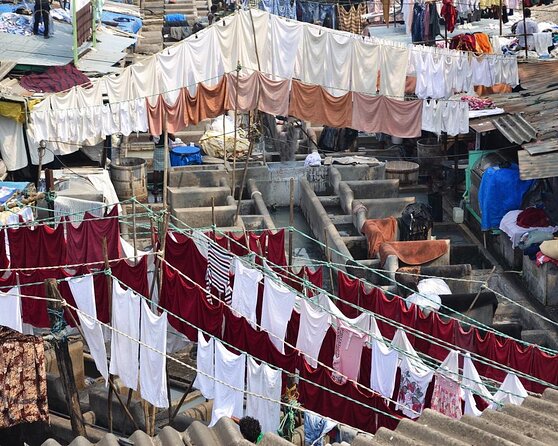
- Recycling as a visible industry: you’ll see how waste gets processed in an informal industrial complex.
- Leather tannery and bylanes: you get both how products are made and what everyday living looks like.
- Potters’ work at Kumbhar Wada: you’ll see the settlement where crafting and home life overlap.
- Respect is baked into the experience: the best reviews emphasize a careful, humane tone rather than shock.
A Slum Walk That Centers Work and Human Scale
Dharavi can be a loaded word before you ever arrive. The value of this tour is that it changes the angle fast: you’re not standing at a distance, and you’re not being sold a tragedy package. Instead, you’re walking through a place where production, recycling, learning, and community routines keep moving.
I like that the experience is built around what people do. One highlight is seeing Mumbai’s waste getting recycled in an informal industrial setting, which explains why Dharavi isn’t just housing or just factories—it’s a system. Another highlight is pairing that economy with bylanes and daily living conditions, so you can connect the dots between work and home.
Now, the balanced part: you may still feel discomfort. That’s not because the tour is sensational; it’s because the subject is real. If you want a purely light itinerary, this won’t be that. If you want a clearer understanding of how cities function beyond the glossy map, it’s a strong choice.
Mahim Stop: The City Edge Where Dharavi’s Story Starts
The tour begins at the edge of the city area of Mahim, the point from where Dharavi began developing. That first step matters because it frames Dharavi as part of Mumbai’s growth, not an isolated island that appeared out of nowhere.
In practical terms, this is your setup moment. You get a sense of location and origin before you move deeper into the neighborhoods. It’s also a good moment to ask questions while things are still calm and easy, before the walk becomes more detailed and more crowded with sensory input.
Other Dharavi walks led by people who live there



Dharavi Stop for Recycling: Seeing Waste Turn Into Industry
Next you spend time in Dharavi focused on the recycling side—seeing Mumbai’s waste get processed in an informal industrial complex. This isn’t just an observation stop; it’s a chance to understand how material flows through the place and back into products and supply chains.
This is also one of the most useful parts for first-timers. Many people arrive thinking of Dharavi as a single “thing.” Here, you see it as a collection of trades and workflows, with recycling at the center. Even without technical detail being your priority, you’ll likely leave with a clearer sense of scale and purpose.
A note on time: this stop is about 30 minutes. That’s enough to understand what the area is doing and how it fits the larger neighborhood, without turning it into a long lecture. If you prefer hands-on experiences, you might wish the recycling portion ran longer, but the pace keeps the overall tour manageable.
Dharavi bylanes and Tannaries: Leather Work Meets Everyday Life
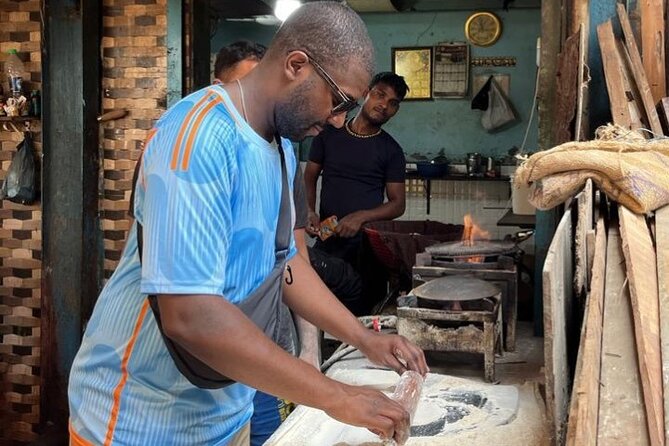
After the recycling look, the route goes into Dharavi bylanes, aimed at showing living conditions and the daily rhythm of residents. This stop is about 30 minutes, which gives you a real sense of how spaces connect: work zones, alleyways, and home-adjacent areas all sit close together.
A key highlight here is tannaries, including Dharavi’s famous leather products being manufactured. That combination—bylanes plus tanneries—does something important for your understanding. You can’t separate production from living when the spaces are so close. The tour pushes you to think in terms of proximity and practicality, not separate categories.
There’s also a “context band” in this section. Along the route you may see elements like slum dwellings, alleys, and community spaces such as temples and schools. Even if you don’t linger at each point, the walk helps you read the neighborhood as a functioning society rather than a single attraction.
Possible drawback to watch for: this is the part where images and emotions can hit hardest. If you’re prone to overthinking, pace yourself. Take breaks when you need to. The tour length is short enough that you can reset your head without feeling trapped.
Kumbhar Wada Potter’s Settlement: Craft Work Inside the Community
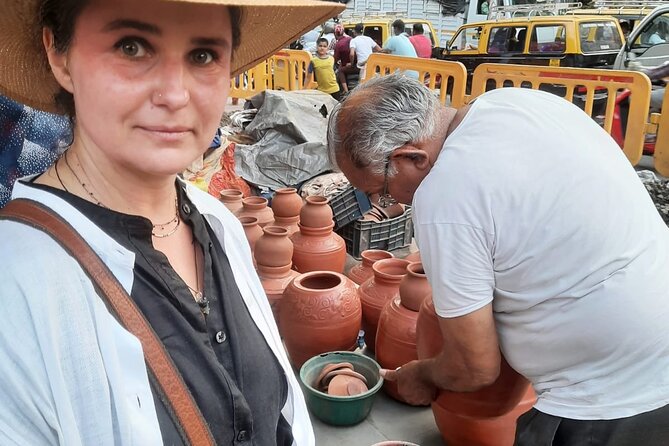
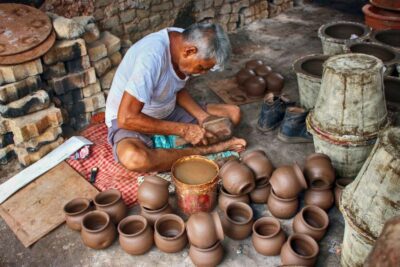
The final walking segment takes you to Kumbhar Wada, where you’ll visit the potters’ settlement. This stop is also around 30 minutes, and it’s structured to show how people work and live in the same environment.
This is the section I’d recommend if you want something tangible. Seeing pottery work makes the neighborhood’s skills feel real in a way a photo never quite does. You may also appreciate the shift in pace from industrial themes (recycling and leather) to a craft tradition where the outputs can feel more familiar.
What makes Kumbhar Wada valuable is the perspective it adds. You start the walk with Dharavi’s growth context, pass through recycling and manufacturing, then end with craft settlement life. That arc helps you understand Dharavi as a set of interlocking livelihoods, not a single storyline.
The tour ends at Kumbhar Wada in Dharavi, which is a nice full-circle feeling: you’re walking from the origin area near Mahim to one of the settlement zones where work is embedded into daily living.
More Mumbai days built around your own list
- Private Mumbai Sightseeing Tour (Traveller’s Choice Award Winner)
★ 5.0 · 1,565 reviews - Elephanta Caves & Island Guided Private Tour
★ 5.0 · 1,327 reviews - Private Guided Walking Tour in Fort & Colaba
★ 5.0 · 895 reviews - Highlights of South Mumbai Guided Private Tour in AC Vehicle
★ 5.0 · 620 reviews - Private Mumbai Sightseeing Tour(Travellers Choice Award Winner)
★ 5.0 · 565 reviews - Private Half-Day Sightseeing Tour in Mumbai
★ 5.0 · 430 reviews
Local Guides and a Respectful Tone: Why Names Matter
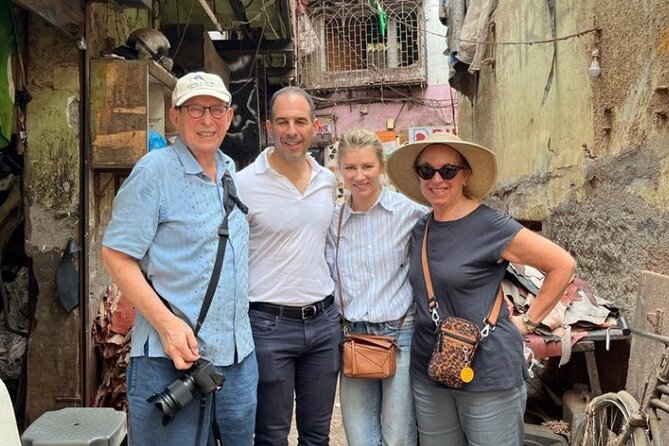
One reason this tour gets such strong ratings is the guide approach. Multiple experiences emphasize a respectful, humane tone and a careful mix of history with contemporary context.
You’ll also notice a recurring theme in guide backgrounds. Many walks are led with local resident perspective, including guides such as Bharti, described as a fourth-generation resident, and others like Jimmy, Kamlesh, Sultan, Palak, Siddhesh, and Maiyur. That matters because local guides naturally prioritize what outsiders often miss: how work actually fits into life, how community space functions, and what residents want you to understand.
I also liked the practical feel of the guiding. In a place like Dharavi, you want someone to help you read the neighborhood without turning it into a checklist. The best versions of this tour feel like a conversation you can walk inside—questions, context, and quick direction when the street pattern gets complex.
There’s an additional reassurance in the feedback: safety and friendliness come up repeatedly. That doesn’t mean you should treat it like a theme park. It means the route is guided with care, and the human connections are real.
Price and Value at $44.75 for Two Hours
At $44.75 per person for about 2 hours, this isn’t the cheapest Mumbai experience. But it also isn’t paying just for a generic walking route. You’re paying for a private setup, hosting charges included, and the time of local guides who know what they’re showing and why it matters.
The value logic is simple: shorter tours that use local resident expertise cost more than big-brand bus tours, but they also deliver information you can’t get from signage. This tour gives you a dense, interpretive route through several parts of Dharavi in one go, including recycling, tannaries, bylanes, and Kumbhar Wada.
You might also see group discounts. If you’re traveling with family or friends, that’s a good way to reduce the per-person impact. The tour is also mobile-ticketed, which helps on a city where last-minute changes happen.
One more practical value point: the tour is often booked about 8 days in advance on average. That’s a decent sign of consistent demand. If you want a specific guide pairing or tighter schedule, it’s smart to book without waiting for the last minute.
Practicalities: Meeting Point, Timing, and What to Bring
This is a private tour, meaning only your group participates. That’s a big deal here, because Dharavi’s streets can be narrow and the experience is better when your group stays together.
Start point is Third Wave Coffee at Tip Road, Unit no.58, Ground, Ram Mahal, Senapati Bapat Marg, Marinagar Colony, Station, Mahim, Mumbai, Maharashtra 400016, India. The walk ends at Kumbhar Wada, Dharavi, Mumbai, Maharashtra, India.
The tour is near public transportation, which helps. Mumbai’s traffic and distances can be unpredictable, so being close to transit reduces stress.
A couple practical notes:
- Bottled water and snacks are not included, so you’ll want to plan accordingly.
- The tour requires good weather. If the forecast looks rough, you might need to shift dates.
Finally, confirmation is received within 48 hours of booking, subject to availability. Most people can participate, but you’ll want to be comfortable walking through busy streets for about two hours.
Who This Walk Suits (and Who Might Want a Different Day)
This tour fits you if you want city understanding with real-world context. If you’re the type who likes to connect dots—how waste becomes materials, how manufacturing fits into neighborhood life, how craft settlements work—you’ll likely enjoy the route.
It’s also a solid fit if you care about respectful storytelling. Many of the strongest impressions revolve around thoughtful guiding and humanizing context rather than sensational framing. If you worry about how to approach a sensitive subject, the guide approach is a key part of the experience’s appeal.
Who might pause before booking? If you need a cheerful, low-emotion day, Dharavi may feel too intense. Also, if you’re expecting a strictly sight-seeing itinerary with set landmarks and panoramic views, the experience is more about walking, interpreting, and listening.
This isn’t about collecting facts. It’s about seeing how a working city-within-a-city actually functions.
Should You Book This Dharavi Walking Tour?
If your goal is to understand Dharavi as a place of work, community, and everyday routines, I think this is a worthwhile booking. The combination of Mahim context, recycling, tannaries, bylanes, and Kumbhar Wada potters makes the time feel efficient and focused.
Just go in with the right mindset. Bring water, wear something comfortable for walking, and be ready for a real neighborhood experience rather than a postcard. If you do that, you’ll leave with a sharper picture of how Mumbai’s industries and lives intersect in one of Asia’s largest slum areas.
FAQ
How long is the Private Guided Walking Tour in Dharavi Slums?
It lasts about 2 hours.
How much does the tour cost?
The price is $44.75 per person.
Is this tour private?
Yes. It is a private tour/activity, and only your group will participate.
Where do I meet the guide?
The start meeting point is Third Wave Coffee, Tip Road, Unit no.58, Ground, Ram Mahal, Senapati Bapat Marg, Marinagar Colony, Station, Mahim, Mumbai, Maharashtra 400016, India.
Where does the tour end?
The tour ends at Kumbhar Wada, Dharavi, Mumbai, Maharashtra, India.
What’s included in the price?
The tour includes hosting charges.
What’s not included?
Bottled water and snacks are not included.
When will I get confirmation after booking?
Confirmation is received within 48 hours of booking, subject to availability.
Does the tour run in bad weather?
The tour requires good weather. If it’s canceled due to poor weather, you’ll be offered a different date or a full refund.
Is free cancellation available?
Yes. You can cancel for a full refund up to 24 hours before the experience starts. If you cancel less than 24 hours before, the amount paid is not refunded.
More Mumbai, Every Kind of Day
- Dharavi slum tour in Mumbai by Female tour guides of the slum
★ 5.0 · 1,976 reviews - Mumbai: Full-Day Sightseeing Tour of Mumbai
★ 4.9 · 1,822 reviews - Private Mumbai Sightseeing Tour (Traveller’s Choice Award Winner)
★ 5.0 · 1,565 reviews - Elephanta Caves & Island Guided Private Tour
★ 5.0 · 1,327 reviews
Mumbai on Your Own Terms
- Private Mumbai Sightseeing Tour (Traveller’s Choice Award Winner)
★ 5.0 · 1,565 reviews - Elephanta Caves & Island Guided Private Tour
★ 5.0 · 1,327 reviews - Private Guided Walking Tour in Fort & Colaba
★ 5.0 · 895 reviews - Highlights of South Mumbai Guided Private Tour in AC Vehicle
★ 5.0 · 620 reviews
Dharavi, Told by Its Residents
- Dharavi slum tour in Mumbai by Female tour guides of the slum
★ 5.0 · 1,976 reviews - Mumbai: Dharavi Slum, DhobiGhat, and Dabbawallas Tour
★ 4.9 · 689 reviews - Dharavi Slum Tour
★ 5.0 · 625 reviews - Dharavi Slum tour in Mumbai by local resident
★ 5.0 · 572 reviews
New on the Mumbai shortlist




Dharavi Community Walks, compared.
 ★ 5.0Dharavi slum tour in Mumbai by Female tour guides of the slumFrom $91,976 reviews
 ★ 4.9Dharavi Slum, DhobiGhat, and Dabbawallas TourFrom $14689 reviews
 ★ 5.0Dharavi Slum TourFrom $20625 reviews
 ★ 5.0Dharavi Slum tour in Mumbai by local residentFrom $4572 reviews
 ★ 4.9Dharavi Slum Slumdog Millionaire Tour with a LocalFrom $10529 reviews
 ★ 5.0Mumbai Slum Tour – Visit Dharavi Slum with Local GuideFrom $5509 reviews
 ★ 5.0Dhobi Ghat Laundry and Dharavi Slum Tour with LocalFrom $4469 reviews
 ★ 5.02-Hour Guided Tour of DharaviFrom $22359 reviews
Browse the lists this tour appears in