
Review · DHARAVI COMMUNITY WALKS
Mumbai Sightseeing with Dharavi Slum
Most cities have postcard views; Mumbai has choices. This private Mumbai + Dharavi day mixes big-name colonial sights with a guided walk through one of Asia’s largest slums. I especially like the way the route links landmark buildings (from Gateway of India to Chhatrapati Shivaji Terminus) with what people actually do every day, and I like that you get time at Dhobi Ghat to watch laundry work in the open. One drawback to plan for: the slum portion is powerful and can feel intense, and lunch is not included.
What makes this tour work is how it balances two sides of the city in one half-day. You’ll cover the waterfront classics near Gateway, then shift to public life around CST and Mani Bhavan, and finally end with Dhobi Ghat followed by Dharavi. Many bookings are led by guides like Nikesh (often called Nick), who are known for being safe-first, friendly, and candid about day-to-day reality.
If you want Mumbai as a mash-up of architecture, streets, and honest human scale, this fits. If you’re looking for a relaxed, only-sightseeing day where everything stays light, you might find Dharavi heavy.
In This Review
- Key things to know before you go
- A private half-day that pairs colonial Mumbai with everyday life
- Meeting point, pickup, and how the timing usually works
- Gateway of India and Taj Mahal Palace: starting with the skyline energy
- CST (UNESCO) and the British-era station feeling
- Mani Bhavan Gandhi Museum: the human scale behind a famous figure
- Dhobi Ghat: the open-air laundry that runs on public visibility
- Passing Mumbai’s colonial markers between the big stops
- Dharavi Slum Walk: how to approach it with respect and get real value
- What’s included in the $250 group price (and what isn’t)
- Who should book this tour, and who should skip it
- Should you book this Mumbai sightseeing with Dharavi slum?
- FAQ
- How long is the Mumbai sightseeing with Dharavi Slum tour?
- What is the price for the tour?
- Is pickup included?
- Does the tour include admission tickets?
- What does the tour include and exclude?
- Is it a private tour?
Key things to know before you go
- Dharavi walk with a real local voice: you spend about 2 hours walking through how people work and live.
- Watch laundry at Dhobi Ghat: it’s quick (around 20 minutes) but you’ll see the open-air process up close.
- CST and Mani Bhavan are built for context: CST is UNESCO-listed, and Mani Bhavan ties the day to Gandhi’s years in Mumbai.
- A mix of stops vs. passes: some sights are quick photo-and-street views from the car, not long museum-style visits.
- Price is per group (up to 3): the math can be great if you’re traveling with a friend or two.
- Private tour means your pace: it’s only your group, with pickup offered and a mobile ticket.
A private half-day that pairs colonial Mumbai with everyday life

This is the kind of Mumbai day that forces you to look twice, in the best way. You start with famous names and official buildings, then gradually move toward the city’s working rhythms. The tour doesn’t treat Dharavi like a side quest; it’s treated as the main event that earns your attention.
I also like that you don’t just stand around and take pictures. The itinerary is built around time blocks: 2 hours in Dharavi, a focused 15 minutes at CST, 30 minutes at Mani Bhavan, and 20 minutes at Dhobi Ghat. That mix helps you keep your bearings without turning the day into a nonstop sprint.
One thing to keep in mind: the schedule is structured, so some big sights elsewhere in the city are likely to be shorter views, quick stops, or roadside perspective rather than long wandering.
Meeting point, pickup, and how the timing usually works
Your day starts at Café Coffee Day in Mahim (Unit No. 58, Ground Floor, Ram Mahal Building, Senapati Bapat Marg, T.P. Road area). Pickup is offered, and you’ll return to the same meeting point at the end, so you’re not trying to figure out Mumbai transit mid-tour.
The tour runs about 6 hours. With that length, you’re getting a full arc: waterfront landmarks and colonial-era architecture, then public-life stops, then the heavy-but-important Dharavi segment. Because it’s private, you’re not stuck behind a large crowd, which matters in Mumbai where traffic and footpaths can be chaotic.
Plan to be ready for walking. Even though the itinerary includes car drives for parts of the route, you’ll be on foot during Dharavi and while you’re at Dhobi Ghat.
Other Dharavi walks led by people who live there




Gateway of India and Taj Mahal Palace: starting with the skyline energy
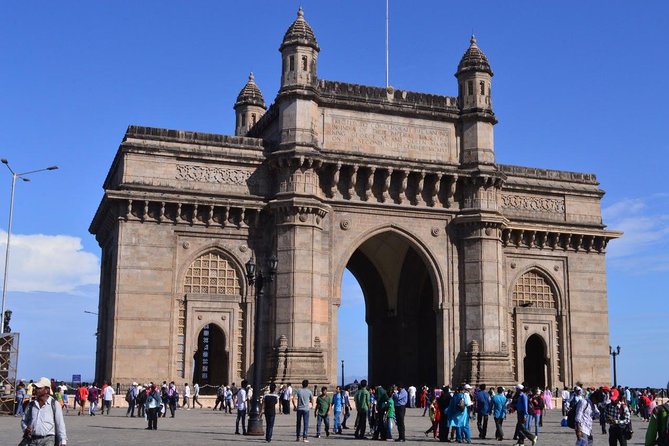
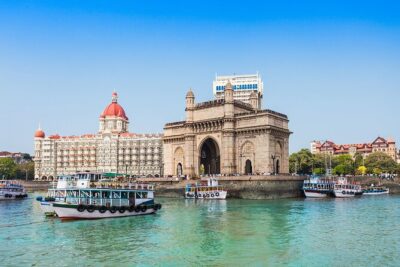
Gateway of India is your first big emotional signal. It’s famously tied to the arrival of King George V and Queen Mary, and it sits right beside the Taj Mahal Palace Hotel. This proximity makes the area useful early in the day: you can get the iconic feel of Mumbai without losing time.
You’re likely to spend only around 10 minutes here, but it’s enough to do two things well. First, you can take in the harbor-side setting and the scale of the buildings. Second, a good guide can connect this area to the way British-era influence and later Indian modern life overlap in the streets.
A practical note: Gateway is a “camera spot.” If you’re sensitive to crowds or want long, quiet viewing, you’ll need to rely on your guide’s timing and the fact that this stop is short.
CST (UNESCO) and the British-era station feeling
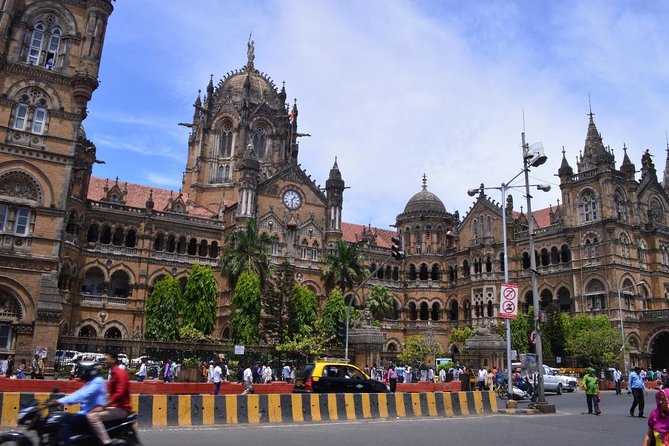
Next comes the heart of Mumbai’s transport story: Chhatrapati Shivaji Terminus (CST). It’s UNESCO-listed, and it also carries the older name Victoria Terminus, which you’ll hear in historical references. Even if you’re not obsessed with architecture, the building hits because it looks engineered to impress.
You’ll have about 15 minutes here. That’s enough time to appreciate the station as a monument and still keep the day moving toward context-building stops. For first-time visitors, this is a smart place to pause, because it’s an easy anchor: after a few hours in cars and streets, you’ll have a landmark that feels official and steady.
Mani Bhavan Gandhi Museum: the human scale behind a famous figure

Mani Bhavan Museum is one of those stops that can change the tone of your whole day. Mahatma Gandhi lived here for 17 years (1917 to 1934), and that long period is the key detail. Instead of treating Gandhi as a distant symbol, this stop gives you the sense of a person working through years in one place.
You’ll have about 30 minutes here, with admission included. Because the time isn’t huge, I’d treat this as a focused stop: read what you can, look at what’s displayed, and use it to connect the rest of the route to the broader story of Mumbai under different rule periods.
If you prefer strict “see only what matters” travel, Mani Bhavan is a good fit. If museums usually feel like a chore, you can still use it as a context reset before the day turns sharply toward real working life at Dhobi Ghat and Dharavi.
Other loops past the Gateway, Marine Drive and beyond
- Mumbai: Full-Day Sightseeing Tour of Mumbai
★ 4.9 · 1,822 reviews - Private Mumbai Sightseeing Tour (Traveller’s Choice Award Winner)
★ 5.0 · 1,565 reviews - Highlights of Mumbai Sightseeing Tour: TRAVELLERS CHOICE AWARDED
★ 5.0 · 915 reviews - Highlights of South Mumbai Guided Private Tour in AC Vehicle
★ 5.0 · 620 reviews - Private Mumbai Sightseeing Tour(Travellers Choice Award Winner)
★ 5.0 · 565 reviews - Private Half-Day Sightseeing Tour in Mumbai
★ 5.0 · 430 reviews
Dhobi Ghat: the open-air laundry that runs on public visibility
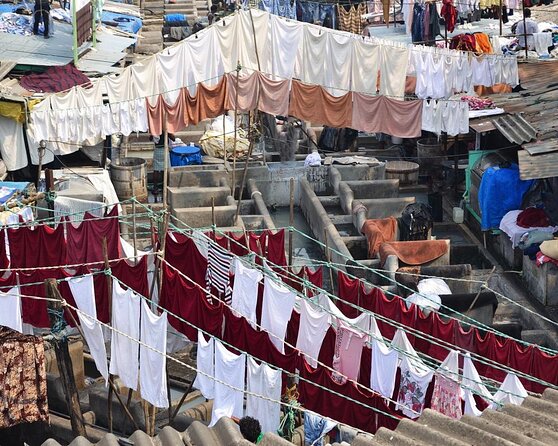
Dhobi Ghat is world-famous for a simple reason: laundry work happens in full view. You’ll spend about 20 minutes, and admission here is free. This short window is actually useful, because it keeps the focus on what’s happening rather than turning it into a long, tiring observation session.
What I like about this stop is that it isn’t staged. Clothes are washed in an open-air setting, and you see the practical side of how a city functions. It also acts as a bridge between the “sightseeing” Mumbai and the “working Mumbai,” so the jump to Dharavi doesn’t feel like a random switch.
A small consideration: because the work is public, it’s important to behave like a polite observer. Keep your movements controlled, don’t get in people’s way, and follow your guide’s cues on where you should stand.
Passing Mumbai’s colonial markers between the big stops
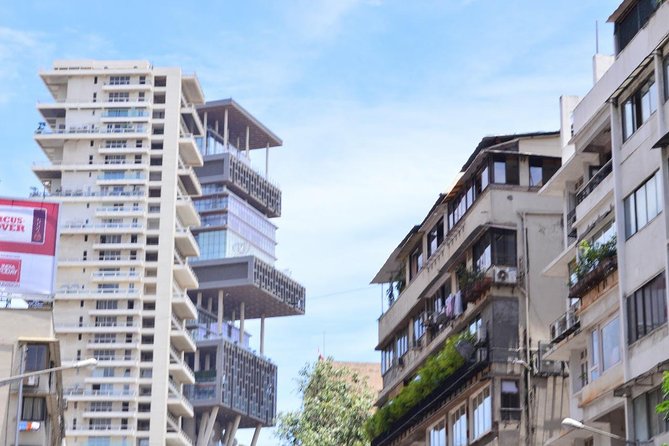
You won’t just sit in the car for dead time. The route includes several colonial-era landmarks and famous city spots, often as drive-bys or short exterior views. On your way, you may see or pass places like Mumbai University (built in 1857), the Rajabai Clock Tower (often compared to Big Ben), and the Watson’s Hotel ruins—tied to the story of Tata, who was refused entry and later built the Taj Mahal Hotel.
You may also get views of Oval Maidan, where cricket is part of the city’s identity, plus Bombay High Court and the Municipality Building. These are the stops that give you the “why” behind the skyline: the architecture shaped how power, law, education, and social life were built in the city.
On the waterfront side, you can expect to pass Marine Drive and Chowpatty Beach. And if the route timing works, you may also see Kamala Nehru Park for skyline views and the famous Old Woman’s Shoe viewpoint, plus Hanging Gardens, built over water tanks near the Tower of Silence (a Parsi burial place). These are good for photos and quick context, but the real weight of the day is still Dharavi.
Dharavi Slum Walk: how to approach it with respect and get real value
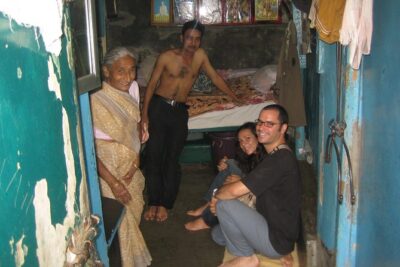
This is the part of the tour that most strongly separates it from a typical city checklist. You’ll spend about 2 hours walking through Dharavi with a guide focused on how people work and live. Admission for this part is free, but the value isn’t in a ticket price. It’s in the access to perspective.
This is where I’d be extra mindful about behavior. You’re not there to hunt for shock or take images without permission. You’re there to listen, learn, and treat people like people. A guide named Nick/Nikesh is repeatedly praised for a safety-first approach and for being honest about what’s going on day to day. That kind of guidance matters, because Dharavi is not a theme park.
Expect a walking-based experience, not a lecture-from-a-car. Your guide will point out what people do, how the area functions, and how daily life keeps moving even with tight space and big constraints. If you come in with a respectful attitude and some patience, you’ll leave with a more grounded picture of Mumbai.
Possible drawback: the emotional impact is real. If you’re sensitive or easily overwhelmed, you may want to mentally prepare for that before you head in.
What’s included in the $250 group price (and what isn’t)
The price is $250 per group, up to 3 people. That structure can be excellent value if you’re traveling with one other person, because it turns a “private tour” experience into something closer to a shared cost. You’re also not paying extra for the guide time itself during the major stops.
What’s included:
- Air-conditioned vehicle
- All fees and taxes
- Admission for certain key stops (listed as included for CST and Mani Bhavan)
What’s not included:
- Lunch
You’ll also notice that several stops show admission as free (Dharavi walk, Gateway of India area, Dhobi Ghat). Even if free doesn’t sound exciting, it helps the tour stay focused on guided time rather than stacking paid ticket logistics.
Practical tip: since lunch isn’t included, plan to eat before the tour or budget for a meal afterward near your return area.
Who should book this tour, and who should skip it
I’d recommend this tour if you want a real mix of Mumbai: major architecture, public work life, and a guided look at Dharavi that’s framed around daily living. It’s also a smart choice if you’re a first-timer who wants a “guided map” of the city’s layers in one day.
It’s especially good for solo travelers who want a safe-feeling setup. One review highlighted that safety was the first priority and that a solo woman traveler felt well looked after with the guide. Private format helps here, because you’re not sharing the day with a rotating crowd.
I’d be cautious if you want only postcard sights, because Dharavi and Dhobi Ghat are working-life experiences. They can be emotional and they require you to slow down and pay attention, not just collect photos.
Should you book this Mumbai sightseeing with Dharavi slum?
Book it if you want Mumbai to feel like a place with gravity, not a collection of photos. The big wins for me are the time balance—Dharavi + Dhobi Ghat paired with CST and Mani Bhavan—and the fact that the experience is led by guides associated with safety-first, friendly, and honest storytelling (names like Nikesh/Nick come up often).
Consider skipping or choosing a different tour if you’re not ready for a heavy, real-world portion of your day or if you don’t want to plan around walking and an empty lunch slot. If you’re okay with that trade, this is one of the better ways to see Mumbai as both a monument city and a working city—within a single 6-hour private format.
FAQ
How long is the Mumbai sightseeing with Dharavi Slum tour?
It runs for about 6 hours (approx.).
What is the price for the tour?
The price is $250 per group, up to 3 people.
Is pickup included?
Pickup is offered, and the tour starts at Café Coffee Day in Mahim. You’ll also return to the meeting point at the end.
Does the tour include admission tickets?
Admission is included for Chhatrapati Shivaji Terminus (CST) and Mani Bhavan Gandhi Museum. Dharavi, Gateway of India, and Dhobi Ghat are listed as free admission.
What does the tour include and exclude?
The tour includes an air-conditioned vehicle and all fees and taxes. Lunch is not included.
Is it a private tour?
Yes. It’s private, so only your group participates. Confirmation is received at booking time.
More Mumbai, Every Kind of Day
- Dharavi slum tour in Mumbai by Female tour guides of the slum
★ 5.0 · 1,976 reviews - Mumbai: Full-Day Sightseeing Tour of Mumbai
★ 4.9 · 1,822 reviews - Private Mumbai Sightseeing Tour (Traveller’s Choice Award Winner)
★ 5.0 · 1,565 reviews - Elephanta Caves & Island Guided Private Tour
★ 5.0 · 1,327 reviews
The Big Mumbai Circuits
- Mumbai: Full-Day Sightseeing Tour of Mumbai
★ 4.9 · 1,822 reviews - Private Mumbai Sightseeing Tour (Traveller’s Choice Award Winner)
★ 5.0 · 1,565 reviews - Highlights of Mumbai Sightseeing Tour: TRAVELLERS CHOICE AWARDED
★ 5.0 · 915 reviews - Highlights of South Mumbai Guided Private Tour in AC Vehicle
★ 5.0 · 620 reviews
Dharavi, Told by Its Residents
- Dharavi slum tour in Mumbai by Female tour guides of the slum
★ 5.0 · 1,976 reviews - Mumbai: Dharavi Slum, DhobiGhat, and Dabbawallas Tour
★ 4.9 · 689 reviews - Dharavi Slum Tour
★ 5.0 · 625 reviews - Dharavi Slum tour in Mumbai by local resident
★ 5.0 · 572 reviews
New on the Mumbai shortlist


Dharavi Community Walks, compared.
 ★ 5.0Dharavi slum tour in Mumbai by Female tour guides of the slumFrom $91,976 reviews
 ★ 4.9Dharavi Slum, DhobiGhat, and Dabbawallas TourFrom $14689 reviews
 ★ 5.0Dharavi Slum TourFrom $20625 reviews
 ★ 5.0Dharavi Slum tour in Mumbai by local residentFrom $4572 reviews
 ★ 4.9Dharavi Slum Slumdog Millionaire Tour with a LocalFrom $10529 reviews
 ★ 5.0Mumbai Slum Tour – Visit Dharavi Slum with Local GuideFrom $5509 reviews
 ★ 5.0Dhobi Ghat Laundry and Dharavi Slum Tour with LocalFrom $4469 reviews
 ★ 5.02-Hour Guided Tour of DharaviFrom $22359 reviews
Browse the lists this tour appears in