

Review · DHARAVI COMMUNITY WALKS
Mumbai City Tour with Ferry Ride and Dharavi Slum
Mumbai can feel like sensory overload. This private day stitches together Dharavi street-level reality, South Mumbai icons, and a ferry cruise along the coast, with a local guide and hotel pickup to keep your day smooth.
I love the way the route covers Mumbai at two scales: everyday life up close (the Dharavi walking portion) and then classic landmarks like Marine Drive and the Gateway of India. I also like that you’re not rushed in a big group-style machine; it’s a private setup with a guide you can ask questions to, plus bottled water to help you pace yourself.
One drawback to plan around: the schedule can depend on timing and conditions, especially the ferry segment (it may not run in monsoon season) and whether you visit Mani Bhavan if your tour starts after 4 PM.
In This Review
- Key things that make this tour worth your time
- Why this Mumbai day feels like more than a checklist
- Timing, transport, and the traffic reality check
- Dharavi walking tour: what you’ll see and how to handle it
- Dhobi Ghat stop: short, unique, and often misunderstood
- Hanging Gardens and Marine Drive: where the city slows down
- Mani Bhavan Gandhi Museum: meaning in a compact visit
- Gateway of India and Oval Maidan: heritage sights with good photo angles
- Chhatrapati Shivaji Terminus and Town Hall: Victorian Bombay in stone
- Colaba ferry ride from Apollo Bunder: the calm break (when it runs)
- Price and value: is $96 fair for this day?
- What to pack and how to dress for Mumbai and Dharavi
- Who should book this Mumbai city tour, and who should skip it
- Should you book this tour?
- FAQ
- Is hotel pickup and drop-off included?
- How long is the tour?
- Are tickets for the main sights included?
- Is food included?
- Can I take photos inside Dharavi?
- Will the ferry ride always run?
- What if I book a tour time after 4 PM?
Key things that make this tour worth your time
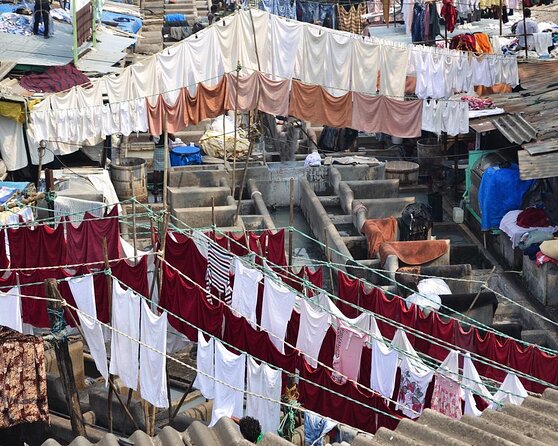
- Dharavi walking route (1 to 1.5 hours): you see both residential and commercial areas on foot.
- Coastal ferry ride from Apollo Bunder: a change of pace from traffic, when the ferry is running.
- Gandhi Museum at Mani Bhavan: a focused stop that gives context beyond the skyline photos.
- South Mumbai heritage cluster: Marine Drive, Gateway of India, and heritage precincts in one day.
- Chhatrapati Shivaji Terminus viewing: Victorian-era grandeur in an easy, guided stop.
- Photo rule in the slums: photography is strictly not allowed there, which keeps the visit respectful and calmer.
Why this Mumbai day feels like more than a checklist
This tour is built for a common problem in Mumbai: you have limited time, but the city is huge and traffic can be punishing. So you get a smart mix that does two jobs at once. First, it gives you the “real Mumbai” angle with the Dharavi walk. Then it pivots to the landmarks most first-timers go looking for, like Gateway of India and Marine Drive, plus a heritage stop or two that help you understand the city’s layers.
The private format also matters. You’re not stuck waiting for a big bus crowd to agree on where to stand. The guide can slow down if you want context, speed up if you’re just trying to see the main sights and move on.
Timing, transport, and the traffic reality check

You’re signing up for an 8-hour day in a city where road time can swing wildly. Pickup and drop-off from your hotel (or port/airport) are included, and you travel by private air-conditioned vehicle with bottled water, which helps you stay functional even when it’s hot.
Here’s the practical takeaway: even if the plan is solid, expect drive times to be variable. One praised part of the experience is that you’re typically working with a driver who knows how to handle Mumbai traffic without making you feel unsafe. In guides/drivers who were named in feedback, people called out that the driving felt controlled even in heavy traffic.
If you’re the type who gets stressed when things run late, this is the one thing you need to accept up front. The day is not just sightseeing; it’s also a fight against the city’s commute time.
Other Dharavi walks led by people who live there




Dharavi walking tour: what you’ll see and how to handle it
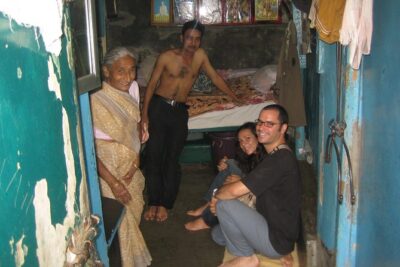
The centerpiece is the Dharavi walking tour, lasting about one to one and a half hours inside Asia’s biggest slum. You’re led through areas that show both residential and commercial life, so it’s not only one kind of street scene. The goal is to give you a human-scale view rather than a photo-op.
Two things make this stop work (when it’s done well):
- You follow your guide’s pacing, because there’s a lot going on and you don’t want to rush through people’s everyday routines.
- You understand the rules. Photography is strictly not allowed in the slums, so come prepared to observe with your eyes, not a camera.
If you’re lucky with your guide, the visit can feel thoughtful and respectful. In feedback, guides like Divya and Rahul were specifically praised for making the walk feel informative and grounded. Another point that came up: guides who know people and can explain how communities function tend to make the experience more than a “here’s a street, goodbye” stop.
Also keep comfort in mind. This is a walking portion, and you’re advised to have a moderate physical fitness level. The heat can be intense, so wear breathable clothes, carry water if you tend to run thirsty, and take small breaks when your guide offers them.
Dhobi Ghat stop: short, unique, and often misunderstood
Next up is Dhobi Ghat, Mumbai’s famous laundry area. The idea is simple and fascinating: traditional laundry workers collect dirty linen, wash it, and return it neatly pressed. It’s one of those places where the concept is clearer than the logistics, so the guide’s commentary matters.
In the provided itinerary, Dhobi Ghat is listed as a short stop (about 15 minutes), and it’s noted that admission is not included. So don’t assume this stop is fully covered like the museum or the slum walk. If you’re sensitive to costs, have a little cash or confirm what fees you might still face before you arrive.
The practical downside: because it’s short, you won’t turn it into a long, detailed visit. Think of it as a quick “how it works” introduction to a working tradition.
Hanging Gardens and Marine Drive: where the city slows down
From the harder-hitting parts of the day, the route moves toward scenic relief. Hanging Gardens sit at the top of Malabar Hill (near Kamala Nehru Park), with terraced walkways and some of the better skyline-and-sea perspectives you can squeeze into a limited schedule. Admission is free and the stop is about 20 minutes.
Then you roll into Marine Drive, a long coastal boulevard in South Mumbai that locals know as a signature promenade. It’s described as a C-shaped six-lane concrete road along the bay, running about 3 kilometers. You’ll get roughly 25 minutes here, and admission is free.
Two tips that make this section more enjoyable:
- Stay aware of where the road meets pedestrians. Marine Drive can be active, so keep your walking pace calm.
- Use the stop to reset your head after Dharavi. This is a good time to look up, not just around.
Other loops past the Gateway, Marine Drive and beyond
- Mumbai: Full-Day Sightseeing Tour of Mumbai
★ 4.9 · 1,822 reviews - Private Mumbai Sightseeing Tour (Traveller’s Choice Award Winner)
★ 5.0 · 1,565 reviews - Highlights of Mumbai Sightseeing Tour: TRAVELLERS CHOICE AWARDED
★ 5.0 · 915 reviews - Highlights of South Mumbai Guided Private Tour in AC Vehicle
★ 5.0 · 620 reviews - Private Mumbai Sightseeing Tour(Travellers Choice Award Winner)
★ 5.0 · 565 reviews - Private Half-Day Sightseeing Tour in Mumbai
★ 5.0 · 430 reviews
Mani Bhavan Gandhi Museum: meaning in a compact visit
Mani Bhavan is the old residence of Mahatma Gandhi in Mumbai, and today it houses a reference library, a photo exhibition covering Gandhi’s life, and additional exhibition content. Your stop is about 20 minutes, and the admission is included.
There’s one timing rule to know: if your tour starts after 4 PM, Mani Bhavan would not be shown. So if this museum matters to you (and it should if you want more than skyline photos), prioritize an earlier departure.
This is also one of the clearer “mental context” stops. After seeing the realities of Mumbai life and the city’s physical layout, Mani Bhavan gives you a different lens on how the city has shaped movements and ideas. It’s short, but it tends to land.
Gateway of India and Oval Maidan: heritage sights with good photo angles
You’ll pass through some of the most recognizable South Mumbai landmarks, including:
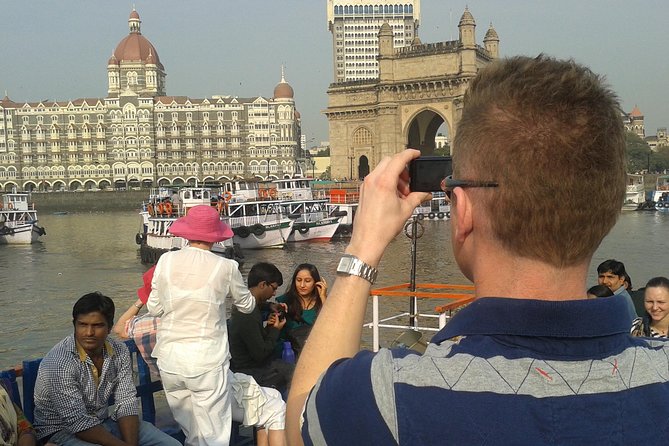
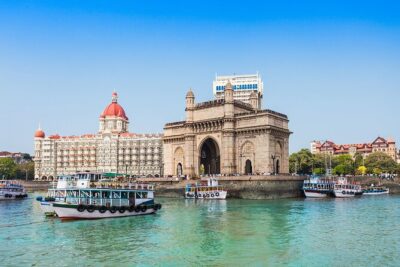
- Gateway of India: a major monument built as a triumphal arch to commemorate King George V and Queen Mary’s visit. The stop is about 30 minutes, and admission is free.
- Oval Maidan: a heritage precinct with Victorian neo-Gothic architecture buildings, including structures around Bombay High Court and Mumbai University nearby. Admission is listed as included, and the stop is about 20 minutes.
Why this cluster works: it gives you the “I understand what I’m looking at” version of the classic views. A guide can connect what you see (architecture and public spaces) to why it’s a focal point for Mumbai’s public life.
The drawback here is also simple: these are central, high-demand areas. If you’re arriving when it’s crowded or hot, you may not linger as long as you’d like. The best approach is to pick what you want most from each stop: a quick look, a brief walk-around, and a few photos (without spending 20 minutes debating the perfect angle).
Chhatrapati Shivaji Terminus and Town Hall: Victorian Bombay in stone
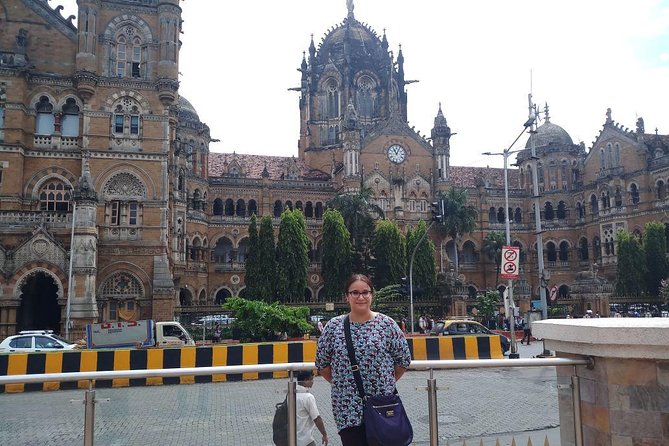
In the late part of the day, you get a look at Chhatrapati Shivaji Terminus (listed as Victoria Terminus in the description you’ll hear). It’s modeled on St Pancras in London and is packed with details like carved stone friezes, stained glass windows, and flying buttresses. Your visit is about 15 minutes, with admission included.
Next, you also get a look at Town Hall, described as one of the most majestic heritage structures in Mumbai’s Victorian-era architecture. The itinerary doesn’t specify a duration, but it’s clearly treated as a viewing stop.
This portion is valuable if you like architecture, because the building details are the story. Don’t rush. Look up at the ornamentation and scan the façade for design elements. A guide’s narration helps you spot what makes this kind of colonial-era planning different from newer buildings.
Colaba ferry ride from Apollo Bunder: the calm break (when it runs)
This is your scheduled reset. From Apollo Bunder in Colaba, you take a ferry cruise along Mumbai’s coast line for about 30 minutes. Admission for this segment is listed as included.
Why it’s worth caring about: the ferry is one of the few ways to see the shoreline without getting stuck in traffic. It also changes the mood—wind, open water, and a different perspective on the city.
But here’s the important condition: the ferry may not be operational during monsoon season from July 1 to September 15. If that happens, the plan shifts to showing you the Taj Mahal Palace Hotel from inside, or providing snacks.
If your dates fall inside those months, I’d make peace with the swap in advance. The ferry is the highlight for many people, but the alternative still gives you something notable in a shorter time window.
Price and value: is $96 fair for this day?
At $96 per person, you’re paying for a full day that blends:
- hotel/port/airport pickup and drop-off
- private air-conditioned transport
- a local guide
- bottled water
- multiple included admission fees (Dharavi and several heritage stops)
- plus the ferry ride when it’s operating
What you’re not paying for is also clear: food and drinks are not included, and souvenir photos cost extra if you buy them.
So is it good value? For a first-time visit with limited time, this pricing often makes sense because it packages far more than a basic bus loop. You’re getting the expensive part (private guide + vehicle time) folded into the day, plus ticketed sights.
The one caution I’d keep in mind is that your enjoyment depends on whether all planned segments run on your specific date and time. Ferry disruptions are possible in monsoon months, and some timing windows affect whether Mani Bhavan is visited. Also, pacing can vary—some people experienced a tighter schedule with less time at each spot.
My practical advice: treat this as a structured day, not a flexible all-day free-for-all. If you want time to roam on your own, plan a separate half-day after the tour.
What to pack and how to dress for Mumbai and Dharavi
Mumbai is a “dress modestly” kind of city, and your tour has a modesty requirement. For Dharavi in particular, the rules and cultural norms are part of what makes the visit respectful and safe—so avoid clothing that’s too revealing.
Bring:
- lightweight breathable clothing (Mumbai heat is real)
- a light layer if you’ll be in air-conditioned car most of the day
- comfortable walking shoes for the slum walk
- water habits that work for you (bottled water is provided)
Also, prepare for weather. The tour operates in all weather conditions, so you’ll want rain protection if you’re traveling outside the driest months.
Who should book this Mumbai city tour, and who should skip it
This tour is a good match if:
- you want a first-timer Mumbai overview in one day
- you’re curious about how the city works socially, not just monuments
- you like guided context (especially at Mani Bhavan and the heritage stops)
- you can handle a walking component and don’t mind heat
You might want to skip or rethink it if:
- you need lots of downtime or long unscheduled breaks
- photography is a priority for you in the slum portion (it’s strictly not allowed there)
- you’re traveling during July 1 to September 15 and the ferry is a non-negotiable highlight for your itinerary (you’ll still get a replacement, but it won’t be the ferry)
Should you book this tour?
If you want the smartest one-day mix of Mumbai’s iconic sights plus a guided Dharavi walk and a chance to see the coast by ferry, I’d book it. The $96 price works well because the tour stacks guide time, transport, and multiple ticketed stops into one day.
But decide based on your priorities. If Mani Bhavan is a must-see, book an earlier slot so you don’t miss the stop after 4 PM. If you’re traveling in monsoon season, assume the ferry could be swapped for the Taj Mahal Palace Hotel interior and plan your expectations accordingly. And if you’re sensitive to the reality of slum life, remember: this is not a staged show. It’s a guided walking look, with strict photo limits, built for respect over entertainment.
FAQ
Is hotel pickup and drop-off included?
Yes. Pickup and drop-off from your accommodations, hotels, port, or airport are included.
How long is the tour?
It runs about 8 hours (approx.).
Are tickets for the main sights included?
Admission tickets are included for some stops, including the Dharavi walking portion and Mani Bhavan, plus some heritage stops. Dhobi Ghat is listed as not included.
Is food included?
No. Food and drinks are not included.
Can I take photos inside Dharavi?
No. Photography is strictly not allowed at slums.
Will the ferry ride always run?
No. The ferry ride may not be operational during monsoon season from July 1 to September 15. If that happens, the plan switches to showing the Taj Mahal Palace Hotel from inside or providing snacks.
What if I book a tour time after 4 PM?
If you select a tour slot after 4 PM (16:00), Mani Bhavan will not be shown.
More Mumbai, Every Kind of Day
- Dharavi slum tour in Mumbai by Female tour guides of the slum
★ 5.0 · 1,976 reviews - Mumbai: Full-Day Sightseeing Tour of Mumbai
★ 4.9 · 1,822 reviews - Private Mumbai Sightseeing Tour (Traveller’s Choice Award Winner)
★ 5.0 · 1,565 reviews - Elephanta Caves & Island Guided Private Tour
★ 5.0 · 1,327 reviews
The Big Mumbai Circuits
- Mumbai: Full-Day Sightseeing Tour of Mumbai
★ 4.9 · 1,822 reviews - Private Mumbai Sightseeing Tour (Traveller’s Choice Award Winner)
★ 5.0 · 1,565 reviews - Highlights of Mumbai Sightseeing Tour: TRAVELLERS CHOICE AWARDED
★ 5.0 · 915 reviews - Highlights of South Mumbai Guided Private Tour in AC Vehicle
★ 5.0 · 620 reviews
Dharavi, Told by Its Residents
- Dharavi slum tour in Mumbai by Female tour guides of the slum
★ 5.0 · 1,976 reviews - Mumbai: Dharavi Slum, DhobiGhat, and Dabbawallas Tour
★ 4.9 · 689 reviews - Dharavi Slum Tour
★ 5.0 · 625 reviews - Dharavi Slum tour in Mumbai by local resident
★ 5.0 · 572 reviews
New on the Mumbai shortlist



Dharavi Community Walks, compared.
 ★ 5.0Dharavi slum tour in Mumbai by Female tour guides of the slumFrom $91,976 reviews
 ★ 4.9Dharavi Slum, DhobiGhat, and Dabbawallas TourFrom $14689 reviews
 ★ 5.0Dharavi Slum TourFrom $20625 reviews
 ★ 5.0Dharavi Slum tour in Mumbai by local residentFrom $4572 reviews
 ★ 4.9Dharavi Slum Slumdog Millionaire Tour with a LocalFrom $10529 reviews
 ★ 5.0Mumbai Slum Tour – Visit Dharavi Slum with Local GuideFrom $5509 reviews
 ★ 5.0Dhobi Ghat Laundry and Dharavi Slum Tour with LocalFrom $4469 reviews
 ★ 5.02-Hour Guided Tour of DharaviFrom $22359 reviews
Browse the lists this tour appears in