
Review · ELEPHANTA ISLAND & CAVE TEMPLES
Two Days Mumbai Tour Package : City + Slum + Elephanta + Market
Mumbai in two days sounds like a sprint. This tour is interesting because it mixes big sights with real neighborhoods, using a private guide and an air-conditioned car.
I especially liked the way the schedule locks in major anchors like the Elephanta Caves and then connects them to Mumbai’s living side—Gandhi’s Mani Bhavan, the laundry at Dhobi Ghat, and then markets later. You’ll also get hotel pickup and drop-off, which matters a lot when traffic can turn a simple ride into a time-sink.
One consideration: the pacing is full-on. You’ll move between many stops, so if you hate tight timelines or prefer long, slow photo walks, this one may feel rushed.
In This Review
- Key things that make this tour work
- Price and logistics: what $187.26 gets you in real terms
- The private guide + AC car in Mumbai traffic
- Day 1 South Mumbai: Gateway of India to Elephanta Caves
- Elephanta Caves: the 5th to 7th century stop that needs time
- Gandhi, laundries, and the UNESCO station rush: CST, Mani Bhavan, Dhobi Ghat
- Sea breezes and colonial-era landmarks: Sassoon Dock to Marine Drive
- Market time in Colaba: Crawford Market and Colaba Causeway shopping
- Day 2: Dharavi on foot, Indian food tasting, and more shopping
- What to pack so day one and day two don’t wear you out
- Is the schedule too packed? How I’d pace your expectations
- Who this tour suits best (and who should choose differently)
- Should you book this tour with Magical Mumbai Tours?
- FAQ
- How long is the Mumbai tour package?
- What is the price per person?
- Does the tour include hotel pickup and drop-off?
- Is this a private tour?
- What’s included in the tour price?
- Are any key admissions included?
- What areas and main sights are covered?
- Do you get a mobile ticket?
- Is there an English-speaking guide?
- What is the cancellation rule?
Key things that make this tour work
- Private guide + AC vehicle to make Mumbai’s distances manageable
- Elephanta Caves included so you don’t have to hunt tickets and timings
- Gandhi and daily life in the same day with Mani Bhavan and Dhobi Ghat
- Dharavi on foot for a grounded look at everyday work and community
- Market time built into the route around Colaba and Crawford Market
Price and logistics: what $187.26 gets you in real terms
At $187.26 per person for about two days, you’re paying for more than “seeing sights.” You’re paying for a private guide, an air-conditioned car, and a plan that strings together far-flung places without you coordinating transport between them.
The included items are what make the value feel real: South Mumbai hotel pickup and drop-off, an English-speaking guide, bottled water, a driver, and all fees and taxes. You also get key paid stops handled for you, including Elephanta Caves, Mani Bhavan Gandhi Museum, and Dhobi Ghat as part of the route.
What is not included matters too. Gratuities are on you, and some landmarks are marked as not included (like the Taj Mahal Palace stop). Food isn’t listed as included beyond the food tasting component that appears on the second day plan.
The private guide + AC car in Mumbai traffic
Mumbai traffic can be chaotic in a way that punishes DIY plans. The big advantage here is simple: you’re not spending your energy figuring out transport, finding the right entrance, or waiting on a cab while everyone else moves on.
Because this is a private tour (only your group participates), your guide can adjust on the fly. That flexibility showed up in the feedback I reviewed: guides like Nikhil and Neha/Pooja were noted for keeping things professional and on-time, and drivers like Sultan were credited with getting groups back safely even when traffic got wild.
You’ll likely feel the benefit most on the “between stops” stretches. Instead of treating each location like a mini expedition, you get a continuous, guided route that helps you get your bearings fast and stay focused on what’s ahead.
Other Dharavi walks led by people who live there




Day 1 South Mumbai: Gateway of India to Elephanta Caves
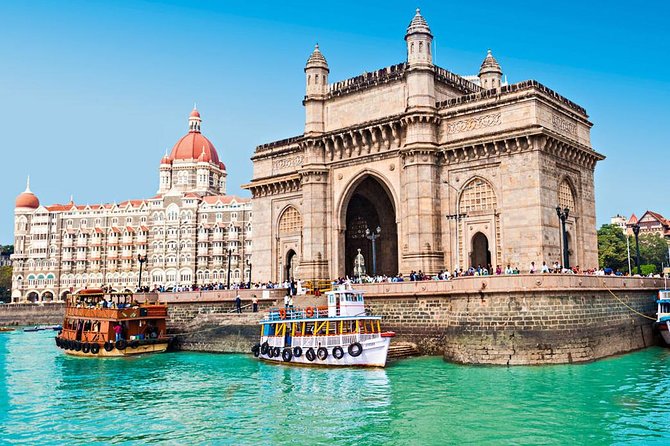
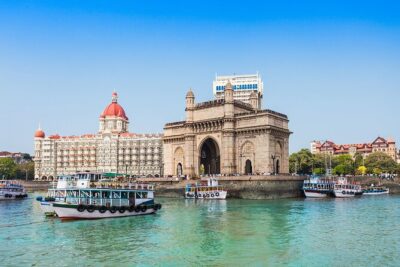
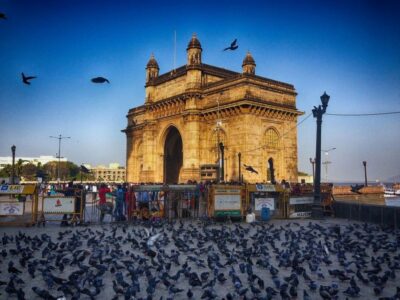
Day one is where you get the skyline and the shoreline story right away. You start at the Gateway of India, a classic starting point for understanding how Mumbai connects to maritime trade and colonial-era architecture. You won’t just stand there for a selfie session either—you’ll have context to help the monument make sense in the city’s wider story.
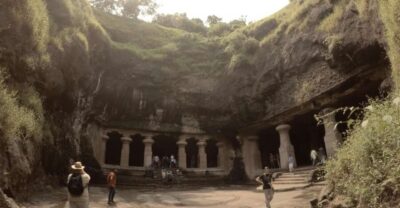
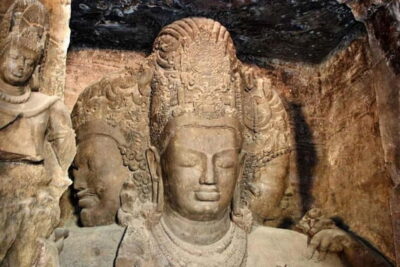
Next comes the long block: the Elephanta Caves. This isn’t a quick in-and-out stop; it’s the centerpiece of the day. Plan for a proper time commitment so you can take in the rock-cut carvings and the sense of place that comes with being on the water and then stepping into ancient stone halls.
After Elephanta, day one continues with major heritage stops that shape Mumbai’s “old meets working city” feel. You’ll see Chhatrapati Shivaji Maharaj Terminus (CST), plus Mani Bhavan Gandhi Museum and Dhobi Ghat as the route moves from monuments into daily life.
A small practical tip: wear shoes that handle walking and uneven surfaces, because the schedule moves between waterfront areas, heritage buildings, and local working sites.
Elephanta Caves: the 5th to 7th century stop that needs time
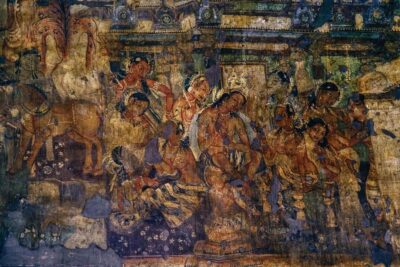
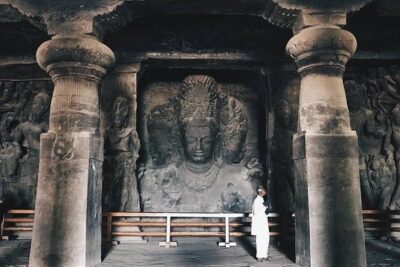
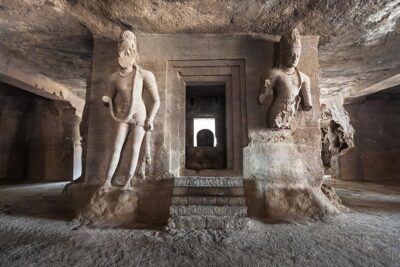
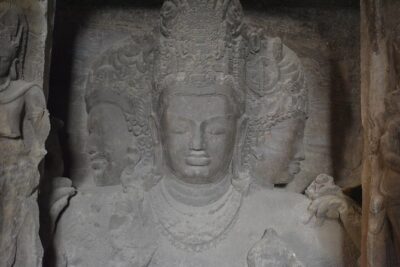
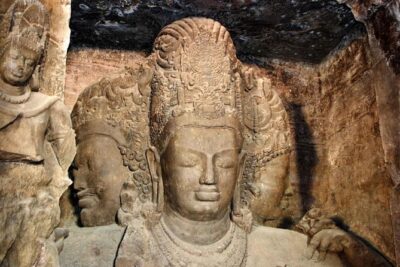
The Elephanta Caves are listed as UNESCO and span rock-cut architecture and ancient sculptures dating roughly from the 5th to 7th centuries. That range matters because it’s not a single-era monument. You’ll want time to notice how the space and carvings shape how people used the caves.
This stop is marked as admission included and has a long duration on the schedule. For you, that’s a win: instead of negotiating entrances and ferry logistics yourself, you get one coordinated block that you can treat like the anchor event of your trip.
What to expect on the ground: you’ll be inside a stone world where light and scale play tricks. If you rush it, you’ll miss details. If you pace yourself, it becomes one of the strongest “wow” moments of the whole itinerary.
From what I picked up from guide feedback, a good guide helps you slow down at the right spots. Names like Samir (Sam) came up as someone who kept groups moving but also made sure the important visuals weren’t skipped.
Gandhi, laundries, and the UNESCO station rush: CST, Mani Bhavan, Dhobi Ghat
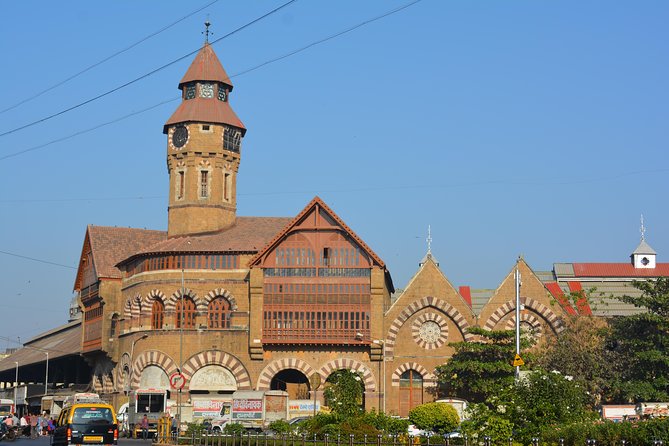
Day one leans into contrast, and that’s why it feels more authentic than a template sightseeing loop.
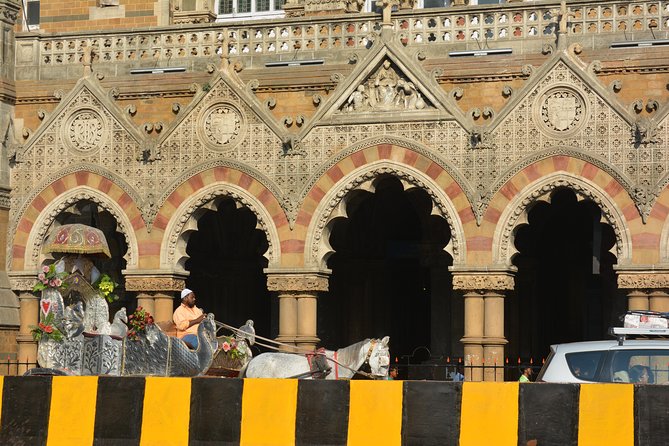
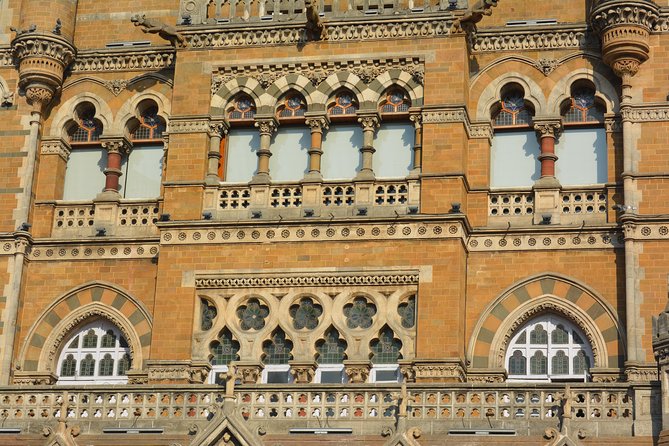
At Chhatrapati Shivaji Maharaj Terminus (CST), you get a quick look at Victorian-Gothic architecture—a UNESCO landmark and an obvious visual stop. It’s brief on the schedule, but that brevity can work if you treat it as a photo-and-context stop rather than a long sit-down museum visit.
Then you shift gears to Mani Bhavan Gandhi Museum, Gandhi’s former residence and Mumbai headquarters during the independence movement. This is included in the schedule, and the stop is long enough (listed around 40 minutes) that you can absorb the themes without feeling like you’re being herded through.
After that comes Dhobi Ghat, an open-air laundry system where washing and drying have been practiced for more than a century. It’s one of those places where “watching” is the whole point. You’ll likely notice how the entire operation is timed and organized around the work itself, not around tourists. It’s included, so you get access without extra paperwork.
If you want a simple way to judge this day: when you finish, you should feel like you’ve seen Mumbai’s identity from two angles—political roots and daily labor.
Other boats out to Elephanta and its carved caves
- Elephanta Caves & Island Guided Private Tour
★ 5.0 · 1,327 reviews - Mumbai: Elephanta Caves Half-Day Guided Tour with Expert
★ 4.8 · 1,032 reviews - Private Elephanta Caves & Mumbai Sightseeing Tour with AC Car
★ 5.0 · 389 reviews - All inclusive Elephanta Caves Guided Tour
★ 5.0 · 386 reviews - From Mumbai: Half-Day Elephanta Caves Tour with Ferry Ride
★ 4.9 · 284 reviews - Mumbai: City Tour, Elephanta Caves, Dharavi Slum W/Options
★ 4.9 · 198 reviews
Sea breezes and colonial-era landmarks: Sassoon Dock to Marine Drive
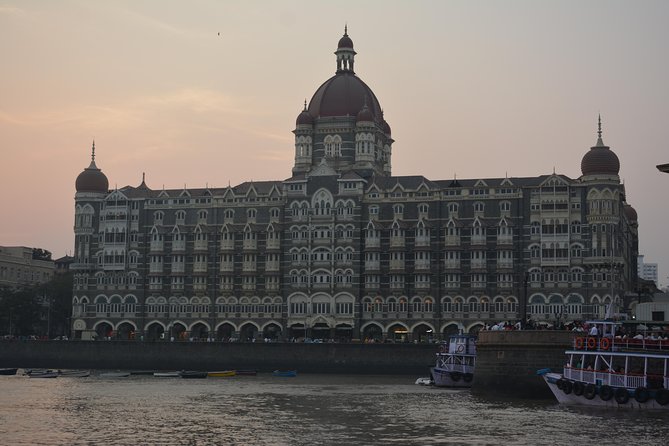
Once the heritage anchors are handled, the route heads toward the waterfront and the city’s grand facades.
At Sassoon Dock, you’re in a real fishing hub. It’s not a museum; it’s where local routines unfold—fishermen bringing in catch and the dock acting like a working artery. This stop is short, but it’s one of the best places on the list to remind yourself that Mumbai isn’t just stone and signage.
Next you pass by Oval Maidan, a large open green used for sports, especially cricket. It’s a quick stop, but it helps explain why the city’s public spaces feel like social stages.
Then the architecture keeps coming: Bombay High Court (principal bench) is a standout because the styling blends Gothic and Indo-Saracenic elements, and the red sandstone look is part of why it feels so dramatic.
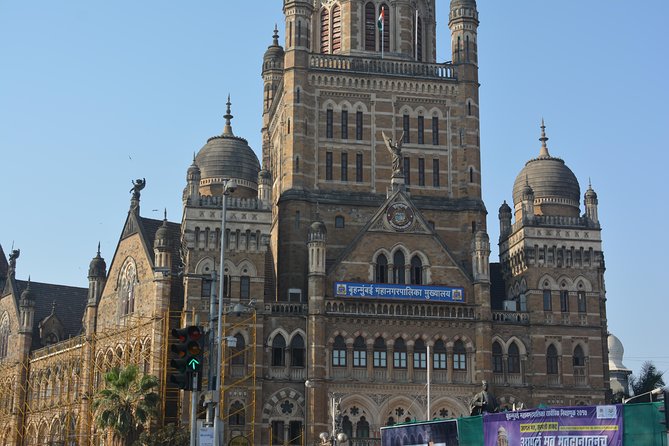
The day finishes with the classic coastal mood at Marine Drive, often called the Queen’s Necklace for its curved shape. You’ll also see Flora Fountain, and later Brihanmumbai Municipal Corporation (BMC) building with its Neo-Gothic design.
Finally, you get downtime at Girgaon Chowpatty (listed around an hour) and the Hanging Gardens. This combination is smart because it gives you a breathing space before the itinerary picks up again on day two.
Market time in Colaba: Crawford Market and Colaba Causeway shopping
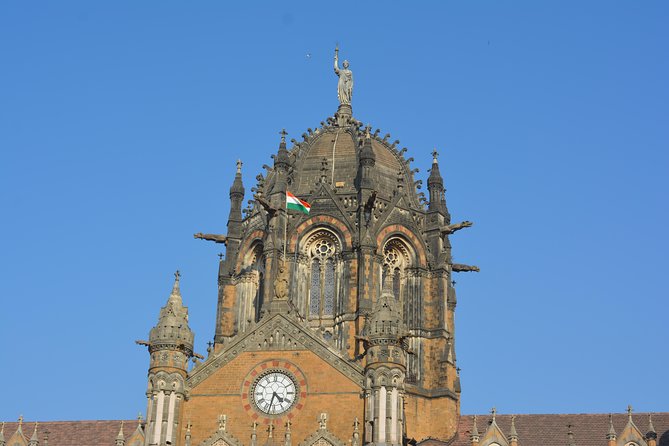
This is the part of the tour that most helps your day-to-day vacation experience. You’ll have the chance to shop in Colaba Causeway and visit Crawford Market—two places known for variety and for the sensory chaos that shopping in India can create.
The most useful thing your guide can do here is not only translate what you’re seeing, but also explain how to shop with your own priorities. In feedback, groups noted they were taken to shops without heavy pressure, which is exactly what I’d want from a market stop. You should be able to browse, compare, and make decisions without feeling dragged.
Crawford Market is listed with a longer block than some of the quick architecture photo stops, around 25 minutes. That extra time can help because markets aren’t just about buying; they’re about understanding what’s available and why people buy it.
Practical move: if you want souvenirs, decide on your budget before you start walking. You’ll thank yourself later when the options multiply.
Day 2: Dharavi on foot, Indian food tasting, and more shopping
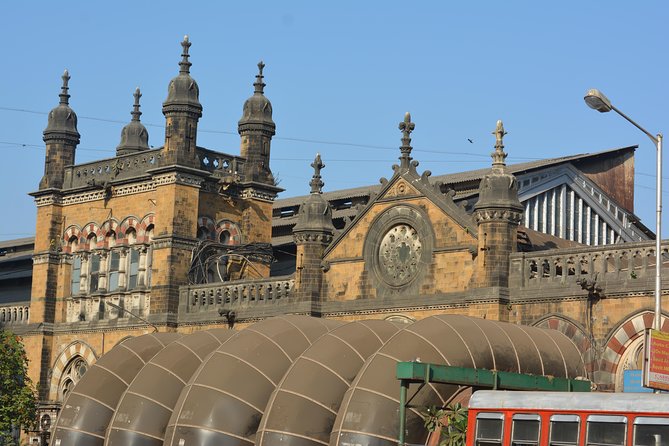
Day two is the “human reality” day, and it’s scheduled as a half-day-style block focusing on Dharavi. The route notes a guided walk to explore the daily lives, resilience, and aspirations of residents, with the explicit goal of challenging stereotypes.
This is a sensitive experience, so the value is in how it’s handled: with a guide who can explain what you’re seeing and keep the focus on people rather than shock value. The tour includes Dharavi as a major stop with a duration of about 3 hours, and the format is on foot, which is important because it turns the neighborhood into a set of lived-in spaces rather than a viewpoint.
After Dharavi, the day shifts to Indian food tasting and Mumbai shopping. Food tasting is listed as part of the second day plan, and the route also connects shopping time after. That structure is helpful because it reduces the “what next” stress. Instead of you hunting for lunch or snacks after a heavy cultural stop, you get your next moment planned.
One more detail I like from feedback: the shopping time isn’t supposed to be aggressive. In other words, the tour seems designed to keep you moving and informed without turning the day into a sales sprint.
What to pack so day one and day two don’t wear you out
This tour is two days of steady movement, so pack like you’re walking more than you’d expect.
Bring:
- Comfortable shoes with good grip (Dhobi Ghat and market streets can be uneven)
- A light layer for indoor air-conditioned pauses and for sun protection outside
- A small water habit: bottled water is included, but you’ll still want steady sips
- A plan for modesty: you’ll pass through religious and community spaces, so loose, respectful clothing helps
Also, carry cash or a card you can use for small buys during Colaba Causeway and Crawford Market, since the tour doesn’t list food or every shopping item as included.
Most importantly: keep your phone charged. You’ll likely want photos at Gateway of India, Marine Drive, and the big architecture moments like CST and BMC.
Is the schedule too packed? How I’d pace your expectations
The itinerary is packed with high-value stops, but that means you’ll want the right mindset.
Think of it like this:
- Some stops are short by design, like the quick architectural hits at Rajabai Clock Tower (about 5 minutes), the High Court exterior, and other exterior views.
- Others are the anchor blocks where you slow down, like Elephanta Caves and the longer museum/learning stops like Mani Bhavan and the guided Dharavi walk.
If you try to treat every stop like a full museum visit, you’ll feel rushed. If you treat the day as a curated route that gives you context and access, it works better.
On the comfort side, the air-conditioned vehicle helps a lot. In Mumbai, that’s not a luxury. It’s a way to protect your energy so you can enjoy the walking parts.
Who this tour suits best (and who should choose differently)
This tour is a strong fit if you want:
- A first-timer plan that covers South Mumbai’s biggest icons
- A mix of heritage plus everyday city life (not just monuments)
- A guided Dharavi walking experience paired with food and shopping
- The convenience of pickup and drop-off in South Mumbai
You might want to skip or reconsider if:
- You prefer fewer stops and more time at each location
- You’re uncomfortable with heavy real-world contrasts (Dharavi can be emotionally intense)
- Your hotel is in North Mumbai, because pickup/drop-off is not listed as included there
Should you book this tour with Magical Mumbai Tours?
I’d book it if you want a tight two-day itinerary that gives you both the postcard Mumbai and the lived-in Mumbai, with a guide and vehicle doing the heavy lifting. The best signal for value is the combination of Elephanta Caves included, major heritage anchors, and a Dharavi on-foot block that’s central to the tour—not an afterthought.
If you’re picky about pacing, set your expectations: you’ll be on the go. But if you like efficiency with context, this is the kind of plan that helps you actually understand the city instead of just collecting stops.
FAQ
How long is the Mumbai tour package?
It runs for about 2 days.
What is the price per person?
The price is listed as $187.26 per person.
Does the tour include hotel pickup and drop-off?
Yes, pickup and drop-off are included for hotels in South Mumbai.
Is this a private tour?
Yes. It’s described as private, with only your group participating.
What’s included in the tour price?
Included items are South Mumbai hotel pickup and drop-off, bottled water, an English-speaking tour guide, a driver, an air-conditioned vehicle, and all fees and taxes.
Are any key admissions included?
Yes. Elephanta Caves is listed as included, and Mani Bhavan Gandhi Museum and Dhobi Ghat are also listed as included in the stop details.
What areas and main sights are covered?
The tour covers South Mumbai and includes stops such as Gateway of India, Elephanta Caves, Dharavi, CST, Mani Bhavan, Dhobi Ghat, Marine Drive, Colaba Causeway, Crawford Market, Girgaon Chowpatty, and Hanging Gardens, among others listed on the route.
Do you get a mobile ticket?
Yes, the tour includes a mobile ticket.
Is there an English-speaking guide?
Yes, the guide is listed as English speaking.
What is the cancellation rule?
Free cancellation is available up to 24 hours in advance for a full refund.
Deeper into the Bazaars
- Mumbai: Street Food and Night Markets Tour
★ 4.9 · 719 reviews - Mumbai Morning Market Tour of Flowers, Fish, and More
★ 5.0 · 100 reviews - Mumbai Morning Market Tour of Flowers, Fish, and More
★ 5.0 · 82 reviews - Mumbai Street Food Tour with Evening Bazaar Walk
★ 4.9 · 79 reviews
Back Across the Harbour to Elephanta
- Elephanta Caves & Island Guided Private Tour
★ 5.0 · 1,327 reviews - Mumbai: Elephanta Caves Half-Day Guided Tour with Expert
★ 4.8 · 1,032 reviews - Private Elephanta Caves & Mumbai Sightseeing Tour with AC Car
★ 5.0 · 389 reviews - All inclusive Elephanta Caves Guided Tour
★ 5.0 · 386 reviews
Dharavi, Told by Its Residents
- Dharavi slum tour in Mumbai by Female tour guides of the slum
★ 5.0 · 1,976 reviews - Mumbai: Dharavi Slum, DhobiGhat, and Dabbawallas Tour
★ 4.9 · 689 reviews - Dharavi Slum Tour
★ 5.0 · 625 reviews - Dharavi Slum tour in Mumbai by local resident
★ 5.0 · 572 reviews
New on the Mumbai shortlist

Elephanta Island & Cave Temples, compared.
 ★ 5.0Elephanta Caves & Island Guided Private TourFrom $421,327 reviews
 ★ 4.8Elephanta Caves Half-Day Guided Tour with ExpertFrom $301,032 reviews
 ★ 5.0Private Elephanta Caves & Mumbai Sightseeing Tour with AC CarFrom $29389 reviews
 ★ 5.0All inclusive Elephanta Caves Guided TourFrom $50386 reviews
 ★ 4.9From Mumbai: Half-Day Elephanta Caves Tour with Ferry RideFrom $26284 reviews
 ★ 4.9City Tour, Elephanta Caves, Dharavi Slum W/OptionsFrom $32198 reviews
 ★ 5.0Elephanta Caves & Island Tour with Multiple OptionsFrom $27171 reviews
 ★ 4.5Mumbai Elephanta Caves Private Half-Day Tour including GuideFrom $105150 reviews
Browse the lists this tour appears in