

Review · DAWN & EARLY MORNING TOURS
Mumbai Morning Market Tour of Flowers, Fish, and More
Waking up early pays off fast in Mumbai. This 3-hour morning route shows the city’s daily work behind Sassoon Dock fish landings and the color of Flower Market Dadar before most of the streets fully wake up.
I especially like the mix of senses and street-level learning—strong sea smell at the dock, then flowers by the handful, and a quick chai break to reset. I also like that Dhobi Ghat is built into the schedule, so you’re not just seeing markets, you’re seeing how life keeps running.
The trade-off is practical: the fish market area can be wet, and the odors are real. Bring shoes you don’t mind getting messy, and accept that the crowds are part of the deal.
In This Review
- Key highlights you’ll feel right away
- Why the markets start before most of Mumbai
- Sassoon Dock fish market: smells, photos, and shoe rules
- Chai break and local culture talk that makes the markets click
- Dhobi Ghat: seeing open-air laundry at full scale
- Dadar fruit and vegetable market: everyday food trade up close
- Flower Market Dadar: why it’s worth the second half of the morning
- Pickup, local transit, and how to keep the day from feeling rushed
- Price and value: about $20.72 for a full workday snapshot
- Who should book this, and who might want to skip it
- Should you book this Mumbai morning market tour of flowers, fish, and more?
- FAQ
- How long is the Mumbai morning markets tour?
- Where does the tour start and where does it end?
- Are there multiple market stops included?
- Is pickup offered?
- Do I need to pay admission at the stops?
- Is this tour private?
- When will I get confirmation after booking?
- What is the cancellation window for a full refund?
Key highlights you’ll feel right away
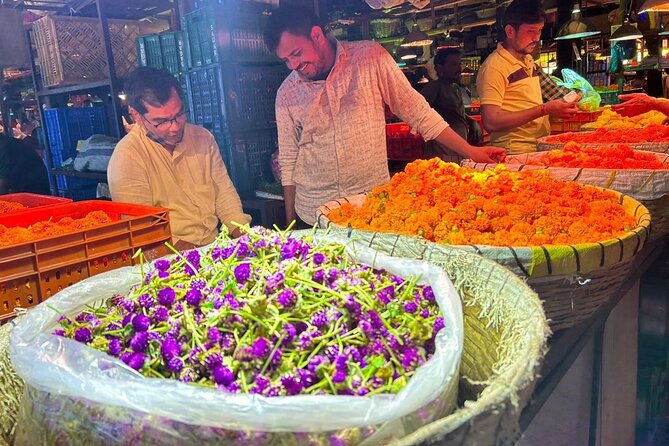
- Sassoon Dock fish market early in the day: boats unload, vendors work, and you get the morning rhythm
- Dhobi Ghat’s open-air laundry in action: washing over 2,000 clothes daily, hotel to hospital laundry included
- Two Dadar markets back-to-back: fruit and vegetables, then flowers, all in one morning block
- Small chai break on the way: a quick pause so your brain can catch up to what you’re seeing
- Private group feel with pickup options: just your group, with mobile ticket support and a guide to keep things moving
Why the markets start before most of Mumbai
This tour is built around timing, and that matters more than people expect. You start while the city is still turning over, so the markets feel closer to their true workday than to a visitor’s photo stop. Later, many of these markets begin to wind down, so going early is the difference between seeing trade at full speed and seeing only leftovers.
You also get a nicer travel rhythm. The schedule helps you catch good morning light for photos and reduces the time you spend stuck in later traffic. If you like doing one “real Mumbai” thing rather than bouncing between monuments, this works.
The other big advantage is the guide. A good guide doesn’t just point; they help you interpret what you’re seeing, from why certain stalls open when they do to how people move through the area without thinking about it.
Sassoon Dock fish market: smells, photos, and shoe rules
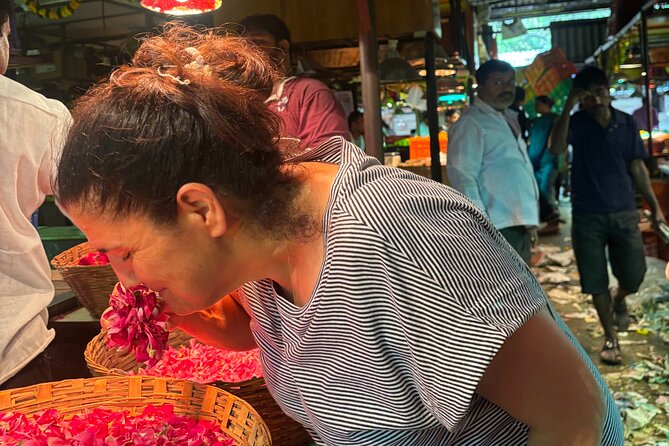
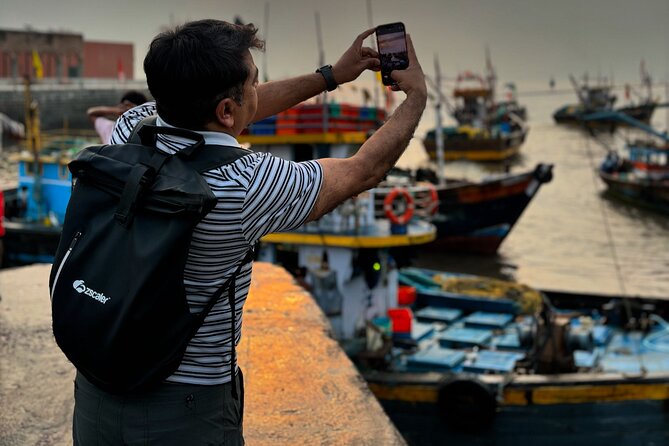
Sassoon Dock is the first stop, with about one hour set aside for the morning fish market. This is where you’ll see fishermen unload fresh catches and watch the quick hand-to-hand flow between boats, vendors, and buyers.
Two practical notes from the real-world experience people share:
- The area can be wet and smelly, so wearing your best shoes is a mistake.
- Expect crowd density. Moving with your guide matters, because you’ll be weaving through people who are focused on their own shopping.
For photos, early is a gift. Morning light tends to be kinder on faces and hands than harsh midday glare, and you’ll have fewer distractions around the edges than you’d get later.
If you have a sensitive nose, plan for that too. You’re not there to ignore the smell—you’re there to understand what food supply looks like when it’s fresh and immediate.
From Crawford Market to Chor Bazaar, more lanes to walk



Chai break and local culture talk that makes the markets click
Between the heavy visual stops, there’s a small chai (tea) break. This isn’t just a sugar-and-caffeine pause. It’s the moment where the morning shifts from scenes to meaning.
You’ll hear explanations that connect the dots: how fish and produce move, why people buy early, and how the flower trade ties into daily life and celebrations. Guides on this tour range from Jawwad (often mentioned as Jay) to Abhishek (Abhi), and the common thread in the feedback is how smoothly they translate everyday routines into something visitors can actually understand on the spot.
A small tip: use the chai break to ask the practical questions you’d rather not think through later—what to watch for at each market, what’s worth trying to buy, and how to navigate the next streets. When your guide is clear and patient (as several named guides are described), the morning becomes easier to follow.
Dhobi Ghat: seeing open-air laundry at full scale
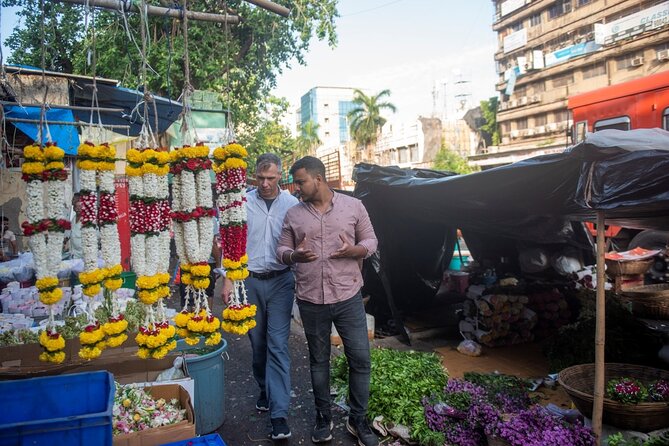
Next you take local taxi or train to Dhobi Ghat. That travel bit is useful because it turns the day into a route, not a checklist. You’re moving through neighborhoods the way locals do—one short leg at a time.
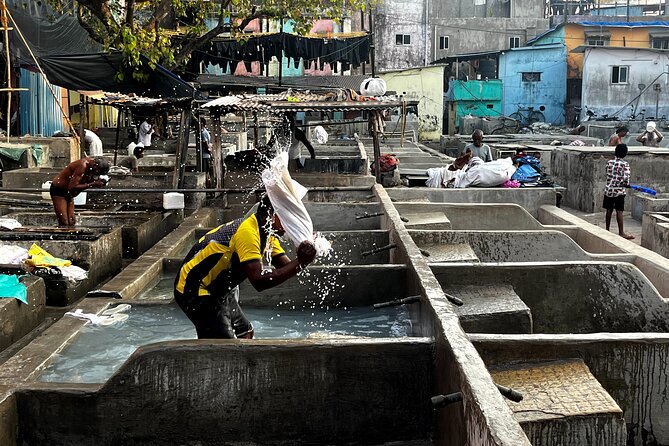
Dhobi Ghat is the heart of the “how Mumbai works” part of this tour. The setting is described as the world’s largest open-air laundry, where thousands of clothes are washed and dried. The scale is part of the story: this operation handles over 2,000 clothes daily, from hotels and hospitals to private homes.
You only have about 30 minutes here, so manage expectations. It’s not a long sit-and-watch museum visit. It’s more like stepping into a working process where you can see techniques, tools, and the flow of laundry through the day. The best approach is simple: watch for patterns. How clothes move, how workers coordinate, and what “finished” looks like in that specific environment.
Also, plan for conditions. Open-air means you’ll feel the morning air, and it can look busy in every direction. The guide helps you focus on what’s most worth your attention and helps you cross streets safely when needed.
Dadar fruit and vegetable market: everyday food trade up close
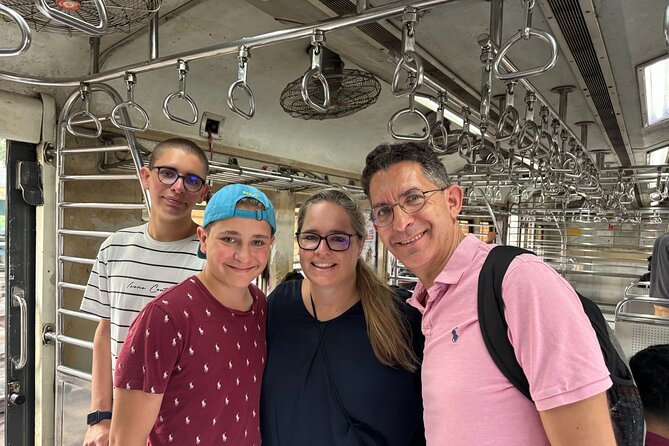
After Dhobi Ghat, you head to the Dadar fruit and vegetable market for about 45 minutes. This is where the morning shifts from fish to land food—produce stacked and sorted in a way that makes sense to people who buy daily.
The value here is seeing seasonal goods in real time. The market is described with fresh vegetables like coriander and chili, plus colorful displays of produce that are being chosen and packaged for immediate use. It’s not gourmet food theater; it’s the supply chain for regular meals.
You’ll also notice how people shop. They’re efficient, they compare, and they know what they want. If you’re shopping at a spice stall back at your hotel afterward, this stop helps you understand what you saw and why it matters.
One caution: the produce market can get crowded as the morning progresses. Stay with your guide if you want a smoother route through stalls without losing track of the group.
Mumbai before the traffic wakes, on other early starts
- The Original Mumbai by Dawn – Recommended by Nigella Lawson & Nat Geo Traveller!
★ 5.0 · 610 reviews - Mumbai: Morning Bicycle Tour
★ 5.0 · 40 reviews - The Colourful Early Morning Tour
★ 5.0 · 31 reviews - Mumbai: Early Morning Bicycle Tour
★ 4.8 · 30 reviews - Early Morning Old Mumbai Private Cycle Tour With Breakfast
★ 5.0 · 21 reviews - 3 Hours Early Morning in South Mumbai Heritage Bicycle Tour
★ 4.5 · 16 reviews
Flower Market Dadar: why it’s worth the second half of the morning
The final market stop is the Flower Market Dadar for about 45 minutes. Flowers in Mumbai are a daily-life thing, not just a special-occasion accessory, and this market shows that fast.
You’re looking at stalls selling fresh flowers in large quantities, with vendors actively working through orders. The colors and shapes are instantly photo-friendly, but the real payoff is understanding the trade as work: choosing, bundling, and moving product quickly so it reaches customers in time.
People also like this ending because it often feels like a calmer contrast after fish and laundry. If the morning has been intense for your senses, flowers give you a visual reset that still feels grounded in local routine.
Because this is your last stop, it’s smart to save your best energy for it. If you’re planning to buy anything, ask your guide how best to carry it through the rest of your day.
Pickup, local transit, and how to keep the day from feeling rushed
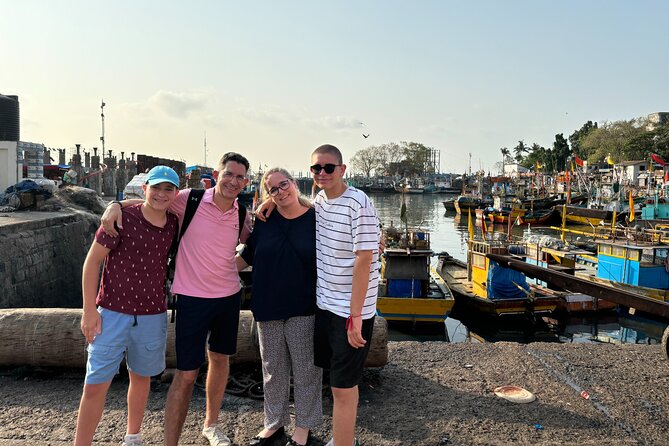
This tour includes pickup offered, and it’s also near public transportation. That combination helps if your hotel isn’t close to the markets but you can reach the meeting area without a major detour.
One useful point: the tour is a private group activity, so it runs at your group’s pace rather than forcing everyone into one constant, fast stride. That said, you still have fixed time blocks at each stop, so the guide will keep things moving. This is a good thing—you get coverage of fish, laundry, produce, and flowers without spending half your morning traveling between far-apart points.
How you start matters too. The meeting point is at PizzaExpress in Colaba (Chhatrapati Shivaji Maharaj Marg, Apollo Bandar), and the plan is to begin at the Dadar Flower Market area, with your guide helping you book a taxi as needed. If you’re using maps, double-check the exact pickup spot the day before so you don’t start your morning hunting for the correct corner.
Price and value: about $20.72 for a full workday snapshot
The price is $20.72 per person for roughly 3 hours. That sounds low until you break down what you’re actually getting:
- Multiple market stops: fish market, Dhobi Ghat, fruit and vegetable market, and flower market
- Short guided interpretation at each stop, so you’re not just standing and guessing
- A small chai break to keep the schedule humane
- Free admission noted for the stops (Sassoon Dock, Dhobi Ghat, the markets)
On this tour, the cost is mostly paying for time, a route that makes sense, and an experienced local who can translate the city’s daily work into something you can follow in real time. And because you’re going early, you’re catching the functioning version of the city—not the quieter, slower later version.
If you like street-level travel that doesn’t require museum tickets or long planning sessions, this is one of the best-value types of tours in Mumbai.
Who should book this, and who might want to skip it
This tour fits best if you:
- Want a morning plan that’s different from the typical sightseeing loop
- Like food markets, local work scenes, and people-at-work photography
- Appreciate a guide-led pace (especially for navigating crowded spaces and crossing streets)
It might not be ideal if you:
- Have trouble with strong smells, since the fish market is part of the experience
- Don’t handle crowds well, since the markets can get dense
- Expect a relaxed, sit-down experience—this is mostly standing, walking, and watching
For footwear, follow the simple rule: wear something practical and easy to wipe clean.
Should you book this Mumbai morning market tour of flowers, fish, and more?
Yes, I think you should book it if you want one morning that feels like you stepped into Mumbai’s daily engine. The combination of Sassoon Dock fish, Dhobi Ghat laundry, and the two Dadar markets gives you contrast—sea, work, food, and flowers—without turning the day into a long commute.
It’s also hard to beat the value for the time you get: about $20.72, free-entry stops, and a chai break in a 3-hour window. Add the fact that named guides like Jawwad (Jay), Abhishek (Abhi), Sharon, and Ayan are repeatedly described as helpful and patient, and you have a good shot at a smooth, well-explained morning.
Just come prepared for the realities: wet ground near the fish market, strong odors, and plenty of people moving with purpose. If that doesn’t scare you, this tour is a smart way to understand how Mumbai works before most of the city has even finished breakfast.
FAQ
How long is the Mumbai morning markets tour?
The tour runs about 3 hours (approx.).
Where does the tour start and where does it end?
You’ll meet at PizzaExpress, Dhanraj Mahal, Chhatrapati Shivaji Maharaj Marg, Apollo Bandar, Colaba, Mumbai, and the tour ends at Flower Market Dadar in Dadar West.
Are there multiple market stops included?
Yes. The stops listed are Sassoon Dock (fish market), Dhobi Ghat, Dadar Fruit and Vegetable Market, and Flower Market Dadar.
Is pickup offered?
Pickup is offered.
Do I need to pay admission at the stops?
Admission ticket is free for the listed stops.
Is this tour private?
Yes. It’s a private tour/activity, with only your group participating.
When will I get confirmation after booking?
Confirmation is received at the time of booking.
What is the cancellation window for a full refund?
Free cancellation is available up to 24 hours in advance for a full refund. Changes within 24 hours of the start time are not accepted.
More Mumbai, Every Kind of Day
- Dharavi slum tour in Mumbai by Female tour guides of the slum
★ 5.0 · 1,976 reviews - Mumbai: Full-Day Sightseeing Tour of Mumbai
★ 4.9 · 1,822 reviews - Private Mumbai Sightseeing Tour (Traveller’s Choice Award Winner)
★ 5.0 · 1,565 reviews - Elephanta Caves & Island Guided Private Tour
★ 5.0 · 1,327 reviews
The City at First Light
- The Original Mumbai by Dawn – Recommended by Nigella Lawson & Nat Geo Traveller!
★ 5.0 · 610 reviews - Mumbai Morning Market Tour of Flowers, Fish, and More
★ 5.0 · 100 reviews - Mumbai: Morning Bicycle Tour
★ 5.0 · 40 reviews - The Colourful Early Morning Tour
★ 5.0 · 31 reviews
Deeper into the Bazaars
- Mumbai: Street Food and Night Markets Tour
★ 4.9 · 719 reviews - Mumbai Morning Market Tour of Flowers, Fish, and More
★ 5.0 · 100 reviews - Mumbai Street Food Tour with Evening Bazaar Walk
★ 4.9 · 79 reviews - Mumbai Markets and Temples Tour
★ 5.0 · 59 reviews
New on the Mumbai shortlist

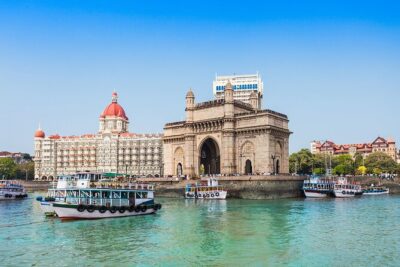

Dawn & Early Morning Tours, compared.
 ★ 5.0The Original Mumbai by Dawn – Recommended by Nigella Lawson & Nat Geo Traveller!From $86610 reviews
 ★ 5.0Mumbai Morning Market Tour of Flowers, Fish, and MoreFrom $19100 reviews
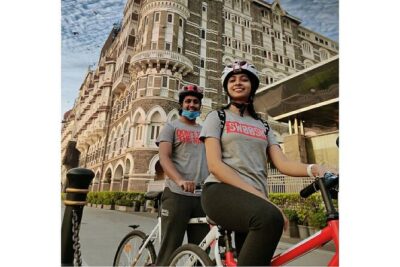 ★ 5.0Morning Bicycle TourFrom $2140 reviews
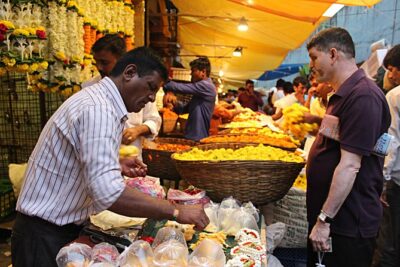 ★ 5.0The Colourful Early Morning TourFrom $3531 reviews
 ★ 4.8Early Morning Bicycle TourFrom $3730 reviews
 ★ 5.0Early Morning Old Mumbai Private Cycle Tour With BreakfastFrom $6521 reviews
 ★ 4.53 Hours Early Morning in South Mumbai Heritage Bicycle TourFrom $3616 reviews
★ 5.0Mumbai Morning Bicycle TourFrom $1815 reviews
★ 4.53 Hours Early Morning in South Mumbai Heritage Bicycle TourFrom $3616 reviews
★ 5.0Mumbai Morning Bicycle TourFrom $1815 reviews
Browse the lists this tour appears in