
Review · MUMBAI BY LOCAL TRAIN
Private Half-Day Mumbai Sightseeing Tour by Public Transportation
Mumbai shifts gears when you ride its transit. This private 4-hour tour takes you through everyday neighborhoods using buses, local trains, and cabs, guided by a real person who helps you move with confidence. You’ll see major landmarks like Chhatrapati Shivaji Terminus, plus street-level stops such as Dhobi Ghat and Chor Bazaar, where the city feels like it’s functioning at full speed.
I especially like two things: you get to travel like a local (not just get dropped at photo spots), and you’ll have a guide who makes the places easier to understand. One thing to consider is that this is a public-transport style outing, so you’ll be on the move and you’ll want to keep your pace steady for the full half day.
In This Review
- Key things to look forward to
- Why 4 Hours of Mumbai Transit Feels More Real
- Starting at Regal Cinema, Ending Near Churchgate
- Regal Cinema: Art Deco Movie House With Old Mumbai Stories
- Chhatrapati Shivaji Terminus: Architecture and Train-Station Power
- BB Dadar Market: Flowers, Auctions, and Daily Commerce
- Dhobi Ghat: Laundry Work in the Open Air
- Chor Bazaar: Flea-Market Energy and a Name With a Legend
- Churchgate Station and the Dabbawala Lunchbox System
- Transportation Style: Buses, Trains, and Black-and-Yellow Cabs
- What Makes the Guide Matter: Dev’s “Tell Me Why” Approach
- Price and Value: What $80 Buys in a Transit-Based Day
- Plan Like a Local: Small Things That Make the Day Easier
- Should You Book This Mumbai Public-Transit Tour?
- FAQ
- How long is the private Mumbai sightseeing tour?
- What stops will I visit during the tour?
- Is transportation included in the price?
- Is this tour private?
- What’s included for food and drinks?
- What is the cancellation policy?
Key things to look forward to
- Private guiding with real conversation to help you interpret what you’re seeing
- Public transit included: buses, trains, and taxis are part of the plan
- Dhobi Ghat in the open air, where laundry work happens in view
- Chhatrapati Shivaji Terminus with Victorian Italianate Gothic Revival architecture
- Chor Bazaar’s folklore, including the meaning of chor (thief) in Marathi and Hindi
- Lunchbox logistics at Churchgate, tied to dabbawallas delivering 200,000 meals daily
Why 4 Hours of Mumbai Transit Feels More Real
If you only see Mumbai from cars and quick stops, you miss how the city actually works. This tour is built around public transportation, which means you’re not just ticking sights—you’re watching people move, trade time, and get things done. And because your guide helps you navigate buses, local trains, and cabs, you spend less time guessing and more time observing.
Another practical win: the tour covers the transport fares for the ride itself. That matters in a place where getting around by taxi can add up fast. Here, you’re paying for movement, not just entry to a few points on a map.
The biggest payoff is perspective. You’ll look at landmarks like Chhatrapati Shivaji Terminus differently once you’ve also seen the daily industries around it—flowers, laundry work, and markets. For me, that’s the best way to understand a city that runs on systems, not monuments.
Starting at Regal Cinema, Ending Near Churchgate
You begin at the Regal Cinema building on Chhatrapati Shivaji Maharaj Marg in Colaba (Apollo Bandar area). You finish near Churchgate at Maharshi Karve Rd. It’s a good setup if you’re staying somewhere south or you want a half-day plan that still leaves room for dinner afterward.
This is also designed to be easy to join without complex pickup arrangements—hotel pickup and drop-off aren’t part of the package. The good news is that the meeting point is near public transportation, and the ending point is near the same kinds of connections. If you’re the type who likes to start your day clean and straightforward, you’ll appreciate this.
What I’d plan for: comfortable shoes. You’ll move through stations and markets, and the stops are short enough that you don’t want to be fighting your feet for the whole 4 hours.
More rides on the locals, from Churchgate out to the suburbs




Regal Cinema: Art Deco Movie House With Old Mumbai Stories
Regal Cinema is an Art Deco movie theatre on Colaba Causeway. One neat detail that sets the tone early: the first film screened there was The Devil’s Brother by Laurel and Hardy in 1933. That kind of fact turns a simple photo stop into a small time machine.
You’ll spend about 10 minutes here, so it’s not a long museum visit. Instead, it works like a starting note—this is Mumbai as it used to entertain people, right at the edge of a very active neighborhood. Since there’s no admission ticket required for this stop, it’s a low-effort way to get an anchor point for the rest of the tour.
If you like architecture and small historical breadcrumbs, you’ll enjoy the way this stop frames the day. If you’re expecting a detailed interior experience, keep expectations modest—the time is short.
Chhatrapati Shivaji Terminus: Architecture and Train-Station Power
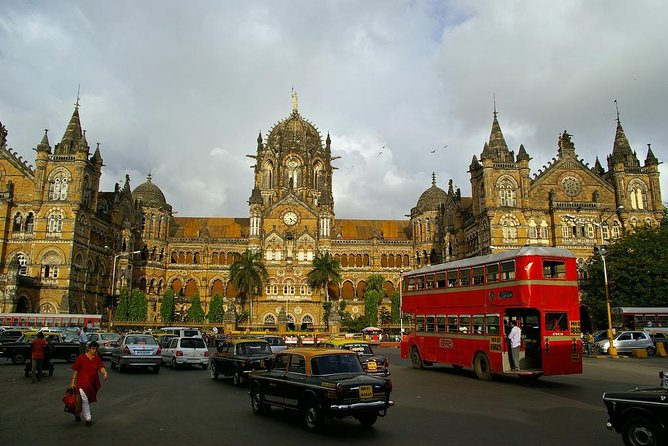
Next comes Chhatrapati Shivaji Terminus (often shortened to CST). This is one of those places where you immediately feel why it matters. It was designed by British architectural engineer Frederick William Stevens in Victorian Italianate Gothic Revival style, and construction began in 1878. It’s also described as one of the busiest railway stations in India.
You’ll have around 10 minutes here. That’s enough to get the essentials: take in the façade, look at the station setting, and watch the flow of people coming and going. Even in a short time, CST’s scale and design give you a “Mumbai is a working city” moment, not just a postcard moment.
My practical advice: treat this stop like orientation. Once you’ve seen a major station like CST up close, the other transit segments of the tour start to make sense in a more personal way—you’ll understand what you’re moving between and why it’s set up where it is.
BB Dadar Market: Flowers, Auctions, and Daily Commerce
BB Dadar Market is a fresh flower market. Expect a lively mix of blooms, plus auction-style buying and selling. You’ll spend about 30 minutes here, which is a comfortable window: long enough to look closely, short enough that you won’t feel stuck.
This stop adds something important to the tour. You’re not just sightseeing; you’re seeing one of the city’s everyday supply chains. Flowers matter in Mumbai’s cultural life, and you can feel that in the way the market functions—fast transactions, color everywhere, and people focused on the next bundle.
A consideration: markets can mean quick changes in crowding and movement. If you don’t enjoy shoulder-to-shoulder situations, you’ll still be okay with 30 minutes, but keep your comfort in mind and move slowly rather than rushing for photos.
Other loops past the Gateway, Marine Drive and beyond
- Mumbai: Full-Day Sightseeing Tour of Mumbai
★ 4.9 · 1,822 reviews - Private Mumbai Sightseeing Tour (Traveller’s Choice Award Winner)
★ 5.0 · 1,565 reviews - Highlights of Mumbai Sightseeing Tour: TRAVELLERS CHOICE AWARDED
★ 5.0 · 915 reviews - Highlights of South Mumbai Guided Private Tour in AC Vehicle
★ 5.0 · 620 reviews - Private Mumbai Sightseeing Tour(Travellers Choice Award Winner)
★ 5.0 · 565 reviews - Private Half-Day Sightseeing Tour in Mumbai
★ 5.0 · 430 reviews
Dhobi Ghat: Laundry Work in the Open Air
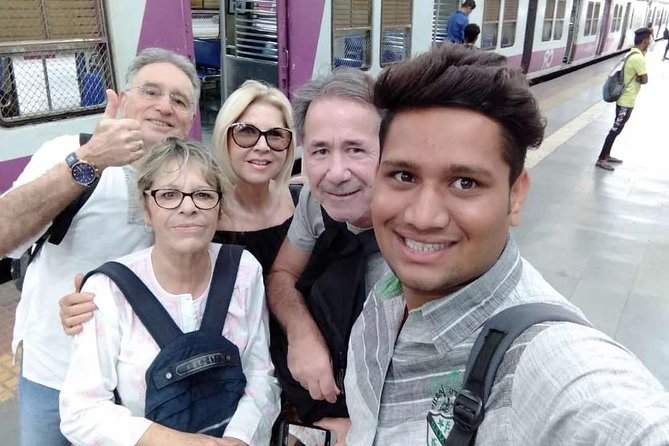
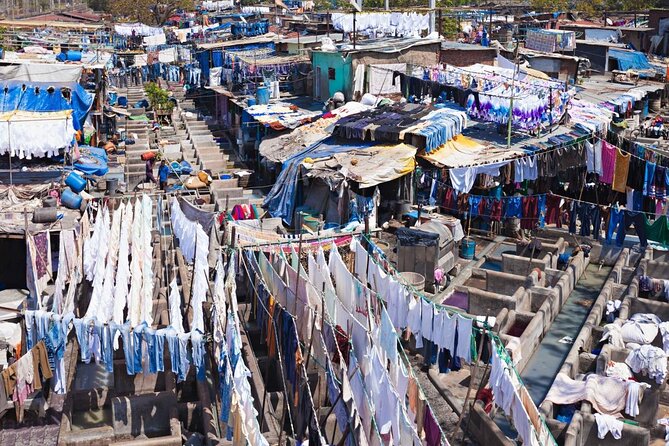
Dhobi Ghat is one of the tour’s most memorable stops because it’s both specific and human. It’s an open-air laundromat where the washers—known as dhobis—work in the open to clean clothes and linens from Mumbai’s hotels and hospitals. It was constructed in 1890.
You’ll spend around 25 minutes here. That’s a good amount of time to notice the workflow and understand the scale of the operation. This is not a quiet “view and leave” attraction. It’s active work, and your guide helps you connect the dots—how an industry like this fits into the city’s everyday life.
What to keep in mind: this is a working area connected to service work. You’ll get the best experience by watching respectfully and giving space where needed. If you’re the type who likes behind-the-scenes views of how cities operate, you’ll likely love this stop.
Chor Bazaar: Flea-Market Energy and a Name With a Legend
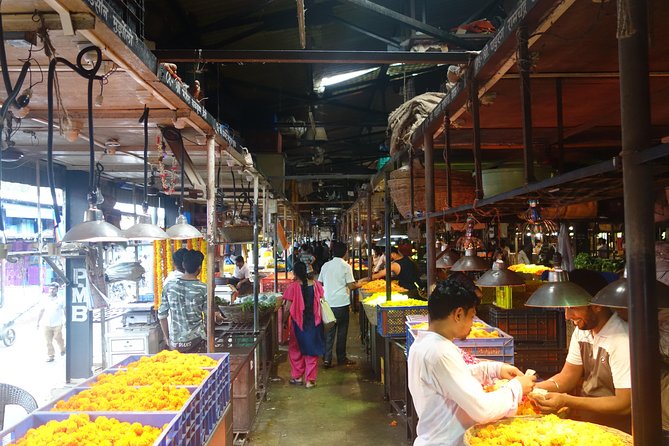
Chor Bazaar is one of the larger flea markets in India, and the name carries a story. The word chor means thief in Marathi and Hindi. There’s also a popular legend that if you lose something in Mumbai, you can buy it back from the Chor Bazaar.
You’ll have about 30 minutes here. That’s enough time to wander, scan stalls, and get a feel for the variety without turning it into a marathon shopping trip. Even if you don’t plan to buy anything, this is a chance to understand how street commerce works—how people search, compare, and trust the market to deliver odd items and second chances.
A practical tip: keep your expectations realistic. Flea markets are about browsing, not guaranteed treasures. If you treat it like an observation stop—what’s being sold, how sellers organize their wares—you’ll get more out of the time.
Churchgate Station and the Dabbawala Lunchbox System
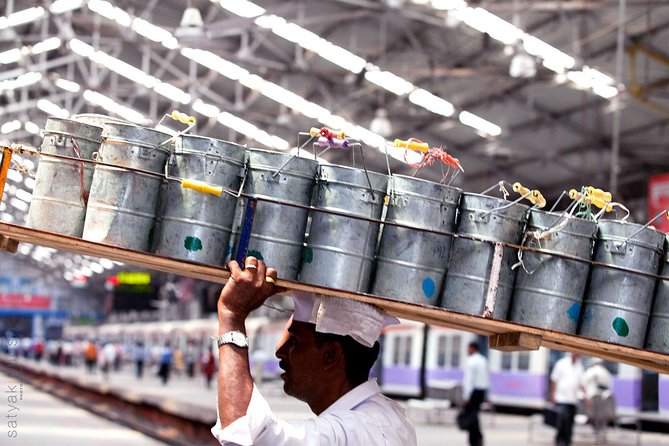
At Churchgate Railway Station, the focus shifts from markets and laundry to systems and logistics. You’ll see the famous dabbawallas and learn how they organize delivery of 200,000 lunchboxes every single day.
You’ll spend about 20 minutes at this stop. That time works well because it gives you enough context to appreciate the scale without pulling you away from the rest of the day. Even if you’ve read or heard about dabbawallas before, seeing the station setting helps you understand why this delivery network is so tightly linked to rail and daily commuting patterns.
For anyone who loves practical explanations—how things work, how routines run—this is a strong payoff. It turns Mumbai from a collection of sights into a place where infrastructure supports everyday life.
Transportation Style: Buses, Trains, and Black-and-Yellow Cabs
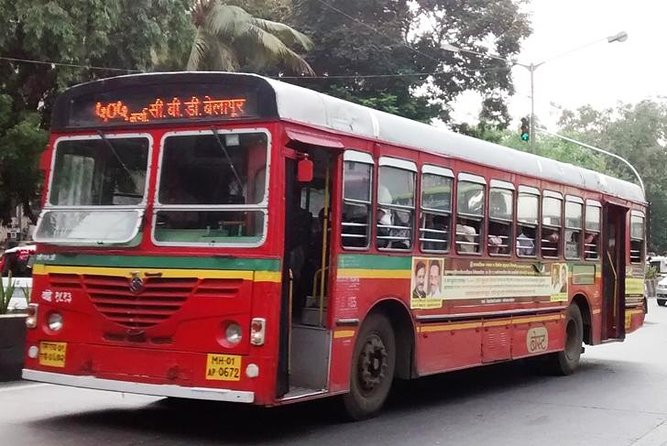
A big reason this tour works is that it doesn’t treat transit as a hurdle. The plan includes local buses, local trains, and taxis. The overview also points to Mumbai’s legendary black and yellow taxis, so you get a mix of transport styles instead of one mode only.
Because the fare for transportation is included, you don’t have to micromanage the day. Your guide handles the routing and helps you stay oriented, which is especially valuable in a city where station layouts and route choices can feel complex if you’re unfamiliar.
What you should consider: time on public transport can feel different than time in a car. Even with guidance, you’re moving with the rhythm of the city—boarding, exiting, and positioning yourself for each segment. If you’re someone who gets flustered easily by crowds or waiting, plan to stay calm and patient. The reward is that you’re seeing the city as it’s lived.
What Makes the Guide Matter: Dev’s “Tell Me Why” Approach
One of the most praised parts of this tour is the guide’s personality and storytelling. A guide named Dev has been highlighted for being awesome, knowledgeable, and delightful in conversation, including sharing about himself during the tour. That kind of back-and-forth changes the experience from sightseeing into learning.
Here’s what you’ll benefit from when a guide like that leads: faster comprehension. You won’t just see Dhobi Ghat—you’ll understand what you’re looking at and why it exists. You won’t just walk through a station—you’ll connect architecture and daily rail flow. And you’ll be able to ask questions without needing to translate every thought on the spot.
If you care about explanations that feel personal and grounded, this is a good match. If you prefer silent tours where you do your own reading afterward, this may feel too conversational—but for most visitors, it’s the best part.
Price and Value: What $80 Buys in a Transit-Based Day
At $80 per person for about 4 hours, this tour can feel like a fair deal once you break down what’s included. You’re getting:
- A local guide
- Tea and bottled water
- Transportation fares for the day’s buses, trains, and cabs
- Admission tickets are listed as free for every stop
That package is the value engine. If you had to recreate this day independently, the guide and transport costs alone would likely be higher than $80 once you start adding taxis and station-to-station navigation. And because you’re visiting multiple stops that each need time and local interpretation, the guide earns their keep.
Who gets the best value? People who want a “how to understand Mumbai” half day. If you’re only interested in one or two famous landmarks and don’t care about market and working-industry stops, you might not use the time efficiently. But if you want a mix of big sights and real neighborhoods, the price-to-experience ratio feels solid.
Plan Like a Local: Small Things That Make the Day Easier
You’re not starting with hotel pickup, so plan your arrival time accordingly. Build in a little cushion to reach Regal Cinema from wherever you’re staying. Since the tour ends near Churchgate, you can also use the rest of your evening to explore that side of town if you want.
Bring the basics you’d bring for any half-day walking and transit:
- comfortable shoes
- a small water plan (you’ll get bottled water on the tour, but you still want to stay comfortable)
- a light layer if you get temperature swings in the day
Food isn’t listed as included beyond tea and bottled water, so treat lunch/dinner plans as separate. If you eat late, this tour can fit well as a mid-afternoon activity before dinner.
Most travelers can participate, and the tour is private, so it’s just your group. That matters if you want to ask questions at your own pace and not wait for strangers to catch up.
Should You Book This Mumbai Public-Transit Tour?
I think you should book if you want Mumbai that feels lived-in: major landmarks, plus working-city stops like Dhobi Ghat and the market scene. You’re paying for a guided route that uses local buses, trains, and taxis, and you’ll likely get the best experience from a guide like Dev, who makes the day feel personal through conversation.
Skip it if you only want a quick parade of famous buildings with minimal transit time. Also skip it if you hate the idea of being in and around stations and market areas for a few short but active segments.
If you’re curious, open-minded, and want to understand the city’s systems—trains, laundry work, lunchbox delivery, and market trading—this half-day is a strong choice.
FAQ
How long is the private Mumbai sightseeing tour?
The tour lasts about 4 hours.
What stops will I visit during the tour?
You’ll visit Regal Cinema, Chhatrapati Shivaji Terminus, BB Dadar Market, Dhobi Ghat, Chor Bazaar, and Churchgate Railway Station.
Is transportation included in the price?
Yes. The fare for transportation used as part of the tour is included.
Is this tour private?
Yes. It’s a private tour/activity, and only your group will participate.
What’s included for food and drinks?
Tea and bottled water are included. Food and drinks are not listed as included unless specified.
What is the cancellation policy?
Free cancellation is available. You can cancel up to 24 hours in advance for a full refund. If you cancel less than 24 hours before the start time, the amount paid isn’t refunded.
Mumbai on Your Own Terms
- Private Mumbai Sightseeing Tour (Traveller’s Choice Award Winner)
★ 5.0 · 1,565 reviews - Elephanta Caves & Island Guided Private Tour
★ 5.0 · 1,327 reviews - Private Guided Walking Tour in Fort & Colaba
★ 5.0 · 895 reviews - Highlights of South Mumbai Guided Private Tour in AC Vehicle
★ 5.0 · 620 reviews
The Big Mumbai Circuits
- Mumbai: Full-Day Sightseeing Tour of Mumbai
★ 4.9 · 1,822 reviews - Private Mumbai Sightseeing Tour (Traveller’s Choice Award Winner)
★ 5.0 · 1,565 reviews - Highlights of Mumbai Sightseeing Tour: TRAVELLERS CHOICE AWARDED
★ 5.0 · 915 reviews - Highlights of South Mumbai Guided Private Tour in AC Vehicle
★ 5.0 · 620 reviews
Mumbai by Rail, Line by Line
- Dabbawala, Dhobi Ghat & Dharavi slum Tour with Local Train Ride
★ 5.0 · 102 reviews - Mumbai Street Food & Bazaar Tour with Local Transport
★ 5.0 · 51 reviews - Local Transport & Dabbawallah Tour
★ 5.0 · 40 reviews - Mumbai: Local Transport & Dabbawallah Tour
★ 4.9 · 14 reviews
New on the Mumbai shortlist


Mumbai by Local Train, compared.
 ★ 5.0Dabbawala, Dhobi Ghat & Dharavi slum Tour with Local Train RideFrom $35102 reviews
 ★ 5.0Mumbai Street Food & Bazaar Tour with Local TransportFrom $2151 reviews
 ★ 5.0Local Transport & Dabbawallah TourFrom $3240 reviews
 ★ 4.9Local Transport & Dabbawallah TourFrom $3114 reviews
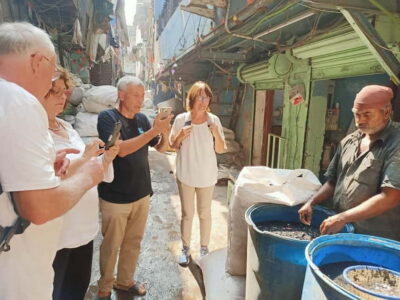 ★ 5.0Dharavi Slum and Dhobi Ghat Tour with Train RideFrom $269 reviews
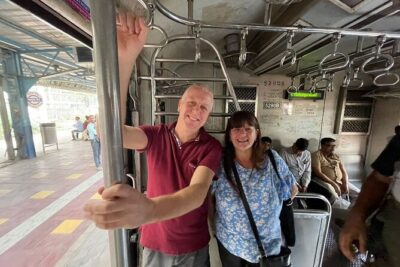 ★ 5.0Primmum Mumbai Sightseeing With Local Train Ride ExperienceFrom $397 reviews
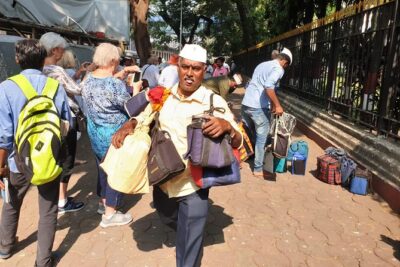 ★ 5.0Mumbai City + Dabbawala aka Lunchbox + Train Ride Tour – The Unfeigned Mumbai.From $696 reviews
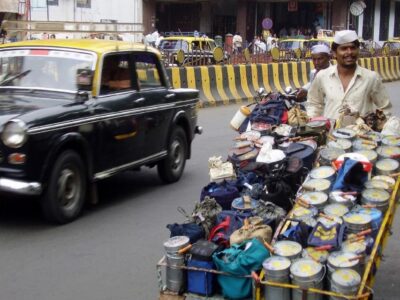 ★ 5.0Public Transportation TourFrom $386 reviews
Browse the lists this tour appears in