
Review · OLD BOMBAY HERITAGE WALKS
Victorian Gothic Heritage Quarter and Art Deco Walking Tour
Mumbai looks different when you walk it. This tour strings together big architectural styles in a tight route, with stops that explain what you’re seeing and why it matters. I love that it’s short, focused, and guide-led, so you can get your bearings fast without committing to half a day.
What I like most is the small-group feel (up to 15) and the way the route mixes headline landmarks with story-rich corners, including places tied to art-deco-era buildings and local street scenes. One drawback to keep in mind: like any walking tour, it is only about 2 hours, so you’ll see the highlights more than you’ll linger for deep museum-style study.
In This Review
- Key takeaways before you go
- Why this Victorian Gothic and Art Deco walk is a smart plan
- Price and what you really get for $18.88
- The walking route: how the 2 hours likely plays out
- Start at Regal Cinema in Colaba and set the scene
- Stop 1: General Post Office Mumbai (1913) and why a post office is a big deal
- Stop 2: Town Hall and the Asiatic Society Library (founded 1804)
- Stop 3: Horniman Circle Garden (built 1860) as a breather
- Stop 4: St. Thomas Cathedral (1718) and the oldest Anglican thread
- Stop 5: Bombay High Court (Gothic Revival, inaugurated 1879)
- Stop 6: Rajabai Clock Tower (completed 1878) and the University of Mumbai
- Stop 7: Oval Maidan and the Victorian-to-Art Deco edge
- Stop 8: Kala Ghoda (Black Horse) precinct for street art energy
- Stop 9: Gateway of India (1924) and the royal-visit commemoration
- Stop 10: The Taj Mahal Palace (built 1903) and the grand finale
- Guides, pace, and why the human part matters
- Practical advice so you’ll enjoy it more
- Who this tour fits best
- Should you book the Victorian Gothic Heritage Quarter and Art Deco walking tour?
- FAQ
- How long is the Victorian Gothic Heritage Quarter and Art Deco Walking Tour?
- How much does the tour cost?
- Where does the tour start and where does it end?
- How large is the group?
- Is bottled water included?
- Is the ticket mobile?
- Are admission tickets free for the stops?
- Do I need private transportation?
- What is the cancellation policy?
- Is this tour suitable for most people?
Key takeaways before you go
- Two architectural eras in one loop: Victorian Gothic and Art Deco show up side by side in the same walk.
- Stops are listed as free admission: you’re not hit with extra site fees at each stop.
- Small group pace: a maximum of 15 travelers helps the guide keep things moving.
- Guides can add street-level stories: record stalls, local precinct chatter, and Sunday cricket energy may appear depending on timing.
- End near Churchgate: you finish in a convenient hub, good for continuing on foot or by transit.
Why this Victorian Gothic and Art Deco walk is a smart plan

Mumbai can feel like nonstop motion, so I like tours that give you structure. This one works because it turns architecture into a timeline you can actually follow—start with early 1900s grandeur, then move through Gothic Revival civic buildings, and finish with a classic grand hotel on the sea-facing side of the city center.
The value is also unusually clear for the price point. At $18.88 per person for around 2 hours, you’re paying mostly for the guide’s storytelling and coordination, not for entry costs. And with mobile tickets and bottled water included, it’s setup-light.
Price and what you really get for $18.88
Let’s talk value honestly. You’re not buying a long ticketed museum day. You’re buying a guided walking route that points out major buildings tied to mail/communication, law, education, churches, gardens, and landmark hospitality.
That means the experience is strongest if you enjoy seeing how a city’s power centers shaped its look—post office, court, university towers, and prominent hotels. If your idea of a great tour is sitting in one place for long explanations, you might find the pace brisk. But if you want an efficient introduction, this is a good match.
More Gothic arches and Deco curves of old Bombay



The walking route: how the 2 hours likely plays out
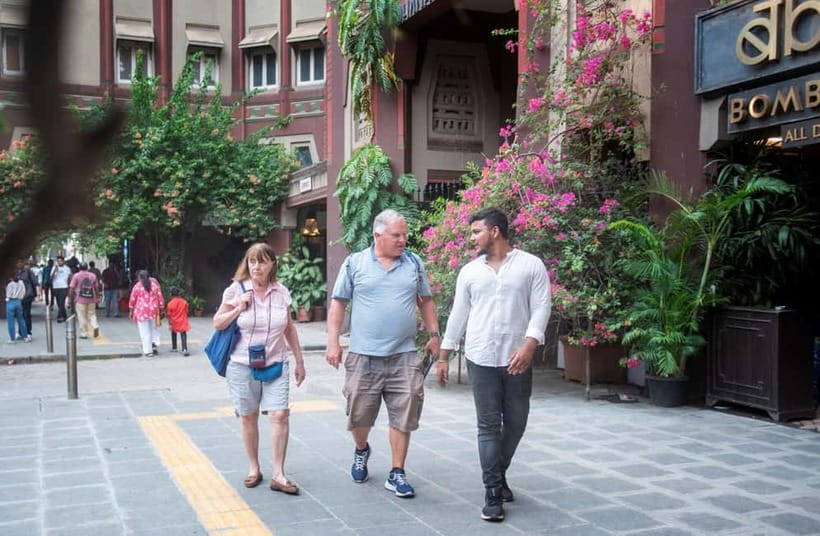
The itinerary is timed in short chunks, mostly about 15 minutes at each stop, with a couple quicker photo-and-story moments. That pacing matters because it keeps your attention from draining and helps you stay oriented—especially in an area where buildings can look similar until someone points out specific design cues.
You also end at Churchgate Station, which is handy because it’s a natural transit connection. Plus, the tour is set near public transportation, so you’re not forced into a taxi for every leg.
Start at Regal Cinema in Colaba and set the scene
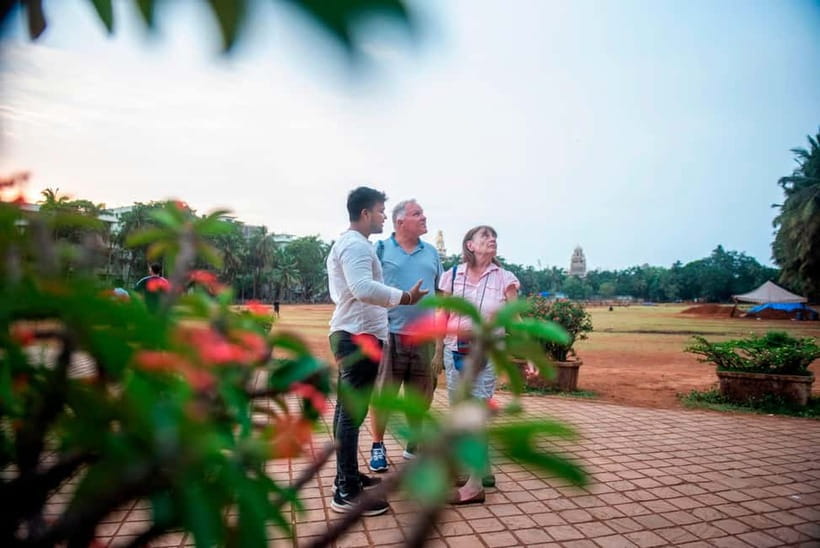
Your walk begins at Regal Cinema, Apollo Bandar, Colaba. Colaba is a fitting starting point because it’s where many first-timers picture Mumbai: sea-air nostalgia, big-city landmarks nearby, and quick access to the heritage belt.
From the start, you’ll get oriented to what the guide is using as the tour’s “map.” It’s not just random stops. The route is designed so you can compare styles: Gothic Revival forms on civic buildings and clock-tower silhouettes, then quicker hits of Art Deco-era neighborhood atmosphere along the way.
Stop 1: General Post Office Mumbai (1913) and why a post office is a big deal
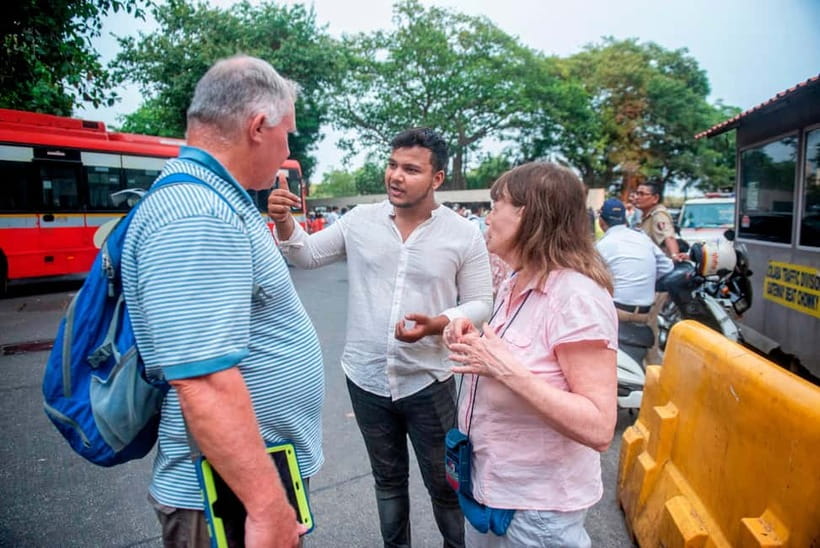
The first major landmark is the General Post Office Mumbai, built in 1913. The design is described as Indo-Saracenic grandeur, and the guide’s job here is to translate the visual cues into context—this is the kind of building that turns infrastructure into a public statement.
You’ll also hear about its role as the city’s mail and communication hub. For me, the fun angle is that you’re looking at a place that used to coordinate everyday life for a whole metropolis, yet it still reads as ceremonial and architectural.
Practical note: the stop is listed at 15 minutes. That’s enough for photos and key details, but don’t expect a long sit-down explanation.
More of Mumbai at walking pace
- Group Guided Walking Tour in Fort and Colaba
★ 5.0 · 1,073 reviews - Private Guided Walking Tour in Fort & Colaba
★ 5.0 · 895 reviews - Private Guided Walking Tour in Bandra Queen of Suburbs
★ 5.0 · 383 reviews - Private Guided Spiritual Walk in Banganga Hindu Temples
★ 5.0 · 271 reviews - Mumbai: Dharavi Slum Walking Tour by First Female Tour Guide
★ 4.9 · 192 reviews - Private Guided Non-Veg Street Food Walking Tour in Muslim Quarter
★ 5.0 · 140 reviews
Stop 2: Town Hall and the Asiatic Society Library (founded 1804)
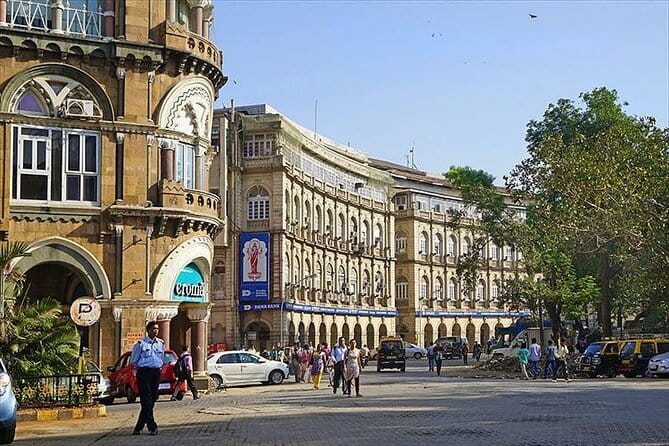
Next up is the Town Hall / Asiatic Society Library area, tied to a library founded in 1804. The architecture is described as neoclassical, and the pitch is that you’re not only looking at a pretty facade—you’re stepping into a place associated with manuscripts, ancient texts, and valuable artifacts.
This stop is also about mood. Neoclassical lines can feel cooler and more formal than the Gothic Revival you’ll see later, so it helps your eye “reset” before the civic-and-judicial blocks.
Again, it’s a 15-minute slot. If you’re the type who loves reading about rare collections, you may wish you had more time, but the tour format keeps the overall loop moving.
Stop 3: Horniman Circle Garden (built 1860) as a breather
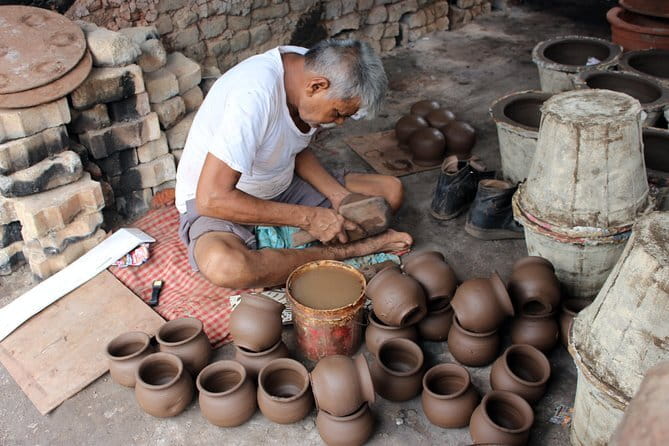
At Horniman Circle, you get a palate cleanser: a garden built in 1860, surrounded by grand colonial buildings. The tour frames it as a serene oasis in the middle of urban intensity, and it’s also a great place to catch the overall streetscape composition.
The guide can also make this stop feel local. One review experience mentioned that on a Sunday, they stopped in the park and there were people playing cricket—an everyday Mumbai scene that turns an architectural walk into something lived-in.
This stop is short at 15 minutes, but the garden setting gives you a break from staring upward at towers and fronts.
Stop 4: St. Thomas Cathedral (1718) and the oldest Anglican thread
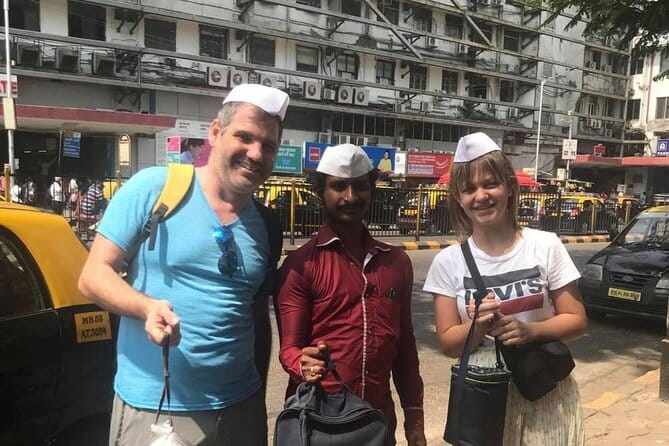
The walk continues to St. Thomas Cathedral Mumbai, noted as the city’s oldest Anglican church and consecrated in 1718. The highlight here is British colonial-era architecture and how the church played a role in the city’s religious development.
For your photos, this is one of those stops where the facade can look dramatic because the details were built to be read from the street. For the story side, the guide can help connect religious presence to colonial-era community structure.
Stop time is 15 minutes. You’ll get enough time to orient, not enough time to wander for hours.
Stop 5: Bombay High Court (Gothic Revival, inaugurated 1879)
Now you’re in heavy civic architecture territory. The High Court of Bombay is described as an iconic Gothic Revival structure inaugurated in 1879. The guide’s role is to point out why that style shows up so often on institutions tied to authority and law.
In practice, this is where you start spotting patterns: pointed arches, vertical emphasis, and ornate stonework cues that make these buildings look like they were designed for long-lasting public presence.
It’s another 15-minute stop, so treat it as a “read the building” moment. If you’re hoping for a long commentary on legal history, you’ll want to pair the walk with extra independent reading afterward.
Stop 6: Rajabai Clock Tower (completed 1878) and the University of Mumbai
The Rajabai Clock Tower is next, completed in 1878 at the University of Mumbai. It’s credited to designer Sir George Gilbert Scott, with funding associated with Premchand Roych (as noted in the tour description).
This stop is a favorite type of stop for architecture fans because a clock tower forces your eye to notice proportion. Even if you don’t care about the exact funding story, you can still appreciate the tower’s role as a landmark for the city’s academic identity.
Duration is 15 minutes. It’s enough for a solid look and a few key facts, especially since the tour doesn’t spend a lot of time repeating earlier style explanations.
Stop 7: Oval Maidan and the Victorian-to-Art Deco edge
At Oval Maidan, you get the open-space view—important in Mumbai because big buildings can crowd your perception. Oval Maidan is described as a historic recreational ground established in the 19th century, and the key idea is that it’s flanked by Victorian Gothic buildings and Art Deco architecture.
That pairing is exactly why this walk works. You’re not just seeing individual buildings. You’re seeing how styles share the same geography. That’s one of the tour’s best “aha” moments: the city doesn’t flip eras cleanly; it overlaps them.
This stop is 10 minutes, so you should use it for orientation photos and quick comparisons.
Stop 8: Kala Ghoda (Black Horse) precinct for street art energy
Next is Kala Ghoda, named after a statue of King Edward VII. It’s presented as a cultural precinct known for art galleries, museums, and street art, and it’s tied to the Kala Ghoda Arts Festival timing in the background.
From what I’d want you to know: this isn’t just another statue stop. It’s the part of the tour where architecture meets day-to-day culture—good for people who like both photo-worthy buildings and the “what’s happening here” feel of a neighborhood.
Time here is 5 minutes, so you’ll mainly get a quick orientation and a few story points, not a full neighborhood exploration.
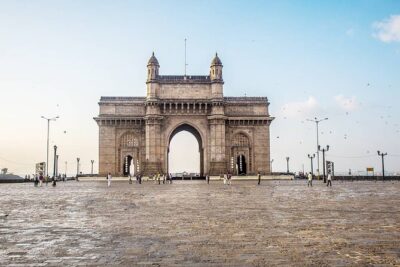
Stop 9: Gateway of India (1924) and the royal-visit commemoration
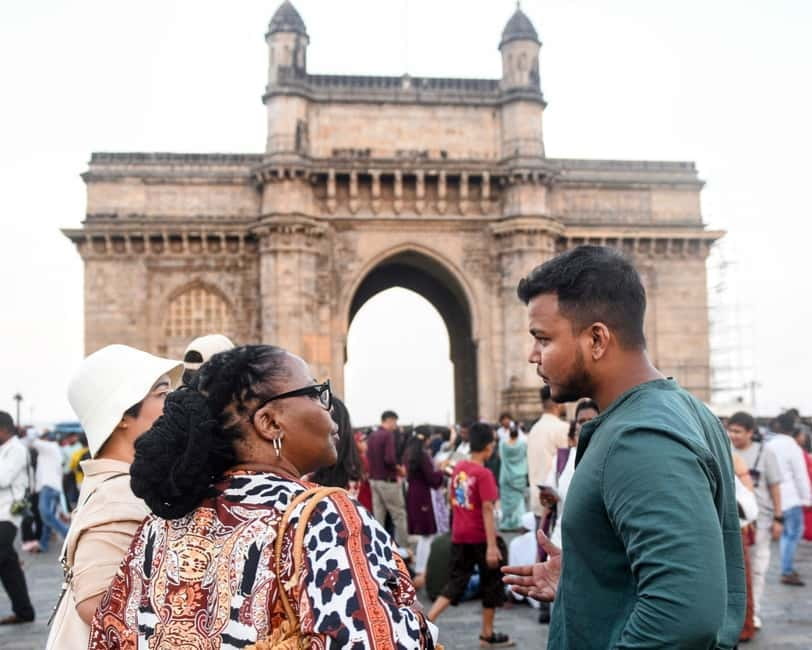
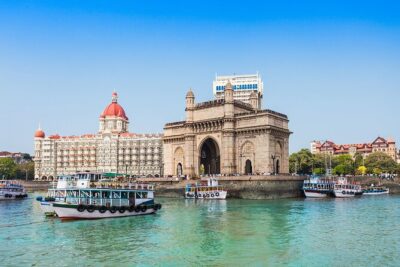
Then comes the classic: the Gateway of India, described as an iconic arch monument built in 1924 to commemorate the visit of King George V and Queen Mary.
This is where your guide’s explanation makes a difference. Without that, you’re likely to see the arch as a photo spot. With the context, it becomes a symbol of a specific era of imperial presence and a landmark that helped define Mumbai’s global-image stage.
Stop time is 10 minutes, which is enough for close-up viewing and a few photos. You won’t have long waiting time unless you run into local crowds.
Stop 10: The Taj Mahal Palace (built 1903) and the grand finale
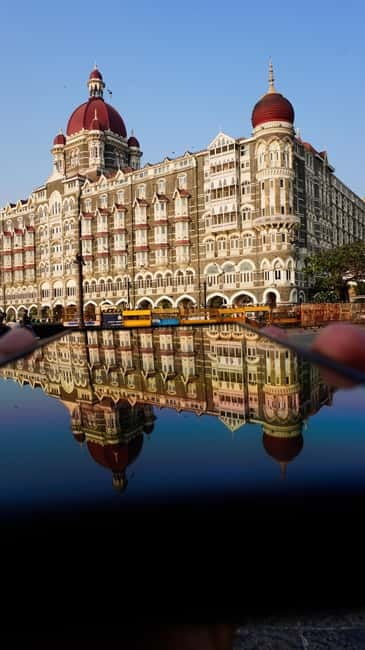
Your last architectural punctuation mark is The Taj Mahal Palace, Mumbai, described as a historic luxury hotel built in 1903 overlooking the Arabian Sea. This is an iconic “finish line” because it’s instantly recognizable and because its grandeur matches the tour’s earlier emphasis on prominent institutions.
You’ll get a short 5-minute look, so approach this as a closing moment: photo, quick story, then you’re done.
Ending near Churchgate Station means you can keep moving right away instead of backtracking.
Guides, pace, and why the human part matters
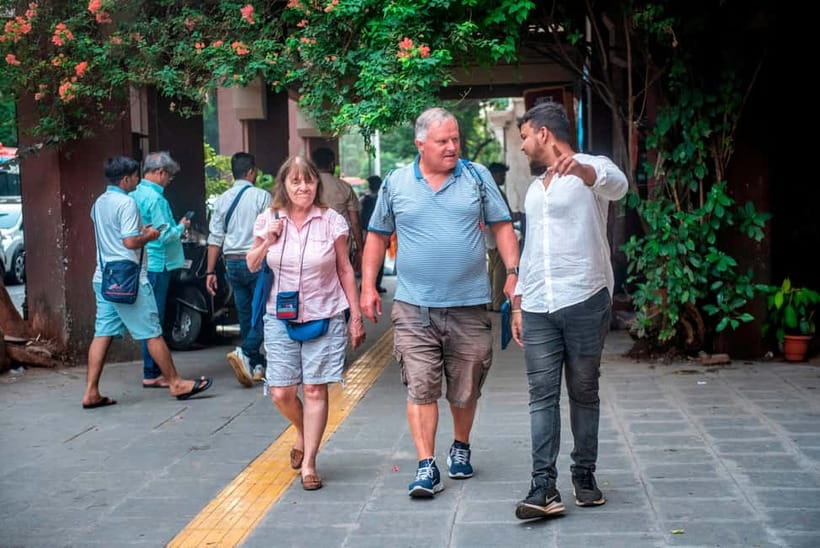
The biggest strength from guide feedback is the storytelling tone. In real experiences shared from this route, guides such as Abhi, Abhishek, Ravi, and Yash are described as friendly and able to answer questions in good English. That matters because the difference between a “photo walk” and a “meaningful walk” is usually whether you understand what you’re looking at.
You may also notice flexibility. One account mentioned unscheduled stops and a longer walk than the listed duration. Another described a Sunday park moment with cricket. These aren’t guaranteed every time, but they point to a tour style that can adapt when timing allows.
One caution: there is at least one critical experience where the guide’s knowledge and presentation were said to fall short. I can’t predict guide-by-guide quality, but it’s fair to say that the experience hinges on the guide running your specific session.
Practical advice so you’ll enjoy it more
Here’s how I’d set yourself up for a better time with a walk like this:
- Wear shoes you can handle for a steady urban pace. It’s a walking route, even if each stop is short.
- Bring sunglasses and plan for sun. You’ll spend time looking up at facades and standing in open areas like Oval Maidan and the Gateway zone.
- Use the garden and park stop as your reset button. Horniman Circle is often where you can catch your breath and regroup your photo plan.
- If you’re a first-timer, lean into questions. This tour format is designed for Q&A during short stops, not for solo wandering.
And yes, you’ll get bottled water, which is a simple but helpful detail.
Who this tour fits best
This is especially good for you if:
- You’re new to Mumbai and want a structured introduction to major heritage landmarks in a short time.
- You like architecture and want quick explanations that help you see details, not just famous buildings.
- You prefer small groups (max 15) and a guide who can talk through what you’re looking at.
It may be less satisfying if you:
- Want deep museum access or long indoor time at each site.
- Prefer a long, slow itinerary with lots of free time to explore independently.
Should you book the Victorian Gothic Heritage Quarter and Art Deco walking tour?
If you’re trying to get oriented in central Mumbai fast, I think it’s a solid booking. For the price, the group size, and the tight 2-hour format, you’re paying for guidance that turns landmark spotting into understanding—especially with the Gothic Revival civic buildings and the Art Deco neighborhood cues you’re meant to compare along the way.
I’d book it if you’re excited by architecture, you like walking, and you’re happy with “highlights with context” rather than long stops. If you’re the kind of traveler who needs lots of guaranteed, detailed interior access and a slower pace, you may want a different type of tour. But for an efficient heritage-and-style sampler, this one is a strong choice.
FAQ
How long is the Victorian Gothic Heritage Quarter and Art Deco Walking Tour?
The tour runs for about 2 hours.
How much does the tour cost?
It costs $18.88 per person.
Where does the tour start and where does it end?
It starts at Regal Cinema, Apollo Bandar, Colaba, Mumbai, and ends at Churchgate Station.
How large is the group?
The tour has a maximum of 15 travelers.
Is bottled water included?
Yes, bottled water is included.
Is the ticket mobile?
Yes, you receive a mobile ticket.
Are admission tickets free for the stops?
The tour details list admission tickets as free for the stops included in the itinerary.
Do I need private transportation?
Private transportation is not included, and the meeting point is noted as near public transportation.
What is the cancellation policy?
You can cancel for a full refund up to 24 hours in advance of the experience’s start time.
Is this tour suitable for most people?
The tour notes that most travelers can participate.
Mumbai on Foot, Continued
- Group Guided Walking Tour in Fort and Colaba
★ 5.0 · 1,073 reviews - Private Guided Walking Tour in Fort & Colaba
★ 5.0 · 895 reviews - Private Guided Walking Tour in Bandra Queen of Suburbs
★ 5.0 · 383 reviews - Private Guided Spiritual Walk in Banganga Hindu Temples
★ 5.0 · 271 reviews
More Mumbai, Every Kind of Day
- Dharavi slum tour in Mumbai by Female tour guides of the slum
★ 5.0 · 1,976 reviews - Mumbai: Full-Day Sightseeing Tour of Mumbai
★ 4.9 · 1,822 reviews - Private Mumbai Sightseeing Tour (Traveller’s Choice Award Winner)
★ 5.0 · 1,565 reviews - Elephanta Caves & Island Guided Private Tour
★ 5.0 · 1,327 reviews
Old Bombay, Building by Building
- Heritage Walk: Recommended by Gigi Hadid as a must-do in Mumbai
★ 5.0 · 122 reviews - Best South Mumbai Heritage Walk
★ 5.0 · 122 reviews - Mumbai: South Mumbai Heritage Walking Guided Tour
★ 4.5 · 69 reviews - Hill-station & Heritage: Lonavala & Karla Caves Tour from Mumbai
★ 5.0 · 60 reviews
New on the Mumbai shortlist


Old Bombay Heritage Walks, compared.
 ★ 5.0Best South Mumbai Heritage WalkFrom $17122 reviews
 ★ 5.0Heritage Walk: Recommended by Gigi Hadid as a must-do in MumbaiFrom $44122 reviews
 ★ 4.5South Mumbai Heritage Walking Guided TourFrom $2869 reviews
 ★ 5.0Hill-station & Heritage: Lonavala & Karla Caves Tour from MumbaiFrom $7260 reviews
 ★ 5.0Mumbai Heritage Walk and Elephanta Caves ExperienceFrom $2953 reviews
 ★ 5.0Kanheri Caves Heritage TourFrom $4545 reviews
 ★ 4.8South Mumbai: Cultural Heritage Walking TourFrom $1645 reviews
 ★ 5.0Private Mumbai Jewish Heritage Tour: Baghdadi & Bene IsraelFrom $9636 reviews
Browse the lists this tour appears in