
Review · OLD BOMBAY HERITAGE WALKS
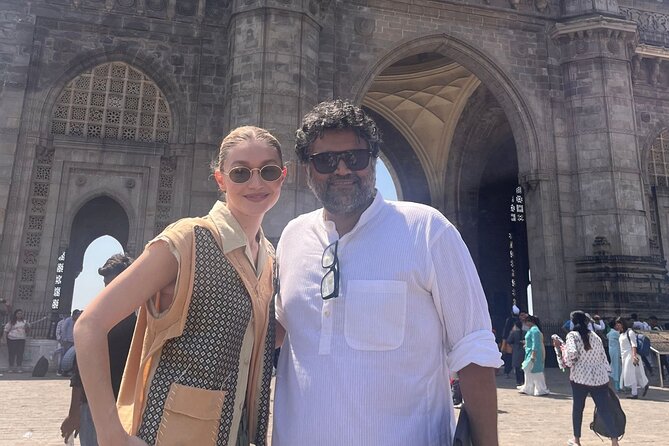
Heritage Walk: Recommended by Gigi Hadid as a must-do in Mumbai
Mumbai’s old map meets modern streets. This private heritage walk threads through Fort-era landmarks, Jewish and Parsi stories, and big-city institutions like the Bombay Stock Exchange. I love the built-in comfort of hotel pickup and drop-off, and the smart stop for a quick bite at Yazdani so you’re not walking on empty. One thing to consider: you mostly get views and stories from the outside, and if you’re hoping to go inside major buildings, this tour may not satisfy that.
The route runs about 3 to 4 hours on foot with a moderate pace. You’ll start at the Asiatic Society area near Town Hall and end in the Kala Ghoda orbit, near art and old docks. A strong point is the personal attention—plus, the guide can adjust the flow based on your interests (and traffic), which matters in Mumbai.
In This Review
- Key Things That Make This Walk Worth Your Time
- South Mumbai, Explained One Step at a Time
- Price and Logistics: What You’re Really Paying For
- Where the Walk Starts: Town Hall and the Asiatic Society Area
- The Horniman Circle Stretch: Green Space and Big Stops
- Yazdani Restaurant & Bakery: The Snack Stop That Makes the Tour Easier
- Flora Fountain to Hutatma Smarak: Expansion Stories in Stone and Water
- Bombay Stock Exchange: Where the City’s Business Heart Beat Is Told
- Keneseth Eliyahoo Synagogue and Kala Ghoda: Jewish Heritage Meets Art Streets
- Ending at Lion Gate: Old Docks and the Stories That Linger
- How Guides Affect the Tour: Personal Attention in Practice
- What If You Want to Go Inside Buildings?
- Who This Heritage Walk Fits Best
- Should You Book This Heritage Walk?
- FAQ
- FAQ
- How long is the Heritage Walk in Mumbai?
- What does the tour cost?
- Does the tour include hotel pickup and drop-off?
- Is a snack included?
- Is this a private tour?
- What is the meeting point and where does the tour end?
- Is there a mobile ticket?
- Are admission fees included?
- Are children allowed, and is there a child fee?
- What happens if the weather is bad?
- Is the tour affected by the Mumbai Marathon?
Key Things That Make This Walk Worth Your Time
- Private guide, not a crowd: your pace and interests can steer the tour.
- Yazdani snack stop: a real break, not a token photo stop.
- South Mumbai landmarks in one loop: from Asiatic Society to the Bombay Stock Exchange area.
- Kala Ghoda Art Precinct + Jewish heritage: history and art zoning side by side.
- Ending near the old docks at Lion Gate: you finish where stories feel most cinematic.
South Mumbai, Explained One Step at a Time

If Mumbai sometimes feels like it’s in fast-forward, this walk is the pause button. It’s a focused way to understand how South Mumbai grew outward from the Fort zone, and how different communities left fingerprints on the streets—Parsis, Jews, and the business class that built the city’s modern pulse.
I like how the tour treats landmarks as clues. You don’t just see names; you get the story behind why they exist and what changed around them. And because it’s private, your guide isn’t trying to keep 20 people together while you’re still processing the last corner.
The pace is walk-based, around 3 to 4 hours total, so it works best when you want real orientation. If you’re the type who likes to know where you are and why that place matters, this hits the sweet spot.
And yes, it has that extra pull: this walk has been flagged as a must-do by a celebrity fan, Gigi Hadid. Even if you ignore the celebrity angle, the structure is solid.
Price and Logistics: What You’re Really Paying For
This runs about $44.39 per person, and it’s commonly booked roughly 25 days in advance. That timing matters because private walking tours can sell out—especially on nice days when people are out exploring.
Value-wise, the price isn’t just for a guide. You also get:
- Hotel pickup and drop-off (with a note that additional transport may be needed for some suburban hotel locations)
- A quick snack at Yazdani
- All fees and taxes included
So you’re paying for convenience plus guidance. That’s the big win in a city where getting across neighborhoods can take time. You avoid the mental load of figuring out where to stand, which gate to approach, and how long a transfer might add.
One practical heads-up: the tour is weather-dependent. If conditions are poor, you’ll be offered a different date or a full refund. Mumbai can be dramatic like that.
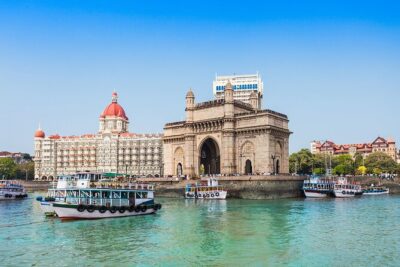
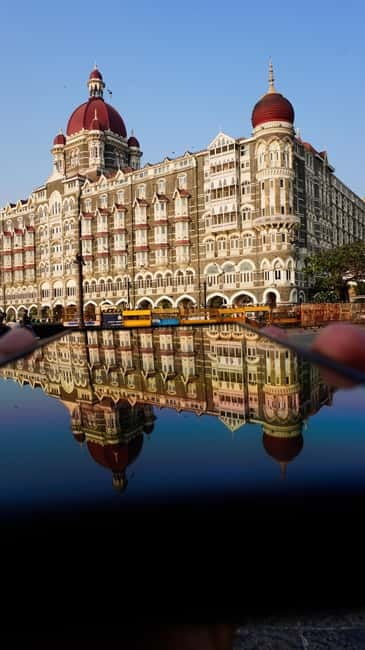
More Gothic arches and Deco curves of old Bombay




Where the Walk Starts: Town Hall and the Asiatic Society Area
You begin near Town Hall / Asiatic Society in the Fort area. This is a good starting point because it’s not far from the old administrative and public-life heart of the city.
The tour starts outside the Bombay Castle area, and that’s more than a geographic detail. It sets the tone: you’re tracing the shift from a fortified zone to a broader city. Your guide uses this early stretch to give you mental landmarks—where things stood and how people moved through the city.
Stop-wise, the first two phases go together:
- Town Hall (Asiatic Society Library area)
- The Asiatic Society, Mumbai
You’ll hear mid-1800s context, including how gas lighting was first exhibited there, plus entertaining anecdotes tied to well-known figures like Jinnah (in the father-of-Pakistan context). I appreciate when a guide doesn’t treat history like a museum display—this is history as street-level storytelling.
One consideration: admission is listed as free for these stops, which is good. But that doesn’t automatically mean you’ll go inside every landmark. One earlier participant specifically wished they could enter more buildings. If indoor access is your priority, manage expectations and focus on the walking + narrative.
The Horniman Circle Stretch: Green Space and Big Stops
Next you move toward Horniman Circle Garden, then on to the St. Thomas Cathedral area. This is a classic South Mumbai pairing: a moment of green calm, then the jump back into stone-and-stories.
Horniman Circle works as a visual reset. Mumbai’s energy is loud, and this stretch gives your brain a breather before you continue connecting dots. It also helps you understand how the city uses open space as a social and civic meeting point.
From a value perspective, these stops matter because they break the route into digestible segments. You’re not just sprinting between named places; you’re getting rhythm—walk, pause, absorb, then continue.
Admission is listed as free here too, so you’re not losing time or money on extra ticketing.
Yazdani Restaurant & Bakery: The Snack Stop That Makes the Tour Easier
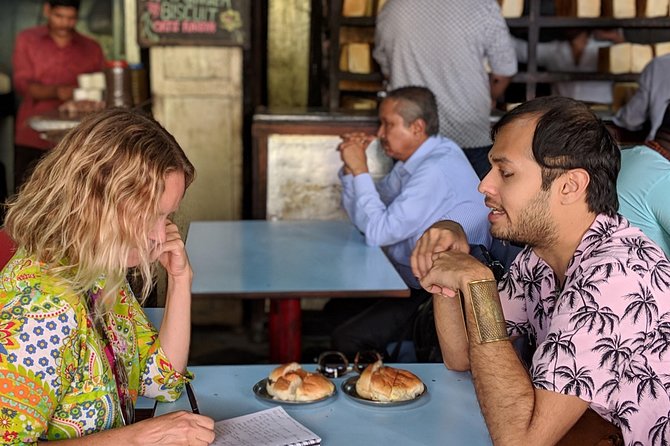
At Yazdani Restaurant & Bakery, you get a quick bite. This is one of the easiest parts to justify even if you’re picky about tour food.
Why it works:
- It’s short enough that you don’t lose momentum.
- It’s timed like a reset, not an end-of-tour reward.
- For many people, it’s a first taste of the Parsi bakery culture that shaped food in this part of Mumbai.
Also, because the tour is on foot, a snack stop is more than comfort—it keeps you from turning the last hour into a tired shuffle. If you tend to get hangry while sightseeing, this matters.
If you’ve only had Indian food occasionally, this stop gives you a more specific, local angle.
More of Mumbai at walking pace
- Group Guided Walking Tour in Fort and Colaba
★ 5.0 · 1,073 reviews - Private Guided Walking Tour in Fort & Colaba
★ 5.0 · 895 reviews - Private Guided Walking Tour in Bandra Queen of Suburbs
★ 5.0 · 383 reviews - Private Guided Spiritual Walk in Banganga Hindu Temples
★ 5.0 · 271 reviews - Mumbai: Dharavi Slum Walking Tour by First Female Tour Guide
★ 4.9 · 192 reviews - Private Guided Non-Veg Street Food Walking Tour in Muslim Quarter
★ 5.0 · 140 reviews
Flora Fountain to Hutatma Smarak: Expansion Stories in Stone and Water
After the snack, you head to Flora Fountain, a place tied to the expansion of Bombay beyond the Fort limits. This is where the walk shifts from “look what’s here” into “why the city pushed outward.”
You also hear about the division of the state of Maharashtra while looking at the Hutatma Smarak. Even if those are names you’ve heard before, hearing them tied directly to a particular location makes them stick.
I like that the guide doesn’t treat these points as unrelated trivia. The tour’s overall shape gives you cause-and-effect: expansion, civic identity, then later layers of political and cultural memory.
Admission is listed as free, and the stop length is manageable, about 15 minutes. You’ll get the key story without being parked for ages.
Bombay Stock Exchange: Where the City’s Business Heart Beat Is Told
At Bombay Stock Exchange, you’ll learn how this major institution started from humble beginnings (under a banyan tree) and grew into the iconic structure it is today.
This is a great stop for two types of people:
1) You want to understand modern Mumbai, not just colonial-era architecture.
2) You like when a guide connects people and power—who built institutions and why.
You’ll be walking through the economy story without needing a finance degree. It’s presented as origin and growth, not a spreadsheet.
Admission is listed as free here too, which again points to the tour being more about guided viewing than deep entry experiences.
Keneseth Eliyahoo Synagogue and Kala Ghoda: Jewish Heritage Meets Art Streets
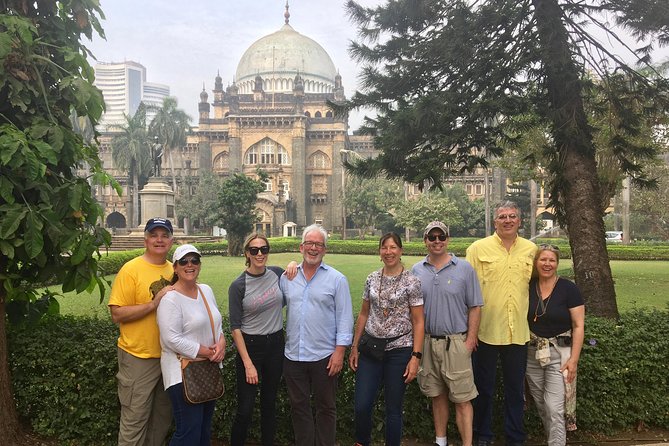
The tour then shifts into Jewish heritage with Keneseth Eliyahoo Synagogue. You’ll hear about the Sassoon family and their impact on Mumbai.
This stop matters because it widens the lens. Many Mumbai heritage walks focus on one community—this one adds another layer, and it fits naturally into the wider South Mumbai story.
Then comes Kala Ghoda Art Precinct, which is where the route starts feeling like two worlds in one day:
- art and streetscapes
- older community stories still attached to the buildings and landmarks
You’ll hear about Sassoon and Jewish history here as well, plus the Watson Hotel, noted as the first iron-cast building in the city and one that hosted Mark Twain.
I’m glad when a tour balances culture types. Art precincts can feel trendy and disconnected from history, but here the guide ties the art area back to what came before.
Stop length is about 25 minutes, which is long enough to feel the atmosphere without getting stuck.
Ending at Lion Gate: Old Docks and the Stories That Linger
The walk finishes at Lion Gate, near old docks. This ending makes sense because docks are where trade, arrivals, and global links become visible even in local storytelling.
You’ll hear about the mysterious Ice King and a connection to the American Civil War, plus other layered dockside tales your guide brings into the last stretch. Docks often work best at the end of an itinerary because the stories feel bigger once you’ve already gathered context from earlier stops.
If you’re the type who likes a strong final “wow, I get it now” moment, this is a good place to close.
How Guides Affect the Tour: Personal Attention in Practice
Because this is a private tour, the guide’s style matters more than usual. The experience is designed so your guide can shape the flow around your interests and energy level.
In recent outings, guides like Meherbeen have adjusted pacing and even added a short local bus hop in the middle to keep things efficient. Another guide, Dereck, has been noted for waiting when the group ran late and then reshaping the tour based on what the group wanted to emphasize.
That kind of flexibility changes the whole experience. Mumbai traffic and weather can mess with timing. When your guide can adapt, you spend less time stressed and more time learning.
What If You Want to Go Inside Buildings?
Here’s the fair warning. One of the less happy experiences described the walk as less engaging than hoped, partly because the group didn’t get to go inside many buildings.
The tour is heavy on walking and guided storytelling, with listed admissions as free for the stops. But free admission doesn’t always mean open-door interior access for a group, and it doesn’t mean every stop includes entry.
If indoor access is a must for your trip style, I’d treat this as a street-history tour first. Expect strong views and strong explanations. If doors are open on the day, great. If not, don’t let that ruin the value—this kind of tour can still deliver a lot.
Who This Heritage Walk Fits Best
This tour is ideal if:
- you want a first real orientation to South Mumbai
- you like history with personality—street-level anecdotes included
- you’d rather have a guide adapt than follow a rigid script
- you prefer a manageable walking day over museum marathons
It may be less ideal if:
- you only enjoy tours where you’re guaranteed interior access to major landmarks
- you’re aiming for long stops and deep time spent in each building
You should also have moderate physical fitness, since it’s a walking route for a few hours.
Should You Book This Heritage Walk?
Yes, if your goal is to understand South Mumbai fast and enjoy the route along the way. The price makes sense because you get more than a guide—you get hotel pickup/drop-off, a purposeful snack stop, and a structured loop through the places that explain how the city became itself.
I’d book it especially if it’s your first time in Mumbai or if you want a day that feels guided but not staged. The private format and the guide flexibility are the differentiators.
Just go in knowing the vibe: walking history with stories and exterior viewpoints. If you want a building-entry tour instead, you might need a different kind of itinerary.
FAQ
FAQ
How long is the Heritage Walk in Mumbai?
The tour lasts about 3 to 4 hours (approximately).
What does the tour cost?
It costs $44.39 per person.
Does the tour include hotel pickup and drop-off?
Yes. Hotel pick-up and drop-off are included, with a note that additional transport cost may apply for pick up from Mumbai Suburban hotels.
Is a snack included?
Yes. You get a quick bite at Yazdani Restaurant & Bakery.
Is this a private tour?
Yes. It’s listed as a private tour/activity, meaning only your group participates.
What is the meeting point and where does the tour end?
You start at Asiatic Society, Mumbai (Town Hall) near the given address in Fort, Mumbai, and end at Ador House, 6, K Dubash Marg, Kala Ghoda, Fort, Mumbai.
Is there a mobile ticket?
Yes. The tour includes a mobile ticket.
Are admission fees included?
Yes. The tour includes all fees and taxes, and the itinerary lists free admission for the stops.
Are children allowed, and is there a child fee?
Yes, children below 9 years can do the tour for free of cost.
What happens if the weather is bad?
This experience requires good weather. If it’s canceled due to poor weather, you’ll be offered a different date or a full refund.
Is the tour affected by the Mumbai Marathon?
Yes. The operator notes they do not conduct this tour on the day of the Mumbai Marathon.
Mumbai on Foot, Continued
- Group Guided Walking Tour in Fort and Colaba
★ 5.0 · 1,073 reviews - Private Guided Walking Tour in Fort & Colaba
★ 5.0 · 895 reviews - Private Guided Walking Tour in Bandra Queen of Suburbs
★ 5.0 · 383 reviews - Private Guided Spiritual Walk in Banganga Hindu Temples
★ 5.0 · 271 reviews
More Mumbai, Every Kind of Day
- Dharavi slum tour in Mumbai by Female tour guides of the slum
★ 5.0 · 1,976 reviews - Mumbai: Full-Day Sightseeing Tour of Mumbai
★ 4.9 · 1,822 reviews - Private Mumbai Sightseeing Tour (Traveller’s Choice Award Winner)
★ 5.0 · 1,565 reviews - Elephanta Caves & Island Guided Private Tour
★ 5.0 · 1,327 reviews
Old Bombay, Building by Building
- Best South Mumbai Heritage Walk
★ 5.0 · 122 reviews - Mumbai: South Mumbai Heritage Walking Guided Tour
★ 4.5 · 69 reviews - Hill-station & Heritage: Lonavala & Karla Caves Tour from Mumbai
★ 5.0 · 60 reviews - Mumbai Heritage Walk and Elephanta Caves Experience
★ 5.0 · 53 reviews
New on the Mumbai shortlist


Old Bombay Heritage Walks, compared.
 ★ 5.0Best South Mumbai Heritage WalkFrom $17122 reviews
 ★ 4.5South Mumbai Heritage Walking Guided TourFrom $2869 reviews
 ★ 5.0Hill-station & Heritage: Lonavala & Karla Caves Tour from MumbaiFrom $7260 reviews
 ★ 5.0Mumbai Heritage Walk and Elephanta Caves ExperienceFrom $2953 reviews
 ★ 5.0Kanheri Caves Heritage TourFrom $4545 reviews
 ★ 4.8South Mumbai: Cultural Heritage Walking TourFrom $1645 reviews
 ★ 5.0Private Mumbai Jewish Heritage Tour: Baghdadi & Bene IsraelFrom $9636 reviews
 ★ 5.0Private Elephanta Caves UNESCO World Heritage Site TourFrom $5934 reviews
Browse the lists this tour appears in