
Review · DAWN & EARLY MORNING TOURS
The Mumbai by Dawn Tour
Morning in Mumbai starts with work.
That’s what makes this tour so compelling: you see Mumbai at dawn before most visitors ever reach breakfast. In about 4 hours, you’ll move through the city’s real supply chain, from newspaper sorting and wholesale markets to Dhobi Ghat and the fish auction at Sassoon Dock.
What I like most is how practical it all feels. You’re not just looking at landmarks. You’re watching people do their jobs—trading, bargaining, grading fish—so your brain finally connects the food, papers, and daily services you use to the busy systems behind them. Another strong point is the variety in one morning: the flower and vegetable markets at Dadar, the sight and smell of the docks, and then the Dhobi Ghat wash pens.
One thing to consider: you really do have to commit to the early start. One past traveler flagged that the morning can feel slow if you expected everything to be in full swing earlier than it ends up being. If you’re not a morning person, plan for sore eyes, not just stunning photos.
In This Review
- Key highlights to look forward to
- Why this dawn tour makes sense for first-timers
- Pickup, timing, and the first big moment at Gateway of India
- Chhatrapati Shivaji Maharaj Terminus and the 660,000-footfall reality
- Crawford Market: where the morning shopping muscle shows up
- Marine Drive stop: a breather with real city views
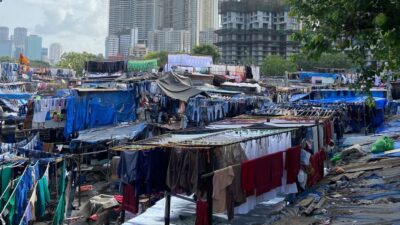
- Dhobi Ghat: the wash pens that run on routine
- Dadar flower market: color, scent, and early bargaining
- Sassoon Dock: the fish auction and the Bombay Duck moment
- A quick look at how the tour connects it all
- Price and what you’re really paying for
- Who this tour fits best (and who should think twice)
- What to bring for a dawn market and dock day
- Should you book the Mumbai by Dawn Tour?
- FAQ
- How long is the Mumbai by Dawn Tour?
- Is this tour private or shared?
- What language is the live tour guide?
- Does the tour include pickup and drop-off?
- What time of day does the tour run?
- Do you visit the fish auction at Sassoon Dock?
- Do you include Dhobi Ghat?
- Is there free cancellation and flexible booking?
Key highlights to look forward to
- CST and its newspaper sorting: you’ll see how the day’s headlines get processed before you even wake up.
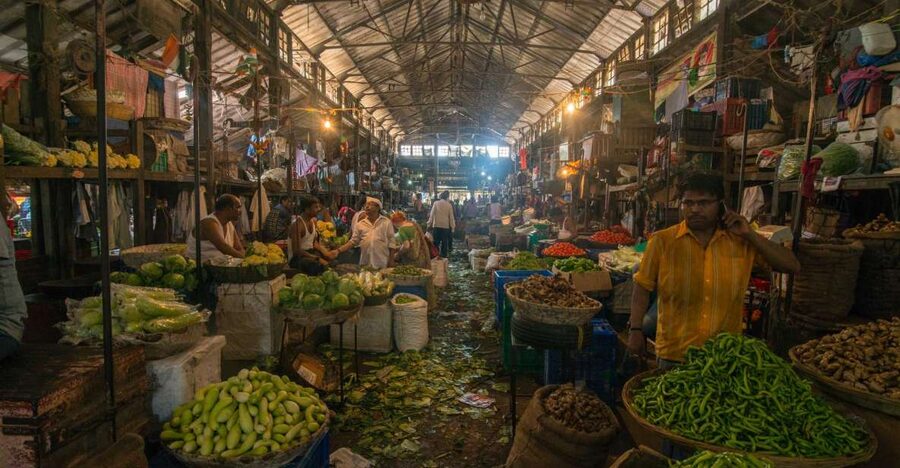
- Dadar flower and wholesale markets: color, scent, and serious bargaining right as the city begins.
- Dhobi Ghat wash pens: thousands of washermen working in open concrete pens, often for hotel and hospital linens.
- Sassoon Dock and the Bombay Duck auction: a one-of-a-kind fish auction scene at the working docks.
- Sunrise stop at Gateway of India: a calm start before the markets heat up.
- Short local train ride: a quick way to experience the city’s rhythm without the tour feeling like a long car ride.
Why this dawn tour makes sense for first-timers
Mumbai at night is loud. Mumbai at midday is busy. Mumbai at dawn is different. It’s all about logistics—who gets what, when, and how fast it reaches the next place that needs it.
That’s the main value of the Mumbai by Dawn Tour: it explains the city’s daily engine. Instead of treating Mumbai like a collection of sights, you see it like a working network. Fresh food trade happens early because it has to. The newspaper and media pipeline starts early because people read early. Even laundry is scheduled as part of the city’s flow.
I also like that the tour is short. Four hours isn’t enough to cover the whole city, but it is long enough to feel the morning transformation. You start with calm and light, then shift to smell, movement, and effort.
Pickup, timing, and the first big moment at Gateway of India
The tour begins with pickup in Mumbai, with a simple rule: wait in your hotel lobby about 10 minutes before the scheduled pickup time. From there, you head toward the Gateway of India area for a sunrise-focused stop that lasts about 20 minutes.
At this hour, the area feels less like a postcard and more like a meeting point—quiet enough to get oriented, but close to the moment when the city’s machines start moving for real. This is a good place to get your bearings fast: you’ll see how Mumbai’s waterfront energy connects to the rest of the city’s day.
If you’re traveling with jet lag, this sunrise piece can be a gentle wake-up. If you’re not, it’s still a nice buffer before the denser market and dock scenes.
Mumbai before the traffic wakes, on other early starts



Chhatrapati Shivaji Maharaj Terminus and the 660,000-footfall reality
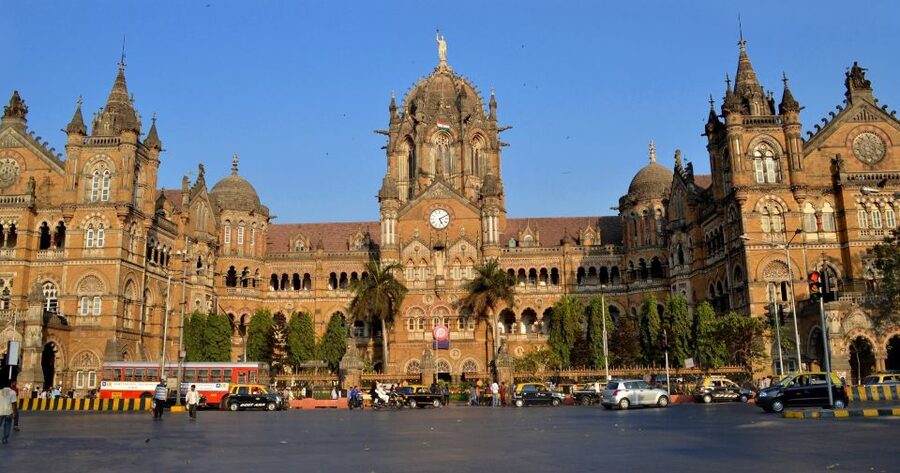
CST (Chhatrapati Shivaji Maharaj Terminus) is the kind of building you can’t ignore. The tour doesn’t just point at it—it gives you a guided look and time to walk. At dawn, it also serves as the city’s largest newspaper sorting area.
This matters more than it sounds. The tour emphasizes that CST isn’t only about architecture and trains. It’s about distribution. The famous figure included with the tour details is striking: CST sees about 660,000 footfalls daily, and at dawn that foot traffic links directly to media sorting and distribution.
Expect a mix of grand structure and practical morning chaos. It’s the rare “wow” stop that also makes you think: who is organizing the flow of things you rely on every day?
Crawford Market: where the morning shopping muscle shows up
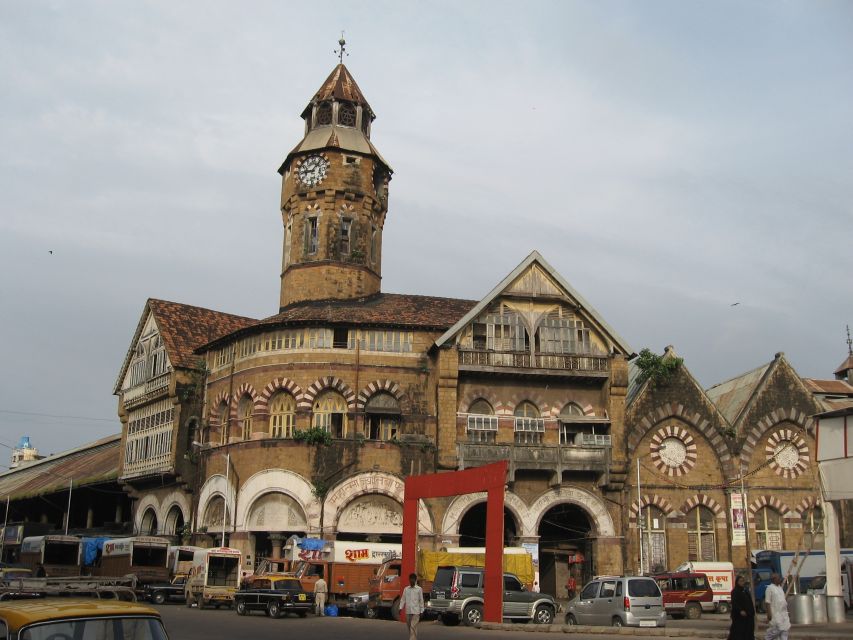
Next comes Crawford Market, with guided time and a short walk. This is where you start seeing the city’s bargaining spirit in motion.
Crawford Market is part of the same early-morning trade world as the flower and vegetable scenes later in the tour. But it also feels like a bridge between the big-station world of CST and the working, sensory intensity of the docks and Dhobi Ghat.
What to watch for here:
- People moving with purpose, not lingering.
- Stalls that feel set up for the day’s first wave.
- You understanding how quickly supplies become meals and deliveries.
This is also a good moment to re-check what you’re comfortable photographing. Market spaces can be crowded, and you’ll get more of the experience if you’re patient and respectful as you take in the scenes.
Marine Drive stop: a breather with real city views
After the market-adjacent intensity, you’ll get a Marine Drive stop. It’s timed as a shorter visit (around 30 minutes), with guided sightseeing.
Think of this as a reset: ocean air, skyline views, and a chance to catch your breath between the busiest stops. Marine Drive also helps you understand Mumbai’s layout. You’ll see how the city’s energy pulls along the coastline and then pushes inland toward transport hubs and trade zones.
If you like photos, you’ll find plenty of angles here. If you just want a quiet moment, this part delivers that too.
- Dharavi slum tour in Mumbai by Female tour guides of the slum
★ 5.0 · 1,976 reviews - Mumbai: Full-Day Sightseeing Tour of Mumbai
★ 4.9 · 1,822 reviews - Private Mumbai Sightseeing Tour (Traveller’s Choice Award Winner)
★ 5.0 · 1,565 reviews - Group Guided Walking Tour in Fort and Colaba
★ 5.0 · 1,073 reviews - Highlights of Mumbai Sightseeing Tour: TRAVELLERS CHOICE AWARDED
★ 5.0 · 915 reviews - Private Guided Walking Tour in Fort & Colaba
★ 5.0 · 895 reviews
Dhobi Ghat: the wash pens that run on routine
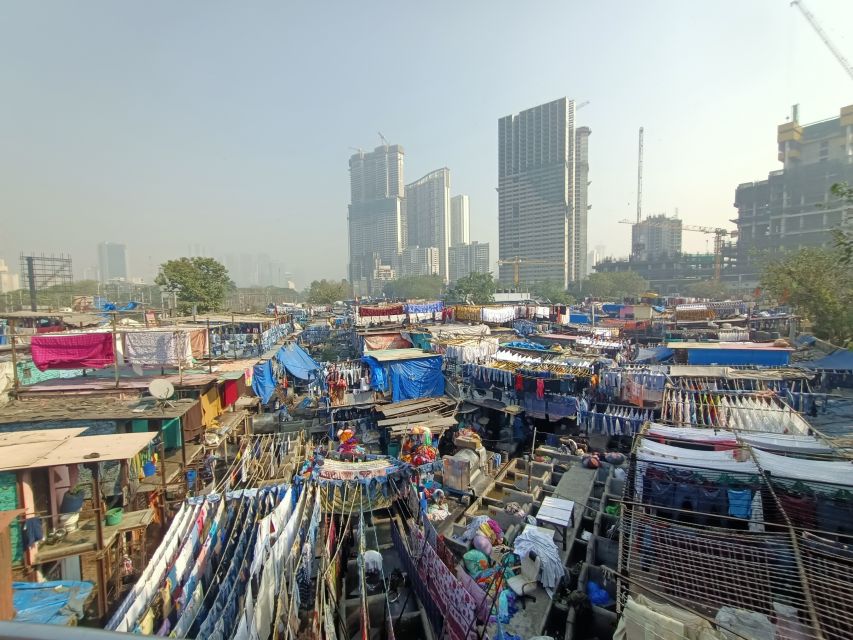
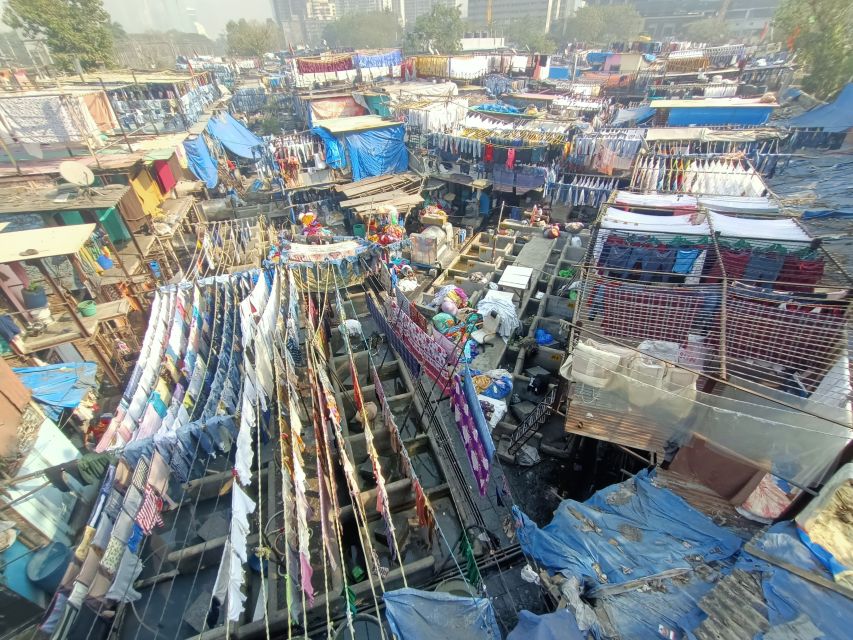
Dhobi Ghat is one of the most powerful stops on the tour because it’s so clearly a daily system. You’ll visit with a guided explanation and time to see the open concrete wash pens up close.
Here’s what the tour highlights: thousands of dhobis (washermen) scrub, flog, wash, and bleach clothes every day. The details given are huge—more than 7,000 dhobis washing over 100,000 clothes daily. And it’s not only neighborhood laundry. The laundry includes linens used for hotels and hospitals.
This stop hits on a theme the tour keeps returning to: Mumbai’s services run on repetition. There’s little romance in the process. That’s exactly why it’s so real.
Practical advice for this stop: keep your expectations steady. Dhobi Ghat can feel intense—visually and in smell if you’re close. Go slowly, watch the workflow, and let the scale sink in. The goal isn’t to turn away; it’s to understand what “infrastructure” looks like when it’s human-powered.
Dadar flower market: color, scent, and early bargaining
Then you’ll head to the Flower Market in Dadar. Expect guided sightseeing and a focused look at an early morning market where you can see fresh trading at work.
The tour description emphasizes fragrance and color, and that’s exactly what makes this stop a strong contrast to the docks and wash pens. It’s still trade—still bargaining—but the sensory experience shifts. Flowers and fresh produce feel more celebratory than fish auctions or laundry pens, even though they’re equally serious businesses.
Why this matters: it helps you see Mumbai’s food and supply world as something broader than one category. You’re not only tracking protein and paperwork—you’re seeing the city’s daily appetite for freshness, beauty, and ritual items that need to be delivered before the day gets too hot.
If you’re shopping at all, do it with the mindset of learning. Ask questions, watch how prices are discussed, and don’t rush your decisions. Early markets reward patience.
Sassoon Dock: the fish auction and the Bombay Duck moment
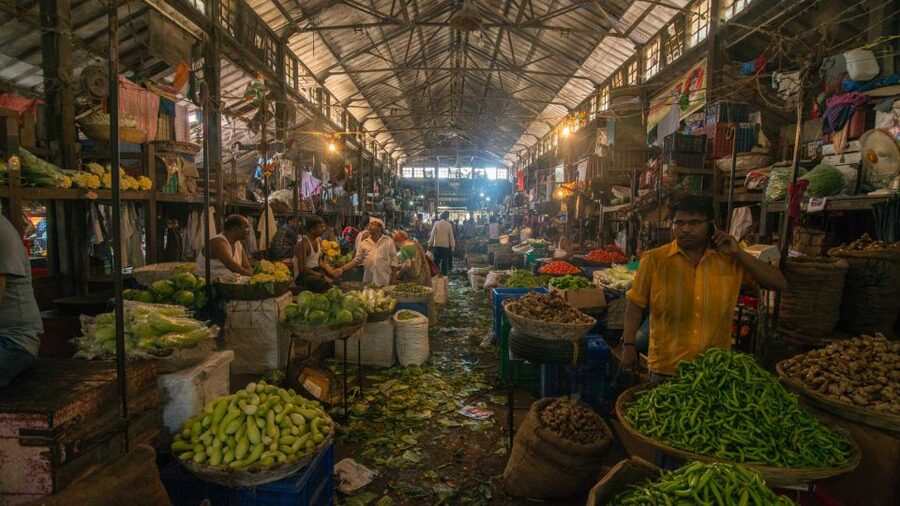
This is the stop many people remember most, and for good reason. The tour takes you to Sassoon Dock, described as the city’s first wet dock and the only one open to the public. You’ll also take a short distance train ride as part of this area experience.
At Sassoon Dock, you’ll see arrival and grading of around 50 tonnes of fish, and you’ll witness a fish auction featuring the famous Bombay Duck.
This is not a gentle viewing experience. It’s fast, loud, and smell-forward. But it’s also fascinating because you’re watching decision-making happen in real time: what gets pulled from the shipment, what moves quickly, and how a commercial auction works when the product is perishable.
If you’re sensitive to strong smells, plan to keep some distance when needed and focus on the auction action rather than standing at the closest edges.
Also: this is one of those moments where you’ll understand why “dawn” isn’t a gimmick here. The auction exists because freshness is life—or at least dinner.
A quick look at how the tour connects it all
Even though the stops are varied, the tour keeps one consistent thread: Mumbai’s daily life begins at dawn, and trade is the backbone.
You’ll hear about how the city’s supply chain operates. The tour description mentions starting with a newspaper vendor and then walking to fruit, flowers, and vegetable wholesalers along both sides of a bridge—so you’re not only seeing destinations, you’re seeing the in-between corridors of daily distribution.
And there’s another detail that adds meaning: the tour includes a moment of morning prayer at the end of the experience. You’ll also have a final return drop back to your accommodation.
That timing matters. You finish with a human pause after the city’s work machines. It feels like a closing chapter rather than a random end.
Price and what you’re really paying for
The price listed is $89 per group up to 2, for a 4-hour private-group experience with an English live guide and pickup/drop included.
On the surface, it’s a short tour. But the value comes from three things:
- Time: you’re paying for dawn access to places and routines that don’t work on a late-morning schedule.
- Local guidance: markets, docks, and Dhobi Ghat are easier to understand when someone helps you read what you’re seeing.
- Transportation included: pickup, drop, and even a short train ride inside the morning route reduce the friction of trying to stitch this together yourself.
If you’re traveling solo, the private-group setup is a big plus because you won’t be squeezed into a large group mindset. If you’re with a friend or partner, pricing per group stays sensible for the amount of movement you get in just half a day.
Who this tour fits best (and who should think twice)
This tour is ideal if you:
- Want an authentic slice of Mumbai beyond the classic sightseeing checklist.
- Care about food systems, labor, and how the city runs before you arrive.
- Like mornings, photos, and watching people at work (respectfully).
It’s less ideal if you:
- Hate very early starts and expect everything to feel fully “open” at the exact moment you arrive.
- Are extremely sensitive to fish odors or close-range market smells.
What to bring for a dawn market and dock day
The tour includes outdoor walks and early sightseeing, so it pays to come prepared. I’d plan on:
- Comfortable shoes (you’ll be walking at CST and market areas).
- Light layers for sunrise-to-morning temperature shifts.
- A water bottle and something small for the gap between stops.
- Smart phone power—this is the kind of morning you’ll want to record.
If you’re prone to getting overwhelmed by crowds or smells, take breaks during the guided walks rather than trying to power through everything at once.
Should you book the Mumbai by Dawn Tour?
If your goal is to understand Mumbai’s day as a functioning city, not just a skyline, I think this tour is a strong choice. The best parts are the ones that teach you how fresh food, news distribution, and laundry logistics actually happen—especially the Dhobi Ghat wash pens and the Sassoon Dock fish auction.
Book it if you can handle early mornings and you’ll enjoy learning through real-world routines. Pass if you’re looking for a relaxed, late-start sightseeing day. This is a working-morning tour. In the best way, it tells you how Mumbai feeds itself and moves information before most of us even start our morning screens.
FAQ
How long is the Mumbai by Dawn Tour?
The tour lasts 4 hours.
Is this tour private or shared?
It’s a private group experience.
What language is the live tour guide?
The live tour guide speaks English.
Does the tour include pickup and drop-off?
Yes. Pickup is included, and the guidance says to wait in your hotel lobby about 10 minutes before the scheduled pickup time. You’ll also be dropped back after the tour.
What time of day does the tour run?
It’s an early-morning tour focused on sunrise, including a sunrise stop at Gateway of India.
Do you visit the fish auction at Sassoon Dock?
Yes. The tour includes a visit to Sassoon Dock and includes a fish auction featuring the Bombay Duck.
Do you include Dhobi Ghat?
Yes. You’ll visit Dhobi Ghat, where the washermen wash and bleach clothes in open concrete wash pens.
Is there free cancellation and flexible booking?
Yes. Free cancellation is available up to 24 hours in advance for a full refund, and there’s a reserve now and pay later option.
More Mumbai, Every Kind of Day
- Dharavi slum tour in Mumbai by Female tour guides of the slum
★ 5.0 · 1,976 reviews - Mumbai: Full-Day Sightseeing Tour of Mumbai
★ 4.9 · 1,822 reviews - Private Mumbai Sightseeing Tour (Traveller’s Choice Award Winner)
★ 5.0 · 1,565 reviews - Elephanta Caves & Island Guided Private Tour
★ 5.0 · 1,327 reviews
The City at First Light
- The Original Mumbai by Dawn – Recommended by Nigella Lawson & Nat Geo Traveller!
★ 5.0 · 610 reviews - Mumbai Morning Market Tour of Flowers, Fish, and More
★ 5.0 · 100 reviews - Mumbai Morning Market Tour of Flowers, Fish, and More
★ 5.0 · 82 reviews - Mumbai: Morning Bicycle Tour
★ 5.0 · 40 reviews
New on the Mumbai shortlist


Dawn & Early Morning Tours, compared.
 ★ 5.0The Original Mumbai by Dawn – Recommended by Nigella Lawson & Nat Geo Traveller!From $86610 reviews
 ★ 5.0Mumbai Morning Market Tour of Flowers, Fish, and MoreFrom $19100 reviews
★ 5.0Mumbai Morning Market Tour of Flowers, Fish, and MoreFrom $2082 reviews
 ★ 5.0Morning Bicycle TourFrom $2140 reviews
 ★ 5.0The Colourful Early Morning TourFrom $3531 reviews
 ★ 4.8Early Morning Bicycle TourFrom $3730 reviews
 ★ 5.0Early Morning Old Mumbai Private Cycle Tour With BreakfastFrom $6521 reviews
 ★ 4.53 Hours Early Morning in South Mumbai Heritage Bicycle TourFrom $3616 reviews
Browse the lists this tour appears in