

Review · OLD BOMBAY HERITAGE WALKS
Mumbai heritage walk- Story of Gothic and Art Deco buildings
Mumbai’s best photo moments are really stories. This heritage walk connects Victorian Gothic and Art Deco buildings to Mumbai’s rise as a trading hub, using architecture as your guide. You’ll stop at big names like Chhatrapati Shivaji Terminus (CST), the Eros Cinema, and the Bombay High Court, with snacks along the way and a group capped at 15 for a more personal pace.
I also love how the walk mixes design details with human reasons—like the clock tower chime story tied to someone’s life, or the way certain buildings signaled status and wealth. One possible drawback: several sights are viewed from the outside, and for a couple of places you may only be able to see the lobby rather than going in, so this is best if you enjoy reading architecture through façades, not if you’re chasing a bunch of paid interiors.
In This Review
- Key highlights that make this walk worth your time
- Why these Gothic and Art Deco buildings make sense together
- Price and timing: what you’re really paying for
- Meeting in Fort: the best mindset for a 3-hour architecture walk
- Chhatrapati Shivaji Terminus (CST): Victorian Gothic Revival with Indian echoes
- Eros Cinema and Empress Court: Art Deco as status, leisure, and skyline
- Bombay High Court and Rajabai Clock Tower: Gothic power and a chime story
- David Sassoon Library and Elphinstone College: institutions built to teach
- The Prince of Wales Museum area: finishing with the right kind of closure
- How the guide style affects the whole experience
- What you should bring (and what to skip)
- Who this tour is best for
- Should you book this Mumbai heritage walk?
- FAQ
- How long is the Mumbai heritage walk?
- What is the price per person?
- What’s the group size like?
- Which buildings are included or covered during the walk?
- Is food included?
- Are admission tickets included?
Key highlights that make this walk worth your time
- Small group size (max 15) keeps the tour chatty and question-friendly
- Gothic + Art Deco theme gives you a clean way to understand Mumbai’s changing identity
- UNESCO CST plus guided stops make the walking route feel purposeful
- Snacks included so you can focus on stories instead of food hunting
- Specific architectural clues like statues of Justice and Mercy, and tiered Art Deco shapes
Why these Gothic and Art Deco buildings make sense together
Mumbai didn’t become important by accident. It grew through trade, administration, education, and finance—systems that needed buildings. This walk helps you see that bigger picture through two styles you’ll keep noticing: Victorian Gothic Revival and Art Deco.
Gothic architecture tends to be busy and dramatic—spires, pointed arches, stonework patterns, and symbolic details. In Mumbai, the Gothic buildings aren’t just decoration. They often look built for authority and institutions: courts, colleges, libraries, and major transport. When the tour points out those features, it’s easier to understand why the city invested in architecture that felt serious and permanent.
Then Art Deco shows up as the next chapter: streamlined, stylized, and tied to modern city life. If Gothic can feel like a loud, formal handshake, Art Deco often feels like the city flexing its modern identity—especially in places connected to leisure and residential status. The walk doesn’t treat Art Deco like trivia. It connects the style to what people wanted from the city at that moment: comfort, prestige, and a modern skyline feel.
This is also a practical tour type. You’re not trying to cram museums into a day. You’re walking a compact heritage area and learning what to look for—so you can keep recognizing the styles even after the tour ends.
Price and timing: what you’re really paying for
The price is $35 per person for about 3 hours, and the group max is 15. That’s a fair setup for a guided heritage walk where you’re hearing interpretive stories rather than just following a route on your own.
The value improves because:
- Snacks are provided, so you’re not burning time and attention on food planning.
- Chhatrapati Shivaji Terminus (CST) includes an admission ticket as part of the experience.
- You get expert narration focused on architecture and city development, not vague landmark talk.
A small note on timing: the tour is scheduled to work best with good weather. If you’re visiting when conditions are unpredictable, it’s worth keeping buffer time in your Fort-area day so you can roll with any date changes.
Also, this is the kind of tour that many people book ahead. If you’re aiming for a specific day, planning around two weeks in advance is usually smart.
More Gothic arches and Deco curves of old Bombay




Meeting in Fort: the best mindset for a 3-hour architecture walk
This walk starts near Chhatrapati Shivaji Maharaj Terminus and ends at the Chhatrapati Shivaji Maharaj Vastu Sangrahalaya (Prince of Wales Museum area). That means you’re doing a classic “head to toe” heritage line through Mumbai’s older core.
Wear comfortable walking shoes. Heritage areas reward slow looking—especially when the guide is pointing out tiny things on large façades. If you come in expecting quick snapshots, you’ll miss the best part. The whole point is to build pattern recognition: once you understand Gothic vs. Art Deco cues, you’ll start spotting them even from street level.
Bring a phone for photos, but also bring a little patience. Some of the best architectural features (carvings, clock details, roofline tiers, sculptural symbols) take a moment to register. A good guide helps you look correctly, not just look harder.
Chhatrapati Shivaji Terminus (CST): Victorian Gothic Revival with Indian echoes

Your first stop sets the tone: CST, a UNESCO heritage building and widely considered one of the strongest examples of Victorian Gothic Revival in India. Even if Gothic sounds abstract, CST makes it physical—stone details, powerful vertical forms, and a sense of grandeur meant for a major public gateway.
What I find especially compelling here is the tour’s emphasis on how the Gothic elements are blended with themes deriving from Indian traditions. That’s not just an artistic footnote. It’s a clue to how Mumbai shaped global styles into something local enough to feel rooted.
You’ll have around 30 minutes here, plus the admission ticket is included, which is a real plus for value. The building is more than “pretty architecture.” It helped define the city as a key node in movement and trade. When you hear the story alongside what you see in front of you, it clicks: transport architecture wasn’t neutral. It was branding for modern Mumbai.
Potential consideration: CST is impressive, but it can also feel like sensory overload if you try to absorb everything at once. Use your time like this—look for Gothic structure first (vertical rhythm, pointed forms), then look for the Indian motif blending the style into something uniquely Mumbai.
Eros Cinema and Empress Court: Art Deco as status, leisure, and skyline
After CST, the tour shifts to Art Deco, and the contrast is fun. This is where you really start seeing how the city’s identity changed over time.
At Eros Cinema, you view the building from the outside for about 30 minutes. It’s described as an Art Deco cinema hall with a shape that rises in tiers—almost like a wedding cake—with a semi-circular tower on top. When a building looks like that, you don’t need a design degree to get it. You can feel the intentional drama in the silhouette.
Then you walk to Empress Court, an impressive residential Art Deco building. Here you’re also looking from the outside, with around 15 minutes on site. The key story is how living in these Art Deco buildings once worked as a symbol of status and wealth. That’s a theme worth holding onto. Art Deco wasn’t just a style—it could be a social signal.
One practical thing: both of these stops are more about what the buildings look like than about going inside. If you love exterior details and skyline shapes, you’ll likely enjoy them more than someone who mainly wants museum-style interiors.
More of Mumbai at walking pace
- Group Guided Walking Tour in Fort and Colaba
★ 5.0 · 1,073 reviews - Private Guided Walking Tour in Fort & Colaba
★ 5.0 · 895 reviews - Private Guided Walking Tour in Bandra Queen of Suburbs
★ 5.0 · 383 reviews - Private Guided Spiritual Walk in Banganga Hindu Temples
★ 5.0 · 271 reviews - Mumbai: Dharavi Slum Walking Tour by First Female Tour Guide
★ 4.9 · 192 reviews - Private Guided Non-Veg Street Food Walking Tour in Muslim Quarter
★ 5.0 · 140 reviews
Bombay High Court and Rajabai Clock Tower: Gothic power and a chime story
Next you move into Gothic territory again, but now it’s tied to law, governance, and public symbolism.
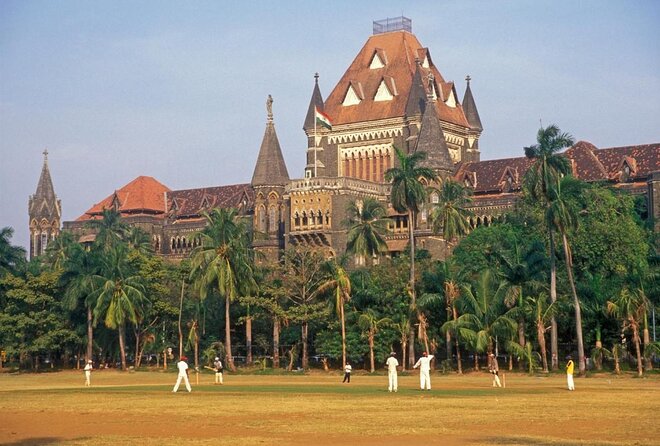
At the Bombay High Court (Principal Bench), you see the building from the outside with about 30 minutes. The architecture is described as a splendid specimen of Gothic design. The highlight is spotting the statues of Justice and Mercy on top of the building. Those symbols matter. They’re not random decoration; they’re the kind of moral messaging public institutions liked to display in stone.
Then comes Rajabai Clock Tower, also about 30 minutes. The tour frames it as a kind of Mumbai version of Big Ben, but with a human-interest twist: the story of how it was financed connects to the patron’s visually challenged mother, who wanted to listen to the chimes and keep her fasts punctually. Whether you’re religious or not, that kind of story makes a clock tower feel less like an object and more like a family need turned into public architecture.
This stop works especially well if you enjoy “symbol plus story.” You look up, you notice details, and then the guide explains the why behind the stone.
Possible drawback: clock towers and courts are great for photos, but they can also feel rigid if you’re not in the mood for symbolism. If you like architecture as narrative, you’ll be in your element.
David Sassoon Library and Elphinstone College: institutions built to teach
Now the walk turns toward education and learning spaces—still Gothic, but in a different tone than a court.
At the David Sassoon Library and Reading Room, you learn about David Sassoon as a Jewish banker who built a magnificent Gothic structure for learning. The important practical point: you may only see it from the lobby, because only members are allowed inside. Even so, that lobby view can still be worthwhile, since it gives you a first look at how seriously the building treats reading and study as part of the city’s identity.
You then appreciate Elphinstone College, also about 15 minutes. You’ll look at its remarkable Gothic structure from outside, and you get a strong connection to people who shaped India’s modern era. The tour notes alumni including Bal Gangadhar Tilak, Dr BR Ambedkar, and Jamshedji Tata.
That alumni list isn’t just trivia. It changes how you interpret the stone. You start thinking about how education institutions become pipelines for civic change. A building like this isn’t only architecture—it’s infrastructure for ideas.
The Prince of Wales Museum area: finishing with the right kind of closure
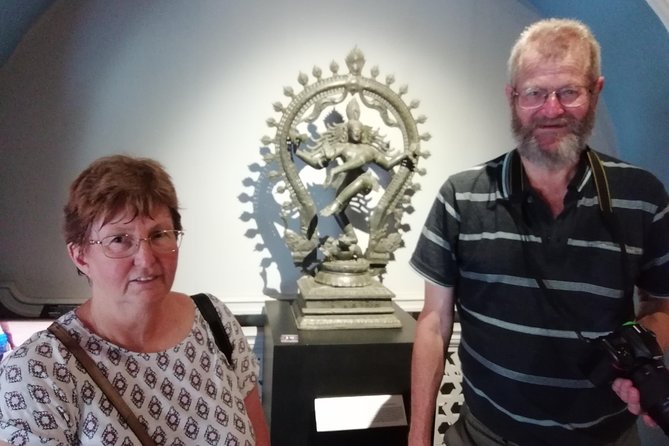
The walk ends at the Chhatrapati Shivaji Maharaj Vastu Sangrahalaya (Prince of Wales Museum). The stop is shorter—around 10 minutes—but it’s a smart way to close the circuit because it ties the architecture theme to a larger cultural institution.
The description here includes that the museum is housed in a magnificent heritage building that was earlier used as a military hospital for the Children’s Welfare Exhibitions. That’s a useful reminder that “heritage” isn’t only about aesthetics. Buildings often shift roles as a city evolves.
If you still have energy after the tour, this is also a nice ending point for wandering nearby. You’re not stuck at a transit hub. You’re finishing in an area that makes it easy to keep exploring on your own.
How the guide style affects the whole experience
A walking heritage tour lives and dies by the guide. The best part of this one is the storytelling focus—how the guide connects architecture to Mumbai’s development and then helps you notice what to look for.
In standout feedback, guides like Pankaj are praised for being enthusiastic and able to answer questions, not just deliver a script. That matters because you’ll likely want to ask things as you spot details: what’s the symbolism here, why this shape, why this style at this time.
If you like tours where you can engage—rather than just listen while walking—this format should fit you.
What you should bring (and what to skip)
To get the most from a Gothic and Art Deco architecture walk, come ready to look up.
Bring:
- Comfortable shoes for steady walking
- Water and a phone for photos
- A curious mindset when you see statues or rooflines
Skip:
- Expecting a “museum day” with lots of deep interior access
- Expecting every building to be entered fully (some are outside-view stops)
If you’re a history buff who likes design details, you’ll likely enjoy how the city’s identity becomes legible through stone.
Who this tour is best for
This tour is a great match if:
- You like architecture and design more than you like generic landmark tours
- You want a straightforward way to understand Mumbai’s growth through institutions and style shifts
- You enjoy guided stories that make famous buildings feel personal
It may be less ideal if:
- You want lots of indoor museum time
- You’re mainly looking for relaxation and scenic downtime (this is structured around buildings and explanation)
If you’re visiting Mumbai for the first time and want something deeper than a bus tour, this is one of the smartest ways to get oriented fast—because it teaches you how to read the city’s look.
Should you book this Mumbai heritage walk?
If you enjoy walking, you’ll probably like this one. The mix of Gothic + Art Deco, the focus on real architectural cues, and the fact that snacks are included make the $35 price feel more grounded than many generic tours. Add in the small group size and the fact that CST admission is included, and the value becomes clearer.
Book it if you want to understand Mumbai’s story through the skyline—courts, libraries, education buildings, cinemas, and transport hubs. Consider skipping or choosing something else if you’re aiming for a tour with lots of full indoor access, because this walk leans heavily on exterior views and limited interior access.
If you want, tell me your travel dates and what other Mumbai plans you have (neighborhoods or museums), and I’ll suggest the cleanest way to slot this 3-hour walk into your day.
FAQ
How long is the Mumbai heritage walk?
It runs for about 3 hours (approximately).
What is the price per person?
The price is $35.00 per person.
What’s the group size like?
It has a maximum of 15 travelers, which helps keep the tour more personal.
Which buildings are included or covered during the walk?
You’ll focus on Chhatrapati Shivaji Terminus (CST), Eros Cinema, Empress Court, the Bombay High Court principal bench, Rajabai Clock Tower, David Sassoon Library and Reading Room, Elphinstone College, and the Chhatrapati Shivaji Maharaj Vastu Sangrahalaya area.
Is food included?
Yes. Snacks are provided during the walk.
Are admission tickets included?
Admission ticket inclusion is not the same for every stop: CST includes an admission ticket, while other stops note that admission is not included. For places like David Sassoon Library, access may be limited to the lobby.
Mumbai on Foot, Continued
- Group Guided Walking Tour in Fort and Colaba
★ 5.0 · 1,073 reviews - Private Guided Walking Tour in Fort & Colaba
★ 5.0 · 895 reviews - Private Guided Walking Tour in Bandra Queen of Suburbs
★ 5.0 · 383 reviews - Private Guided Spiritual Walk in Banganga Hindu Temples
★ 5.0 · 271 reviews
More Mumbai, Every Kind of Day
- Dharavi slum tour in Mumbai by Female tour guides of the slum
★ 5.0 · 1,976 reviews - Mumbai: Full-Day Sightseeing Tour of Mumbai
★ 4.9 · 1,822 reviews - Private Mumbai Sightseeing Tour (Traveller’s Choice Award Winner)
★ 5.0 · 1,565 reviews - Elephanta Caves & Island Guided Private Tour
★ 5.0 · 1,327 reviews
Old Bombay, Building by Building
- Heritage Walk: Recommended by Gigi Hadid as a must-do in Mumbai
★ 5.0 · 122 reviews - Best South Mumbai Heritage Walk
★ 5.0 · 122 reviews - Mumbai: South Mumbai Heritage Walking Guided Tour
★ 4.5 · 69 reviews - Hill-station & Heritage: Lonavala & Karla Caves Tour from Mumbai
★ 5.0 · 60 reviews
New on the Mumbai shortlist



Old Bombay Heritage Walks, compared.
 ★ 5.0Best South Mumbai Heritage WalkFrom $17122 reviews
 ★ 5.0Heritage Walk: Recommended by Gigi Hadid as a must-do in MumbaiFrom $44122 reviews
 ★ 4.5South Mumbai Heritage Walking Guided TourFrom $2869 reviews
 ★ 5.0Hill-station & Heritage: Lonavala & Karla Caves Tour from MumbaiFrom $7260 reviews
 ★ 5.0Mumbai Heritage Walk and Elephanta Caves ExperienceFrom $2953 reviews
 ★ 5.0Kanheri Caves Heritage TourFrom $4545 reviews
 ★ 4.8South Mumbai: Cultural Heritage Walking TourFrom $1645 reviews
 ★ 5.0Private Mumbai Jewish Heritage Tour: Baghdadi & Bene IsraelFrom $9636 reviews
Browse the lists this tour appears in