
Review · OLD BOMBAY HERITAGE WALKS
Jewish Heritage and Mumbai Highlights Private Full-Day Tour
Jewish life in Mumbai isn’t hidden history—it’s on display if you know where to look. This private full-day-style tour (about 5 hours) strings together major Jewish sites with a few classic Mumbai landmarks, guided in a way that makes the stories feel current, not dusty. You’ll spend time at multiple synagogues, hear how Jewish communities lived alongside their Hindu and Muslim neighbors, and get context for what you’re seeing beyond the stone and street names.
I really like two things: the focus on firsthand community storytelling (not just facts on a plaque) and the tight, easy flow of stops in an air-conditioned vehicle with pickup and drop-off from your accommodation. If your guide is someone like Hanna or Joshua, you’ll likely get a warm, personal tone—shared Jewish experience in Mumbai, not just a script.
The one drawback to think about: the tour is built as a short visit rotation (most stops are 15–30 minutes), and there’s no lunch included. If you want long, slow time inside each building, you may feel a bit rushed.
In This Review
- Key things that make this tour worth your time
- Jewish Heritage in Mumbai: What the Tour Actually Helps You See
- Victoria Terminus: Victorian Mumbai, Movie Fame, and Orientation
- Magen David Synagogue: The Daily Minyan Detail That Changes Everything
- Tiphereth Israel Synagogue: One of Mumbai’s Most Active Jewish Centers
- Dhobi Ghat and Mani Bhavan Gandhi Museum: A Busy City Thread
- Keneseth Eliyahoo Synagogue: Jacob Sassoon’s 1884 Memory in Stone
- David Sassoon Library and Reading Room: Learning as Community Legacy
- Gateway of India: Harbor Views and the Final Story Beat
- Meeting Members and Hearing Stories Firsthand: The Tour’s Real Secret
- Price and Logistics: What $106.87 Buys You in Real Terms
- Who This Tour Fits Best (and Who Might Want a Different Plan)
- Should You Book This Jewish Heritage Tour?
- FAQ
- How long is the Jewish Heritage and Mumbai Highlights private tour?
- What time does the tour start?
- How much does the tour cost?
- Is pickup and drop-off included?
- What’s included in the tour price?
- Is lunch included?
- Are there entry fees at the places you visit?
- Is this a private tour?
- Do I get a ticket on my phone?
- What is the cancellation window?
Key things that make this tour worth your time

- Daily minyan at Magen David Synagogue, plus time at other active Jewish centers
- Jacob Sassoon’s 1884 legacy at Keneseth Eliyahoo Synagogue—sightseeing with a family-name origin story
- Baghdadi philanthropy at David Sassoon Library, where education and memory connect
- A practical mix of Jewish sites and Mumbai icons, including Dhobi Ghat and the Gateway of India
- Pickup, air-conditioned vehicle, bottled water, and English guidance, so you can focus on the places
Jewish Heritage in Mumbai: What the Tour Actually Helps You See
Mumbai’s Jewish story is easy to miss if you only visit the big tourist hits. This tour fixes that with a simple idea: pair each synagogue and Jewish institution with enough context to understand why it mattered to daily life. You’re not just checking boxes. You’re learning how a community organized itself, worshiped, educated its children, and lived—peacefully—with neighbors from other faiths.
The format also helps. Instead of bouncing around the city with transit stress, you ride in an air-conditioned vehicle between stops. Every scheduled stop is short enough to keep energy up, but long enough to actually look around and hear the point of the place.
And yes, the guide matters. In the best moments, you’re not only hearing history—you’re hearing how Jewish life is experienced in Mumbai today, including personal family rituals shared by your guide when available. That makes the city feel human.
Victoria Terminus: Victorian Mumbai, Movie Fame, and Orientation
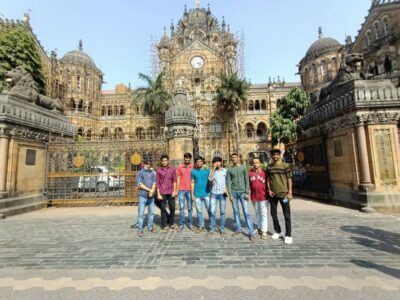
You start by driving past stunning Victorian buildings, including Mumbai University and Victoria Terminus Railway Station. That station also has an extra layer of recognition because it was filmed for Slumdog Millionaire. Even if you don’t care about the film angle, the architecture gives you a fast orientation: Mumbai didn’t just grow randomly—there were planned, monumental moments that shaped how the city looks and moves.
This is a drive-past stop, around 20 minutes, and admission is free. So think of it as your warm-up. You get the city’s scale and style in one block, then you head to places where the Jewish story becomes specific and physical.
Tip: If you’re the type who likes photos, this is where you’ll likely get clean exteriors before traffic and crowds change the lighting.
More Gothic arches and Deco curves of old Bombay




Magen David Synagogue: The Daily Minyan Detail That Changes Everything
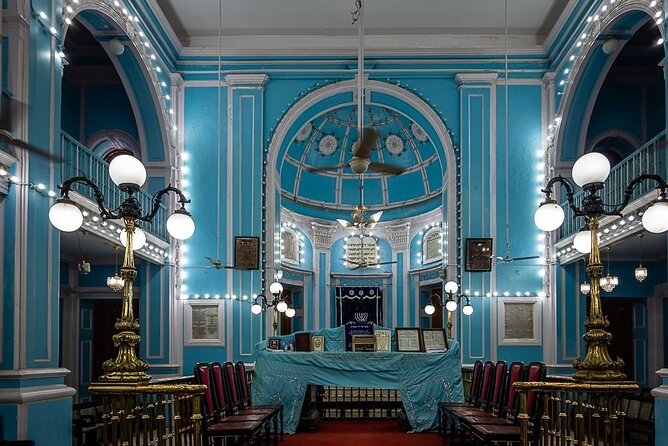
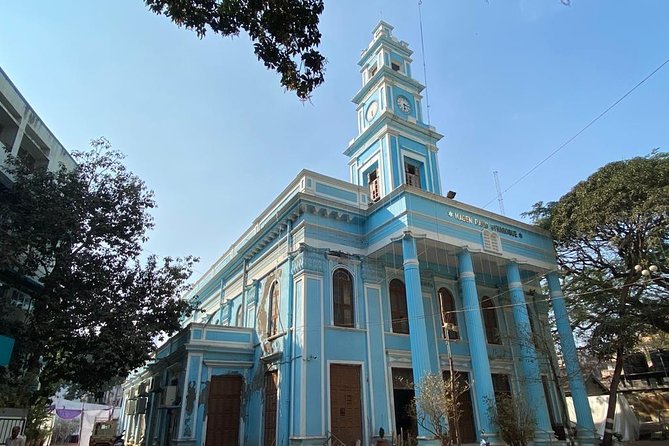
Then you get to Magen David Synagogue, the tour’s first true stop inside a Jewish house of worship. The standout fact here is simple and important: it’s the only synagogue with a daily minyan. That matters because a minyan isn’t just a technical religious requirement—it’s a sign of ongoing communal rhythm. It signals that worship and community gathering are happening on a regular basis, not only for special events.
You’ll spend about 30 minutes here, and the admission is free. That time is enough to absorb the setting, listen to what makes this synagogue distinct, and understand how daily prayer structure ties into community continuity.
Possible consideration: Since it’s an active synagogue, access can be more about timing and flow than about a museum-style experience. The tour keeps it respectful and practical, but this is still a working place.
Tiphereth Israel Synagogue: One of Mumbai’s Most Active Jewish Centers
Next is Tiphereth Israel Synagogue, described as one of the city’s most active Jewish centers. The goal of this stop is to show you how Jewish institutions operate as community hubs, not just places for holidays.
You’ll get around 30 minutes, again with free admission. In that short window, your guide helps you connect what you see to why it functions the way it does—especially how the synagogue fits into broader communal life.
This stop is a great pairing with Magen David because you start noticing patterns. Even though each building has its own identity, they share a common theme: community structure that supports worship, learning, and belonging.
Dhobi Ghat and Mani Bhavan Gandhi Museum: A Busy City Thread
Between Jewish sites, the tour intentionally inserts two Mumbai landmarks: Dhobi Ghat and Mani Bhavan Gandhi Museum. Dhobi Ghat is a massive outdoor laundry, and you’ll spend about 15 minutes here with admission free. It’s not a Jewish stop, but it’s useful. You’re watching a city system at work—labor, routine, and the kind of everyday infrastructure that defines Mumbai as much as its monuments.
Then you head to Mani Bhavan Gandhi Museum, dedicated to Mahatma Gandhi, for about 30 minutes. Admission is free, and it’s another way to understand Mumbai’s layers: modern religious communities exist in a city shaped by public life, politics, and reform movements.
How this helps you as a visitor: These two stops break up the solemnity of synagogue visits with real-world Mumbai activity and a broad historical lens. It keeps the day from turning into only one theme at a time.
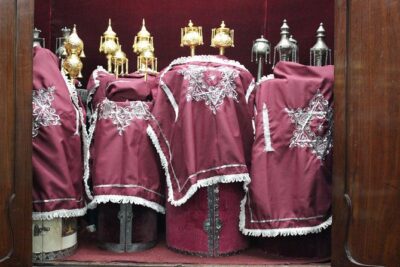
More of Jewish Bombay, synagogue by synagogue
- Private Mumbai Jewish Heritage Tour: Baghdadi & Bene Israel
★ 5.0 · 36 reviews - Jewish Heritage and Mumbai Highlights Private Full-Day Tour
★ 5.0 · 32 reviews - Jewish Heritage Tour
★ 4.0 · 3 reviews
Keneseth Eliyahoo Synagogue: Jacob Sassoon’s 1884 Memory in Stone
Now you get back to a standout synagogue stop: Keneseth Eliyahoo Synagogue. This one has a powerful origin story tied to a person’s family memory. It was built in 1884 by Jacob Sassoon in memory of his father, Elias Sassoon.
You’ll spend about 30 minutes here, free admission. The “why” behind the building matters: philanthropy, family legacy, and religious devotion all converge in the architecture. Your guide’s job in this stop is to connect that back to the larger Jewish presence in Mumbai’s Fort area—how communities built landmarks that could outlast individual lifetimes.
This synagogue is also a good photo target because it’s described as one of the most magnificent structures in that surrounding landscape (and yes, you’ll notice the scale right away).
David Sassoon Library and Reading Room: Learning as Community Legacy
After Keneseth Eliyahoo, you visit David Sassoon Library and Reading Room for about 20 minutes. Admission is free, and the point is straightforward: education as part of Jewish community life.
The library was built in honor of David Sassoon, identified as a well-known Baghdadi philanthropist. That detail gives you context for why such places were built where they were. Libraries and reading rooms aren’t only about books—they’re about creating a public space for learning, shared culture, and community momentum.
I like this stop because it rounds out the tour. Worship gets a lot of attention, but education and public life are what keep traditions alive between generations.
Gateway of India: Harbor Views and the Final Story Beat
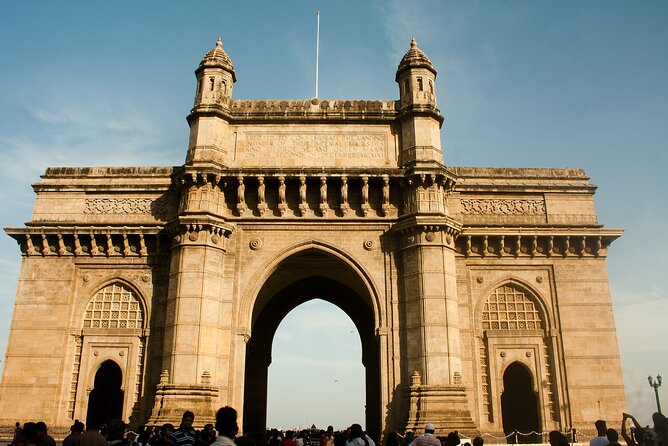
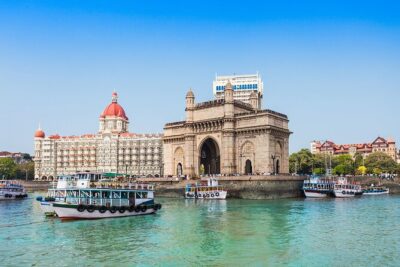
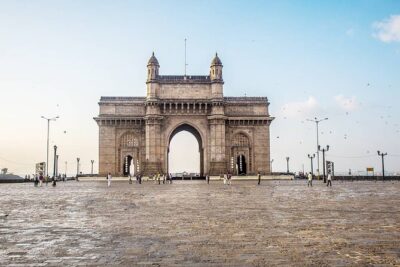
To close out the route, you drive to the Gateway of India, overlooking Mumbai harbour. You’ll have about 30 minutes, free admission, and the main value here is the sense of place. It’s the moment where you step back and look at the city as a whole, with the harbor framing the scale of trade, travel, and change.
Even though this isn’t a Jewish site, it helps you understand why communities settled where they did and how Mumbai’s position as a port city shaped arrivals, networks, and long-term neighborhoods.
If you’re tired by this point, that’s normal. The trick is to keep your eyes open and use this stop to connect the dots between the grand civic Mumbai you’ve seen and the community buildings you visited earlier.
Meeting Members and Hearing Stories Firsthand: The Tour’s Real Secret
The official promise is that you’ll learn about Jewish life and culture and that you may meet members of the Jewish community to hear their stories firsthand. Even if that meeting varies depending on availability, you’ll still get the strongest part of the experience through your guide’s interpretation.
In the feedback you’ll often see the same pattern: guides like Hanna and Joshua aren’t just reciting dates. They’re sharing what being Jewish in Mumbai feels like, including personal family rituals and the way their community thinks about living alongside other religions.
That’s the value you can’t get from a self-guided walk. You’re hearing how the places connect—how a synagogue relates to nearby institutions, and how the community’s past is tied to how people think and speak today.
One extra note: some days can include additional nearby sights beyond the fixed synagogue and institution stops (for example, experiences mentioned include a kosher kitchen and other well-known landmarks). If your guide offers optional add-ons, treat them as bonuses, not as the main event.
Price and Logistics: What $106.87 Buys You in Real Terms
At $106.87 per person for about 5 hours, this tour isn’t trying to compete with the cheapest city walking tours. It’s priced like what it is: a private experience with pickup, an air-conditioned vehicle, bottled water, and English-language guidance, plus time inside multiple synagogues and Jewish institutions where access and context are the whole point.
Here’s what you get for the money, in practical terms:
- Pickup and drop-off from your accommodation, which saves time and stress
- Air-conditioned vehicle for Mumbai’s heat and traffic
- English speaking guide to interpret the places while you’re there
- Bottled water (small, but you’ll thank yourself mid-day)
- Entry fees covered by the tour for the included stops (the plan lists no admission fees for the covered locations)
- Private format, so you’re not stuck listening to a mismatched pace
What’s not included is lunch. That’s the main planning item. If you book this, I’d plan to eat either right before pickup or shortly after drop-off, because you’re not scheduled for a sit-down meal.
Also worth knowing: group discounts are listed, and there’s a mobile ticket option. That’s helpful if you’re traveling with people and want to share the total cost efficiently.
Who This Tour Fits Best (and Who Might Want a Different Plan)
This is a strong choice if:
- You’re interested in Jewish heritage in Mumbai and want context you can’t easily get on your own
- You like short, guided stops that add up to a coherent story by the end of the day
- You want a private setup with pickup, so the day stays manageable
It’s also a good first-Mumbai tour if you want your “greatest hits” plus the meaning behind them. Dhobi Ghat, Mani Bhavan, and the Gateway of India give you broader city knowledge, while the synagogues and institutions anchor the theme.
Who might hesitate:
- You need long stays in each location. Most visits are 15–30 minutes, so this is designed for momentum.
- You don’t want to handle food planning. Lunch isn’t included.
Should You Book This Jewish Heritage Tour?
If your goal is to understand how Jewish community life has taken root in Mumbai—through synagogues, education, and real people—this is an excellent booking. The tour’s structure is efficient, the guidance sounds personal from the way guides describe their own connection to the city, and you also get a few major Mumbai landmarks that help you place everything on the map.
I’d book it if you’re doing Mumbai for the first time, or if you’re specifically trying to connect architecture to lived community life. I’d think twice if you’re strictly into slow museum-style visits or if you need lunch scheduled during the tour.
In short: this is one of those rare city tours where the “why” matters as much as the “where,” and you’ll leave with a clearer picture of Mumbai’s religious neighborhoods as part of everyday history.
FAQ
How long is the Jewish Heritage and Mumbai Highlights private tour?
It runs for about 5 hours (approx.).
What time does the tour start?
It starts at 9:30 am.
How much does the tour cost?
The price is $106.87 per person.
Is pickup and drop-off included?
Yes. Pickup and drop-off from your accommodation are included.
What’s included in the tour price?
You get an air-conditioned vehicle, an English speaking experienced guide, bottled water, pickup and drop-off, and presently applicable tax.
Is lunch included?
No, lunch is not included.
Are there entry fees at the places you visit?
The tour indicates there are no entry fees applicable for the places covered.
Is this a private tour?
Yes. It’s a private tour/activity, and only your group participates.
Do I get a ticket on my phone?
Yes. The tour includes a mobile ticket.
What is the cancellation window?
You can cancel for a full refund up to 24 hours before the experience’s start time.
The Big Mumbai Circuits
- Mumbai: Full-Day Sightseeing Tour of Mumbai
★ 4.9 · 1,822 reviews - Private Mumbai Sightseeing Tour (Traveller’s Choice Award Winner)
★ 5.0 · 1,565 reviews - Highlights of Mumbai Sightseeing Tour: TRAVELLERS CHOICE AWARDED
★ 5.0 · 915 reviews - Highlights of South Mumbai Guided Private Tour in AC Vehicle
★ 5.0 · 620 reviews
Jewish Bombay, the Longer Trail
- Private Mumbai Jewish Heritage Tour: Baghdadi & Bene Israel
★ 5.0 · 36 reviews - Private Jewish Heritage Tour
★ 4.5 · 18 reviews - Jewish Heritage Tour
★ 4.0 · 3 reviews
Old Bombay, Building by Building
- Best South Mumbai Heritage Walk
★ 5.0 · 122 reviews - Heritage Walk: Recommended by Gigi Hadid as a must-do in Mumbai
★ 5.0 · 122 reviews - Mumbai: South Mumbai Heritage Walking Guided Tour
★ 4.5 · 69 reviews - Hill-station & Heritage: Lonavala & Karla Caves Tour from Mumbai
★ 5.0 · 60 reviews
New on the Mumbai shortlist


Old Bombay Heritage Walks, compared.
 ★ 5.0Best South Mumbai Heritage WalkFrom $17122 reviews
 ★ 5.0Heritage Walk: Recommended by Gigi Hadid as a must-do in MumbaiFrom $44122 reviews
 ★ 4.5South Mumbai Heritage Walking Guided TourFrom $2869 reviews
 ★ 5.0Hill-station & Heritage: Lonavala & Karla Caves Tour from MumbaiFrom $7260 reviews
 ★ 5.0Mumbai Heritage Walk and Elephanta Caves ExperienceFrom $2953 reviews
 ★ 5.0Kanheri Caves Heritage TourFrom $4545 reviews
 ★ 4.8South Mumbai: Cultural Heritage Walking TourFrom $1645 reviews
 ★ 5.0Private Mumbai Jewish Heritage Tour: Baghdadi & Bene IsraelFrom $9636 reviews
Browse the lists this tour appears in