
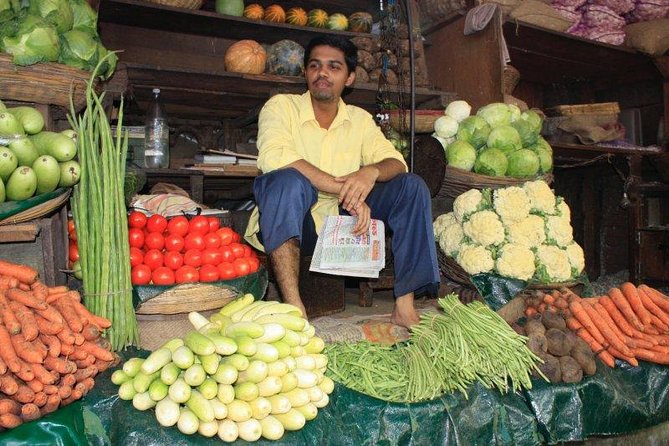
Review · BAZAAR & MARKET WALKS
Explore the New colorful places in Mumbai Market Tour
South Mumbai’s market lanes feel like a living map. This colorful walk threads through iconic stalls and old religious landmarks, where shopping, faith, and everyday life overlap street by street. You’ll move through narrow alleyways beside colonial-era facades, temples, and mosques, all while your guide explains what you’re actually seeing.
I especially love how practical this tour feels. It makes sense of the clutter: candles and cake molds at Crawford Market, then cloth at Mangaldas, then spices, jewelry, and flowers—without turning it into a shopping lecture. Guides like Akash, Sanika, Arjun, Rakesh, and Siddhi Gunjal all show up in the experience in different styles, but the common thread is clear: they talk with confidence and keep things moving.
One consideration: you’ll be on your feet for about three hours, and markets can get tight and busy. If heat, crowds, or uneven walking surfaces are tough for you, plan your timing carefully—later in the day can feel easier than peak sun, depending on your slot.
In This Review
- Key things I think you’ll like
- Where you meet and how the tour flows in South Mumbai
- Crawford Market: the classic stop for candles, fruit, and odd-but-fun finds
- Mangaldas cloth markets: fabrics, shopping temptations, and local trade logic
- Spice, jewelry, and flower markets: the senses get a job
- The spice segment
- The jewelry segment
- The flower segment
- Jama Masjid and Mumba Devi Temple: faith between the stalls
- Madhav Baugh and the cow shelter: a different kind of stop
- How the 3 hours really works (and why the route makes sense)
- Price and value: what $36.24 buys you in Mumbai
- Who this tour suits best
- My practical take: tips to get the most out of it
- Should you book this Mumbai market tour?
- FAQ
- How long is the New colorful places in Mumbai Market Tour?
- What is the price per person?
- Where does the tour start?
- Is admission included?
- Is a mobile ticket provided?
- What’s included in the price?
- Are drinks included?
- How big is the group?
- What is the cancellation policy?
- Can most people participate?
Key things I think you’ll like
- Small group (max 15 people), so you’re not stuck far back in the crowd
- Real market mix: cloth, spices, jewelry, flowers, and classic shopping pockets
- Culture stops built in: Jama Masjid, Mumba Devi Temple, and more along the route
- Purpose-driven visit: a cow shelter stop adds a different side to the day
- No-pressure shopping vibe: the tour pacing is about seeing and learning, not chasing purchases
Where you meet and how the tour flows in South Mumbai
This experience starts at McDonald’s (Empire Building), Dr Dadabhai Naoroji Road, Azad Maidan, Fort. Meeting here helps because you’re already in the thick of South Mumbai’s action, close to the old-market area where the walking makes sense.
From there, you’re on foot for about 3 hours. The route is designed to stack several market clusters and cultural landmarks into one loop, so you get a fast look at how different parts of South Mumbai work. It’s also structured enough that you won’t feel like you’re wandering alone—your guide keeps the route coherent even when streets narrow and stall-to-stall life takes over.
The tour runs with a mobile ticket, and the group size is capped at 15 people. That matters here. In busy markets, smaller groups are easier to manage, and you’re more likely to stay close to the guide when you hit tight alleys.
Crawford Market: the classic stop for candles, fruit, and odd-but-fun finds
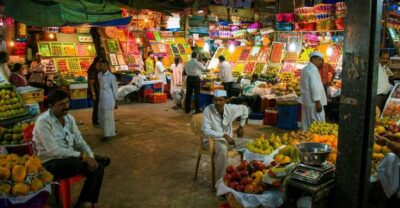
Your first big anchor is Crawford Market, one of the places that makes Mumbai markets feel like Mumbai markets. This is where you can find the expected—plus a few surprises.
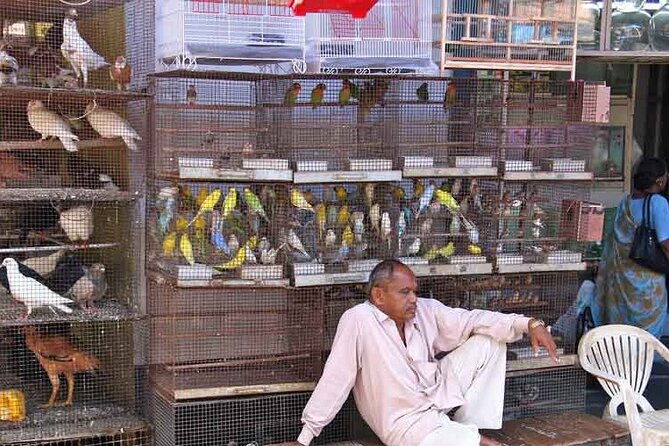
You’ll see shopping items that feel very specific to the market character: scented candles, exotic fruits, cake mold supplies, and even party-wear type accessories. That mix is part of the point. Markets here aren’t organized like malls. They’re organized like daily needs: celebrations, food, gifts, and quick fixes all show up in the same flow.
What I like about this stop is how useful it is for first-timers. Even if you don’t plan to buy much, Crawford Market gives you a baseline for how vendors sell and how shoppers move. It’s also a good place for questions—your guide can point out what to look for and how to read the stall logic quickly, so you don’t feel lost.
If you have a shopping plan, this is also a practical timing choice. You’ll be freshest here, and you’ll have your energy before the route adds more walking and more sensory overload.
From Crawford Market to Chor Bazaar, more lanes to walk


Mangaldas cloth markets: fabrics, shopping temptations, and local trade logic
After Crawford Market, the tour heads into Mangaldas Market, known for cloth and fabric shopping. This area tends to pull people in for one simple reason: the variety is intense, and the prices and quality mix in a way that feels personal once you start comparing.
This isn’t just about fabric bolts on racks. It’s about how a local trade center works. Your guide’s explanations help you understand what’s sold nearby, how vendors position products, and how shoppers decide what to bring home. Even if you’re not buying cloth, you’ll get a clearer sense of why Mangaldas is a known name in the market ecosystem.
One thing to keep in mind: fabric shopping in India can be a fast-moving world. If you’re sensitive to strong sales energy, set your own boundaries early. The tour style here is designed to be no-pressure, but stalls are still stalls—vendors will notice you, ask questions, and offer suggestions.
Spice, jewelry, and flower markets: the senses get a job

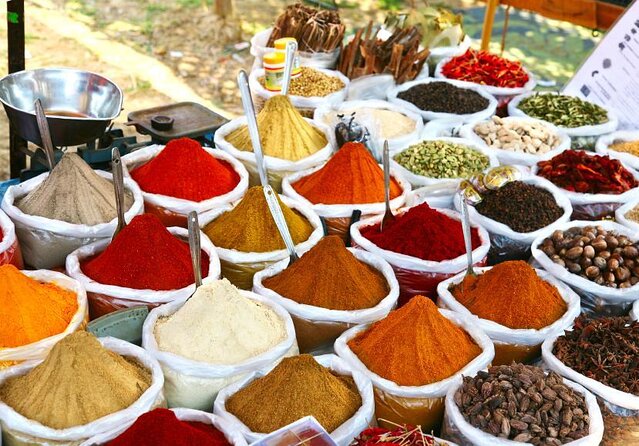
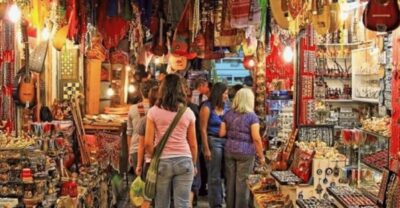
Then the route shifts into three overlapping market themes: spice, jewelry, and flowers. This is where the tour earns its title—colorful, yes, but also loud in smell and motion.
The spice segment
Spice markets are great for learning without needing a shopping bag. You’ll see what’s traded in bulk and what’s sold for everyday use. Your guide can help you connect the smells to real cooking habits, not just show you jars.
Practical tip: if you’re sensitive to fragrance or strong aromas, you might want to move slowly and step back when needed. The markets are active, and the air can be thick.
- Dharavi slum tour in Mumbai by Female tour guides of the slum
★ 5.0 · 1,976 reviews - Mumbai: Full-Day Sightseeing Tour of Mumbai
★ 4.9 · 1,822 reviews - Private Mumbai Sightseeing Tour (Traveller’s Choice Award Winner)
★ 5.0 · 1,565 reviews - Group Guided Walking Tour in Fort and Colaba
★ 5.0 · 1,073 reviews - Highlights of Mumbai Sightseeing Tour: TRAVELLERS CHOICE AWARDED
★ 5.0 · 915 reviews - Private Guided Walking Tour in Fort & Colaba
★ 5.0 · 895 reviews
The jewelry segment
Jewelry stalls add a different kind of visual rhythm. Instead of stacks of products, you’re looking at display and detail. Your guide helps you understand what’s commonly sold in this kind of market setting and how the selling works when customers browse closely.
If you like photography, this is where you may get the best close-up shots. Just be respectful—markets are work zones, not photo studios.
The flower segment
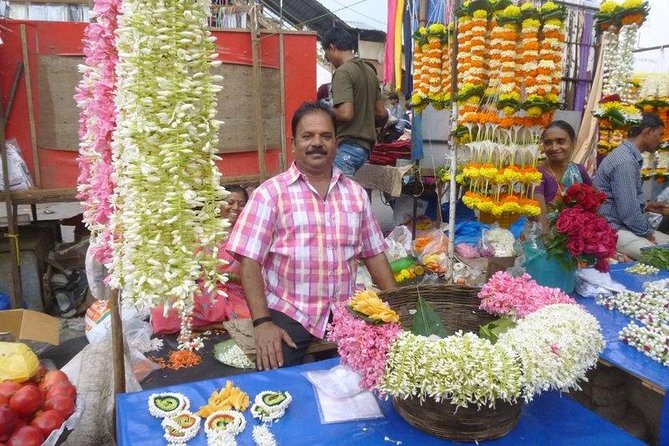
Flowers are often the emotional connection point. In many Indian market areas, flowers aren’t just decoration. They connect to daily prayer, ceremonies, and quick offerings—so they fit naturally with the religious stops later on the walk.
Even if you buy nothing, the flower stalls help you feel how the market environment supports ritual life in the city.
Jama Masjid and Mumba Devi Temple: faith between the stalls
One reason this tour works is that it doesn’t treat religion like a separate museum stop. You’ll pass Jama Masjid, described as the oldest Muslim community, and also visit Mumba Devi Temple along the route.
Seeing these sites in the middle of market movement changes the way you understand the area. You don’t experience faith as a fixed landmark only. You see it as part of daily routines—people going in, people going out, and the market continuing around it.
Madhav Baugh is also included on the route. The idea here is that the walk isn’t only about shopping. It’s about the mix of streets where different community spaces sit close together.
A quick practical note: wear something comfortable and be ready for modesty norms around temples and religious sites. If you’re unsure, a light scarf can solve a lot of problems fast. Keep your shoulders and head covered if you need to.
Madhav Baugh and the cow shelter: a different kind of stop
The tour also includes a stop at a cow shelter. This is the part that adds meaning without adding lectures.
A cow shelter visit changes the tone of the walk. Markets are about trade and shopping. A shelter stop brings you to the city’s care systems—how people support animals and how that care fits into daily life. It’s also a useful reset from the sensory intensity of spices and cloth.
What I like here is balance. You’re not only seeing commerce. You’re seeing how kindness and responsibility exist right alongside it.
If you’re worried about animal-related rules—where you can stand, how to behave, and what not to touch—follow your guide’s cues. Your guide’s role is especially important at stops like this because conditions can change quickly.
How the 3 hours really works (and why the route makes sense)
This is a tight 3-hour walking tour, so timing matters. The itinerary is built like layers: start with a major market anchor, then move through cloth and specialty clusters, then connect the markets to religious landmarks and finally add the shelter stop.
That flow is helpful because it keeps your brain organized. Markets can feel like chaos. Having a guided route turns the chaos into a story you can remember.
Also, the small group size—up to 15 people—is a real benefit for route navigation. In narrow sections, it’s easier for your guide to keep everyone together, and it’s easier for you to hear explanations without having to shout over crowds.
Price and value: what $36.24 buys you in Mumbai
At $36.24 per person for about 3 hours, the price is best understood as a local navigation fee plus guided context.
What’s included is a professional guide (cultured, highly qualified, and experienced) and admission ticket free for the stops. That means you’re paying mostly for expertise and time—someone who can point out what matters, avoid you getting stuck in the wrong corners, and keep the walk efficient.
Not included: drinks. This is one of the few practical downsides, and it matters in Mumbai. Carry water or plan to buy something simple nearby during breaks. Markets often move fast, and you don’t want to spend the second half searching for a bottle.
If you enjoy independent exploring, you might think you can do these areas yourself. You can—but this tour saves you guesswork. It gives you a structured path through places that can otherwise feel overwhelming, especially if it’s your first time in South Mumbai’s market zone.
Who this tour suits best
This is a good fit if:
- you want a fast, guided introduction to South Mumbai markets
- you like seeing everyday life where shopping and faith share the same streets
- you enjoy learning from a guide who tells you what you’re looking at
- you’re okay with walking and tight market spaces for a few hours
It’s also a nice option if you’ve got limited time and want a single “big picture” pass. The route hits multiple market types—cloth, spices, jewelry, flowers—and then adds cultural stops and a cow shelter, so it feels like more than one market in a disguise.
My practical take: tips to get the most out of it
- Wear comfortable shoes with good grip. Market floors can be uneven.
- Bring water. Drinks aren’t included.
- If you get heat tired, aim for a later slot. One note in the experience shows late afternoon can help avoid harsher sun.
- Keep your expectations clear. This is a walk and see day. You might buy things, but the tour is designed to help you understand what you’re seeing without pressure.
Should you book this Mumbai market tour?
I’d book it if you want a guided, efficient introduction to classic markets in South Mumbai—especially if you care about context, not just browsing. The mix of Crawford Market, Mangaldas, specialty stalls, Jama Masjid, Mumba Devi Temple, and a cow shelter stop makes it feel balanced, not one-note shopping.
Skip it if you hate crowded narrow streets or if you need a slow, sit-down pace. At three hours on foot, you’ll want energy and comfort with close quarters.
FAQ
How long is the New colorful places in Mumbai Market Tour?
The tour lasts about 3 hours.
What is the price per person?
The price is $36.24 per person.
Where does the tour start?
It starts at McDonald’s, No 134 to 136, Empire Building, Dr Dadabhai Naoroji Rd, Azad Maidan, Fort, Mumbai, Maharashtra 400001.
Is admission included?
Yes. Admission ticket is free for the included stops.
Is a mobile ticket provided?
Yes. The tour includes a mobile ticket.
What’s included in the price?
You get a cultured, professional, highly qualified, knowledgeable guide.
Are drinks included?
No. Drinks are not included.
How big is the group?
The tour has a maximum of 15 people.
What is the cancellation policy?
You can cancel for a full refund if you cancel at least 24 hours before the experience starts. If you cancel less than 24 hours before, you don’t get a refund.
Can most people participate?
The tour says most people can participate.
More Mumbai, Every Kind of Day
- Dharavi slum tour in Mumbai by Female tour guides of the slum
★ 5.0 · 1,976 reviews - Mumbai: Full-Day Sightseeing Tour of Mumbai
★ 4.9 · 1,822 reviews - Private Mumbai Sightseeing Tour (Traveller’s Choice Award Winner)
★ 5.0 · 1,565 reviews - Elephanta Caves & Island Guided Private Tour
★ 5.0 · 1,327 reviews
Deeper into the Bazaars
- Mumbai: Street Food and Night Markets Tour
★ 4.9 · 719 reviews - Mumbai Morning Market Tour of Flowers, Fish, and More
★ 5.0 · 100 reviews - Mumbai Morning Market Tour of Flowers, Fish, and More
★ 5.0 · 82 reviews - Mumbai Street Food Tour with Evening Bazaar Walk
★ 4.9 · 79 reviews
New on the Mumbai shortlist


Bazaar & Market Walks, compared.
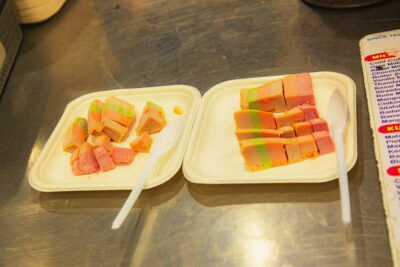 ★ 4.9Street Food and Night Markets TourFrom $13719 reviews
 ★ 5.0Mumbai Morning Market Tour of Flowers, Fish, and MoreFrom $19100 reviews
★ 5.0Mumbai Morning Market Tour of Flowers, Fish, and MoreFrom $2082 reviews
★ 5.0Mumbai Morning Market Tour of Flowers, Fish, and MoreFrom $19100 reviews
★ 5.0Mumbai Morning Market Tour of Flowers, Fish, and MoreFrom $2082 reviews
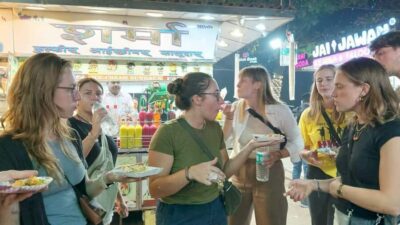 ★ 4.9Mumbai Street Food Tour with Evening Bazaar WalkFrom $1379 reviews
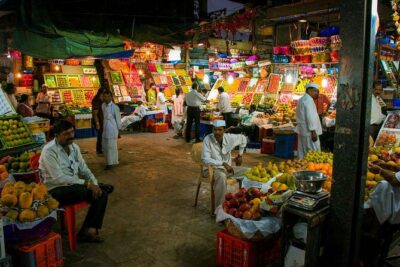 ★ 5.0Mumbai Markets and Temples TourFrom $2759 reviews
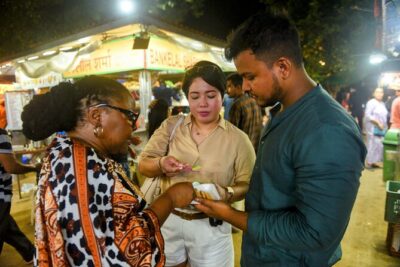 ★ 5.0Mumbai Street Food & Bazaar Tour with Local TransportFrom $2151 reviews
 ★ 4.6Local Markets & Temples TourFrom $2745 reviews
 ★ 4.4Vibrant Markets of Mumbai (2 Hours Guided Walking Tour)From $1444 reviews
Browse the lists this tour appears in