
Review · TEMPLES & SACRED SITES
Banganga Walkeshwar Walking Tour
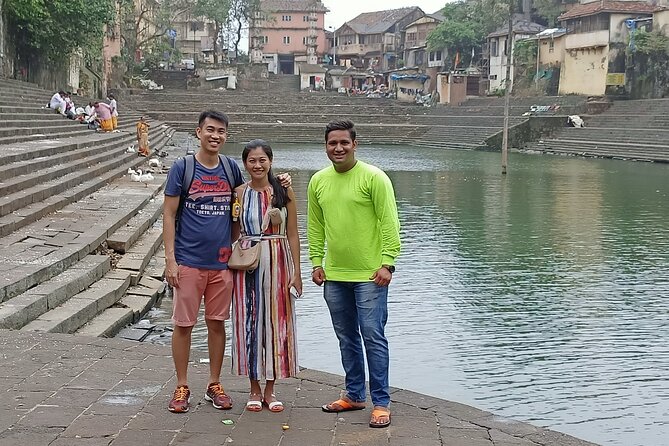
Walkeshwar and Banganga feel like Mumbai paused. This walking tour takes you through temple lanes and down to the steps of Banganga Tank, where daily life and worship overlap in a very real way.
What I like most is how the guide turns ordinary sights into something you can actually picture: the stories behind the 18 temples and the meaning of the Deepstambhas pillars of light. I also like the value for money—an English-speaking guide for about 2.5 hours, with key stops marked as free admission.
One thing to consider: this is a focused neighborhood walk, so you won’t get a broad drive-through of every Mumbai landmark. If you’re hoping for lots of quick photo stops across town, this route may feel too concentrated.
In This Review
- Key Highlights at a Glance
- Walkeshwar to Banganga: A neighborhood tour you’ll remember
- Stop 1: Walkeshwar’s 18-temple circuit and the meaning of stone
- Banganga Tank steps: where daily life and puja share the same stairs
- Deepstambhas: pillars of light with local lore behind them
- Stop 2: The street around Banganga Tank and what you’ll notice
- Dhobi Ghat: open-air laundry and the British-era connection
- What makes the guide-led format worth it
- Duration and pacing: about 2.5 hours, with real time at the tank
- Price and value: why $18.13 can make sense here
- Meeting point and practical logistics you should plan around
- Who should book this walk
- Should you book the Banganga Walkeshwar Walking Tour?
- FAQ
- How long is the Banganga Walkeshwar Walking Tour?
- What’s included in the price?
- Is food and drink included?
- What ticket format do I get?
- Where is the meeting point?
- What’s the group size limit?
- What are the main stops on the tour?
- Do I need to buy admission tickets for the sites?
- Can I cancel for a full refund?
Key Highlights at a Glance
- 18 temples in the Walkeshwar area with a guided circuit that adds context as you go
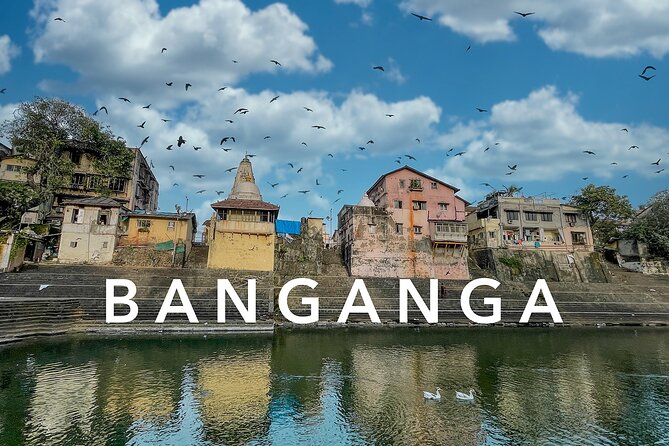
- Banganga Tank steps used every day for play, social time, washing, and puja
- Deepstambhas (pillars of light) marking entrances and notable temples, tied to local lore
- Narrow street around Banganga Tank with temples, homes, and dharamsalas (religious rest houses)
- Dhobi Ghat open-air laundry, including a note about British-built origins and scale
- Small group size (max 15) and an English-speaking guide for a more personal pace
Walkeshwar to Banganga: A neighborhood tour you’ll remember
Mumbai’s big sights get all the attention, but Walkeshwar and Banganga are where you start to understand how the city breathes. The experience centers on temple steps, stone details, and the everyday rhythm around Banganga Tank—so even if you only know a few words of Hindi, you’ll still read the place through what’s happening.
The tour is built around guided explanation, not just movement. In descriptions shared by people who’ve done it with guides like Ajay, Dhaval, and Sid, the consistent theme is clear communication and story-driven walking—exactly what you want when you’re stepping into layers of culture you didn’t grow up with.
Stop 1: Walkeshwar’s 18-temple circuit and the meaning of stone
Walkeshwar is introduced as the oldest continually inhabited place in Mumbai, and the first part of the walk leans into that idea. The focus isn’t only on one temple view; it’s on the full sense of place you get when you move between shrines and landmarks in a connected area.
A standout promise is the 18 temple surround approach. Instead of a “one temple and leave” stop, you get a walk that links the sites together so the guide can share deeper stories for each part of the circuit. If you like religious architecture and small inscriptions—or you just want to know what you’re looking at—this format works.
Then there are the memorial stones known as pallias, described as memorial stones of dead warriors that are worshiped by Gujaratis. That’s the kind of detail that changes how you see a stone that might look decorative at first glance. With a good guide, it becomes a window into how communities remember, honor, and keep traditions alive.
From Banganga to Siddhivinayak, more sacred stops


Banganga Tank steps: where daily life and puja share the same stairs
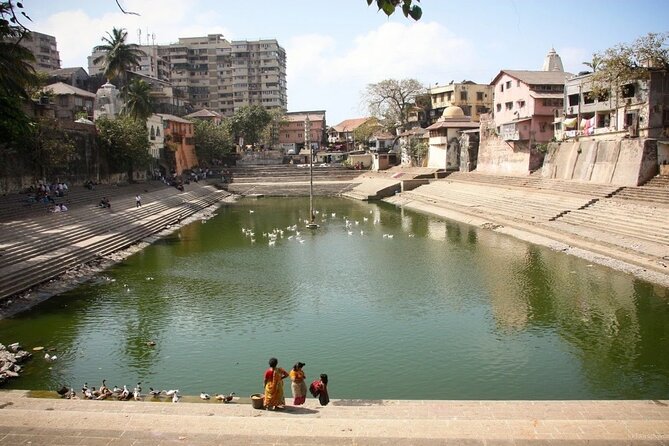
The walk reaches Banganga Tank and Walkeshwar Temple, and this is where the tour becomes more than temples. The steps of Banganga Tank aren’t treated like a museum edge—they serve multiple roles at once.
You’re told the steps act as a play area for children, a social hub for residents, a place to dry washing, and a spot for puja (worship). That combination is the real magic. It means the place isn’t frozen for visitors; it’s working for locals all day, every day.
For you, this is useful because it gives you permission to observe without trying too hard. You don’t need to stage your own experience. Just watch how people use the space and listen to how the guide explains why that matters. It’s also a gentle reminder that in India, many sacred areas function as part of everyday life—not separate from it.
Deepstambhas: pillars of light with local lore behind them
At the entrance to Banganga Tank—and at significant temples in the area—you’ll hear about Deepstambhas (pillars of light). These mark important boundaries and entrances, but they also connect to a more specific piece of lore: a saint is said to be buried under each one.
I love this kind of detail because it gives you a mental map while you’re walking. Instead of seeing scattered monuments, you connect them to a theme. And when your guide points these out in context, they become part of a story, not just photo fodder.
Stop 2: The street around Banganga Tank and what you’ll notice
After the Walkeshwar portion, the tour shifts into the narrower lanes around Banganga Tank. You’ll walk through a street lined with temples, homes, and dharamsalas (religious rest houses). This matters because it shows the area as a living system—religious, domestic, and community-focused all at once.
A key consideration is that the area includes encroaching migrant communities, including slum-dwellers who have occupied the space for past few decades. That’s not presented like shock tourism; it’s part of the real layout of Mumbai in this zone.
If you go in with respect and curiosity, you’ll get more out of it. Keep your tone calm, your camera use mindful, and your attention on what the guide explains about the area’s history and current life.
More of Mumbai at walking pace
- Group Guided Walking Tour in Fort and Colaba
★ 5.0 · 1,073 reviews - Private Guided Walking Tour in Fort & Colaba
★ 5.0 · 895 reviews - Private Guided Walking Tour in Bandra Queen of Suburbs
★ 5.0 · 383 reviews - Private Guided Spiritual Walk in Banganga Hindu Temples
★ 5.0 · 271 reviews - Mumbai: Dharavi Slum Walking Tour by First Female Tour Guide
★ 4.9 · 192 reviews - Private Guided Non-Veg Street Food Walking Tour in Muslim Quarter
★ 5.0 · 140 reviews
Dhobi Ghat: open-air laundry and the British-era connection

The second half includes Dhobi Ghat, described as the second largest laundry in Mumbai. You’ll see open air laundry there, and you’re also told it was built by the British.
This is one of those stops where you’ll probably notice a lot happening visually—clothes drying, people working, and the whole operation set outdoors. With the context from your guide, the scene turns from a spectacle into an industrial snapshot: a working system shaped by time and by the city’s changes.
Practical tip: because it’s open air, the best photos usually come when the light is working in your favor. Wear something comfortable and be ready for the fact that Dhobi Ghat is active rather than posed.
What makes the guide-led format worth it
This experience leans heavily on the guide. The tour includes an English speaking guide, and in the feedback shared from earlier experiences, people specifically highlight guides like Ajay, Dhaval, and Sid for being well informed and passionate, with explanations offered in detail rather than rushed.
Here’s why that matters for you: Walkeshwar and Banganga aren’t “readable” at a glance. The Deepstambhas lore, the pallias memorial stones, the uses of Banganga Tank steps—these are exactly the things you might miss if you’re walking without context.
Also, the tour caps at 15 travelers, which generally means you can hear the guide without constant strain. It doesn’t feel like sprinting through stations. It feels like a guided walk where questions make sense.
Duration and pacing: about 2.5 hours, with real time at the tank
The full tour runs about 2 hours 30 minutes. The plan breaks down into 2 hours at Walkeshwar and 30 minutes for the Banganga area and Dhobi Ghat.
That pacing is good if you want both explanation and observation. The Walkeshwar portion takes enough time to connect the temples and stone details, while the Dhobi Ghat stop gives you a short, focused look rather than a half-day detour.
If you’re short on time in Mumbai but still want something meaningful beyond the famous monuments, this length fits well. It’s long enough to feel like you left with understanding, not just photos.
Price and value: why $18.13 can make sense here
The price is $18.13 per person, and key stops are listed as free admission. When you add in the inclusion of an English-speaking guide, the value feels straightforward: you’re paying for local interpretation and route design, not entrance fees.
You also get a mobile ticket, which usually means fewer headaches once you’re in the area. And since it starts and ends back at the meeting point, you don’t need to think too hard about where you’ll finish.
One more value point: it’s a small-group walk. For a city as big as Mumbai, a focused neighborhood experience can be a smarter use of time than trying to cover everything in a single day.
Meeting point and practical logistics you should plan around
The tour starts at Hotel Banganga Arogya Bhavan, located at Banganga, Shop No. 91, Road, Shubash Chowk, Walkeshwar, Malabar Hill, Mumbai, Maharashtra 400006, India. It ends back at the same meeting point.
Because it’s a walking tour with neighborhood lanes, wear shoes you trust. The route includes temple areas and stone steps, and you’ll want stable footing. Also remember that food and drink are not included, so plan a water break before you go out—and consider a light snack around the start if you’re sensitive to hunger during long walks.
It’s also worth noting the typical planning window: this experience is often booked about 40 days in advance on average. If your dates are tight, it’s smarter to reserve early rather than wait.
Who should book this walk
This is a strong fit if you want:
- A guided look at Walkeshwar’s temple area and the Banganga Tank steps and their everyday use
- A clear explanation of religious markers like Deepstambhas and memorial stones
- A short, focused route that ends near where it began
- A small-group experience with an English-speaking guide
It’s less ideal if you need a broad “greatest hits” tour that jumps quickly between distant Mumbai landmarks. This is about one neighborhood’s stories, not about covering the whole city.
Should you book the Banganga Walkeshwar Walking Tour?
Yes—if you like walking with context and you enjoy religious and neighborhood details, this is the kind of experience that makes a city feel personal. The biggest reason to book is the guide-led storytelling around specific features: the 18-temple circuit, the Banganga Tank steps, the Deepstambhas lore, and the working scene at Dhobi Ghat.
Before you go, go in with the right expectations: bring comfortable shoes, plan for open-air conditions, and remember there’s no food included. If you want a deeper understanding of how faith and daily life coexist in Mumbai, this route is a smart choice.
FAQ
How long is the Banganga Walkeshwar Walking Tour?
The tour is approximately 2 hours 30 minutes, with about 2 hours in Walkeshwar and about 30 minutes in the Banganga area and Dhobi Ghat.
What’s included in the price?
An English-speaking guide is included. Admission tickets at the listed stops are marked as free.
Is food and drink included?
No. Food and drink are not included.
What ticket format do I get?
You receive a mobile ticket.
Where is the meeting point?
The tour starts at Hotel Banganga Arogya Bhavan, Banganga, Shop No. 91, Road, Shubash Chowk, Walkeshwar, Malabar Hill, Mumbai, Maharashtra 400006, India.
What’s the group size limit?
This activity has a maximum of 15 travelers.
What are the main stops on the tour?
The tour includes Walkeshwar (including temples and Banganga Tank area) and then Banganga, including Dhobi Ghat.
Do I need to buy admission tickets for the sites?
Admission tickets are listed as free for the stops included in the itinerary.
Can I cancel for a full refund?
Yes, you can cancel up to 24 hours in advance for a full refund. If you cancel less than 24 hours before the start time, the amount paid will not be refunded.
Mumbai on Foot, Continued
- Group Guided Walking Tour in Fort and Colaba
★ 5.0 · 1,073 reviews - Private Guided Walking Tour in Fort & Colaba
★ 5.0 · 895 reviews - Private Guided Walking Tour in Bandra Queen of Suburbs
★ 5.0 · 383 reviews - Private Guided Spiritual Walk in Banganga Hindu Temples
★ 5.0 · 271 reviews
More Mumbai, Every Kind of Day
- Dharavi slum tour in Mumbai by Female tour guides of the slum
★ 5.0 · 1,976 reviews - Mumbai: Full-Day Sightseeing Tour of Mumbai
★ 4.9 · 1,822 reviews - Private Mumbai Sightseeing Tour (Traveller’s Choice Award Winner)
★ 5.0 · 1,565 reviews - Elephanta Caves & Island Guided Private Tour
★ 5.0 · 1,327 reviews
Sacred Mumbai, Continued
- Private Guided Spiritual Walk in Banganga Hindu Temples
★ 5.0 · 271 reviews - Mumbai: Kanheri Caves and The Golden Pagoda Temple
★ 4.7 · 108 reviews - Sanjay Gandhi National Park(SGNP) + Kenheri Caves + Lion Safari + Jain Temple
★ 5.0 · 88 reviews - Mumbai Markets and Temples Tour
★ 5.0 · 59 reviews
New on the Mumbai shortlist


Temples & Sacred Sites, compared.
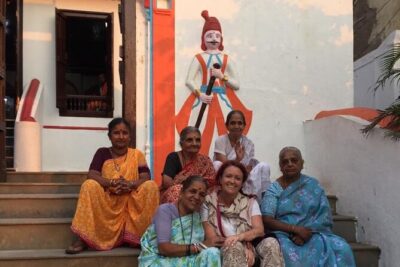 ★ 5.0Private Guided Spiritual Walk in Banganga Hindu TemplesFrom $36271 reviews
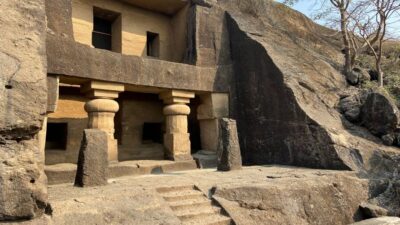 ★ 4.7Kanheri Caves and The Golden Pagoda TempleFrom $43108 reviews
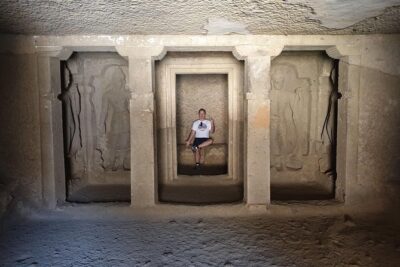 ★ 5.0Sanjay Gandhi National Park(SGNP) + Kenheri Caves + Lion Safari + Jain TempleFrom $6988 reviews
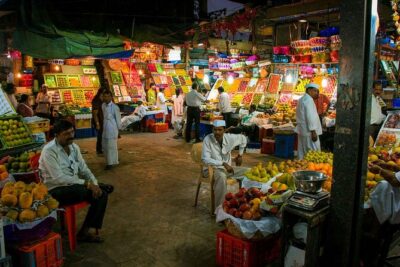 ★ 5.0Mumbai Markets and Temples TourFrom $2759 reviews
 ★ 5.0Sanjay Gandhi National Park+ Kanheri Caves + Temple +Tigar SafariFrom $2754 reviews
 ★ 4.8Buddhist Kanheri Caves with Golden Pagoda TempleFrom $2847 reviews
 ★ 4.6Local Markets & Temples TourFrom $2745 reviews
 ★ 5.0Mumbai Temple Tour in Private VehicleFrom $9839 reviews
Browse the lists this tour appears in