
Review · OLD BOMBAY HERITAGE WALKS
Cultural & Heritage Tour Of Mumbai 01 Day
Mumbai hits fast, even in one day. This private one-day cultural and heritage loop is built for real orientation: you’ll get airport/address pickup, a dedicated guide’s commentary, and enough stops to understand how Mumbai grew into a commercial and financial powerhouse.
I especially like the private round-trip AC transportation (so you’re not wrestling with buses or random drop-offs) and the way the day mixes famous monuments with everyday texture, like the working laundry scene at Dhobi Ghat. One thing to consider: the schedule is packed, and Mumbai traffic can affect pacing, so wear comfy shoes and expect a long day.
In This Review
- What You’ll Remember Most
- Entering Mumbai’s Golden-Era Story at Prince of Wales Museum
- Mumbai Fort: Walking Through the City’s Old Power Center
- Marine Drive: The Waterfront Boulevard Built on Reclaimed Land
- Gateway of India: Mumbai’s Landmark for Arrivals and Departures
- Flora Fountain and Hutama Chowk: The City’s Piccadilly-Circus Energy
- Chhatrapati Shivaji Maharaj Terminus: Gothic Meets India
- Rajabai Clock Tower and Bombay High Court: Architecture with Attitude
- Dhobi Ghat: Watching Tradition at Work
- How the Private Format Changes the Day
- Price and Value: Is $75 for 8 Hours Actually Fair?
- Getting the Timing Right: Morning Works Best for Hard Sightseeing Days
- What to Pack and Expect on the Ground
- Should You Book This One-Day Mumbai Heritage Tour?
- FAQ
- How long is the Mumbai cultural and heritage tour?
- Is this a private tour or a group tour?
- What transportation is included?
- Where do you meet the guide or representative?
- Do I need a passport for this tour?
- What is the cancellation window?
What You’ll Remember Most
- A true one-day “big picture” route: you’ll see the landmarks that define Mumbai’s modern skyline and colonial-era architecture.
- Prince of Wales Museum as your culture warm-up: a strong first stop that helps the rest of the day make sense.
- Marine Drive at the right mood: a classic waterfront promenade built on reclaimed land, great for photos and people-watching.
- Dhobi Ghat, the working-laundry reality check: watch traditional wash practices that keep happening day after day.
- Landmark architecture without the guesswork: Chhatrapati Shivaji Maharaj Terminus, the Rajabai Clock Tower, and High Court buildings get practical explanations.
- Unlimited mineral water: a small inclusion that helps on a long, warm day.
Entering Mumbai’s Golden-Era Story at Prince of Wales Museum
Most “first time in Mumbai” days start with a shock of scale. This one starts with context. Your guide takes you to the Prince of Wales Museum as your introduction to the city’s cultural layers, before you jump into the landmark-and-traffic part of town.
Why this stop works: it gives you a reference point for the buildings and design you’ll keep seeing later. You’re not just snapping photos—you’re learning how Mumbai’s identity was shaped by trade, empire, and local culture. Even if you’re not a museum person, think of this as an orientation tool.
A small practical note: museum interiors can mean more time on your feet than you expect, and you’re still early in the day—so take your water breaks seriously.
Mumbai Fort: Walking Through the City’s Old Power Center
After you get your bearings, the tour heads to Mumbai Fort, the area north of Colaba where an old British fort once stood. The point here isn’t nostalgia. It’s that you’ll see plenty of impressive buildings tied to what people call Mumbai’s golden period—architecture that signals authority, wealth, and long-distance connections.
This segment is ideal for asking questions. When a guide points out what you’re looking at—styles, time periods, and why certain neighborhoods matter—you’ll start “reading” the city faster. And because this is a private tour, you can slow down when something catches your eye.
Possible drawback: this part can feel like “more architecture, less time to sit.” If you’re tired, you’ll want to keep your breaks short and efficient.
More Gothic arches and Deco curves of old Bombay



Marine Drive: The Waterfront Boulevard Built on Reclaimed Land
Then comes Marine Drive, one of the most famous thoroughfares in Mumbai. It was built in the 1920s and 30s on land reclaimed from the sea, which is exactly the kind of detail that makes the city feel engineered and ambitious, not random.
Why you’ll like it: Marine Drive is a great place to see Mumbai’s mood. You get sea-adjacent views, sweeping stretches of buildings, and that signature promenade vibe—ideal for photos and for understanding why so many people think of this city as dramatic and cinematic.
In planning terms, I like doing a major outdoor stop earlier in the day when possible. Mumbai traffic can get intense later, and if your route has flexibility, morning sightseeing tends to feel smoother.
Gateway of India: Mumbai’s Landmark for Arrivals and Departures
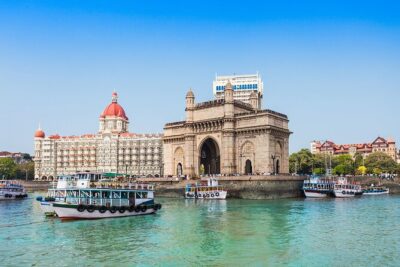
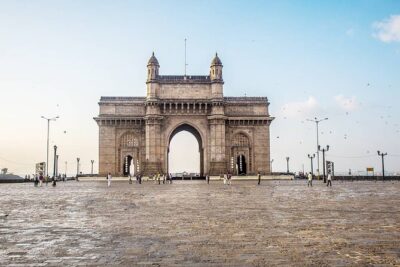
Next is the Gateway of India, Mumbai’s principal landmark. It’s a huge arch by Apollo Bunder and serves as the starting point for many tourist routes, which is a helpful clue: this spot is the city’s “main door” for visitors.
The monument was built to commemorate the visit of King George V and Queen Mary in 1911. That single fact can reframe your whole understanding of the surrounding area—you start seeing it as a place that has long been tied to international movement and public ceremony.
Practical tip: treat this as both a history moment and a logistics anchor. It’s often where you realize how the day’s geography connects.
Flora Fountain and Hutama Chowk: The City’s Piccadilly-Circus Energy
Flora Fountain (also associated with Hutama Chowk) is another central stop, erected in 1869 in honour of Sir Bartle Frere, a British governor of Bombay. The fountain marks a junction of five streets, and it’s known as the Picadilly Circus of Mumbai.
I like this stop because it’s not just a monument—it’s a crossroads. You can watch the flow of city life while your guide explains the mythological figures at the fountain’s corners. The top has a figure of the Roman Goddess of flowers, which gives you a fun contrast: European symbolism sitting in the middle of an Indian street network.
One consideration: junctions mean noise and crowds. If you’re sensitive to sensory overload, plan quick photo pauses and keep moving.
More layers of Bombay history to walk through
- Mumbai Heritage Walk and Elephanta Caves Experience
★ 5.0 · 53 reviews - Kanheri Caves Heritage Tour
★ 5.0 · 45 reviews - South Mumbai: Cultural Heritage Walking Tour
★ 4.8 · 45 reviews - Mumbai Private Cultural Tour with Lunch and Transport
★ 5.0 · 44 reviews - Private Mumbai Jewish Heritage Tour: Baghdadi & Bene Israel
★ 5.0 · 36 reviews - Private Elephanta Caves UNESCO World Heritage Site Tour
★ 5.0 · 34 reviews
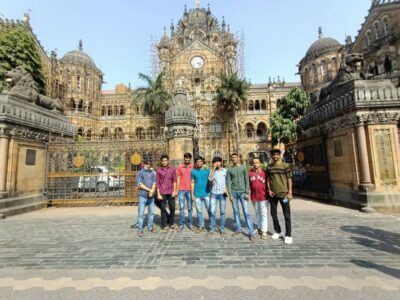
Chhatrapati Shivaji Maharaj Terminus: Gothic Meets India
Victoria Terminus—now Chhatrapati Shivaji Maharaj Terminus—is one of Mumbai’s most prominent buildings and, according to the details your guide will share, architecturally one of the finest stations in the world.
This is where the tour’s architectural storytelling pays off. The building combines Gothic and Indian influences, and it was completed in 1885. Your guide will also point out that it was designed by F.W. Stevens and that construction began in 1878. The frontage is over 1,500 feet, and it’s described as Italian Gothic in style.
Why this stop matters: you’re not just seeing a station. You’re seeing how Mumbai celebrated modern transport with serious design. Even if you don’t ride trains, this is the kind of place where architecture feels like a statement about the city’s ambition.
Practical note: stations can mean lots of foot traffic. Keep your focus on the building itself and let the movement become background.
Rajabai Clock Tower and Bombay High Court: Architecture with Attitude
From the railway masterwork, the day moves to Rajabai Clock Tower, at the gardens of Bombay University. The tower rises above the library portion and has five elaborately decorated storeys, standing at 280 feet. The height alone makes it memorable, but it’s the detail your guide draws out that makes it stick.
Right next door in spirit (and close in location) is the Mumbai High Court. It’s an attractive early English Gothic building beside the Oval Ground. The guide will point out the statues representing Justice and Mercy surmounting the central structure.
I like these stops because they show you what power looked like in stone and shape—how institutions wanted to project order. If you’re the type of traveler who likes to connect the dots, this is where the “Mumbai grew into a governing-and-commercial hub” idea turns concrete.
Possible drawback: this portion is strong for architecture lovers, but if you want more street-level markets or food stops, you might find it a bit quieter. Still, it’s a good balance against the waterfront and landmark areas.
Dhobi Ghat: Watching Tradition at Work
Dhobi Ghat is where the tour slows into something real-life. The dhobi is a traditional laundryman who collects dirty linen, washes it, and returns it neatly pressed to your doorstep for a pittance. The “laundries” are called ghats: rows of concrete wash pens, each fitted with its own flogging stone.
This stop is unique because it’s functional, not staged. You’re seeing the city’s work system at a human scale. For photographers, it’s also visually compelling—hands, tools, water, and routines in motion.
How to think about it: Dhobi Ghat can be intense. Expect strong activity, and plan to observe with respect. If you’re not comfortable around close-up labor scenes or strong smells, you might want to keep viewing time limited and stay at a comfortable distance where you can still get the point.
How the Private Format Changes the Day
This experience is private for your party only, with a dedicated guide and private round-trip transport with air-conditioning. That means your day is more “you-shaped” than “tour-bus-shaped.”
Here’s what that usually translates to on the ground:
- You can ask questions as they come up, instead of saving them for later.
- You can move at your pace, especially at photo-heavy stops like Marine Drive and Gateway of India.
- You’re not stuck waiting on other group members who want different things at the same time.
In the broader TravelAstu feedback you provided, guides named Jay and Laxman show up as standouts for service and attentiveness. Even if your guide is different, the pattern is clear: clear communication and responsiveness matter here, not just driving you from A to B.
Price and Value: Is $75 for 8 Hours Actually Fair?
At $75 per person, you’re paying for a lot of practical pieces: private sightseeing, guide commentary across multiple landmark areas, round-trip AC transport, and unlimited mineral water.
The biggest value driver is the private transportation. In Mumbai, saving time lost to wrong turns, unclear meeting points, and public transit friction can be worth more than the premium over cheaper options. Plus, the day is long enough (about 8 hours) that you’ll feel what “easy logistics” are doing for you.
You also get a mobile ticket, and the tour includes group discounts, which can help if you’re traveling with friends or family and can split cost.
If you’re the kind of traveler who likes to learn while moving, this pricing structure makes sense. If you only want a quick photo walk, you might find it more cost-effective to pick a smaller set of stops.
Getting the Timing Right: Morning Works Best for Hard Sightseeing Days
Mumbai traffic can be a buzzkill, especially later in the day. The smartest approach is to schedule major outdoor landmarks earlier when you can, then shift into architecture and landmark viewing as the day goes on.
This tour naturally supports that flow because it includes a mix of waterfront and monument viewing early-to-mid day, then institutional architecture and Dhobi Ghat. The private car helps, but physics is still physics: the city’s road system can slow things down.
My advice: plan your energy like a pro. You’ll likely do lots of standing and short walks. Bring sunglasses, keep water handy (you’ll get unlimited mineral water), and don’t plan anything tight right after the tour ends.
What to Pack and Expect on the Ground
The information you have doesn’t list special dress rules, so I’d treat this as standard city sightseeing: comfortable shoes, sun protection, and a small day bag.
Also expect:
- Heat and brightness (Marine Drive and Gateway of India are outdoors).
- Crowds at major landmarks (junctions and famous monuments draw people).
- A meaningful stop at Dhobi Ghat, where you’ll be observing active work.
Because pickup can happen from the airport or your address, confirm what time you need to be ready at. The day is built around a smooth transfer into sightseeing and a later return with “sweet memories,” not a loose wandering plan.
Should You Book This One-Day Mumbai Heritage Tour?
If you want to understand Mumbai fast—culture, colonial-era architecture, major landmarks, and working-city reality—this is a good match. The private format, AC transport, and guide-led context make the day feel purposeful, not chaotic.
I’d especially recommend it if:
- It’s your first time in Mumbai and you want strong orientation.
- You dislike negotiating transport and prefer a clear route.
- You like architecture and want guided explanations at multiple key sites.
- You want a cultural stop that’s not just temples and monuments—Dhobi Ghat adds real texture.
I’d think twice if you hate tight schedules or you’re only interested in a single neighborhood vibe. This tour is designed to cover the main story beats in one day, not to linger.
If that sounds like your style, book it.
FAQ
How long is the Mumbai cultural and heritage tour?
The tour runs for about 8 hours.
Is this a private tour or a group tour?
It is private. Only your group participates.
What transportation is included?
You get private round-trip transportation with air-conditioning, plus unlimited mineral water.
Where do you meet the guide or representative?
You’ll be met on arrival at the airport or from your address by a TravelAstu representative.
Do I need a passport for this tour?
Yes. A current valid passport is required on the day of travel.
What is the cancellation window?
Free cancellation is available. You can cancel up to 24 hours in advance for a full refund.
Bombay History, Chapter by Chapter
- Heritage Walk: Recommended by Gigi Hadid as a must-do in Mumbai
★ 5.0 · 122 reviews - Best South Mumbai Heritage Walk
★ 5.0 · 122 reviews - Mumbai: South Mumbai Heritage Walking Guided Tour
★ 4.5 · 69 reviews - Hill-station & Heritage: Lonavala & Karla Caves Tour from Mumbai
★ 5.0 · 60 reviews
More Mumbai, Every Kind of Day
- Dharavi slum tour in Mumbai by Female tour guides of the slum
★ 5.0 · 1,976 reviews - Mumbai: Full-Day Sightseeing Tour of Mumbai
★ 4.9 · 1,822 reviews - Private Mumbai Sightseeing Tour (Traveller’s Choice Award Winner)
★ 5.0 · 1,565 reviews - Elephanta Caves & Island Guided Private Tour
★ 5.0 · 1,327 reviews
Old Bombay, Building by Building
- Heritage Walk: Recommended by Gigi Hadid as a must-do in Mumbai
★ 5.0 · 122 reviews - Best South Mumbai Heritage Walk
★ 5.0 · 122 reviews - Mumbai: South Mumbai Heritage Walking Guided Tour
★ 4.5 · 69 reviews - Hill-station & Heritage: Lonavala & Karla Caves Tour from Mumbai
★ 5.0 · 60 reviews
New on the Mumbai shortlist


Old Bombay Heritage Walks, compared.
 ★ 5.0Best South Mumbai Heritage WalkFrom $17122 reviews
 ★ 5.0Heritage Walk: Recommended by Gigi Hadid as a must-do in MumbaiFrom $44122 reviews
 ★ 4.5South Mumbai Heritage Walking Guided TourFrom $2869 reviews
 ★ 5.0Hill-station & Heritage: Lonavala & Karla Caves Tour from MumbaiFrom $7260 reviews
 ★ 5.0Mumbai Heritage Walk and Elephanta Caves ExperienceFrom $2953 reviews
 ★ 4.8South Mumbai: Cultural Heritage Walking TourFrom $1645 reviews
 ★ 5.0Kanheri Caves Heritage TourFrom $4545 reviews
 ★ 5.0Private Mumbai Jewish Heritage Tour: Baghdadi & Bene IsraelFrom $9636 reviews
Browse the lists this tour appears in