

Review · PRIVATE GUIDES & CUSTOM DAYS
Private Mumbai 25 sights in one tour as recommended by Gigi Hadid
One city, 25 stops, and a guide who connects the dots. This private Mumbai half-day is built for getting your bearings fast, with hotel pickup, a professional local guide, and a tight route through Colonial landmarks and everyday Mumbai. You’ll like the mix of famous icons (Gateway of India, Marine Drive) and street-level scenes (Dhobi Ghat, lunch delivery culture). The only real drawback is the pace: with so much packed into 3 to 4 hours, you’ll be doing lots of short walks and photo breaks instead of lingering.
I especially like the value math here: private vehicle comfort plus admissions handled on select stops, and the schedule is designed around the best “first visit” priorities. You also get a clear, story-driven approach to architecture and power—British-era civic buildings right beside Maratha and Gandhi-era landmarks. If your idea of a perfect tour is slow and museum-deep, this one may feel like a strong espresso.
Finally, you should know up front that a few elements depend on timing and conditions—Dabbawalas are mentioned with a weekend restriction, and the tour requires good weather. Still, for first-timers and time-crunched planners, it’s an efficient way to see a lot without turning your day into a logistics headache.
In This Review
- Key highlights worth your attention
- Why 25 Mumbai Stops in a Half-Day Actually Works
- Colonial Mumbai Core: Gateway of India to Oval Maidan
- Art Deco, Galleries, and Mani Bhavan’s Focused Story
- Churchgate, Dabbawalas, and Chhatrapati Shivaji Terminus (CST) Views
- Marine Drive and Dhobi Ghat: The Most “Real Mumbai” Parts
- Price and Value: $83.25 for Transport, Guide, and Key Admissions
- Timing, Weather, and Small Rules You Should Actually Care About
- Booking Tips and What to Expect on the Day
- Should You Book This Private Mumbai 25-Stop Tour?
- FAQ
- How long is the private Mumbai tour?
- What is the tour price per person?
- What time does the tour start?
- Does the tour include hotel pickup and drop-off?
- Are entrance fees included?
- Is food included on the tour?
- Are Dabbawalas included on weekends?
- Do children get a discount?
Key highlights worth your attention
- 25 top Mumbai sights in about 3 to 4 hours, with hotel pickup and drop-off
- Private vehicle comfort and a professional local guide to keep the stories coherent
- Colonial-to-modern route covering Gateway of India, CST, and Marine Drive viewpoints
- Hands-on cultural moments like Dhobi Ghat’s open-air laundry scene
- Gandhi at Mani Bhavan Museum (admission included) for a focused, meaningful stop
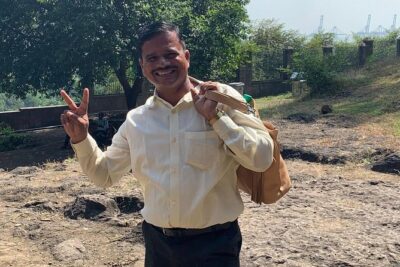
- A guide can make or break this kind of itinerary, and one praised guide name in a review was Krupesh
Why 25 Mumbai Stops in a Half-Day Actually Works
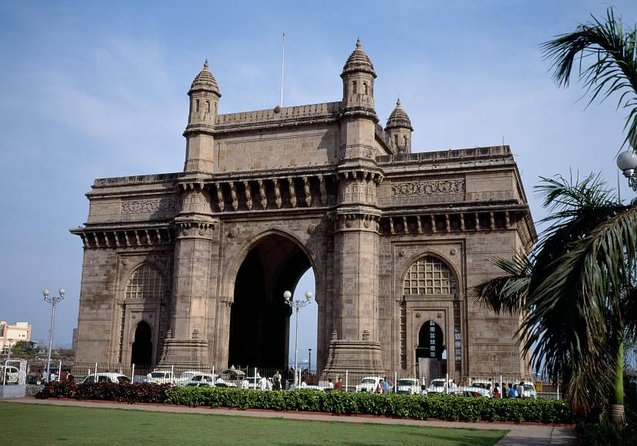
Mumbai is big, loud, and spread out. When you have limited time, trying to “DIY a highlights list” can turn into traffic frustration and missed context. This tour is built to solve that with a private guided route that bundles major sights together, then sprinkles in smaller, watchable scenes.
The practical win is that you’re not bouncing between apps, tickets, and directions. Your day runs on pickup and drop-off, and the guide helps you understand what you’re looking at—especially the architecture. That matters in Mumbai, where many buildings look similar at a glance, but their stories are very different.
The other advantage is that it’s described as hop-on hop-off, but you’re doing it with a guide and a private vehicle. So you still get choices for how long you stop, but you don’t lose the thread of why each place matters.
Colonial Mumbai Core: Gateway of India to Oval Maidan
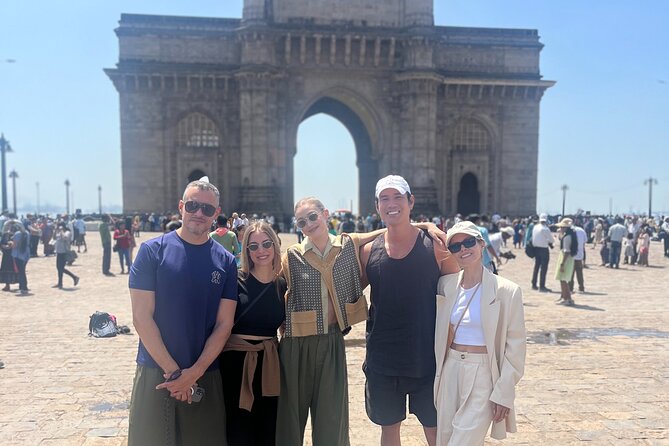
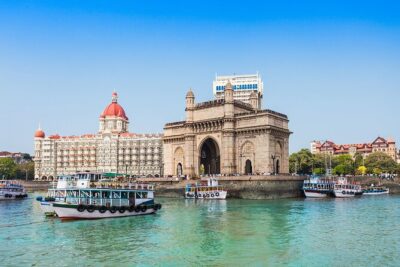
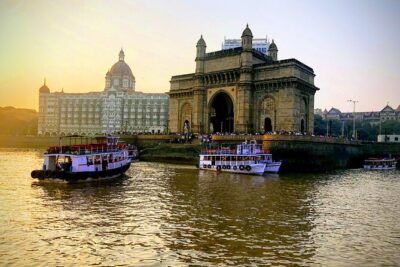
Most first-time days should start with the place that feels like the city’s front door. Here, you begin at the Gateway of India, a victory arch tied to British-era ceremony. Even if you only catch it briefly, the setting is iconic, and it instantly anchors your mental map.
Next, you’ll see the Statue of Chhatrapati Shivaji Maharaj, a strong reminder that Mumbai isn’t just colonial buildings—it’s also Maratha pride and resistance. From there, the tour includes photo/drive-by stops at major landmarks, including a century-old hotel tied to celebrity history (Barack Obama and the Beatles are specifically mentioned) and the Royal Mumbai Yacht Club, created by John Adams and Charles Stevens.
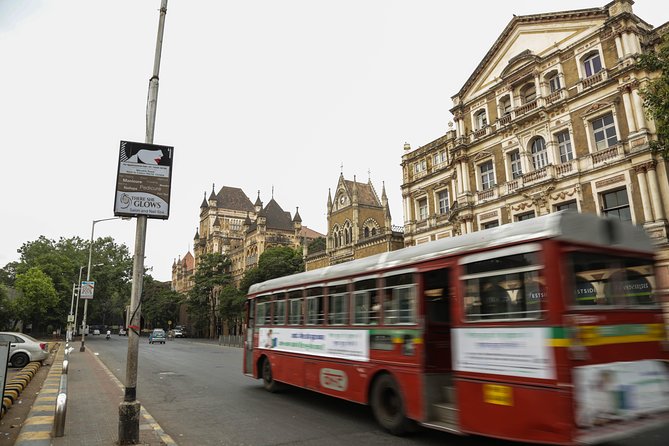
From the “who’s who” story layer, the route shifts toward civic buildings and city design. You’ll pass the Maharashtra Police Headquarters, described as linked to earlier sites and notable work by John Lockwood Kipling. You’ll also reach the Wellington Fountain in Wellington Circle, which commemorates Duke of Wellington after Waterloo—an example of how public monuments served as political messaging.
As you head toward art and education, stops like the National Gallery of Modern Art give you a quick taste of Mumbai’s contemporary side. The schedule then enters Kala Ghoda Art Precinct, which is less about one museum and more about neighborhood identity—stories tied to Sassoon and Jewish history, plus the Watson Hotel (the first iron-cast building in the city) and its current threat due to deterioration.
If you like architecture, this is where the itinerary becomes satisfying. The stops around colleges and libraries help you see Mumbai as a city that built institutions, not just monuments. The David Sassoon Library and Reading Room is a short stop with big “pause-worthy” value because it overlooks Kala Ghoda, and it’s housed in what was once a mechanical institute. Nearby, the University of Mumbai Library is described as so beautiful you’d want to linger—especially with its arches and architectural feel.
Then you reach a rhythm that’s very Mumbai: clocks, courts, and sport. The Rajabai Clock Tower is introduced as Mumbai’s “Big Ben,” built with a donation from Premchand Roychand and chiming old British tunes every 15 minutes. You’ll also visit the Bombay High Court Principal Bench, described as built in the form of a German castle. If you care about how systems changed, it’s noted here that the jury system was abolished in this setting.
The last “core” walk in this section is Oval Maidan, where aspiring cricketers practice. It’s a reminder that Mumbai’s public spaces serve everyday life, not just sightseeing.
More Mumbai days built around your own list




Art Deco, Galleries, and Mani Bhavan’s Focused Story
After the Colonial civic spine, the tour pivots to culture. The Kala Ghoda area is a key stop because it ties together art, community history, and unusual architecture details. If you’re the type who likes to understand why a neighborhood looks the way it does, this area is doing a lot of work for you in a short time.
From there, you’ll head toward a more personal, human story at Mani Bhavan Gandhi Museum. Admission is included, and the focus is Gandhi’s life—specifically how it’s archived there. I like this stop because it changes the tempo. After monuments and institutions, you get a place that’s meant for reflection, not just photos.
The route also includes references to other visually striking sites—like an Art Deco structure connected to Zubeida—as well as the chance to see cinematic landmarks and well-known dining history. Because the names aren’t spelled out in the provided details, I’d treat these as bonus story/photo moments. The bigger point is that the guide is using Mumbai’s pop-culture anchors to keep you from zoning out during a packed itinerary.
If you’re planning what to wear, keep this in mind: you’ll do a mix of short walks and street-level viewing. Light layers help, and shoes with decent grip matter because you’ll be moving through real city sidewalks.
Churchgate, Dabbawalas, and Chhatrapati Shivaji Terminus (CST) Views
Mumbai’s transport story is part of what makes the city feel like it runs on clockwork. The schedule includes Churchgate Railway Station, where the focus shifts to the lunch delivery system. The tour describes meeting or observing Dabbawalas delivering lunches across the city with extreme precision, and it notes that this part is shut on weekends.
That detail matters for planning. If your trip falls on a Saturday or Sunday, you should expect that lunch-delivery observation may not happen. In that case, the rest of the transport-and-architecture stops become even more important.
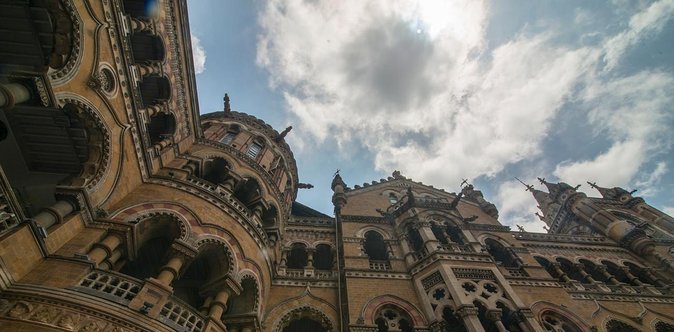
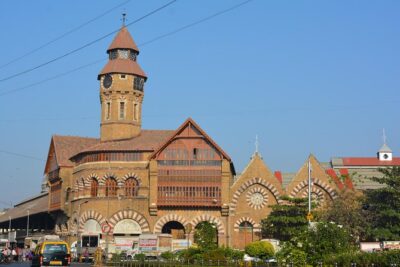
Next is Chhatrapati Shivaji Maharaj Terminus (often called CST). The building is described as likely the most architecturally stunning in India, and you’re also given context about its daily footfall: up to 660,000 people a day. Even if you don’t go inside in a long way, the “read” the guide gives you tends to be the point—how a station can represent a whole era of city ambition.
The combination of Churchgate and CST makes sense: you’re comparing two rail worlds, and the guide’s commentary helps you see Mumbai’s growth through movement.
Marine Drive and Dhobi Ghat: The Most “Real Mumbai” Parts
Every fast itinerary needs at least two moments that feel like real life, not just famous landmarks. In this route, those are Marine Drive and Dhobi Ghat.
You’ll spend time at Marine Drive, described as a breathtaking sea viewpoint. Even when you’re tired from the schedule, the shoreline usually resets your mood. It’s also one of those places where the guide’s framing helps you notice the details—like how the city presents itself to the ocean and how public spaces shape daily experience.
Then you hit Dhobi Ghat, the open-air laundry where you can see the human “washing machines” of Mumbai at work. This stop is only listed for a short duration, but don’t underestimate it. It’s the kind of place that hits your senses quickly: sound, steam, water rhythms, and the sheer scale of the work.
Practical note: bring a mindset for watching. This isn’t a museum “look and leave” situation. Even on a brief visit, you’ll get a strong sense of how much labor supports the city’s everyday convenience.
- Dharavi slum tour in Mumbai by Female tour guides of the slum
★ 5.0 · 1,976 reviews - Mumbai: Full-Day Sightseeing Tour of Mumbai
★ 4.9 · 1,822 reviews - Private Mumbai Sightseeing Tour (Traveller’s Choice Award Winner)
★ 5.0 · 1,565 reviews - Group Guided Walking Tour in Fort and Colaba
★ 5.0 · 1,073 reviews - Highlights of Mumbai Sightseeing Tour: TRAVELLERS CHOICE AWARDED
★ 5.0 · 915 reviews - Private Guided Walking Tour in Fort & Colaba
★ 5.0 · 895 reviews
Price and Value: $83.25 for Transport, Guide, and Key Admissions
At $83.25 per person, this tour sits in the “pay for convenience” category—and that’s not a bad thing in Mumbai. Here’s what you’re paying for: a private vehicle, hotel pickup and drop-off, a professional guide, and all fees and taxes (taxes are listed as 5%).
The itinerary includes admissions at select points, notably Mani Bhavan Gandhi Museum (admission included) and it repeatedly flags many stops as free. So the value isn’t just “we drive you around.” It’s that you’re not stacking your day with extra ticket hassles.
You also get things that matter when you’re sightseeing on a deadline:
- a mobile ticket
- group discounts (depending on how you book)
- group-only participation since it’s private
The additional cost considerations are clearly spelled out. If you’re staying in suburban Mumbai and need pickup from there, there may be extra transport cost. Also, food and drinks aren’t included unless specified, and you can add a language guide besides English at extra cost.
One more angle: because the tour is built around many short stops, it tends to work best when you’re okay with spending money to buy time—and not with money to buy hours. If you want a slow museum day, you’ll likely feel rushed.
Timing, Weather, and Small Rules You Should Actually Care About
This tour starts at 9:30 am and runs about 3 to 4 hours, depending on traffic and the guide’s sequencing. That flexibility is useful in Mumbai, where a “same street, different time” shift can mean very different drive times.
The description also says it’s dependent on good weather. If weather is poor and the tour is canceled, you’ll be offered a different date or a full refund. That’s exactly what you want to hear for an outdoor-heavy route like this one.
Two timing points are worth repeating:
- Dabbawalas are shut on weekends, so plan around that if this is a must-see.
- The tour is not conducted on the Mumbai Marathon day.
Finally, there’s a basic physical note: you should have a moderate physical fitness level. You’re not doing extreme hikes, but you are moving around enough that tired legs can become your limiting factor.
Booking Tips and What to Expect on the Day
I recommend booking if you want predictable sightseeing without the scramble of self-planning. This experience is typically booked about 67 days in advance, which tells me it’s popular enough that earlier planning gives you more comfortable scheduling choices.
On the day, expect a string of short walks plus drive-by photo moments. The guide is the key. One strong review example highlighted Krupesh for story delivery, and another note praised the comfortable, clean car. That fits the overall design: you’re buying interpretation, not just movement.
Bring a few basics:
- comfortable shoes for short walks
- a light layer for weather shifts
- a water plan (since food and drinks aren’t included)
If you’re sensitive to crowds, the stations and central areas can feel busy, but your stops are structured, and a guide helps you choose where to stand and when.
Should You Book This Private Mumbai 25-Stop Tour?
Book it if you’re here for the first time, you want a high-coverage introduction, and you’d rather pay for a guided route than spend your day troubleshooting transit. It’s also a smart pick if your travel style is “see the big stuff, then go deep later.” You’ll collect names, neighborhoods, and architectural details you can research after.
Skip it if you’re the type who hates moving through a list. This itinerary is designed for speed and variety, not for long museum time or slow café pacing. And if your dates fall on a weekend, you should assume the Dabbawalas observation part may not happen.
Also, if Gandhi-focused sites are a top priority, you’ll get Mani Bhavan in a way that feels deliberate, not accidental. If your priority is only one or two neighborhoods, you might get more satisfaction from a narrower, longer tour.
Overall, this is the kind of half-day that gives you a usable mental map of Mumbai—then lets you choose what deserves a second visit.
FAQ
How long is the private Mumbai tour?
It runs for about 3 to 4 hours.
What is the tour price per person?
The price is $83.25 per person.
What time does the tour start?
The start time is 9:30 am.
Does the tour include hotel pickup and drop-off?
Yes, hotel pickup and drop-off are included.
Are entrance fees included?
All fees and taxes are included, and the schedule lists several stops as free while Mani Bhavan Gandhi Museum is listed as admission included.
Is food included on the tour?
Food and drinks are not included, unless specified.
Are Dabbawalas included on weekends?
The Dabbawalas part is noted as shut on weekends, so it may not happen if you tour on Saturday or Sunday.
Do children get a discount?
Children below 10 years old can do the tour for free of cost.
More Mumbai, Every Kind of Day
- Dharavi slum tour in Mumbai by Female tour guides of the slum
★ 5.0 · 1,976 reviews - Mumbai: Full-Day Sightseeing Tour of Mumbai
★ 4.9 · 1,822 reviews - Private Mumbai Sightseeing Tour (Traveller’s Choice Award Winner)
★ 5.0 · 1,565 reviews - Elephanta Caves & Island Guided Private Tour
★ 5.0 · 1,327 reviews
Mumbai on Your Own Terms
- Private Mumbai Sightseeing Tour (Traveller’s Choice Award Winner)
★ 5.0 · 1,565 reviews - Elephanta Caves & Island Guided Private Tour
★ 5.0 · 1,327 reviews - Private Guided Walking Tour in Fort & Colaba
★ 5.0 · 895 reviews - Highlights of South Mumbai Guided Private Tour in AC Vehicle
★ 5.0 · 620 reviews
New on the Mumbai shortlist


Private Guides & Custom Days, compared.
 ★ 5.0Private Mumbai Sightseeing Tour (Traveller’s Choice Award Winner)From $271,565 reviews
 ★ 5.0Elephanta Caves & Island Guided Private TourFrom $421,327 reviews
 ★ 5.0Private Guided Walking Tour in Fort & ColabaFrom $36895 reviews
 ★ 5.0Highlights of South Mumbai Guided Private Tour in AC VehicleFrom $74620 reviews
 ★ 5.0Private Mumbai Sightseeing Tour(Travellers Choice Award Winner)From $29565 reviews
 ★ 5.0Private Half-Day Sightseeing Tour in MumbaiFrom $33430 reviews
 ★ 5.0Private Elephanta Caves & Mumbai Sightseeing Tour with AC CarFrom $29389 reviews
 ★ 5.0Private Guided Walking Tour in Bandra Queen of SuburbsFrom $36383 reviews
Browse the lists this tour appears in