
Review · SIGHTSEEING & CITY HIGHLIGHTS
Mumbai Sightseeing By Motorbike
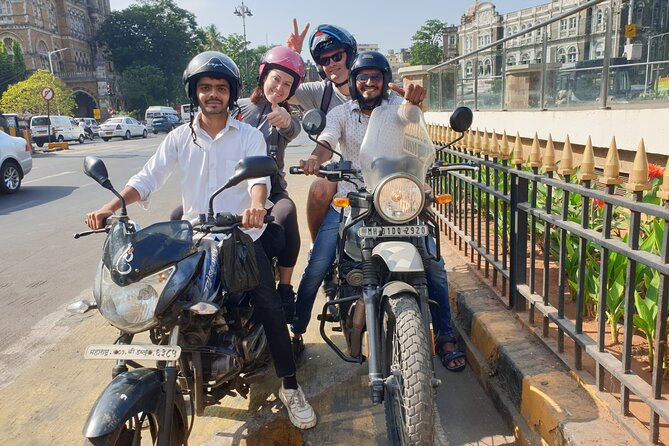
South Mumbai looks different from a motorbike seat. You get a fast, flexible way to cover major landmarks with hotel pickup and a helmet, plus real city energy flowing past you. I like that the ride is organized for comfort and safety, and I like the mix of famous monuments and meaningful stops like the Gandhi-focused Mani Bhavan museum. One thing to consider: you’ll spend time sitting on the back seat in traffic, so heat and sun can be noticeable.
This is a private tour, so your guide can pace the route to your group. You’ll pass sights such as Dhobi Ghat laundry scenes, Marine Drive, and the Gateway of India, with short photo stops and the option to pause for lunch (not included). Doable for a moderate fitness level, but it isn’t the kind of activity where you can casually hop on and off every minute.
In This Review
- Key things to know before you ride
- Why a motorbike is the smart way to see South Mumbai
- Price and time: what $78 buys you
- Hotel pickup, private pace, and how the ride actually feels
- The route: your South Mumbai stop-by-stop highlights
- Dhobi Ghat: the world’s largest outdoor laundry
- Hanging Gardens (Pherozeshah Mehta Gardens)
- Mani Bhavan Gandhi Museum: Gandhi’s Mumbai base
- Kamala Nehru Park: an old park with a distinctive detail
- Marine Drive: coastline views and UNESCO context
- Gateway of India: the early 1900s landmark you can’t miss
- Banganga: a temple complex and an ancient water tank
- University of Mumbai Library: a link to 1857
- Bombay High Court: a major 1862 institution
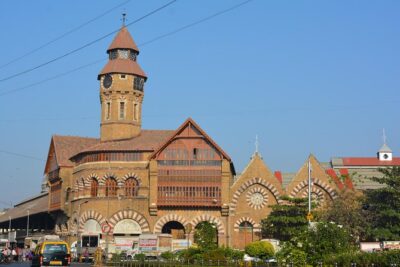
- Chhatrapati Shivaji Terminus (CST): formerly Victoria Terminus
- Crawford Market: 1871 roots and Arthur Crawford
- Safety and comfort: what I’d plan for
- Lunch break (and what not to expect)
- Who this tour suits best
- Should you book Mumbai Sightseeing by Motorbike?
Key things to know before you ride
- Hotel pickup and drop-off means you skip the logistics and start with a clean meet-up.
- Helmets are provided, so you don’t have to bring anything safety-related.
- Mani Bhavan museum entry is included, while many other major stops are free.
- A private format keeps the route flexible if you want more time at a landmark.
- It’s built around quick photo stops, not a slow museum day.
- Lunch isn’t included, so plan for a break if you need one.
Why a motorbike is the smart way to see South Mumbai
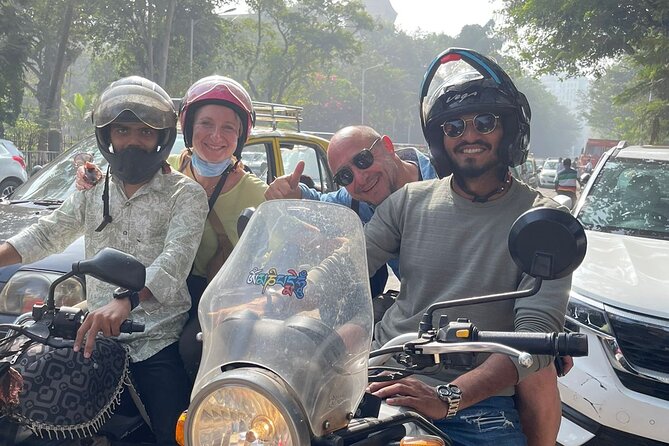
Mumbai’s traffic can be intense, and a car tour can feel like you’re mostly watching the back of other cars. From the bike, you get a wider view of the skyline and sea-front as you move through the area. It’s also a practical way to fit a lot of landmarks into roughly five hours.
I also like the perspective angle. You’re seeing South Mumbai’s landmarks with 360-degree movement around you, not trapped behind tinted glass. That matters at places like Marine Drive, where the curve and coastline feel more obvious when you’re flowing along the road.
Price and time: what $78 buys you
At $78 per person for about 5 hours, you’re paying for the full package: rider/guide, helmet, bike rent, parking, a bottle of mineral water, and hotel pickup and drop-off. That’s the part people often forget to price separately—getting to and from central sights can eat up your day.
You also get a clear structure: the route is set up as a sequence of short stops. Many of them are free to visit, while the one big-ticket cultural stop—Mani Bhavan—has admission included. The result is a tour that feels efficient without pretending you’ll see everything in Mumbai. You won’t, and you shouldn’t try.
Other loops past the Gateway, Marine Drive and beyond



Hotel pickup, private pace, and how the ride actually feels
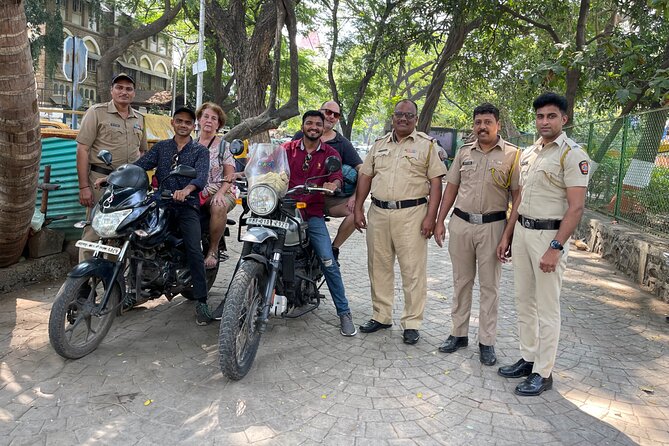
Pickup is included, so you’re not negotiating taxis, navigating back streets, or trying to find a meeting point while you’re already tired. The tour is private, meaning it’s only your group, and your guide can adjust pacing.
This also explains why the stop times are relatively short. You’re moving between landmarks, grabbing the highlights, and then getting back on the bike. If you’re the type who likes long sit-down breaks at each site, you might feel a little rushed. If you like seeing “the important parts” and then exploring further on your own later, this format fits well.
The route: your South Mumbai stop-by-stop highlights
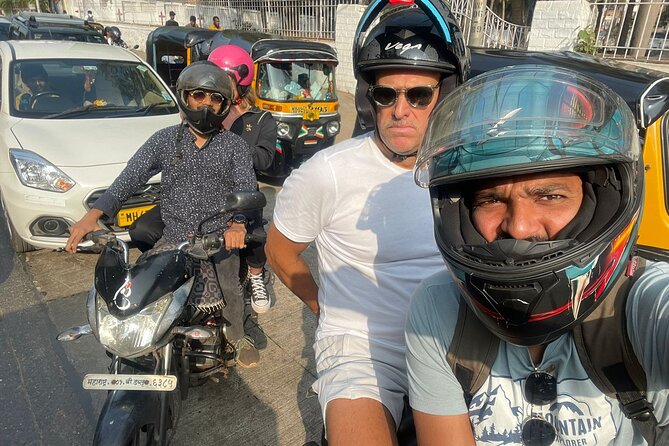
Below is what you can expect to see, in the order you’ll generally hit things, plus what each stop adds.
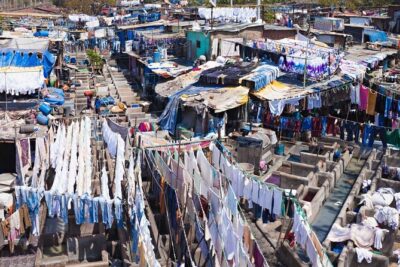
Dhobi Ghat: the world’s largest outdoor laundry
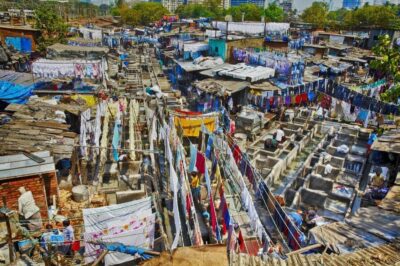
Dhobi Ghat is known as the world’s largest outdoor laundry, with rows of open-air concrete wash pens. Each wash area is set up with its own stone used for washing by hand. It’s a quick stop, but it’s one of those places where the daily rhythm of Mumbai feels real and immediate.
- Dharavi slum tour in Mumbai by Female tour guides of the slum
★ 5.0 · 1,976 reviews - Mumbai: Full-Day Sightseeing Tour of Mumbai
★ 4.9 · 1,822 reviews - Private Mumbai Sightseeing Tour (Traveller’s Choice Award Winner)
★ 5.0 · 1,565 reviews - Group Guided Walking Tour in Fort and Colaba
★ 5.0 · 1,073 reviews - Highlights of Mumbai Sightseeing Tour: TRAVELLERS CHOICE AWARDED
★ 5.0 · 915 reviews - Private Guided Walking Tour in Fort & Colaba
★ 5.0 · 895 reviews
Hanging Gardens (Pherozeshah Mehta Gardens)
These gardens are also called the Pherozeshah Mehta Gardens, first built in 1881 and linked to architect Ulhas Ghapokar. The story here matters: it’s said the gardens were built over one of Bombay’s main water reservoirs. Even with a short visit, you’re getting a taste of the city’s old-world planning and how it shaped public spaces.
Mani Bhavan Gandhi Museum: Gandhi’s Mumbai base
Mani Bhavan is a museum and historical building dedicated to Gandhi, in the Gamdevi precinct on Laburnum Road. It served as a focal point for Gandhi’s political activities in Mumbai, so this isn’t just a pretty building stop. Admission is included, which is a nice value add compared with free roadside photo stops.
Kamala Nehru Park: an old park with a distinctive detail
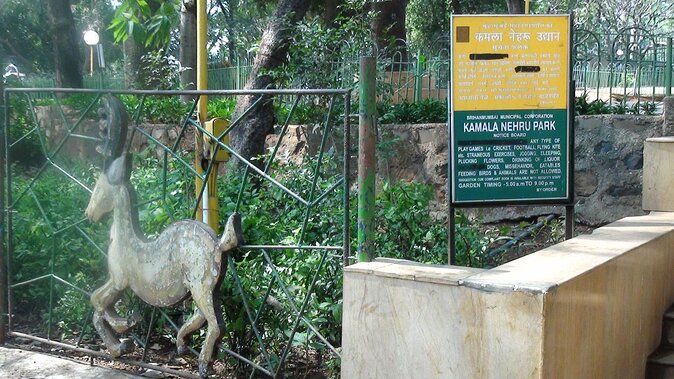
Kamala Nehru Park is named after Kamla Nehru, wife of Jawaharlal Nehru, and is described as one of the oldest parks in Mumbai. There’s also a shoe structure in the park, inspired from a nursery (as described in the tour info). This is a shorter pause, but it gives you a break from heavy sightseeing while still staying in the historic South Mumbai lane.
Marine Drive: coastline views and UNESCO context
Marine Drive arcs along the shore of the Arabian Sea. The area is part of the UNESCO-listed Victorian Gothic and Art Deco ensembles, and it was built on reclaimed land back in 1920. From the bike and during the quick stop, you’ll get an easy sense of why this road is such a landmark in its own right.
Gateway of India: the early 1900s landmark you can’t miss
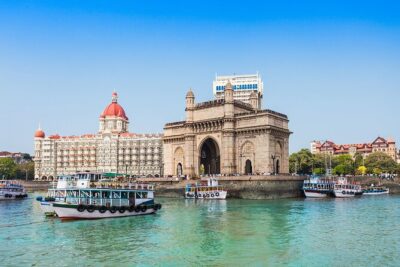
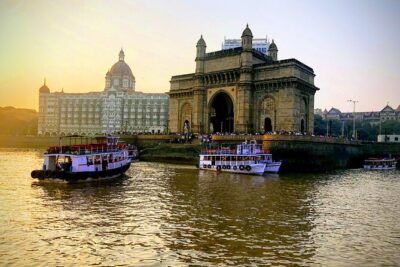
The Gateway of India is an arch monument built in the early twentieth century. It was erected to commemorate the landing in December 1911 at Apollo Bunder. Even if you’ve seen it in photos before, seeing it from the moving viewpoint and then taking a photo stop helps it click as an actual civic centerpiece.
Banganga: a temple complex and an ancient water tank
Banganga, or Banganga Tank, is an ancient water tank that’s part of the Walkeshwar Temple Complex in the Malabar Hill area. It’s revered in Hinduism, and the stop is tied to that spiritual and local-history setting. This is a quieter contrast to some of the big monument stops, and it’s a good moment to slow down.
University of Mumbai Library: a link to 1857
You’ll pass the University of Mumbai Library, connected to one of India’s oldest premier universities. The university is described as established in 1857 following Wood’s Education Dispatch. This isn’t the kind of stop where you get a long tour, but it’s useful context for how South Mumbai became a hub of learning and administration.
Bombay High Court: a major 1862 institution
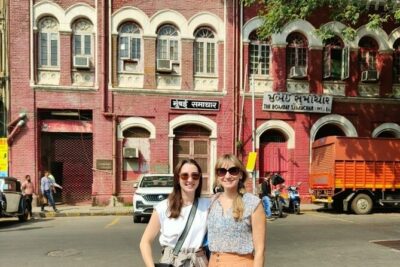
The Bombay High Court was one of the three High Courts established in the Presidency Towns. It was created by letters patent granted by Queen Victoria (dated June 26, 1862) and inaugurated on August 14, 1862. If you’re into architecture or institutions, this stop is a strong “why this city looks the way it does” piece.
Chhatrapati Shivaji Terminus (CST): formerly Victoria Terminus
CST, formerly Victoria Terminus, is described as a modern yet archaic railway station. It’s one of Mumbai’s best-known architectural symbols, tied to the city’s rail history. Even with a brief stop, you’ll be able to appreciate the scale and style—this is a place that dominates its surroundings.
Crawford Market: 1871 roots and Arthur Crawford
Crawford Market was founded in 1871 and initially known as Mahatma Jyotirao Phule Market. It got the name Crawford after city municipal commissioner Arthur Crawford. This is a good last stop because it feels like part of everyday Mumbai life rather than only a monument.
Safety and comfort: what I’d plan for
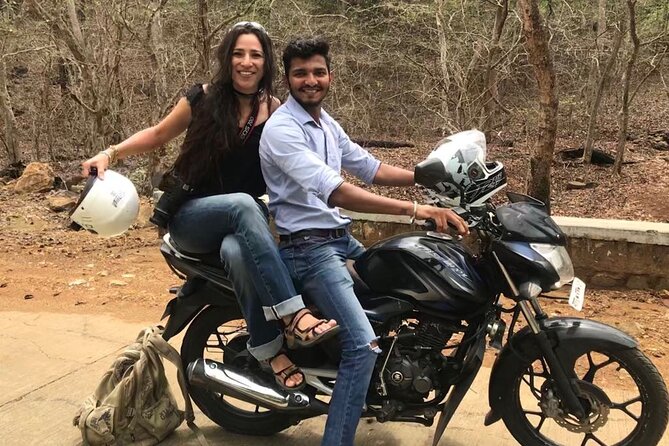
Helmets are provided, and that’s a big deal. You also get an experienced rider/guide, and the tour is set up to make the experience feel safe rather than risky.
One practical tip that matters: wear pants before you hop on. One rider specifically noted that the back seat can get hot, so loose clothing that covers your legs is a comfort win. If you’re used to sitting in cars with AC, this is the moment you’ll want to adapt.
Also remember the “private motorbike” format means you’re not walking a lot between stops, but you are staying seated and exposed to street conditions for stretches. A moderate fitness level is recommended, so plan on getting on and off the bike steadily.
Lunch break (and what not to expect)
There’s an option to break for lunch, but food isn’t included. That means you should either eat before you set out or plan for a stop after you’ve done the main sightseeing portion. If you have a dietary requirement, this is one of the few parts you’ll need to handle yourself.
Who this tour suits best
This is a strong choice if you want a highlights-heavy South Mumbai ride without spending hours on transit. It’s also a good fit if you like structure: a route, clear stops, and a guide to connect the dots quickly.
I’d especially recommend it if you’re:
- short on time and want the major South Mumbai landmarks
- curious about how places connect to Gandhi’s story at Mani Bhavan
- a first-timer to motorbikes who still wants a guided experience
If you’re someone who needs lots of slow walking, long museum time, or repeated restroom breaks, you might feel constrained by the stop-and-go pacing.
Should you book Mumbai Sightseeing by Motorbike?
Book it if you want an efficient, guided way to see South Mumbai’s top landmarks with hotel pickup and a helmet included. The value is strongest when you want a lot of sights covered in about five hours, with Mani Bhavan as the one meaningful paid entry that’s taken care of.
Skip it if you hate sitting for long periods in warm weather or you’re sensitive to getting splashed by street conditions. Also think twice if you want deep museum time at each stop.
If you do book, you’ll get the best result by dressing for the heat on the back seat (pants help), and by treating it as a “highlights tour” that sets you up to explore more on your own afterward.
More Mumbai, Every Kind of Day
- Dharavi slum tour in Mumbai by Female tour guides of the slum
★ 5.0 · 1,976 reviews - Mumbai: Full-Day Sightseeing Tour of Mumbai
★ 4.9 · 1,822 reviews - Private Mumbai Sightseeing Tour (Traveller’s Choice Award Winner)
★ 5.0 · 1,565 reviews - Elephanta Caves & Island Guided Private Tour
★ 5.0 · 1,327 reviews
The Big Mumbai Circuits
- Mumbai: Full-Day Sightseeing Tour of Mumbai
★ 4.9 · 1,822 reviews - Private Mumbai Sightseeing Tour (Traveller’s Choice Award Winner)
★ 5.0 · 1,565 reviews - Highlights of Mumbai Sightseeing Tour: TRAVELLERS CHOICE AWARDED
★ 5.0 · 915 reviews - Highlights of South Mumbai Guided Private Tour in AC Vehicle
★ 5.0 · 620 reviews
New on the Mumbai shortlist

Sightseeing & City Highlights, compared.
 ★ 4.9Full-Day Sightseeing Tour of MumbaiFrom $241,822 reviews
 ★ 5.0Private Mumbai Sightseeing Tour (Traveller’s Choice Award Winner)From $271,565 reviews
 ★ 5.0Highlights of Mumbai Sightseeing Tour: TRAVELLERS CHOICE AWARDEDFrom $33915 reviews
 ★ 5.0Highlights of South Mumbai Guided Private Tour in AC VehicleFrom $74620 reviews
 ★ 5.0Private Mumbai Sightseeing Tour(Travellers Choice Award Winner)From $29565 reviews
 ★ 5.0Private Half-Day Sightseeing Tour in MumbaiFrom $33430 reviews
 ★ 5.0Private Elephanta Caves & Mumbai Sightseeing Tour with AC CarFrom $29389 reviews
 ★ 5.0Private Mumbai Sightseeing Tour with Local English GuideFrom $33342 reviews
Browse the lists this tour appears in