
Review · SIGHTSEEING & CITY HIGHLIGHTS
Mumbai Must See tour
Mumbai hits fast, and this tour helps. I love how it compresses the big landmarks into a practical route from the harbor into the Fort area, and I also like the Gandhi Museum stop for real context, not just picture-taking. The possible drawback is time: four hours moves with purpose, so if you want to linger forever, you’ll feel the pinch.
You’ll travel with a private group, which makes it easier to ask questions as you go. Pickup is offered, and you’ll use a mobile ticket, so you can spend more time looking at Mumbai and less time sorting logistics.
In This Review
- Key things that make this tour work
- A 4-hour sprint through Mumbai’s most famous landmarks
- Gateway of India: your starting point on the Arabian Sea
- Nariman Point and Marine Drive: art deco along the waterline
- Hanging Gardens (Pherozeshah Mehta Gardens): a Victorian-era survival trick
- Tower of Silence (Parsee Bawdi): learning respectfully at Malabar Hill
- Dhobi Ghat: laundry work you can actually see
- Mani Bhavan Gandhi Museum: why Mumbai matters to Gandhi’s work
- Chhatrapati Shivaji Maharaj Terminus and the Gothic buildings around the Fort area
- Price, pace, and why it’s good value for a first visit
- Quick practical advice before you go
- Should you book the Mumbai Must See tour?
- FAQ
- How long is the Mumbai Must See tour?
- Is pickup included in the tour?
- Will I get a mobile ticket?
- Which entrance fees are included?
- Is this tour private?
- What are the main stops on the tour?
- When is the tour available?
- Does the tour depend on weather?
- Can I cancel for a refund?
Key things that make this tour work
- A tight 4-hour highlights route that covers Mumbai’s most photographed harbor and art-deco coastline
- Mani Bhavan Gandhi Museum included, so you get meaning behind the monuments
- Free admission at most stops, which helps your total value
- Fort-area architecture moments, from British-era gothic to Mumbai’s clocktower district
- Dhobi Ghat viewing from a bridge, giving you a close look at daily work
A 4-hour sprint through Mumbai’s most famous landmarks
This is the kind of tour I like for first-timers: it gets you oriented fast, then gives you enough story to understand what you’re seeing. Mumbai can feel overwhelming at street level, so having someone translate the city while you move is a big help.
At $59.99 per person for about four hours, the value comes from concentration. Most stops list admission as free, and at least one museum stop is covered as included. In other words, you’re paying mainly for guide time, route planning, and cutting down the “what do I do next?” stress.
Also, you’re not stuck in a huge crowd. This is a private tour, meaning it’s only your group. That usually makes the pace feel more human, even when the city itself doesn’t slow down.
One more practical note: the tour is listed as requiring good weather. Mumbai photos look best with clear light, and you’ll be moving outside between stops.
Gateway of India: your starting point on the Arabian Sea
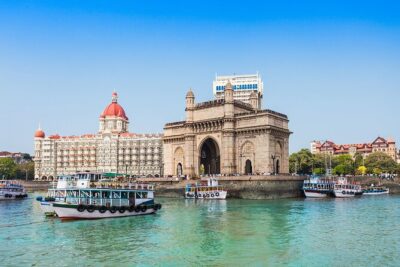
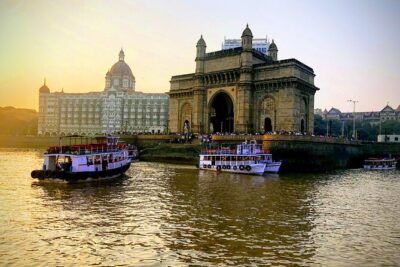
The tour opens at the Gateway of India, on the waterfront at Apollo Bunder in South Mumbai. You’ll see it set against the Arabian Sea, which matters because this landmark isn’t just a building—it’s a “front door” to the city’s relationship with the sea and the wider world.
This monument is often compared to the Taj Mahal of Mumbai, and that’s not just hype. The setting makes the scale feel grand, and the moment works even if you’re not a big history person. You get an instant visual marker for where “South Mumbai” starts.
What I like here for your first visit: the guide can connect the landmark to the city’s long record of invasions, colonization, and cultural mixing. Mumbai’s story includes influences from Muslims, Portuguese, and the British, and you’ll feel that layering as you move through the next blocks.
Other loops past the Gateway, Marine Drive and beyond




Nariman Point and Marine Drive: art deco along the waterline
Next you head toward Nariman Point, which is tied to business life—high-rises, offices, and upscale hotels. But it’s also famous for the sea-facing scene, especially when people are out for drinks near sunset.
Why this stop is more than a skyline check: Nariman Point sits right near cultural spaces like the National Centre for the Performing Arts and the Piramal Art Gallery. Even if you don’t go inside, the area tells you something about Mumbai’s modern edge—art, performance, and commerce in the same stretch.
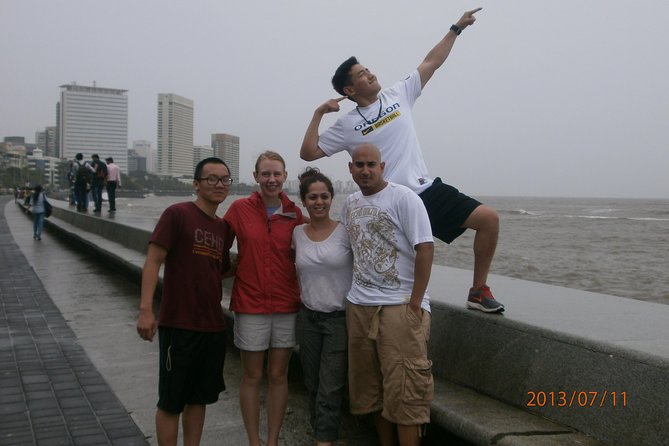
From there you roll into Marine Drive, the famous promenade lined with art deco buildings. The guide’s job here is to help you see design choices, not just random photo angles. You’ll also hear the connection that people make between Marine Drive and Miami’s style, because the promenade was developed as an area that visually feels like a seaside showpiece.
A practical tip: if you can, plan to visit when the sky has some color. Marine Drive works in daylight, but the whole art-deco “story” lands harder when the light softens.
Potential drawback: if you come on a super crowded time, this section can feel busy and loud. The upside of a private group is that your guide can often help you find a calmer angle and keep things moving.
Hanging Gardens (Pherozeshah Mehta Gardens): a Victorian-era survival trick
The Hanging Gardens, also known as the Pherozeshah Mehta Gardens, are a reminder that Mumbai’s “pretty” spaces often have practical roots. They were built in 1881 and designed by Ulhas Ghapokar.
Here’s the interesting part for your brain: the gardens are said to have been built over one of Bombay’s main water reservoirs. That wasn’t just for views. It was meant to protect the reservoir from getting polluted, especially from nearby areas linked in local thinking to the towers of silence.
You’re not going to get a long garden picnic on this kind of tour. Instead, you get a short stop with a solid explanation of how the city solved problems while also creating places people enjoy.
If you’re the type who likes details, this stop will scratch that itch. If you prefer only major landmarks, you might treat it as a breather between heavier sites.
Tower of Silence (Parsee Bawdi): learning respectfully at Malabar Hill
Next comes the Tower of Silence, also called Parsee Bawdi, in the Malabar Hill region. This area is a large funeral ground—55 acres—and it’s where last rites are performed for the Parsee community.
This stop needs a respectful tone. You’ll be learning about a community practice that’s tied to identity and belief systems, not sightseeing habits.
What makes it valuable on a “must see” route is that it rounds out Mumbai beyond colonial buildings and seaside views. Mumbai isn’t only monuments. It’s also faith, ritual, and how people handle life and death.
Practical consideration: because it’s a burial/funeral space, expect that there may be rules about where you can stand and how you can move. The tour structure helps because your guide can set expectations so you don’t accidentally do something awkward.
- Dharavi slum tour in Mumbai by Female tour guides of the slum
★ 5.0 · 1,976 reviews - Mumbai: Full-Day Sightseeing Tour of Mumbai
★ 4.9 · 1,822 reviews - Private Mumbai Sightseeing Tour (Traveller’s Choice Award Winner)
★ 5.0 · 1,565 reviews - Group Guided Walking Tour in Fort and Colaba
★ 5.0 · 1,073 reviews - Highlights of Mumbai Sightseeing Tour: TRAVELLERS CHOICE AWARDED
★ 5.0 · 915 reviews - Private Guided Walking Tour in Fort & Colaba
★ 5.0 · 895 reviews
Dhobi Ghat: laundry work you can actually see
Then you head to Dhobi Ghat, where “Dhobi” means washerman and “Ghat” means laundry. You’ll view the open-air washing area from a bridge, which is a key detail. It’s a way to observe without needing to walk into people’s working zones.
This is one of those Mumbai stops that gives you a new sense of scale. The city is known for its speed and nonstop motion, and seeing everyday work on display makes that feel real. Even in a short visit, you get the pattern of labor—water, soap, scrubbing, and routines that are older than most tourists’ first trip.
It’s also a good counterpoint to the more “monument” parts of the tour. Here you’re seeing the city as a functioning machine.
A drawback to keep in mind: this stop can be visually intense and sometimes noisy or busy depending on the time of day. If you’re sensitive to crowds, aim to stay close to your guide and keep your plan simple: look, listen, ask, move on.
Mani Bhavan Gandhi Museum: why Mumbai matters to Gandhi’s work
The tour includes Mani Bhavan Gandhi Museum, and this is the one interior stop on your list. It’s also the one that’s clearly marked as admission included.
Mani Bhavan was a focal point for Gandhi’s political activities in Mumbai between 1917 and 1934. That time window is important because it helps you understand why Mumbai wasn’t just a backdrop for the independence movement. It was part of the action.
What I like for you here: this museum gives context. After you’ve seen architecture shaped by different empires and communities, this stop anchors the story in political action and personal conviction.
You’ll usually get more than just name dates if your guide connects the exhibits to what Mumbai was doing during that era—port life, commerce, and the push-and-pull between local daily life and big historic events.
Chhatrapati Shivaji Maharaj Terminus and the Gothic buildings around the Fort area
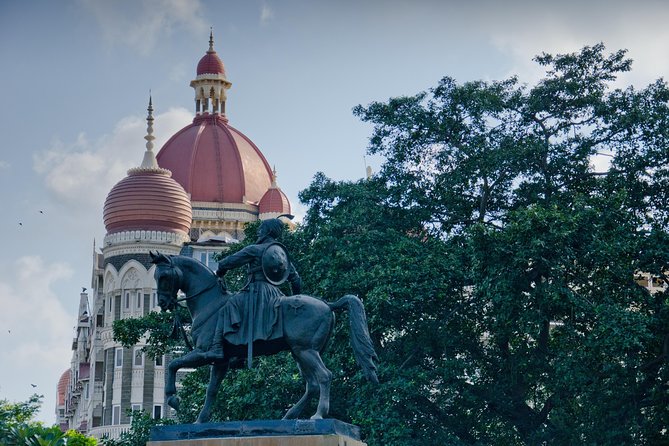
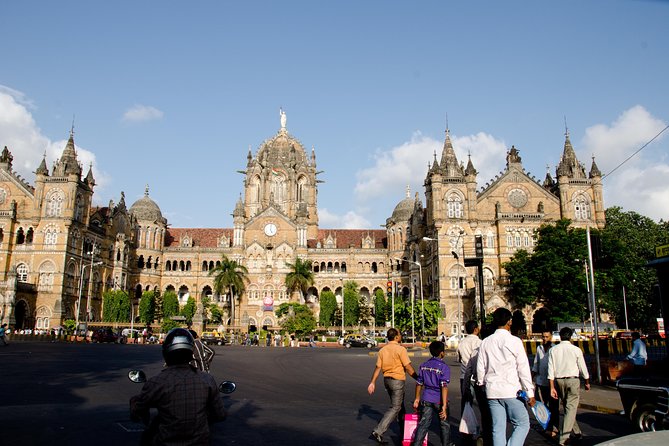
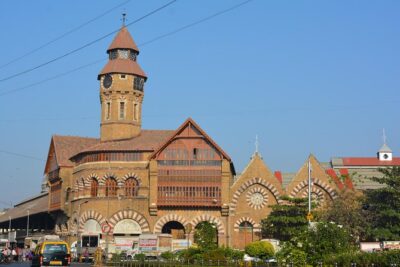
The last major landmark is Chhatrapati Shivaji Terminus (formerly Victoria Terminus). This building is described as an outstanding example of Victorian Gothic Revival architecture blended with themes deriving from Indian traditional architecture.
It’s a powerful finish because it brings the “architecture story” full circle. Earlier parts of the tour give you glimpses of British-era influence and the art-deco coastline. CST shows how Mumbai adopted and reshaped imported styles in its own visual language.
Two extra architectural stops round out this section:
- You’ll see Gothic university administration buildings founded in 1857 on 14 acres, including a 280-foot clocktower. This type of stop matters because clocktowers and campus buildings are part of how the British era left long-term city form.
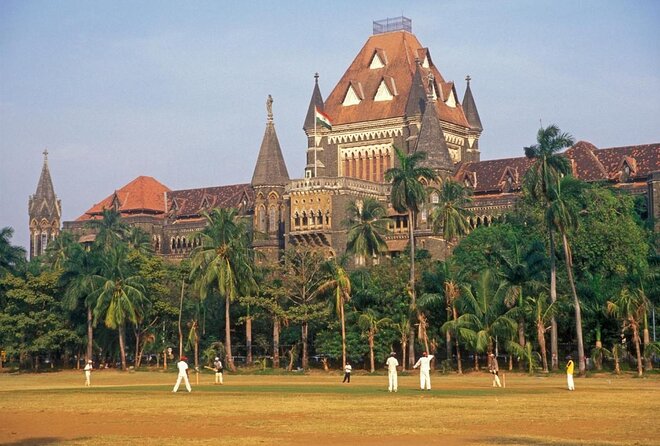
- You’ll also pass the historic Gothic revival building that houses one of India’s oldest High Courts. Legal buildings in historic districts are often where you feel the “institutional” side of colonial-era urban planning.
Short version: if you care about how cities look and how power was built into walls, this part will feel satisfying.
If you want a photo moment, this is the one. CST is instantly recognizable, and the surrounding Fort-area architecture helps the photos feel grounded in context rather than random.
Price, pace, and why it’s good value for a first visit
Let’s talk money honestly. At $59.99 per person for about four hours, you’re not paying for a long sit-down experience. You’re paying for smart sequencing—harbor, promenade, gardens, a working neighborhood viewpoint, a museum, then big architecture icons.
The value gets better because many stops list admission ticket free. The one you can’t skip if you want meaning—the Gandhi museum—is marked as included. That means you’re less likely to end up paying surprise entry fees mid-tour.
Now the pace. The tour is designed to be a “must see” introduction, so you’ll move between sites efficiently. This is great if you’re trying to cover a lot without wasting half a day figuring things out. It’s less ideal if your travel style is slow and you like long museum time or long people-watching sessions.
Who I think this suits best:
- First-timers who want a guided way to see the big hitters
- Travelers who like architecture and want to understand what styles mean
- People who want context for Mumbai beyond food stalls and street scenes
- Anyone who prefers a private experience so questions feel easy
Who might prefer a different format:
- You if you already know Mumbai well and only want very specific neighborhoods
- You if you want a long indoor museum day (this tour is built for a quick, focused hit of sights)
Quick practical advice before you go
- Wear comfortable shoes. You’ll be walking and standing for short viewing moments.
- Bring water. Even when it’s not hot, Mumbai’s daytime walking can add up.
- If you’re sensitive to crowds, pick calmer times of day when possible. Your guide can help manage the flow.
- Keep your expectations realistic: you’re seeing a highlight reel. The payoff is understanding what you’re seeing, fast.
Should you book the Mumbai Must See tour?
Yes, I’d book it if you want an efficient, guided introduction to Mumbai’s most iconic places—Gateway of India, Marine Drive, Dhobi Ghat, Mani Bhavan, and Chhatrapati Shivaji Terminus—without spending your first day glued to maps.
I’d skip it if you hate a tight schedule, you need lots of museum time, or you only care about one narrow slice of the city. In that case, a neighborhood-specific day tour might fit better.
If you book, go in with one goal: leave with a mental map of how Mumbai layers together—sea power, colonial architecture, daily work, and political history—so your next day in the city feels easier.
FAQ
How long is the Mumbai Must See tour?
It lasts about 4 hours.
Is pickup included in the tour?
Pickup is offered.
Will I get a mobile ticket?
Yes, the tour uses a mobile ticket.
Which entrance fees are included?
Admission is listed as free for Gateway of India, Nariman Point, Marine Drive, Hanging Gardens, Dhobi Ghat, and Chhatrapati Shivaji Terminus. Mani Bhavan Gandhi Museum is marked as admission included. For the Tower of Silence, no admission detail is listed.
Is this tour private?
Yes. It’s a private tour/activity, and only your group participates.
What are the main stops on the tour?
The tour includes Gateway of India, Nariman Point, Marine Drive, Hanging Gardens (Pherozeshah Mehta Gardens), the Tower of Silence (Parsee Bawdi), Dhobi Ghat, Mani Bhavan Gandhi Museum, and Chhatrapati Shivaji Terminus, along with additional Gothic-style university and High Court buildings in the same area.
When is the tour available?
It runs Monday through Sunday, with opening hours listed as 12:00 AM to 12:30 AM.
Does the tour depend on weather?
Yes. It requires good weather, and if it’s canceled due to poor weather you’ll be offered a different date or a full refund.
Can I cancel for a refund?
Free cancellation is available. You can cancel up to 24 hours in advance for a full refund.
More Mumbai, Every Kind of Day
- Dharavi slum tour in Mumbai by Female tour guides of the slum
★ 5.0 · 1,976 reviews - Mumbai: Full-Day Sightseeing Tour of Mumbai
★ 4.9 · 1,822 reviews - Private Mumbai Sightseeing Tour (Traveller’s Choice Award Winner)
★ 5.0 · 1,565 reviews - Elephanta Caves & Island Guided Private Tour
★ 5.0 · 1,327 reviews
The Big Mumbai Circuits
- Mumbai: Full-Day Sightseeing Tour of Mumbai
★ 4.9 · 1,822 reviews - Private Mumbai Sightseeing Tour (Traveller’s Choice Award Winner)
★ 5.0 · 1,565 reviews - Highlights of Mumbai Sightseeing Tour: TRAVELLERS CHOICE AWARDED
★ 5.0 · 915 reviews - Highlights of South Mumbai Guided Private Tour in AC Vehicle
★ 5.0 · 620 reviews
New on the Mumbai shortlist


Sightseeing & City Highlights, compared.
 ★ 4.9Full-Day Sightseeing Tour of MumbaiFrom $241,822 reviews
 ★ 5.0Private Mumbai Sightseeing Tour (Traveller’s Choice Award Winner)From $271,565 reviews
 ★ 5.0Highlights of Mumbai Sightseeing Tour: TRAVELLERS CHOICE AWARDEDFrom $33915 reviews
 ★ 5.0Highlights of South Mumbai Guided Private Tour in AC VehicleFrom $74620 reviews
 ★ 5.0Private Mumbai Sightseeing Tour(Travellers Choice Award Winner)From $29565 reviews
 ★ 5.0Private Half-Day Sightseeing Tour in MumbaiFrom $33430 reviews
 ★ 5.0Private Elephanta Caves & Mumbai Sightseeing Tour with AC CarFrom $29389 reviews
 ★ 5.0Private Mumbai Sightseeing Tour with Local English GuideFrom $33342 reviews
Browse the lists this tour appears in