
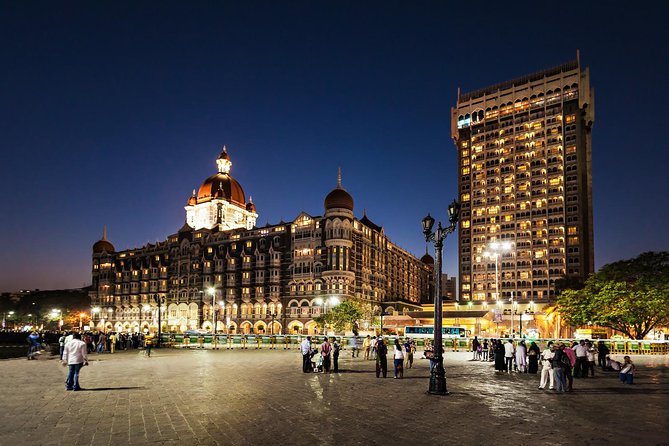
Review · MUMBAI AFTER DARK
Mumbai by Night Guided Tour
Mumbai after dark hits different. This guided night route swaps daytime traffic for cool streetlights and major landmarks that look completely different after sunset. You’ll roll past the city’s signature scenes with a local guide like Loki, Dawood, or Alam, who keeps the mood moving and the facts coming.
Two things I really liked: first, the quick, well-timed stops at icons like the Gateway of India and Marine Drive, where lighting does half the work for you. Second, the practical comfort of hotel transfers in an air-conditioned car, with a small group cap that makes the ride feel personal rather than rushed.
One consideration: pickup is only guaranteed for hotels between Dadar and Colaba. If you’re staying farther out, you’ll use a central meeting point instead, so check your start location before you plan your evening.
In This Review
- Key points worth knowing
- Why Mumbai looks different after sunset
- Price and what $50 buys you in real value
- Pickup, AC comfort, and how the timing works
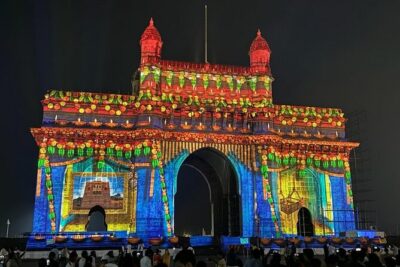
- Gateway of India: lit up and easy to savor for 15 minutes
- Colaba Causeway: colonial buildings plus an evening street walk
- The Gothic drive-past: when empty roads change the mood
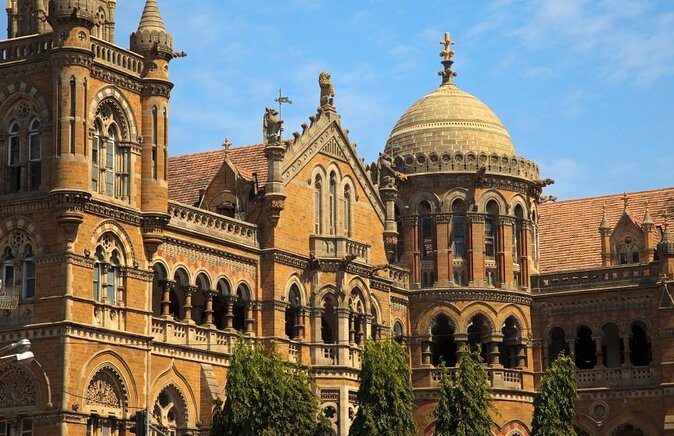
- Chhatrapati Shivaji Terminus (CST): the station architecture at full night power
- Banganga: Ramayana connections and a myth-feeling pause
- Marine Drive: doing nothing, and why that’s the point
- Your guide makes the tour: the names you’ll likely hear
- What to do with the missing food part
- Tips so you get the best photos and the least hassle
- Who this tour suits best
- Should you book Mumbai by Night Guided Tour?
- FAQ
- How long is the Mumbai by Night guided tour?
- What does the tour cost?
- Is hotel pickup and drop-off included?
- Where is hotel pickup available?
- What if I’m staying outside the Dadar to Colaba pickup area?
- Are tickets included for all stops?
- Is food included on the tour?
- What’s included in the tour besides the guide?
- How big is the group?
- What is the cancellation policy?
Key points worth knowing
- Night views without the daytime chaos: you cover a lot while roads are calmer
- Small group limit (max 20): easier conversations with the guide
- Icon stops with smart timing: short visits that still feel worth it
- Chhatrapati Shivaji Terminus ticket included: the one paid admission stop
- Marine Drive lighting effect: the famous Queen’s Necklace look from the street
- Myth-meets-modern at Banganga: a spiritual stop with Ramayana connections
Why Mumbai looks different after sunset
If you’ve only seen Mumbai by day, you’ve seen the workday version. At night, the city shifts gears. The same streets feel wider. The crowds move differently. And the big monuments stop competing with traffic noise, so you actually notice what you’re looking at.
This tour leans into that idea. You’re not trying to “finish” Mumbai in one night. Instead, you’re getting a guided loop of the places people point to on a map, timed so they’re lit up and easier to appreciate. Each stop is short, but the tour keeps momentum, so you’re not stuck waiting around while the city cools down.
The vibe also works well for first-time visitors who don’t have unlimited daylight. If your afternoon is full—flight timing, another reservation, or just jet lag—this is a simple way to still see the highlights.
Price and what $50 buys you in real value
The price is $50 per person, and the value is mostly about what’s included. You get:
- Hotel pickup and drop-off (for selected hotels in the Dadar-to-Colaba zone, or a nearby central meeting point)
- Air-conditioned car transport
- Bottled water
- All taxes and fees
- Mobile ticket
- A guided route that hits multiple major sights in about 2.5 hours
Here’s the part that matters: most of the landmarks you stop at don’t cost extra. Gateway of India, Colaba Causeway, Banganga, and Marine Drive are listed as free admission stops. The one stop with a ticket component is Chhatrapati Shivaji Terminus (CST), where admission is included.
So your money is buying access + interpretation + logistics, not constant paid entries. That’s a good trade when you’re doing a short visit to Mumbai and want the city context without spending your night on planning and ticket hunting.
Also, it’s usually booked about 22 days in advance on average. If you’re traveling at a busy time, I’d book early so you’re not guessing whether your preferred slot still has space.
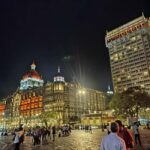
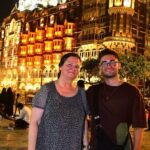
The Queen's Necklace and more of Mumbai lit up late

Pickup, AC comfort, and how the timing works
This tour runs for about 2 hours 30 minutes. You’ll be in a car between stops, which is a big deal in Mumbai. Even when the night is cooler, traffic patterns can still surprise you. The whole structure is built for efficiency: quick photo windows, brief orientation, then moving on.
Transport is air-conditioned, and that comfort matters more than you might think. You’ll be outdoors at night, and the heat and humidity can still catch you. The AC ride gives you a reset so you can keep enjoying each stop instead of just enduring them.
Group size is capped at 20 people, which changes the feel of a tour. You still get a real guide interaction, and the car doesn’t turn into a chaotic cluster where nobody hears the explanation.
One practical detail: pickup availability is limited. If your hotel is between Dadar and Colaba, pickup is included. If it’s beyond that, you’ll be routed to a central meeting point close to your hotel, with additional pickup charges if you’re going past the Dadar boundary. That doesn’t make the tour bad, but it does mean you should double-check where you’ll start.
Gateway of India: lit up and easy to savor for 15 minutes
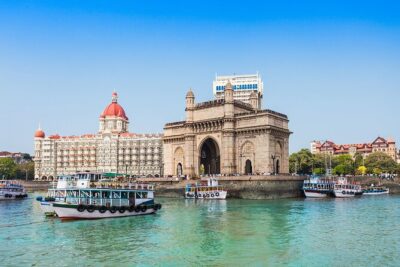
Your evening starts at the Gateway of India, one of Mumbai’s most photographed landmarks for a reason. At night, it looks calmer and more dramatic. The lighting helps the monument read as a centerpiece instead of just another traffic-adjacent landmark.
The stop is short—about 15 minutes—but it’s enough time to:
- Take in the scale from the main viewpoint
- Get a sense of how the seafront area breathes after dark
- Capture a couple of clean photos before the crowd flow changes
Admission here is listed as free, so you won’t feel like you’re paying to “stand in a line.” The timing is built for the atmosphere: you’re not sprinting through a checklist; you’re getting a quick orientation to the waterfront side of the city.
Colaba Causeway: colonial buildings plus an evening street walk
Next comes Colaba Causeway, a classic evening walk zone. The charm is that it mixes practical street energy with architectural background—colonial-era structure with shopfront life rolling along in the evening.
You’ll spend about 15 minutes here. That’s enough to stroll a bit, glance into storefronts, and soak up the feel of the area without turning it into a full shopping detour. Admission is listed as free, so you’re mostly spending time on atmosphere rather than logistics.
If you’re thinking about snacks, this is the part of the night where you might naturally want to pause and pick something up. Just remember: the tour itself does not include food or drinks. The bottled water is there, but if you want to eat, you’ll need to plan it yourself.
Also, Colaba Causeway can get busy depending on the hour. Keep your phone secure and move with purpose through the crowds so you don’t lose your group.
- Dharavi slum tour in Mumbai by Female tour guides of the slum
★ 5.0 · 1,976 reviews - Mumbai: Full-Day Sightseeing Tour of Mumbai
★ 4.9 · 1,822 reviews - Private Mumbai Sightseeing Tour (Traveller’s Choice Award Winner)
★ 5.0 · 1,565 reviews - Group Guided Walking Tour in Fort and Colaba
★ 5.0 · 1,073 reviews - Highlights of Mumbai Sightseeing Tour: TRAVELLERS CHOICE AWARDED
★ 5.0 · 915 reviews - Private Guided Walking Tour in Fort & Colaba
★ 5.0 · 895 reviews
The Gothic drive-past: when empty roads change the mood
Between stops, you’ll pass blocks of Gothic architecture with the roads calmer at night. This is one of those “drive-by details” that turns the night tour into something more cinematic.
Even when you don’t stop for long, the effect is real: the architecture looks more intentional when the street noise drops. You get that sense of stepping into a different era without needing a full walking tour.
In practice, this is also where a guide can give context. If you ask a quick question—what building you’re seeing, or what era it relates to—you’ll usually get an explanation that makes the next photo easier to understand.
Chhatrapati Shivaji Terminus (CST): the station architecture at full night power
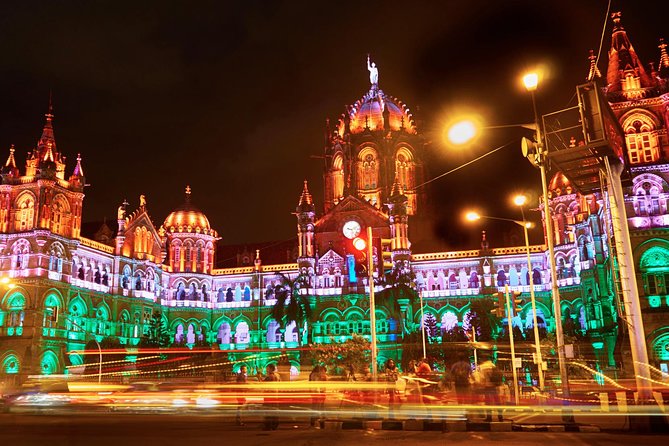
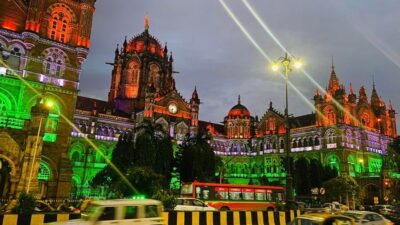
The biggest “ticket” moment is Chhatrapati Shivaji Terminus, also widely known from its older naming. The stop here is about 10 minutes, and the admission ticket is included.
This is not a slow museum visit. It’s more like a guided viewing window. The key value is the architecture: when it’s lit up, CST reads as a monument, not just a place where trains happen. Even for people who aren’t into train stations, it’s hard not to notice the detail.
After that exterior viewing, you’ll also see the market activity inside the heritage building area, which adds a very Mumbai contrast. You get the grand building look, then the everyday life underneath it. That mix is why a night stop works so well here: the monument lighting sets the stage, and the internal scene keeps it human.
The short time means you should decide in advance what you want most:
- Quick photos of the façade and lighting, or
- Paying attention to what the station interior scene looks like
Either way, this is one of the strongest “wow” stops on the whole route.
Banganga: Ramayana connections and a myth-feeling pause
Then you head to Banganga, a stop framed by spiritual and myth connections, including links dating back to the Ramayana. This is not a flashy monument stop. It’s more of a stillness-and-story moment.
You’ll have about 15 minutes here, and admission is listed as free. The best way to enjoy it is to slow down for a few minutes. Look around, read the mood, and let the place feel like what it is: a spiritual stop with a narrative that reaches beyond just this street corner.
If you like learning how cities layer belief, legend, and daily life into the same physical space, this is where the tour delivers more than sightseeing. It turns the night walk into something with meaning.
As always, keep your behavior respectful at religious or spiritual locations and dress appropriately.
Marine Drive: doing nothing, and why that’s the point
The last major scenic stop is Marine Drive, where the tour gives you a simple instruction: sit, breathe ocean air, and watch the view.
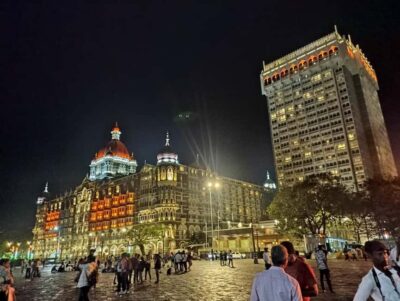
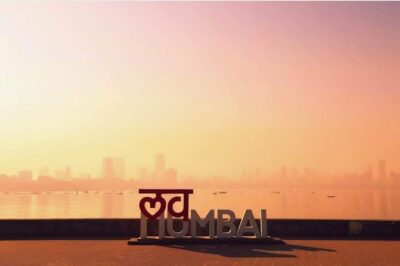
You’ll spend about 15 minutes, and admission is free. Here’s the payoff: across the bay, the buildings light up, and the streetlights create the illusion of the Queen’s Necklace. It’s one of those effects that looks good even if you’re not a photographer.
This stop is also a nice pacing reset. If the earlier portions felt like walking and photographing, Marine Drive lets you stop moving and just observe. You get the coastal skyline feel without needing to plan a separate sunset spot.
If you want better photos, pick a spot where you can stabilize your phone and avoid constantly leaning over railings. Night photos work best when you don’t rush.
Your guide makes the tour: the names you’ll likely hear
Part of what makes this tour land well is the guide. In the real world, a night tour lives or dies on how the guide turns stops into understanding.
I saw a pattern in the guide styles linked to this tour: people like Loki, Dawood, Pawan, and Alam are praised for explaining details clearly, answering questions, and keeping the ride organized. When the guide is good, you don’t feel like you’re just being transported between monuments. You feel like you’re learning how to read the city.
One helpful detail from the guide feedback: the drive staff can also matter. Pawan is mentioned as an excellent driver with strong English, which adds confidence when you’re navigating a busy city at night. That’s underrated. A smooth ride means you can focus on the views when the car slows at the right moment.
If you’re the type who likes asking questions, bring a few. Ask what you’re seeing at each stop, or what the architectural style is. You’ll usually get a quick, practical answer.
What to do with the missing food part
Food and drinks are not included. That’s common for short guided tours, but it changes how you should plan.
My advice: treat this as a sightseeing tour first, and food second. If you want street snacks, consider timing your meal around the Colaba area or later on after the tour. You’ll get bottled water, so you won’t arrive totally dry.
If you’re sensitive to crowds, stick to simple snack choices and avoid turning dinner into a long detour. The tour moves fast enough that you don’t want to miss the group while hunting for a specific stall.
Tips so you get the best photos and the least hassle
Short stops are great, but they demand good habits. Here’s what I’d do:
- Wear comfortable shoes. You’ll be standing and walking in a few places.
- Bring a phone charger or a power bank. Night photos eat battery fast.
- Try to keep your bag secure in Colaba Causeway. Crowds happen.
- Plan for weather. Nights can still feel warm, and you’ll be swapping outdoor time with AC car time.
- If you care about station photos, decide what angles you want at CST before you arrive. Ten minutes can disappear.
Also, keep your expectations honest. This isn’t a deep multi-hour architecture walk. It’s a tight, high-impact route designed to help you see a lot without spending your whole night on logistics.
Who this tour suits best
This is a smart fit if you:
- Have limited time in Mumbai and want the highlights
- Already have daytime plans and want a night-focused option
- Prefer a guided overview rather than sorting out transit and ticket stops alone
- Like cities more when monuments are lit and streets are calmer
It’s also good for travelers who want structure. If you’ve ever felt lost in a big city at night, having a plan helps you enjoy the experience instead of worrying about what’s next.
Should you book Mumbai by Night Guided Tour?
Book it if you want an efficient, well-lit introduction to Mumbai with minimal decision-making. The tour’s best strength is that it strings together big-name sights—Gateway of India, CST, Banganga, and Marine Drive—in a way that feels doable in one evening.
Don’t book it if your hotel pickup situation is complicated for you, or if you need a tour that includes meals and longer time at each site. The short stops are part of the concept, so if you want slow and detailed, you’ll feel a bit constrained.
FAQ
How long is the Mumbai by Night guided tour?
It runs for about 2 hours 30 minutes.
What does the tour cost?
The price is $50.00 per person.
Is hotel pickup and drop-off included?
Yes, hotel pickup and drop-off is included for selected hotels.
Where is hotel pickup available?
Pickup is available for hotels located between Dadar and Colaba. If your hotel is beyond that range, pickup is from a central meeting point close to your hotel.
What if I’m staying outside the Dadar to Colaba pickup area?
You’ll meet at a central meeting point near your hotel. There may also be additional charges for pickup beyond Dadar.
Are tickets included for all stops?
Admission is listed as free for Gateway of India, Colaba Causeway, Banganga, and Marine Drive. Admission for Chhatrapati Shivaji Terminus is included.
Is food included on the tour?
No. Food and drinks are not included. Bottled water is included.
What’s included in the tour besides the guide?
You’ll get travel in an air-conditioned car, bottled water, and all taxes, fees, and handling charges. You also receive a mobile ticket.
How big is the group?
The tour has a maximum of 20 people.
What is the cancellation policy?
You can cancel for a full refund up to 24 hours before the experience starts. If you cancel less than 24 hours before, you won’t get a refund.
More Mumbai, Every Kind of Day
- Dharavi slum tour in Mumbai by Female tour guides of the slum
★ 5.0 · 1,976 reviews - Mumbai: Full-Day Sightseeing Tour of Mumbai
★ 4.9 · 1,822 reviews - Private Mumbai Sightseeing Tour (Traveller’s Choice Award Winner)
★ 5.0 · 1,565 reviews - Elephanta Caves & Island Guided Private Tour
★ 5.0 · 1,327 reviews
When Marine Drive Lights Up
- Mumbai: Street Food and Night Markets Tour
★ 4.9 · 719 reviews - Mumbai by Night: Private Iconic Sights Tour in Lights
★ 4.9 · 261 reviews - Mumbai By Night: Lights & Luminance
★ 5.0 · 246 reviews - Mumbai by Night: Private Tour of Iconic Sights in Lights
★ 5.0 · 86 reviews
New on the Mumbai shortlist

Mumbai After Dark, compared.
 ★ 4.9Street Food and Night Markets TourFrom $13719 reviews
 ★ 4.9Mumbai by Night: Private Iconic Sights Tour in LightsFrom $18261 reviews
 ★ 5.0Mumbai By Night: Lights & LuminanceFrom $37246 reviews
 ★ 5.0Mumbai by Night: Private Tour of Iconic Sights in LightsFrom $2286 reviews
 ★ 4.9Mumbai Street Food Tour with Evening Bazaar WalkFrom $1379 reviews
 ★ 4.9Day & Night City Tours with Multiple Add On OptionsFrom $1666 reviews
 ★ 5.0Mumbai After Dark: Private Night Tour with AC TransfersFrom $2548 reviews
 ★ 5.0Best of Mumbai by Day/Night Private Tour With Meal and Transport.From $9039 reviews
Browse the lists this tour appears in