Review · MUMBAI
Hidden Jewels and Offbeat Tour of Mumbai
Fish smoke, temple chants, and dabawallas in one morning. This 4-hour offbeat route connects the city’s past and present through Sassoon Dock, neighborhood walking, and a stop at Banganga Tank that helps you picture Mumbai a century ago.
I love the five-senses approach: you’ll smell the sea at the dock, hear the rhythm of wholesale markets, and see everyday life up close. I also love the people-first feel, including the chance for an up-close home visit and conversations guided by pros like Hanna, Joshua, and Ritu.
One consideration: you’re moving through busy public spaces in the morning, and the tour does not include lunch—so plan for crowds, heat, and basic street conditions.
In This Review
- Key highlights you’ll feel fast
- Why this tour works: it’s not just sightseeing
- Sassoon Dock: old dock, serious fish market
- Colaba fishing village walk: Mumbai’s older life inside the city
- Crawford Market (Mahatma Jyotiba Phule mandai): architecture meets wholesale reality
- Churchgate Railway Station and the lunchbox system
- ISKCON Chowpatty: temple ceremony with real cultural context
- Banganga Tank: a century-old Mumbai perspective to close the loop
- Price and value: does $89.36 make sense?
- The practical stuff that makes or breaks your day
- Booking decision: should you book this Mumbai offbeat tour?
- FAQ
- What is the duration of the Hidden Jewels and Offbeat Tour of Mumbai?
- What time does the tour start?
- Does the tour include pickup and drop-off?
- Is the tour guided in English?
- Are there any entry fees for the stops?
- Is lunch included?
- Is it a private tour?
- How soon will I receive confirmation after booking?
- Can I cancel for a refund?
Key highlights you’ll feel fast
- Sassoon Dock and the fish market vibe: see one of the city’s oldest docks in action.
- A real fishing village walk in the city center: Colaba-style streets with working fishermen energy.
- Crawford Market (Mahatma Jyotiba Phule mandai): wholesale produce and classic architecture in the same stop.
- Churchgate and the lunchbox system: watch dabawallas at work near a major rail hub.
- A temple ceremony at ISKCON Chowpatty: Hindu worship with guided context for what you’re seeing.
- Banganga Tank’s old-Mumbai mood: a calmer, reflective ending point that helps you zoom out historically.
Why this tour works: it’s not just sightseeing
Mumbai can feel like a blur if you only grab photos from the main streets. This tour gives you structure without making it feel rigid. You start at places tied to work—fish, fruit, rail logistics—then you slow down at Banganga Tank, where you can actually take in the city’s layered past.
For me, the best part is that the stops connect logically. The dock shows how the city fed itself. The fishing village walk gives you a ground-level sense of who lived here first. The market tells you how the city buys and sells food. Then the Churchgate stop explains how a whole network moves meals across town. And the temple adds the spiritual thread that’s still woven through daily life.
There’s also a practical bonus: pickup and drop-off from your accommodation, plus an air-conditioned vehicle and bottled water. At $89.36 for a half-day, that’s a value deal if you’d otherwise spend time figuring out transport and timing on your own.
Sassoon Dock: old dock, serious fish market
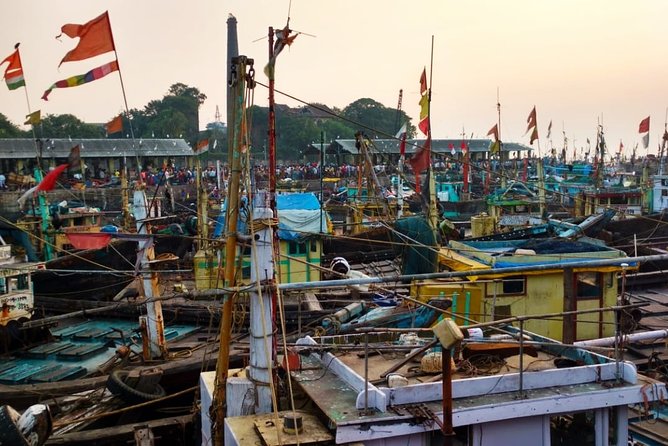
Your morning kicks off at Sassoon Dock, one of Mumbai’s oldest docks and also a major fish market. This is where the city’s relationship with the sea becomes real fast. You’re not looking at a museum version of working life—you’re seeing the pace of trade, the movement of people, and the sheer scale of seafood brought in and handled.
What you’ll like here
- You’ll get sensory detail right away: the smell of salt and fish, the sounds of vendors and workers, and the visual rhythm of crates, stalls, and boats.
- Your guide frames it historically, so it’s not random chaos. You start to understand how Mumbai grew from fishing roots into a major city.
What to watch for
- Expect crowded lanes and quick-moving activity around the docks. Wear shoes you’re happy to get scuffed, and plan to keep your phone secure while you photograph.
- If you’re sensitive to strong odors, this first stop can be the toughest. The tour’s upside is that you’re not stuck here for long—about 30 minutes.
If you want a photo, aim for a shot that includes people and motion, not just fish. The market tells a story through how everyone works.
Still weighing it up? Put these Mumbai tours side by side before you decide.




Colaba fishing village walk: Mumbai’s older life inside the city
Next comes Colaba, a walk through a fishing village right in the heart of the city. It’s a clever change of pace after Sassoon Dock. You see how everyday residents live when the ocean is part of the routine, not a distant landmark.
This stop helps you connect dots. Mumbai’s story isn’t only about big buildings; it’s also about fishermen and original inhabitants shaping the city’s edge and identity long before today’s skyline.
Why this portion matters
- You’re seeing the neighborhood side of the city, not a postcard-only version.
- You’ll likely notice how working life blends with regular street life: where people move, how daily routines feel, and how communities hold on to what matters.
Potential drawback
- This is still a street walk. You’ll be dealing with uneven sidewalks, local foot traffic, and the usual Mumbai morning bustle. If you’re traveling with limited walking tolerance, this is the point you’ll want to pace yourself.
For your photos, look for small scenes—netting, small boats, locals passing by—rather than trying to stage everything.
Crawford Market (Mahatma Jyotiba Phule mandai): architecture meets wholesale reality
Crawford Market is one of those places where you can feel the city’s planning and ambition even as trade stays intensely practical. The market—now known as Mahatma Jyotiba Phule mandai—is a wholesale fruit and vegetable hub, and it’s famous for its architecture.
You get a short but satisfying window—about 20 minutes. That’s enough time to grab a couple of angles and watch how goods flow, but it’s not enough to wander aimlessly. The guide helps you focus on the sights that actually make the place worth your time.
What to look for
- The building details: classic market architecture that gives the stop more personality than a typical produce hall.
- The trading energy: crates, quick exchanges, and the way workers move when they’re doing business, not catering for tourists.
How to make it easy on yourself
- Keep your camera ready, but don’t block foot traffic. Markets move fast.
- If you’re sensitive to heat, this is a place where you’ll appreciate water and shade breaks between stops (your tour has bottled water, but you still want to plan your own comfort).
If you like street-level travel that still feels “designed,” this is a great mid-tour anchor.
Churchgate Railway Station and the lunchbox system
One of the most memorable parts for many people is the Churchgate Railway Station stop. This is where you’ll witness the “lunch box” system and watch dabawallas in action. It’s a logistics story disguised as a daily ritual.
The experience here is about more than food transportation. It’s about how coordination becomes culture. You’ll see how meal delivery depends on timing, accuracy, and teamwork—built for a city that never stops moving.
Why it’s such a good stop
- It’s unique. Not many cities have a visible, daily, human supply chain that you can understand in a couple of hours.
- It gives context for Mumbai’s scale. When you learn the system, the city’s pace makes more sense.
A realistic caution
- Rail station areas can be crowded. You’ll want to be comfortable with people around you and keep your belongings secure.
- The stop is about 20 minutes—short, but usually long enough to observe what’s happening if you’re not trying to get every photo imaginable.
If you’re a traveler who loves systems—how things work—this is the part that will click.
- Dharavi slum tour in Mumbai by Female tour guides of the slum
★ 5.0 · 1,976 reviews - Mumbai: Full-Day Sightseeing Tour of Mumbai
★ 4.9 · 1,822 reviews - Private Mumbai Sightseeing Tour (Traveller’s Choice Award Winner)
★ 5.0 · 1,565 reviews - Group Guided Walking Tour in Fort and Colaba
★ 5.0 · 1,073 reviews - Highlights of Mumbai Sightseeing Tour: TRAVELLERS CHOICE AWARDED
★ 5.0 · 915 reviews - Private Guided Walking Tour in Fort & Colaba
★ 5.0 · 895 reviews
ISKCON Chowpatty: temple ceremony with real cultural context
Then you head to ISKCON Youth Services (ISKCON Chowpatty), where you’ll see a Hindu temple ceremony for about 30 minutes. This stop changes the tone from commerce and work to worship and meaning.
A ceremony is more than visuals. Your guide’s role matters here because you’re watching actions that come with specific purposes—timing, gestures, and the flow of the ritual. Without context, it can feel like you’re watching without understanding. With context, you start to follow the story.
What to do to make the visit smooth
- Dress respectfully. Even if you see other people in casual clothing, it’s still smart to cover shoulders and avoid very revealing outfits in a place of worship.
- Keep your pace quiet. You’re in a religious setting, so your body language should match the setting.
Possible drawback
- Ceremonies can attract crowds. If you’re aiming for photos, expect it to be more about watching than shooting. Concentrate on the ceremony first.
This is also the stop that can help you grasp Mumbai as a place where faith and daily life share the same streets.
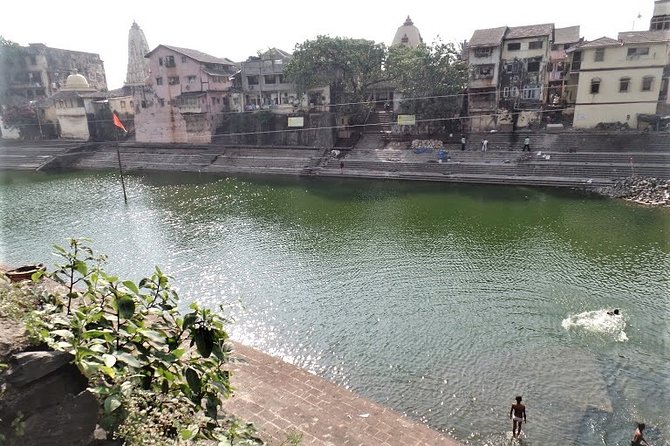
Banganga Tank: a century-old Mumbai perspective to close the loop
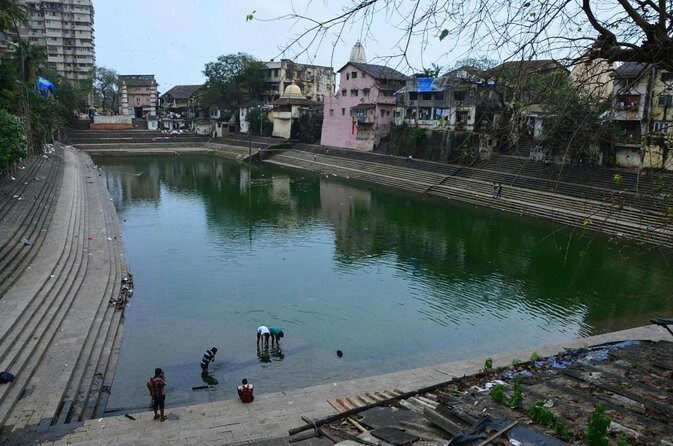
Your tour ends at Banganga Tank, with about 45 minutes here. This is where the route slows down and turns reflective. Banganga Tank is described as a way to see how the city looked a century ago—so it’s not just another scenic stop. It’s a mental time shift.
The value is in how it reframes everything you saw earlier. You start thinking: what stayed the same, what changed, and why the city grew the way it did.
What you’ll enjoy
- More time to soak in surroundings compared with the earlier fast stops.
- A quieter finish point where you can make sense of the whole tour arc.
What to watch
- Banganga is a tank area, so you may encounter uneven ground or areas with more foot traffic. Wear shoes with grip and take it slow.
If you like finishing a tour with a place that feels calm and story-driven, this ending is a smart choice.
Price and value: does $89.36 make sense?
At $89.36 per person for roughly four hours, the value hinges on what you’d otherwise pay in time and transport. This tour includes pickup and drop-off, an English-speaking experienced guide, an air-conditioned vehicle, bottled water, and applicable tax. That package is especially helpful in Mumbai, where getting from one district to another can be time-consuming.
You still control your own comfort because lunch isn’t included. That’s not unusual, but it does mean you should plan a snack or light breakfast and maybe carry a small water backup if you’re traveling in hotter months.
Also note: the tour lists ticketed admission as free for the places covered. That’s good for budgeting and keeps the experience from turning into a money-by-money add-on.
Bottom line: if you want an organized way to see work life, markets, rail logistics, and a temple ceremony without spending hours mapping routes, this is priced reasonably.
The practical stuff that makes or breaks your day
Here’s how to set yourself up for an easy, enjoyable morning.
Start time and timing
- You start at 9:00 am. In Mumbai, mornings tend to be more comfortable than midday, but you’ll still want breathable clothes and sun protection.
Walking and street conditions
- Expect a mix of market floors, dock-adjacent streets, and station areas. That’s not a “stroller-friendly” style tour, but it should work for most travelers who can handle a few short walks.
Mobile tickets and private group feel
- You get a mobile ticket, and it’s a private tour/activity, so only your group participates. That often means you can ask more questions and move at a pace that fits your comfort level.
Who this tour suits best
- Great fit if you love local life: food systems, neighborhoods, and how people organize everyday routines.
- Especially good if you want a guided explanation behind the visuals—why a market looks the way it does, what the lunchbox system means, and what a ceremony involves.
- Works well for history-curious travelers who don’t want museum-only learning.
Who might prefer a different style
- If you hate crowds or strong smells, Sassoon Dock may feel uncomfortable. You can still do the tour, but you should go with realistic expectations and plan accordingly.
Booking decision: should you book this Mumbai offbeat tour?
Yes, if you want a morning in Mumbai that’s more than monuments. This tour gives you work-life Mumbai—fish markets, wholesale produce, rail delivery, and worship—plus a closing stop that helps you understand how the city grew from fishing origins to the metropolis it is today.
I’d book it if you enjoy:
- seeing how systems function (dabawallas and transport logistics),
- learning through real places (dock, market, temple),
- and getting guided context so the city’s everyday details make sense.
I might skip it if you’re only interested in major tourist landmarks or you’re not comfortable with crowded public spaces and the sensory realities of markets.
If that sounds like your style, this is a solid half-day plan that’s both practical and genuinely different.
FAQ
What is the duration of the Hidden Jewels and Offbeat Tour of Mumbai?
It runs for about 4 hours.
What time does the tour start?
The start time is 9:00 am.
Does the tour include pickup and drop-off?
Yes. Pickup and drop-off from your accommodation are included.
Is the tour guided in English?
Yes. The tour includes an English-speaking guide.
Are there any entry fees for the stops?
No entry fee is applicable for the places covered on this tour.
Is lunch included?
No. Lunch is not included.
Is it a private tour?
Yes. Only your group will participate.
How soon will I receive confirmation after booking?
Confirmation is received within 48 hours of booking, subject to availability.
Can I cancel for a refund?
You can cancel for a full refund if you cancel at least 24 hours before the experience’s start time.
More Mumbai, Every Kind of Day
- Dharavi slum tour in Mumbai by Female tour guides of the slum
★ 5.0 · 1,976 reviews - Mumbai: Full-Day Sightseeing Tour of Mumbai
★ 4.9 · 1,822 reviews - Private Mumbai Sightseeing Tour (Traveller’s Choice Award Winner)
★ 5.0 · 1,565 reviews - Elephanta Caves & Island Guided Private Tour
★ 5.0 · 1,327 reviews