
Review · SIGHTSEEING & CITY HIGHLIGHTS
Private Mumbai Sightseeing Tour
Mumbai compresses fast in a few hours. This private half-day tour pulls together landmark after landmark in southern Mumbai—Gateway of India, Gandhi at Mani Bhavan, and UNESCO-listed Chhatrapati Shivaji Terminus—using air-conditioned pickup and transport. You’ll also get a private, professional art historian guide and a route that can flex around what you care about most.
One thing to consider: the experience depends on the comfort of the vehicle. In at least one case, noisy A/C made it harder to hear the guide, so if you’re sensitive to sound, request the quietest seating spot when you can.
I love how much you can fit in 4 to 5 hours without feeling rushed into a checklist. You get bottled water, short, meaningful stops (including the color-and-motion scene at Dhobi Ghat), and a guide who can explain context instead of just naming places—someone like Raj, who came through as engaging and professional in the accounts I saw.
In This Review
- Quick hits
- How this half-day route works in South Mumbai
- Price and what you actually get for $90 per person
- Getting the most out of a private guide (and staying heard)
- Banganga Tank: a 12th-century start in Malabar Hill
- Gateway of India and Taj Mahal Palace: symbols built for an arrival
- Mani Bhavan Gandhi Museum: where Gandhi lived in Mumbai
- Haji Ali and a Jain Temple: sacred places, short visits, real detail
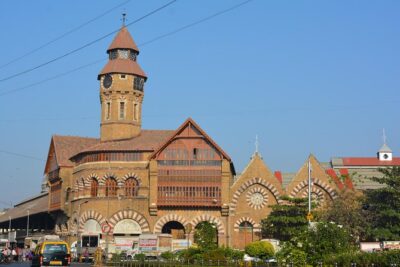
- Chhatrapati Shivaji Terminus: UNESCO station energy in 25 minutes
- Marine Drive, Rajabai Clock Tower, and Kamala Nehru Park: the city skyline beat
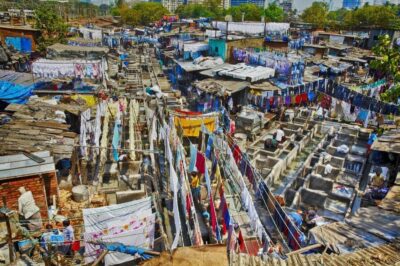
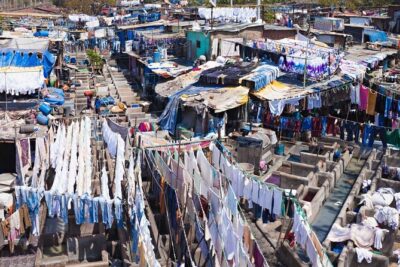
- Dhobi Ghat: the world’s largest outdoor laundry
- Art and institutions: modern art, old libraries, and a historic court
- Who this tour suits best (and who should choose something else)
- Should you book this Mumbai private tour?
- FAQ
- How long is the Private Mumbai Sightseeing Tour?
- Where do you get picked up and dropped off?
- Is this tour private?
- Are entrance fees included?
- Is food included in the tour price?
- What is the cancellation policy?
Quick hits
- Hotel, port, or rail pickup and drop-off so you don’t fight traffic on your own
- Private air-conditioned vehicle plus bottled water
- UNESCO stop at Chhatrapati Shivaji Terminus with a guided orientation of what you’re seeing
- Dhobi Ghat: the world’s largest outdoor laundry, watched in real time as clothes dry
- Gandhi’s Mumbai base at Mani Bhavan with museum/library time included
- Flexible route: tell your guide your priorities and adjust where the clock allows
How this half-day route works in South Mumbai
This is designed for people who want a real sampling of Mumbai, not a full-day marathon. The tour runs about 4 to 5 hours, and it starts with convenient pickup from your hotel, port, or railway station, then ends back where you began.
The big advantage is the structure. You’re not trying to coordinate rides between far-flung sights. Instead, you’re moving through a concentrated circuit in the city’s south—mostly around the historic core—so the guide can keep the story going as you travel.
You’ll also get a private guide who can shape the order and pacing based on your interests, within reason. Tell them early what matters most—religious sites, independence-era stories, architecture, photo time, or museum time—and they’ll build a route that fits. If you’re on a cruise day or you only have a half day in town, that flexibility is worth its weight.
Price and what you actually get for $90 per person
At $90 per person, this isn’t a bargain bus tour. It’s closer to a “pay for time and context” experience: private transport, a guide who can explain what you’re looking at, and admissions where they’re included.
Here’s what that cost buys you in practical terms:
- A private car with A/C for the half-day window (that matters in Mumbai’s heat and humidity)
- Hotel/port/station transfers so you aren’t hunting meeting points
- Short guided stops at multiple major landmarks, not just one or two
- Bottled water and fuel surcharge coverage
- Professional art historian guide, which is often the difference between seeing buildings and understanding why they matter
Food is not included, so you’ll want to plan a snack or meal before and after. If you like to control what you eat (and where), that’s usually fine. If you’d rather have everything bundled, you’ll need to plan meals around your tour time.
Also note the tour includes mobile tickets and a group discount option. If you’re traveling with others, it may help to check whether your booking can reflect that discount structure.
Other loops past the Gateway, Marine Drive and beyond




Getting the most out of a private guide (and staying heard)
A good private guide can turn “I saw a monument” into “I know what I’m looking at.” This tour is built for that. You’ll hear about Mumbai’s place as a major city and the Bollywood film industry’s presence, plus the city’s transition under British rule from the 18th to the 20th centuries.
To get the best results, come with a short priority list. For example:
- Do you want more architecture (Gateway of India, Rajabai Clock Tower)?
- More cultural life and religion (Haji Ali, Jain Temple, Banganga Tank)?
- Or more Gandhi and independence-era storytelling (Mani Bhavan)?
One careful note: vehicle comfort affects the experience. If you’re booking on a day when the A/C might feel strong or loud, ask for a seat where you can hear the guide clearly. Even with a great guide, the tour won’t land if you can’t catch the explanations.
Banganga Tank: a 12th-century start in Malabar Hill
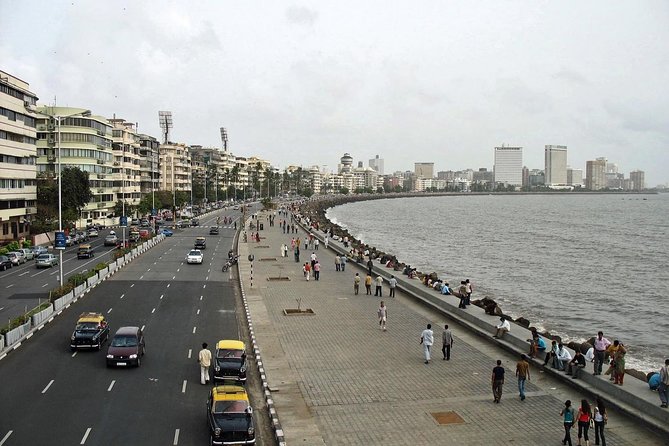
Your tour begins at Banganga, an ancient tank with roots that go back to the 12th century. It’s part of the Walkeshwar temple complex in Malabar Hill.
Why this stop matters: it shifts you from modern Mumbai’s speed to the older rhythm of the city. A tank like this isn’t just a pretty landmark—it’s tied to long-used religious space and local history.
Practical tips:
- Time here is short (about 20 minutes), so focus on the tank setting and the temple-complex surroundings rather than expecting a long wander.
- Since it’s a sacred-area context, keep clothing comfortable but modest. Loose, comfortable layers help in warm weather.
Gateway of India and Taj Mahal Palace: symbols built for an arrival
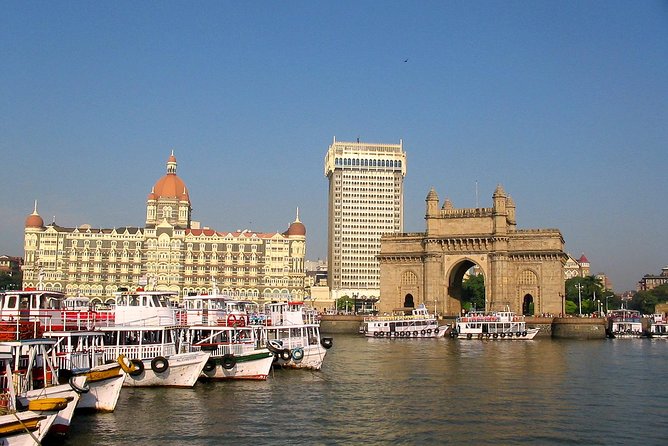
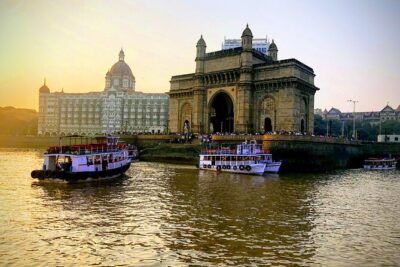
Next comes the Gateway of India, the large arch monument associated with the 1911 visit of King George V. You’ll also see the nearby Taj Mahal Palace Hotel, opened in 1903, which sits right by the waterfront area where the Gateway marks the city’s ceremonial front.
This stop is built for atmosphere. The Gateway is famous for its photo presence, but it also makes a useful reference point for understanding British-era presence and Mumbai’s place as a port city.
What to do during your 20 minutes:
- Take wide shots for the full arch, then snap close details for texture and scale.
- If the light is good, position yourself for views that include both the Gateway and the Taj-area backdrop.
- Keep an eye on pedestrian movement; this area can be active.
Admission here is free, and the time window makes it a “see it clearly, then move on” stop.
More Mumbai days built around your own list
- Private Mumbai Sightseeing Tour (Traveller’s Choice Award Winner)
★ 5.0 · 1,565 reviews - Elephanta Caves & Island Guided Private Tour
★ 5.0 · 1,327 reviews - Private Guided Walking Tour in Fort & Colaba
★ 5.0 · 895 reviews - Highlights of South Mumbai Guided Private Tour in AC Vehicle
★ 5.0 · 620 reviews - Private Mumbai Sightseeing Tour(Travellers Choice Award Winner)
★ 5.0 · 565 reviews - Private Half-Day Sightseeing Tour in Mumbai
★ 5.0 · 430 reviews
Mani Bhavan Gandhi Museum: where Gandhi lived in Mumbai
Then you’ll head to Mani Bhavan Gandhi Museum, Gandhi’s former residence, Mani Bhavan. This was Gandhi’s Mumbai headquarters for roughly 17 years, from 1917 to 1934.
You get about 25 minutes here, and admission is included. This is one of the stops that tends to feel most personal because it’s connected directly to a lived place, not just a monument.
To make the most of the visit:
- Spend a few minutes reading key displays before you rush for photos.
- If you’re interested in independence history, focus on how the museum frames Gandhi’s work in Mumbai rather than trying to absorb everything at once.
If you only have a single museum moment in Mumbai, this is a solid choice.
Haji Ali and a Jain Temple: sacred places, short visits, real detail
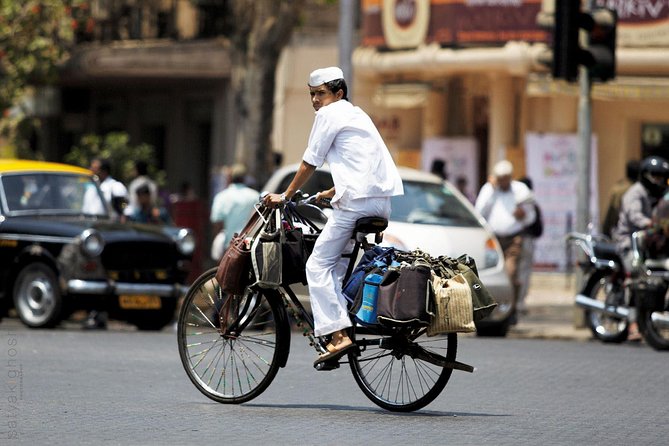
Your route includes both Haji Ali and a Jain Temple stop.
- Haji Ali is a respected Muslim tomb site that people from across India come to visit.
- The Jain Temple is known for intricate stone carvings and a dome with zodiac-style painting.
Time is limited here (roughly 15 minutes for the Jain Temple, plus a separate Haji Ali stop), so think of it as a guided orientation and quick appreciation rather than a deep spiritual retreat.
Two practical points:
- Expect people. These are active religious sites, so be respectful and patient.
- Dress in a way that you’re comfortable staying in place for photographs and brief pauses.
Free admissions help keep the itinerary simple.
Chhatrapati Shivaji Terminus: UNESCO station energy in 25 minutes
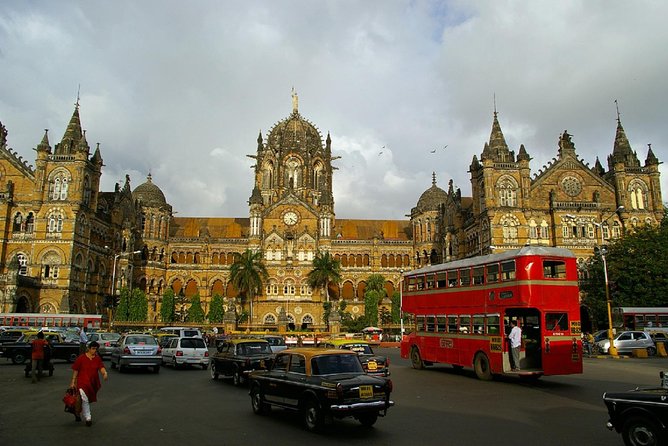
One of the tour’s centerpieces is Chhatrapati Shivaji Terminus, a UNESCO World Heritage site. You’ll get about 25 minutes here, with free admission.
This isn’t a quiet museum stop. It’s a functioning, bustling train station that has appeared in movies for years, so you’ll experience that constant movement firsthand.
A realistic expectation: your stop is timed. You’ll likely focus on getting oriented—key sightlines, the station’s visual scale, and the context a guide provides—rather than a long, step-by-step exploration of every corridor.
If you want extra time at the station itself, ask your guide early in the day if the schedule allows. This is one of those moments where good planning helps you avoid rushing at the end.
Marine Drive, Rajabai Clock Tower, and Kamala Nehru Park: the city skyline beat
The tour then shifts into classic Mumbai views—especially along the Marine Drive area.
You’ll drive around Marine Drive, often called Queens Necklace, and pass colonial-era buildings like Flora Fountain. This is one of the best “see the city” segments because the route gives you a moving perspective.
Next is Rajabai Clock Tower, about 85 meters tall and part of the Victorian and Art Deco Ensemble of Mumbai—a UNESCO listing added in 2018. The clock-tower feel is often compared to London’s Big Ben style, and standing near or viewing it from the right angles helps you understand why people find it so striking.
You also stop at Kamala Nehru Park, a favorite city park with a quirky feature: a boot-shaped structure. You get about 25 minutes, and the stop works well if you want a breather with skyline views.
Together, these stops help you connect the dots:
- The colonial architecture tells one story
- The skyline views show how the city breathes today
- The park gives you a pause so the tour doesn’t feel like a blur
Dhobi Ghat: the world’s largest outdoor laundry
Then comes one of the most memorable, sensory stops: Dhobi Ghat. This is described as the world’s largest outdoor laundry, where you can watch colorful clothes laid out to dry in the sun.
Time is around 20 minutes, with free admission. That’s usually enough to absorb the scene without burning all your energy.
When you visit:
- Plan for heat and sun. Bring your water or sip what’s provided.
- Be prepared for a working-laundry environment. You’re observing daily life, so keep your camera use respectful and mindful.
If you want “Mumbai in motion,” this is it.
Art and institutions: modern art, old libraries, and a historic court
Your route can also include quick stops connected to Mumbai’s arts and institutions—time permitting based on how your day is going.
You may see:
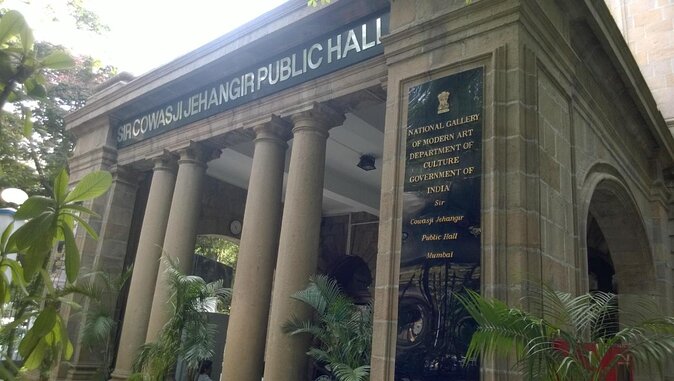
- National Gallery of Modern Art, Mumbai, opened to the public in 1996, with exhibitions and art collections.
- David Sassoon Library, a heritage building linked to Albert Sassoon’s idea for placing a library in the city center.
- A drive past Bombay High Court, one of India’s oldest high courts.
These aren’t long museum sessions in a half-day format. Think of them as meaningful “place markers.” Your guide can point out why they matter and what kind of culture they represent, without eating up the day.
If you’re an art lover and you want more museum time, you might need a longer, separate outing. For a half day, these stops are best as context and taste.
Who this tour suits best (and who should choose something else)
This private tour fits you if:
- You’re visiting for the first time and want the big Mumbai names plus key UNESCO and Gandhi sites
- You’re short on time (cruise stop, quick city stay, or limited daylight)
- You like a guide-driven story, not just walking between photos
- You want a mix of waterfront landmarks, religious sites, and daily-life moments
It may not be ideal if:
- You want long, in-depth museum time at multiple indoor places
- You expect to spend lots of time inside a major train station building rather than a timed orientation pause
- You’re highly sensitive to vehicle comfort, since the ride quality directly affects how easy it is to hear the guide
Should you book this Mumbai private tour?
Yes, if you want high value in limited time. The combination of UNESCO Chhatrapati Shivaji Terminus, Gandhi’s Mani Bhavan, Marine Drive area views, and Dhobi Ghat gives you a well-rounded sample of Mumbai’s layers—colonial-era landmarks, independence-era storytelling, and everyday city life.
Before you book, do two small things that pay off:
- Make a quick list of your top three priorities (history, skyline architecture, Gandhi, religious sites, photos).
- Ask your guide how they plan to use the timed stops—especially the station pause—so your expectations match what’s realistic in 4 to 5 hours.
If you’re trying to maximize a single half day without losing the human context, this is a strong pick.
FAQ
How long is the Private Mumbai Sightseeing Tour?
It runs about 4 to 5 hours.
Where do you get picked up and dropped off?
Pickup and drop-off are included from your hotel, port, or railway station in Mumbai.
Is this tour private?
Yes. It’s a private tour/activity, and only your group participates.
Are entrance fees included?
Admission is included for Mani Bhavan Gandhi Museum. Other listed stops have free admission.
Is food included in the tour price?
No. Food and drinks are not included.
What is the cancellation policy?
Free cancellation is available up to 24 hours in advance for a full refund.
More Mumbai, Every Kind of Day
- Dharavi slum tour in Mumbai by Female tour guides of the slum
★ 5.0 · 1,976 reviews - Mumbai: Full-Day Sightseeing Tour of Mumbai
★ 4.9 · 1,822 reviews - Private Mumbai Sightseeing Tour (Traveller’s Choice Award Winner)
★ 5.0 · 1,565 reviews - Elephanta Caves & Island Guided Private Tour
★ 5.0 · 1,327 reviews
Mumbai on Your Own Terms
- Private Mumbai Sightseeing Tour (Traveller’s Choice Award Winner)
★ 5.0 · 1,565 reviews - Elephanta Caves & Island Guided Private Tour
★ 5.0 · 1,327 reviews - Private Guided Walking Tour in Fort & Colaba
★ 5.0 · 895 reviews - Highlights of South Mumbai Guided Private Tour in AC Vehicle
★ 5.0 · 620 reviews
The Big Mumbai Circuits
- Mumbai: Full-Day Sightseeing Tour of Mumbai
★ 4.9 · 1,822 reviews - Private Mumbai Sightseeing Tour (Traveller’s Choice Award Winner)
★ 5.0 · 1,565 reviews - Highlights of Mumbai Sightseeing Tour: TRAVELLERS CHOICE AWARDED
★ 5.0 · 915 reviews - Highlights of South Mumbai Guided Private Tour in AC Vehicle
★ 5.0 · 620 reviews
New on the Mumbai shortlist


Sightseeing & City Highlights, compared.
 ★ 4.9Full-Day Sightseeing Tour of MumbaiFrom $241,822 reviews
 ★ 5.0Private Mumbai Sightseeing Tour (Traveller’s Choice Award Winner)From $271,565 reviews
 ★ 5.0Highlights of Mumbai Sightseeing Tour: TRAVELLERS CHOICE AWARDEDFrom $33915 reviews
 ★ 5.0Highlights of South Mumbai Guided Private Tour in AC VehicleFrom $74620 reviews
 ★ 5.0Private Mumbai Sightseeing Tour(Travellers Choice Award Winner)From $29565 reviews
 ★ 5.0Private Half-Day Sightseeing Tour in MumbaiFrom $33430 reviews
 ★ 5.0Private Elephanta Caves & Mumbai Sightseeing Tour with AC CarFrom $29389 reviews
 ★ 5.0Private Mumbai Sightseeing Tour with Local English GuideFrom $33342 reviews
Browse the lists this tour appears in