
Review · KANHERI CAVES & NATIONAL PARK
Private Full-Day Mumbai City Tour with Kanheri Caves Excursion
Mumbai can feel like chaos.
That’s exactly why a private full-day plan works so well: you get a morning trip to the often-skipped Kanheri Caves, plus a tight afternoon loop of Mumbai’s biggest landmarks without getting dragged from stop to stop. I especially like the mix of Buddhist archaeology at Kanheri and the very human, everyday moments in places like Dhobi Ghat, and I also like that the schedule can be adjusted to your interests. The main thing to consider is timing: Mumbai traffic and heat can slow the day, so you may need to be flexible if you want every single stop.
You start early with pickup and a private, air-conditioned vehicle, then settle into the kind of day that’s built for efficiency without feeling rushed. Expect guided walking where it makes sense, scenic photo breaks where it pays off, and enough variety that you’ll see Mumbai’s layers in one long stretch—colonial, religious, and street-level.
In This Review
- Key highlights worth planning around
- Kanheri Caves at the start: why this morning stop matters
- Gateway of India: the colonial monument you’ll actually understand
- Chhatrapati Shivaji Maharaj Terminus (CST): Gothic details without the museum ticket
- Crawford Market (Mahata Jyotiba Phule Mandai): Mumbai’s working pulse
- Mani Bhavan Gandhi Museum: small rooms, big weight
- Hanging Gardens on Malabar Hill: the photo stop that pays off
- Dhobi Ghat: watching Mumbai wash its everyday life
- Prince of Wales Museum (Chhatrapati Shivaji Maharaj Vastu Sangrahalaya): architecture plus art
- Price and what $182.44 buys you in real terms
- How the day flows (and how to make it work with Mumbai traffic)
- Who this private Mumbai tour is best for
- Should you book Private Full-Day Mumbai Tour with Kanheri Caves?
- FAQ
- Is pickup included, and where can it be from?
- How long is the tour?
- What time does the tour start?
- Is lunch included?
- Are entrance fees included?
- Is the Prince of Wales Museum open every day?
- Is this a private tour?
Key highlights worth planning around
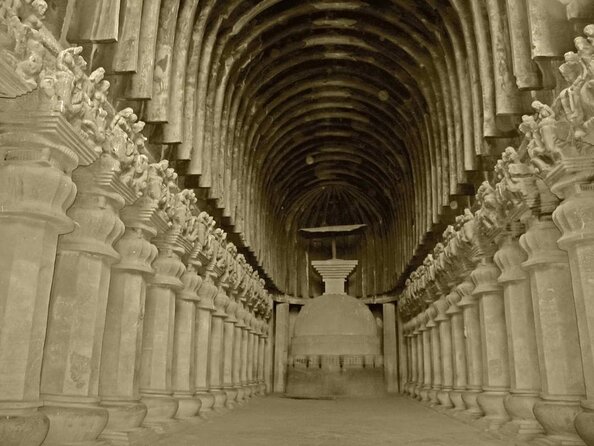
- Kanheri Caves first thing: You’ll reach a 1,000-plus-year Buddhist monastic complex in Sanjay Gandhi National Park before the city crowds start to thicken.
- Private guide attention: The day is designed around your pace, not a big-group scramble.
- A landmark-plus-local mix: From Gateway of India and CST to Crawford Market, Mani Bhavan, and Dhobi Ghat.
- Malabar Hill viewpoints: Hanging Gardens on the way up gives you panoramic views over South Mumbai and the Arabian Sea.
- Museum stop depends on your day: The Prince of Wales Museum (Chhatrapati Shivaji Maharaj Vastu Sangrahalaya) is closed Mondays.
- Traffic and heat are real: The route is solid, but Mumbai can still push timings around.
Kanheri Caves at the start: why this morning stop matters
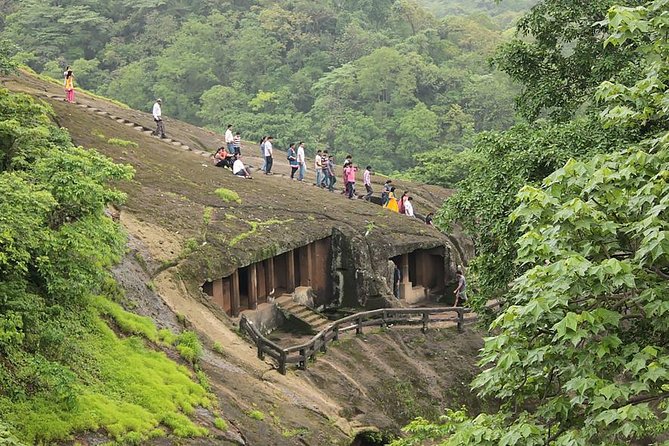
The morning begins with pickup from your hotel, airport, or cruise port (start time is 8:00 am). Then you ride out in a private, air-conditioned vehicle for about an hour to Sanjay Gandhi National Park, where the Kanheri Caves are located.
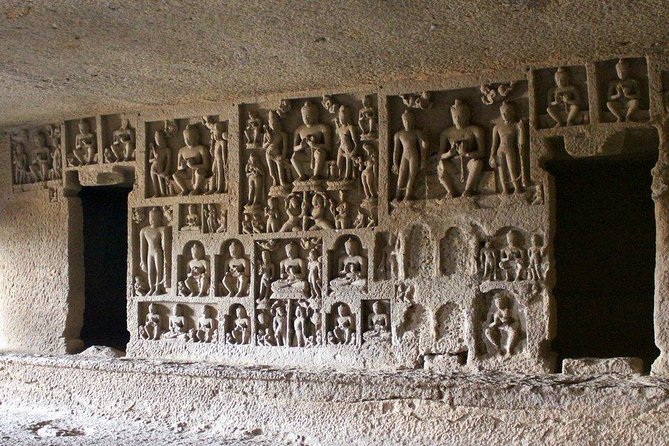
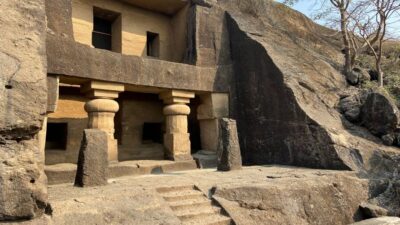
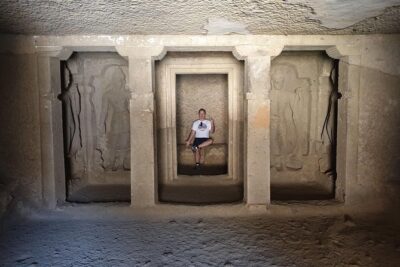
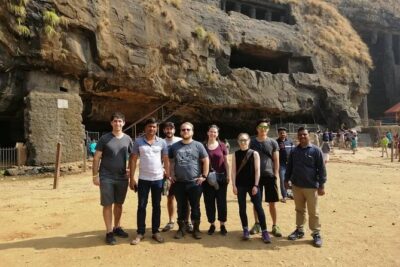
Kanheri is one of those places that changes how you understand the city. Instead of starting with modern Mumbai, you step into a Buddhist world carved into basalt rock. The caves are part of a larger monastic setting—there are 109 basalt rock caves—and they were carved between the 1st century BC and roughly the 9th century AD. The site functioned as a center for Buddhist monks for over 1,000 years.
What makes this stop feel more than just a quick photo stop is how the space is organized. The caves include vihara (monasteries), chaitya (halls), and dwellings used over centuries. Even if you’re not a hardcore temple person, it’s easy to see how it worked as a “study and living” complex rather than a single temple you rush through.
What to watch for: admission is not included for Kanheri, so you’ll want to budget for tickets if you want to enter the caves themselves. Also, plan for walking in a heritage site environment. Wear comfortable shoes and dress like you’re going to be outside early, before you heat up.
Gateway of India: the colonial monument you’ll actually understand
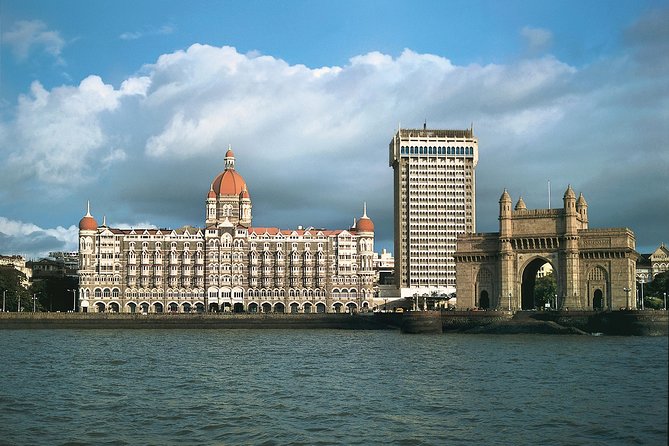
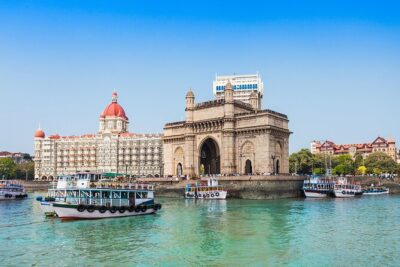
After the caves, you return to Mumbai and hit the Gateway of India, a basalt arch built for royal pomp—then repurposed by history. It faces Mumbai Harbour at Apollo Bandar, and it’s hard to ignore once you’re there.
Here’s the context that makes the stop click. The Gateway was built to commemorate the 1911 royal visit of King George V, but it wasn’t completed until 1924. And then the British used it again, just 24 years later, to parade the last British regiment as India moved toward independence.
That’s a lot of meaning for a monument you might otherwise treat as a postcard. Having time with a guide helps you notice what you’re seeing—how it sits on the water, why the materials and scale matter, and how the timeline connects to the country’s shift.
You’ll also get a break for lunch at a local restaurant (own expense). This is a good place to choose something quick and filling, because the afternoon includes several short stops.
Practical note: this stop is time-limited, so don’t plan to linger for a long snack and then rush. Use the time for the right photos and a short walk around the viewing areas.
More green escapes into Sanjay Gandhi park and Kanheri


Chhatrapati Shivaji Maharaj Terminus (CST): Gothic details without the museum ticket
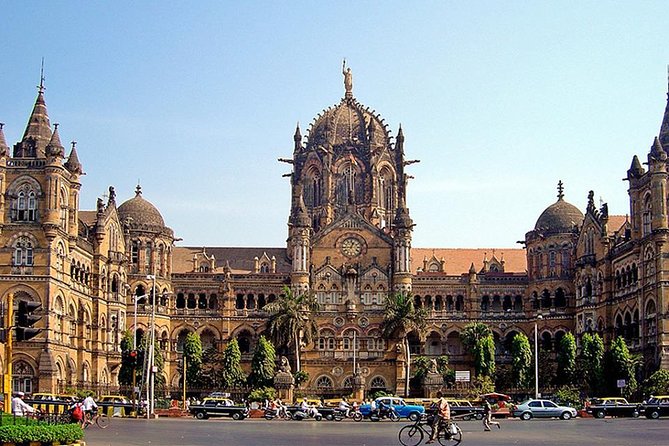
Next up is Chhatrapati Shivaji Maharaj Terminus, also known historically as CST / Victoria Terminus. You don’t need a ticket to view it, and you don’t need a long explanation to feel its impact—it’s imposing, and it gets crowded fast.
CST is a UNESCO World Heritage Site, and it’s described as a Victorian Gothic masterpiece. The big win here is that you get to see one of Mumbai’s most dramatic buildings while still moving through the day. You’ll likely notice the architectural “overload” on the façade—lots of ornament and strong shapes—plus the energy of a major working station.
It’s also a smart stop because it puts the city’s modern movement into perspective. You’re not just looking at history in a quiet museum; you’re looking at history still used every day.
What to consider: this is a photo-and-look stop. If you want interior access or a deeper station experience, plan that separately. This tour is built to make the day efficient, not to turn one location into an all-day event.
Crawford Market (Mahata Jyotiba Phule Mandai): Mumbai’s working pulse
Then you head to Mahatma Jyotiba Phule Mandai, formerly known as Crawford Market. It’s a wholesale market, and that matters. This isn’t a craft bazaar for souvenirs. You’ll see the city’s daily rhythm in the trading: mainly fruit and vegetables, meat and fish, and also the spice trade where tourists often pick up packets.
The market is also described as holding some of the last traces of British-era Bombay before the central bazaars take over. That’s useful context because it explains why the market area feels like a transition zone—you’re seeing commerce in a building and street layout that reflects older planning.
You get about 30 minutes, which is right for browsing stalls, picking out a few spice options, and getting a feel for what locals actually do. You don’t need to shop to enjoy it; it’s an excellent sensory stop.
Quick tip: if you’re sensitive to smells or crowds, keep your expectations realistic. This is active trade space. Go with a calm pace, and you’ll enjoy it.
Mani Bhavan Gandhi Museum: small rooms, big weight
One of the strongest stops on the day is Mani Bhavan, a Gujarati-style residence that served as Mahatma Gandhi’s headquarters during visits to Bombay from 1917 to 1934.
Mani Bhavan is described as poignant and tiny—so don’t treat it like a mega-museum. You’ll move through rooms and exhibits that focus on Gandhi’s personal presence in the city. The highlights include his personal room, photo records, dioramas, and documents, including letters he wrote to Adolf Hitler and Franklin D. Roosevelt. There are also tributes from people like Ho Chi Minh and Albert Einstein.
What makes this work well in a full-day tour is the contrast. You’ve just seen the outward spectacle of Gateway of India. Before that, you’ve been in ancient caves. Mani Bhavan brings the story back to one person and one place—quiet enough that it hits harder.
What to consider: admission is not included here, so budget for it if you want full access. Also, keep your energy for this stop: it can be emotionally heavy, and it’s easy to feel rushed if the day runs late.
Other loops past the Gateway, Marine Drive and beyond
- Mumbai: Full-Day Sightseeing Tour of Mumbai
★ 4.9 · 1,822 reviews - Private Mumbai Sightseeing Tour (Traveller’s Choice Award Winner)
★ 5.0 · 1,565 reviews - Highlights of Mumbai Sightseeing Tour: TRAVELLERS CHOICE AWARDED
★ 5.0 · 915 reviews - Highlights of South Mumbai Guided Private Tour in AC Vehicle
★ 5.0 · 620 reviews - Private Mumbai Sightseeing Tour(Travellers Choice Award Winner)
★ 5.0 · 565 reviews - Private Half-Day Sightseeing Tour in Mumbai
★ 5.0 · 430 reviews
Hanging Gardens on Malabar Hill: the photo stop that pays off
On Malabar Hill, you’ll visit the Hanging Gardens, also called the Pherozeshah Mehta Gardens. This is a terraced garden perched above South Mumbai, and it’s one of those stops where the views do some of the work for the guide.
The gardens are known for their terraced design and for hedges shaped into animal figures. It’s also a great place to look out over the Arabian Sea and take in the contrast between the city’s modern skyline and the waterfront.
Even if you only get a half-hour, this can be the moment where you “get your bearings” for the rest of the day—especially if you’re still figuring out Mumbai’s geography and neighborhoods.
Practical note: bring water and take breaks as needed. If heat is high, plan to sit for a few minutes before you keep walking. (One reason the day can get shortened for some people is exactly this kind of temperature toll.)
Dhobi Ghat: watching Mumbai wash its everyday life
Then comes one of the most memorable parts: Mahalaxmi Dhobi Ghat. This is an open-air laundry area that’s been operating for about 140 years, and it’s described as the largest unmechanized laundry facility in the world.
The scale is the wow factor. Hundreds of people wash clothes and linen daily using a human-powered workflow across 1,026 open-air troughs. From a visitor perspective, it’s less about “tour watching” and more about seeing the labor behind daily life—like catching the city in motion.
You also get a practical viewing tip: the best view is from the bridge across the railway tracks near Mahalaxmi train station. That’s the kind of detail that makes the stop more than a casual drive-by. With a guide, you’re more likely to stand where the sightlines work.
You’ll have about 15 minutes, which is just enough time to observe without turning it into something awkward. Keep your camera steady, stay respectful, and let the scene do the talking.
What to consider: this is a working area. It’s normal to see people at work up close. Dress comfortably and don’t expect quiet.
Prince of Wales Museum (Chhatrapati Shivaji Maharaj Vastu Sangrahalaya): architecture plus art
The final major indoor stop is Chhatrapati Shivaji Maharaj Vastu Sangrahalaya, formerly known as the Prince of Wales Museum. It’s scheduled for about an hour, and it’s worth using that time because it combines two things: architecture and collections.
A big detail here is the architect: it was designed by George Wittet, and he’s also credited with the design brains behind the Gateway of India. That connection is fun because it links the earlier monument to this building later in the day.
The museum’s collections include artefacts from the Mughal empire plus rare heirlooms from places including Europe, Nepal, Tibet, Japan, and China. If you’re curious about how ideas traveled and got collected across regions, this is a helpful stop after all the street-level viewing earlier.
Important timing note: the museum is closed Mondays. If your day falls on a Monday, your guide should adjust what you see, since the plan is flexible.
Price and what $182.44 buys you in real terms
At $182.44 per person for a roughly 9 to 10 hour day, the value comes from the parts that are hardest to DIY cleanly: long-distance timing, private transportation, and a guide who can stitch the day together.
Here’s what you get that reduces hassle:
- Round-trip pickup and drop-off from your chosen location (hotel/airport/cruise port)
- Private air-conditioned vehicle
- Professional local private tour guide
- Bottled water
Then there are the things you should expect to pay separately:
- Food and drinks (lunch is own expense)
- Entrance fees where applicable (Kanheri and Mani Bhavan and the museum are explicitly not included)
So you’re paying for the “go all day with a plan” part. If you try to cobble it together yourself, the time cost and friction can eat the savings fast—especially in a city like Mumbai where traffic can mess with your schedule even on Sundays.
The best value angle is that you’re not only hitting the shiny top icons. One guide example involved Apurva, who led a route where the usual tourist list wasn’t dominating the day, and that energy showed up in the experience. In other words: the tour isn’t just checking boxes. It’s built to make the day feel like you actually learned Mumbai’s layers.
How the day flows (and how to make it work with Mumbai traffic)
The day starts at 8:00 am, then moves from Kanheri into a sequence of city highlights. You’ll drive past major sights like CST and Marine Drive rather than trekking everywhere on foot, which matters when heat and crowd levels spike.
The schedule is not guaranteed to be in perfect lockstep:
- transfer time depends on time of day and traffic
- the afternoon order may be changed
That flexibility is a strength. It also means you should keep your expectations realistic. If the temperature climbs and roads slow, the day can become “shorten a couple of sights” instead of “do everything exactly as written.” That’s not a failure—it’s what good trip planning looks like when conditions shift.
My practical advice: wear light layers you can shed, carry water (you’re given bottled water, but you’ll likely want more), and treat the tour like an intentional best-effort route. If you plan with that mindset, you’ll have a smoother day.
Who this private Mumbai tour is best for
This tour is a strong fit if you want:
- a private day without fighting for a spot in crowded group logistics
- a balance of iconic landmarks and more local, human experiences
- an out-of-town morning to Kanheri Caves, which many city-focused plans skip
- enough guidance that you understand what you’re seeing, not just where it is
It’s especially good for first-timers who need structure, and for people who like variety—temples and monuments in the same day, plus market life and Gandhi’s story.
You might not love it if you want long stays in only one museum, or if you hate any possibility of schedule shifts due to heat and traffic.
Should you book Private Full-Day Mumbai Tour with Kanheri Caves?
Yes, if your goal is a single day that covers a lot of meaningful ground without turning into a stressful scavenger hunt. The combination of Kanheri Caves and a well-paced sweep through Mumbai’s major landmarks, plus stops like Mani Bhavan and Dhobi Ghat, is a rare mix of “big sights” and “real city texture.”
Book it particularly if you value a guide who can keep the day interesting and organized. One example included a guide named Apurva with strong English and a route that avoided feeling like a copy-paste checklist. That’s the sweet spot: you get a plan, but you still feel like you’re seeing the city rather than being processed by it.
FAQ
Is pickup included, and where can it be from?
Yes. The tour includes hotel, airport, or cruise port pickup and drop-off, depending on where you’re starting.
How long is the tour?
It’s listed as approximately 9 to 10 hours.
What time does the tour start?
The start time is 8:00 am.
Is lunch included?
No. Lunch is at a local restaurant and is listed as own expense.
Are entrance fees included?
Some admissions are not included. Kanheri Caves and Mani Bhavan are listed as not included, and the Prince of Wales Museum admission is also listed as not included where applicable.
Is the Prince of Wales Museum open every day?
No. It’s closed Mondays.
Is this a private tour?
Yes. It’s a private tour/activity, and only your group participates.
Mumbai on Your Own Terms
- Private Mumbai Sightseeing Tour (Traveller’s Choice Award Winner)
★ 5.0 · 1,565 reviews - Elephanta Caves & Island Guided Private Tour
★ 5.0 · 1,327 reviews - Private Guided Walking Tour in Fort & Colaba
★ 5.0 · 895 reviews - Highlights of South Mumbai Guided Private Tour in AC Vehicle
★ 5.0 · 620 reviews
The Big Mumbai Circuits
- Mumbai: Full-Day Sightseeing Tour of Mumbai
★ 4.9 · 1,822 reviews - Private Mumbai Sightseeing Tour (Traveller’s Choice Award Winner)
★ 5.0 · 1,565 reviews - Highlights of Mumbai Sightseeing Tour: TRAVELLERS CHOICE AWARDED
★ 5.0 · 915 reviews - Highlights of South Mumbai Guided Private Tour in AC Vehicle
★ 5.0 · 620 reviews
Kanheri and the Forest, Again
- Mumbai: Kanheri Caves and The Golden Pagoda Temple
★ 4.7 · 108 reviews - Sanjay Gandhi National Park(SGNP) + Kenheri Caves + Lion Safari + Jain Temple
★ 5.0 · 88 reviews - Sanjay Gandhi National Park+ Kanheri Caves + Temple +Tigar Safari
★ 5.0 · 54 reviews - Mumbai: Buddhist Kanheri Caves with Golden Pagoda Temple
★ 4.8 · 47 reviews
New on the Mumbai shortlist


Kanheri Caves & National Park, compared.
 ★ 4.7Kanheri Caves and The Golden Pagoda TempleFrom $43108 reviews
 ★ 5.0Sanjay Gandhi National Park(SGNP) + Kenheri Caves + Lion Safari + Jain TempleFrom $6988 reviews
 ★ 5.0Sanjay Gandhi National Park+ Kanheri Caves + Temple +Tigar SafariFrom $2754 reviews
 ★ 4.8Buddhist Kanheri Caves with Golden Pagoda TempleFrom $2847 reviews
 ★ 5.0Kanheri Cave with Global Vipassana Pagoda Tour in Private VehicleFrom $8746 reviews
 ★ 5.0Kanheri Caves Heritage TourFrom $4545 reviews
 ★ 5.0Private Guided Tour in Kanheri Cave with TransfersFrom $3344 reviews
 ★ 5.0South Mumbai City with Kanheri Cave Tour in Private VehicleFrom $8437 reviews
Browse the lists this tour appears in