
Review · SIGHTSEEING & CITY HIGHLIGHTS
Mumbai: Full Day City Sightseeing with Lunch, Car & Guide
Mumbai shows its cards fast on this tour. It’s a tight, well-planned day through colonial landmarks, working-city life, and big-figure history, with a private guide to connect the dots from stop to stop. I especially love how the route mixes architecture (like Dhobi Ghat and CST) with everyday Mumbai you can actually see. One thing to consider: it’s an 8-hour loop, so expect walking and plenty of street time in traffic.
The practical win here is comfort. You get hotel pickup and drop-off plus a private AC car, and the day is paced with a lunch break so you’re not rushing from one photo stop to the next. A standout bonus: the tour includes entrance fees and a way to skip the line at participating sights, which matters in Mumbai when queues can chew up your daylight.
In This Review
- Quick hits you’ll feel on day one
- Entering the day: pickup, comfort, and how the route stays sane
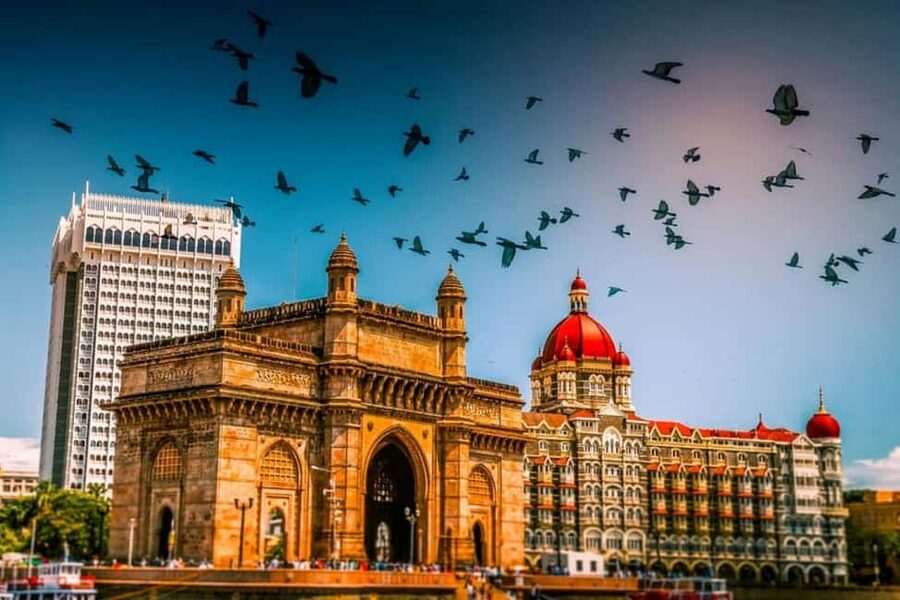
- Gateway of India, Taj Mahal Palace, and the first big photo moment
- Chhatrapati Shivaji Maharaj Terminus (CST): the Gothic train-station masterpiece
- Kala Ghoda and Oval Maidan: the arts district meets civic monuments
- Horniman Circle and the Asiatic Society Library: old texts, quieter streets
- Crawford Market and lunch: where flavors and logistics meet
- Marine Drive (Queen’s Necklace): a scenic break with timing payoff
- Mani Bhavan: Gandhi’s presence in Mumbai, told on-site
- Malabar Hill viewpoints: Banganga Tank, Hanging Gardens, and a Jain Temple
- Antilia drive-by and Dhobi Ghat: extreme wealth meets ordinary work
- Price and value: what $25 covers (and why that matters in Mumbai)
- Who should book this (and who might want a different plan)
- The guide and driver make the difference more than you think
- Should you book this Mumbai full-day sightseeing tour?
- FAQ
- How long is the Mumbai city sightseeing tour?
- What’s included in the price?
- Is lunch included?
- Do I need to pay entrance fees separately?
- What languages is the live guide available in?
- Is this tour a private group?
- Is wheelchair access available?
- Is hotel pickup included?
- Does the tour include a way to skip lines?
Quick hits you’ll feel on day one
- Private AC car + live guide: you get context, not just a bus route.
- Skip-the-line entry at participating places to protect your time.
- Full-day architecture arc: Gateway to CST to Rajabai Clock Tower, all in one flow.
- Working Mumbai included: Dhobi Ghat is open-air laundry life, not a stage set.
- Gandhi sites on the same day via Mani Bhavan, so the story sticks.
- Lunch is built in after the halfway point, giving you a real reset.
Entering the day: pickup, comfort, and how the route stays sane
This is built as a true day tour, starting with pickup from your hotel in Mumbai. You meet your guide and then move in a private AC car, which is a big deal in a city where traffic can be intense. The itinerary is paced so you don’t spend the entire day staring at your phone while the car inches forward.
What I like about this setup is simple: you’re not stuck coordinating anything. Entrance fees are handled, mineral water is included, and parking and tolls are covered. That means you can focus on the sights and the walking between them.
There’s also something quietly useful about the private-group format. You can ask the guide to slow down for photos, spend a bit longer at a viewpoint, or adjust how much you want to read on the spot. It doesn’t turn into a stop-and-go stampede.
Gateway of India, Taj Mahal Palace, and the first big photo moment
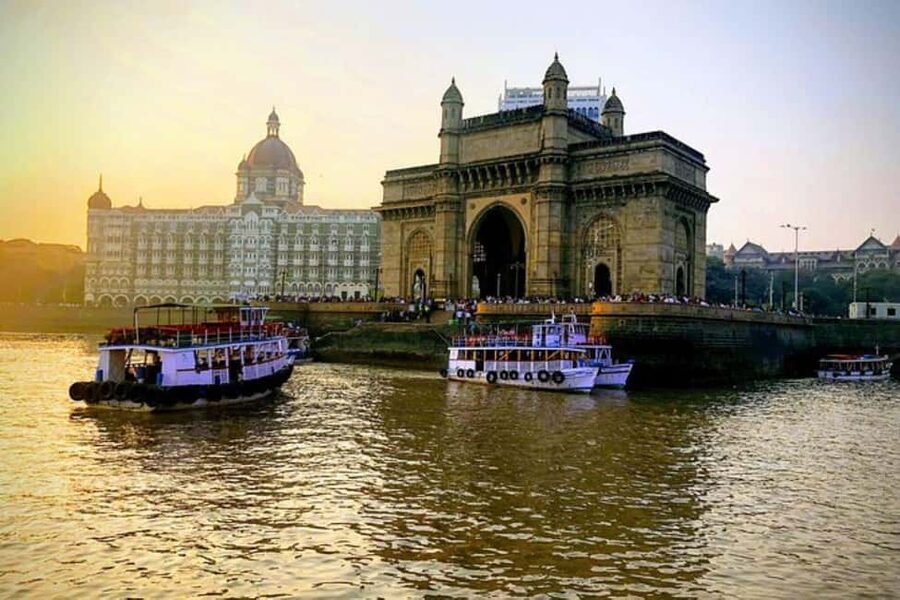
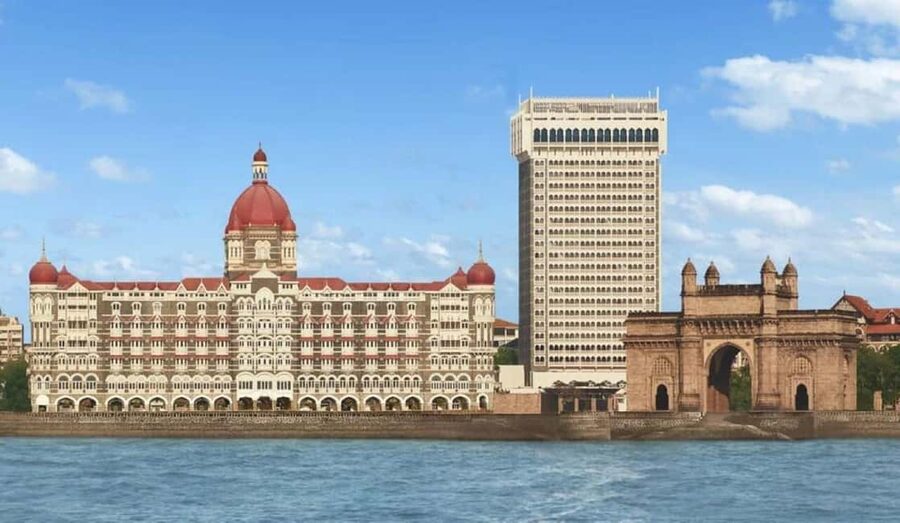
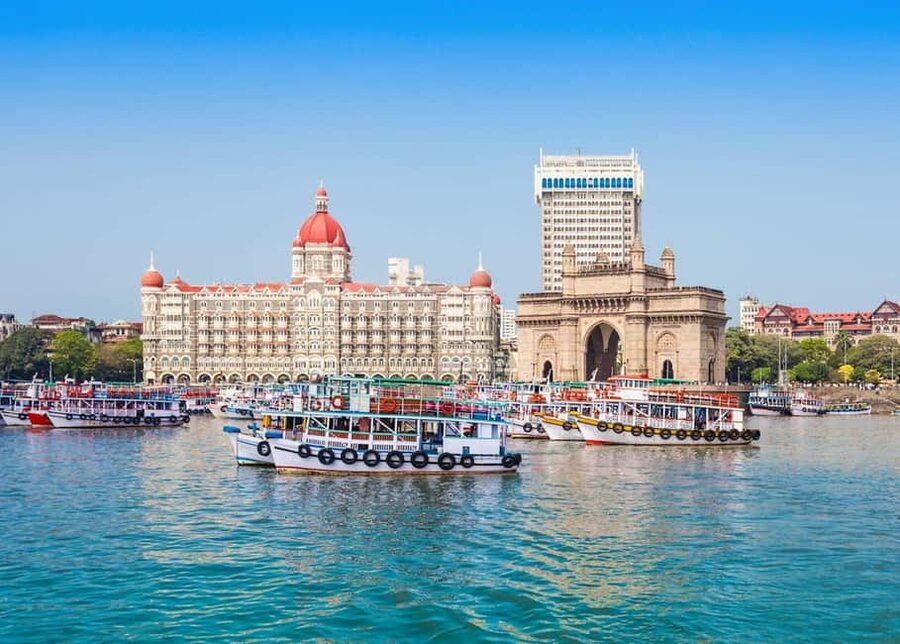
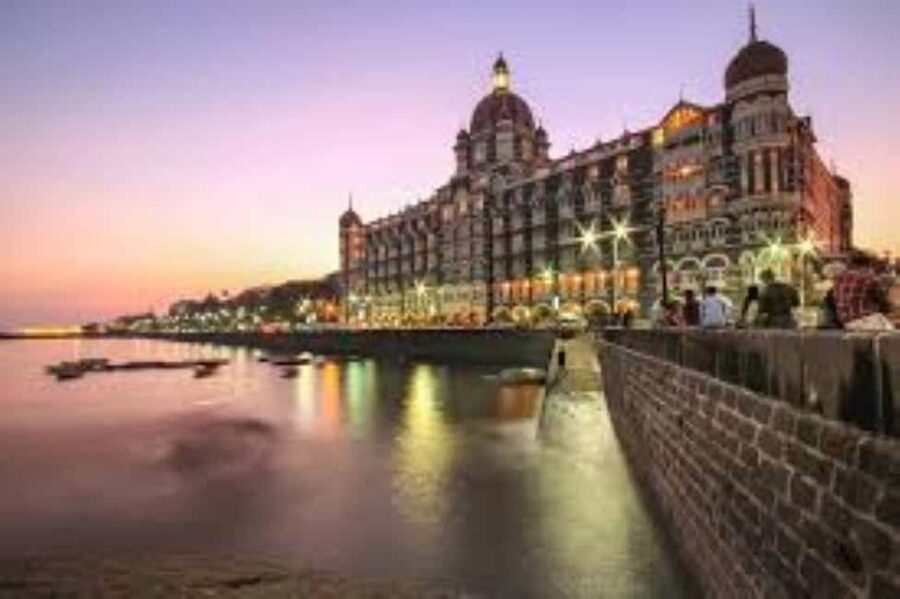
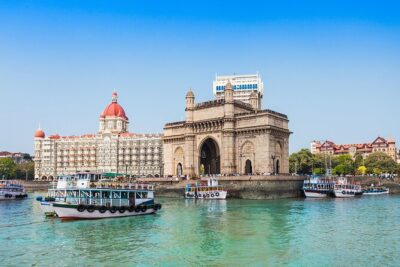
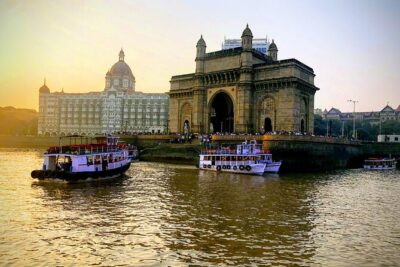
You start near the water at Gateway of India, a grand colonial arch built to commemorate the visit of King George V in 1911. Even if you’ve seen pictures, standing here gives you scale: this is a landmark designed to be seen from far away and to signal a new chapter.
From there, you’ll have a stop for photos and a guided look connected to the Taj Mahal Palace Hotel. It’s Mumbai’s most iconic historic luxury hotel, and the area around it sets the tone for the day: seaside glamour plus old-world architecture, all within a few minutes of each other.
Practical note: this early portion is where you can get your bearings. If you’re jet-lagged or new to the city, seeing these landmarks in daylight helps you later understand why Mumbai’s layout feels the way it does.
Other loops past the Gateway, Marine Drive and beyond




Chhatrapati Shivaji Maharaj Terminus (CST): the Gothic train-station masterpiece
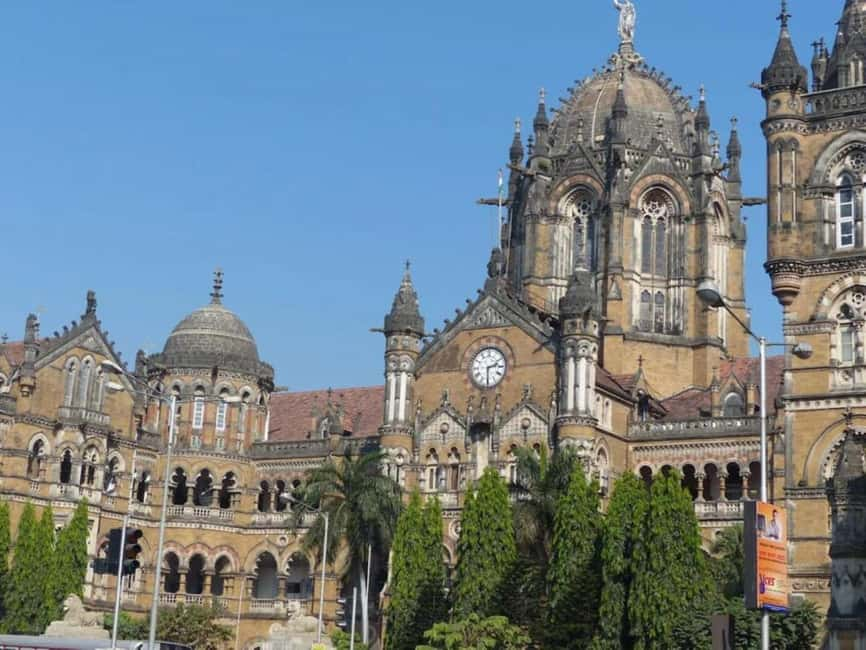
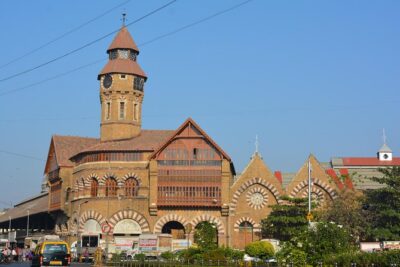
CST, officially Chhatrapati Shivaji Maharaj Terminus, is a UNESCO World Heritage Site and one of Mumbai’s star buildings. The key idea to remember is that this isn’t a museum that you leave behind. It’s a train station—busy, active, and still doing the job it was built for.
The building is described as Victorian Gothic architecture, and the walk inside and around it tends to make the details click: arches, stonework, and those strong geometric lines that make the place feel dramatic even at street level. Because it’s also a working hub, the station helps you understand how Mumbai blends movement and monument at the same time.
Your route actually includes CST more than once, which is smart. The first visit helps you appreciate it as a structure. Later, you get another angle and more time to absorb what you missed the first pass.
Kala Ghoda and Oval Maidan: the arts district meets civic monuments
Kala Ghoda is Mumbai’s cultural and artistic hub, known for colonial architecture plus galleries and museums. Even if you don’t go inside every venue, the streets and facades give you a “this part of town has identity” feeling—less about commerce, more about character.
Then you move toward Oval Maidan and the Rajabai Clock Tower. The Rajabai Clock Tower is inspired by Big Ben, and it’s right beside Bombay High Court and the open lawn of Oval Maidan. The effect is striking: you get a sense of how Gothic Revival architecture helped define Mumbai’s civic presence.
A helpful way to experience these stops is to slow down for one small task: look at the lines. When you pay attention to the building edges and towers, you start to spot repeating design choices across different landmarks. That’s the best kind of “architectural education” you can get in a single day.
Horniman Circle and the Asiatic Society Library: old texts, quieter streets
Near Horniman Circle you get a calmer pocket of urban space—a peaceful plaza surrounded by colonial buildings. It’s a nice contrast after heavier traffic areas, and it’s the kind of place where you can catch your breath without feeling like you’re stepping away from the story.
Next is the Asiatic Society Library, described as housing a priceless collection of rare manuscripts and books. What I like here is that it’s not just about admiring an exterior. It points you toward Mumbai as a city of scholarship and collecting, not only commerce and speed.
If you’re the type who likes stories behind institutions, this stop is worth giving extra attention to. You’re seeing how knowledge was preserved and organized, which helps you understand why cities build libraries and not just monuments.
Other ways to cover Mumbai end to end
- Mumbai City of Dreams Tour in Private Vehicle
★ 5.0 · 299 reviews - Mumbai: Guided City Sightseeing Tour
★ 4.8 · 278 reviews - Mumbai City Sightseeing Small Group Tour
★ 5.0 · 216 reviews - Private Mumbai City Tour with Transport
★ 5.0 · 214 reviews - Mumbai: City Tour, Elephanta Caves, Dharavi Slum W/Options
★ 4.9 · 198 reviews - Half Day Mumbai City Private Sightseeing Tour
★ 5.0 · 181 reviews
Crawford Market and lunch: where flavors and logistics meet
Crawford Market is historic and full of senses—spices, fresh produce, color on display, and that colonial-era architecture feeling in the background. Even if you only do a photo stop plus a guided visit, it’s one of those places that makes the city feel real fast.
Then comes lunch, timed after roughly half the sightseeing. That matters. Without a break, a full day through dense neighborhoods turns into a blur of quick glances. With lunch built in, you can slow down, eat something local, and reset before the afternoon history and viewpoints.
The tour includes lunch at a local restaurant selected for the experience. You’ll also have mineral water, which is small but helpful when you’re walking in Mumbai heat and humidity.
If you have dietary needs, I’d plan to mention them ahead of time when confirming the restaurant details (the tour data says lunch is included, but doesn’t list specific dietary options).
Marine Drive (Queen’s Necklace): a scenic break with timing payoff
Marine Drive is a beachfront boulevard that curves along the Arabian Sea, often described as resembling a glittering necklace at night. On a day tour, you may catch it in daylight or approach evening depending on timing, but either way the shoreline setting gives you a breather.
This stop is also valuable because it changes your perspective from architecture to city geography. You see how Mumbai faces the sea and how the built environment hugs the water. That gives context to the earlier Gateway area too.
You’ll have a guided visit and walk here, so it’s not just standing at a railing. It’s one of those places where you can take a few slow photos without feeling guilty about missing another museum.
Mani Bhavan: Gandhi’s presence in Mumbai, told on-site
Mani Bhavan was Mahatma Gandhi’s residence in Mumbai and is now a museum chronicling his life and freedom movement. This is one of the more emotionally grounded stops in the day because it connects a major figure to an actual address, not an abstract timeline.
The tour includes a guided visit, sightseeing, and walk here. That format helps because the museum theme is easy to underestimate if you treat it like a quick photo break. With a guide, you’re more likely to grasp what the place represents beyond its walls.
If you want one simple takeaway from this section: don’t rush it. Even a short museum stop feels better when you give it enough time to turn symbols into meaning.
Malabar Hill viewpoints: Banganga Tank, Hanging Gardens, and a Jain Temple
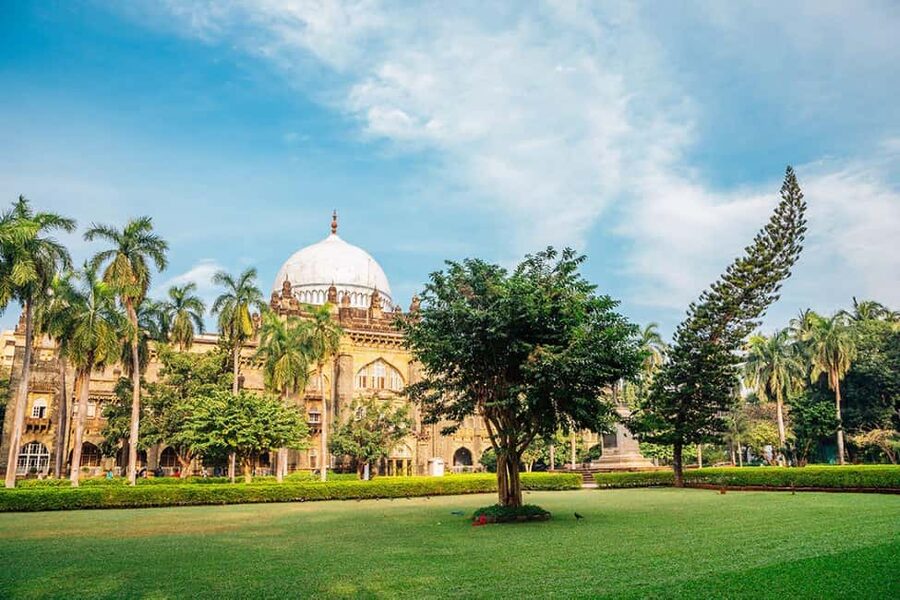
After the inner-city history and markets, the route heads toward Malabar Hill, described as the poshest locality. It’s paired with several stops that shift the mood again: Banganga Tank, Hanging Gardens, and a Jain Temple.
Banganga Tank is an ancient sacred water tank. The point of including it in a city tour is that Mumbai isn’t only modern skylines and colonial monuments. It also has long-standing religious and sacred spaces that shape daily culture.
Then come the Hanging Gardens, which offer panoramic views and green spaces. If you’re hoping for a visual payoff after hours of city streets, this is the spot where you can look out and feel the scale of Mumbai.
A Jain Temple stop is also included with sightseeing and walking. This adds another layer to the day: multiple faith traditions, multiple architectural expressions, all without leaving the same half of town.
Practical tip: bring shoes you trust for steps and uneven ground. This part of the itinerary is the kind of place where one wrong shoe can make you feel every stair for the rest of the day.
Antilia drive-by and Dhobi Ghat: extreme wealth meets ordinary work
The tour includes a drive-by at Antilia, a 27-story private home owned by Mukesh Ambani. Seeing it from the road isn’t the same as touring the building, but it still lands as a reality check. You get a fast snapshot of how concentrated wealth is in this city.
Then the day takes a turn toward working life with Dhobi Ghat, described as the world’s largest open-air laundry. This is where the city’s labor becomes visible. Hundreds of washermen clean clothes using traditional methods, and it’s an active scene rather than a staged one.
What I like most about placing Dhobi Ghat toward the end is that the day’s theme comes into focus. Early on, you learn about architecture and institutions. By late afternoon, you’re seeing how daily work keeps the city running. That contrast is the whole point.
A small consideration: you’ll likely want to keep expectations grounded. It’s not designed as a polished attraction. If you approach it as a human workplace you’re observing, you’ll get more from it than if you expect a museum-style layout.
Price and value: what $25 covers (and why that matters in Mumbai)
At about $25 per person for an 8-hour private-group tour, the value is mostly in what’s included. You’re not just buying transportation. You’re getting:
- Hotel pickup and drop-off
- A private, live guide
- Private AC car for the full circuit
- Lunch
- Entrance fees for all included places
- Mineral water
- Parking fees, fuel, taxes, and road tolls
In a city where prices can add up quickly (especially when entrance fees and multiple rides are involved), bundling these pieces is a real convenience. It reduces the mental math and helps you avoid surprise add-ons.
The other value factor is time. The tour includes skip-the-line entry through a separate entrance at participating sights. Even if you’re not racing the clock, fewer queues gives you more freedom to enjoy what you’ve paid to see.
So the deal isn’t only the price—it’s the friction removed.
Who should book this (and who might want a different plan)
I think this works best if you’re:
- New to Mumbai and want a single, organized day that covers major highlights
- More interested in seeing neighborhoods and landmarks together than doing deep museum research
- Happy with walking and using an AC car to reset between clusters
- Want a guide to explain what you’re looking at, not just point directions
It might be less ideal if you:
- Prefer long, slow visits where you stay in one area for the whole day
- Dislike crowds and active workplaces (Dhobi Ghat and busy stations are part of the experience)
- Want a totally flexible itinerary with no fixed stops
One more practical note: the itinerary is dense enough that you’ll likely feel the full day even with lunch and transport. If you’re prone to fatigue, plan a low-effort evening afterward.
The guide and driver make the difference more than you think
The success of this type of full-day city tour comes down to two people: the guide and the driver. In one highlighted experience, the guide named Hamid was praised for giving lots of details and being a careful host, while the driver Mehtab was credited for handling traffic safely. That kind of teamwork is what turns a plan on paper into a day that feels smooth.
Even with a great route, Mumbai traffic can be relentless. A good driver and a guide who can flex timing without cutting essential stops changes everything.
Should you book this Mumbai full-day sightseeing tour?
Yes, if you want a structured day that gives you a wide Mumbai snapshot without the hassle of planning transport, entrance fees, and routing. You’ll get major landmarks like CST, a coastal reset at Marine Drive, a history-and-ideas stop at Mani Bhavan, and the high-contrast real-world visit to Dhobi Ghat—all in one run.
I’d say book it especially if you like variety and you’re traveling with limited time. If you’re the type who wants to linger in one neighborhood for hours, you might prefer something less packed. But for most visitors, this is the practical way to see the city’s big faces and its working everyday side, with comfort built in.
FAQ
How long is the Mumbai city sightseeing tour?
The tour duration is 8 hours.
What’s included in the price?
It includes hotel pickup and drop-off, a private tour guide, sightseeing by private AC car, lunch, entrance fees of all places, mineral water, and all parking fees, fuel, taxes, and road tolls.
Is lunch included?
Yes. Lunch is included after about half of the sightseeing.
Do I need to pay entrance fees separately?
No. Entrance fees are included for all places on the tour.
What languages is the live guide available in?
The guide is available in English and Hindi.
Is this tour a private group?
Yes, it’s a private group.
Is wheelchair access available?
Yes, the tour is wheelchair accessible.
Is hotel pickup included?
Yes. Pickup is included from your desired location in Mumbai.
Does the tour include a way to skip lines?
Yes. The tour notes skip-the-line entry through a separate entrance.
City Circuits, More of Them
- Mumbai City of Dreams Tour in Private Vehicle
★ 5.0 · 299 reviews - Mumbai: Guided City Sightseeing Tour
★ 4.8 · 278 reviews - Mumbai City Sightseeing Small Group Tour
★ 5.0 · 216 reviews - Private Mumbai City Tour with Transport
★ 5.0 · 214 reviews
More Mumbai, Every Kind of Day
- Dharavi slum tour in Mumbai by Female tour guides of the slum
★ 5.0 · 1,976 reviews - Mumbai: Full-Day Sightseeing Tour of Mumbai
★ 4.9 · 1,822 reviews - Private Mumbai Sightseeing Tour (Traveller’s Choice Award Winner)
★ 5.0 · 1,565 reviews - Elephanta Caves & Island Guided Private Tour
★ 5.0 · 1,327 reviews
The Big Mumbai Circuits
- Mumbai: Full-Day Sightseeing Tour of Mumbai
★ 4.9 · 1,822 reviews - Private Mumbai Sightseeing Tour (Traveller’s Choice Award Winner)
★ 5.0 · 1,565 reviews - Highlights of Mumbai Sightseeing Tour: TRAVELLERS CHOICE AWARDED
★ 5.0 · 915 reviews - Highlights of South Mumbai Guided Private Tour in AC Vehicle
★ 5.0 · 620 reviews
New on the Mumbai shortlist


Sightseeing & City Highlights, compared.
 ★ 4.9Full-Day Sightseeing Tour of MumbaiFrom $241,822 reviews
 ★ 5.0Private Mumbai Sightseeing Tour (Traveller’s Choice Award Winner)From $271,565 reviews
 ★ 5.0Highlights of Mumbai Sightseeing Tour: TRAVELLERS CHOICE AWARDEDFrom $33915 reviews
 ★ 5.0Highlights of South Mumbai Guided Private Tour in AC VehicleFrom $74620 reviews
 ★ 5.0Private Mumbai Sightseeing Tour(Travellers Choice Award Winner)From $29565 reviews
 ★ 5.0Private Half-Day Sightseeing Tour in MumbaiFrom $33430 reviews
 ★ 5.0Private Elephanta Caves & Mumbai Sightseeing Tour with AC CarFrom $29389 reviews
 ★ 5.0Private Mumbai Sightseeing Tour with Local English GuideFrom $33342 reviews
Browse the lists this tour appears in